As of 2026, a 2001 Vermont State Quarter that appears to be made of gold is almost certainly a standard copper-nickel or silver-clad coin that has been gold-plated by a private company after leaving the United States Mint. These coins generally hold a value of $0.25 to $2.00, as the thin layer of gold plating is considered an "alteration" that prevents the coin from receiving a professional numismatic grade.
Understanding the 2001 Vermont "Gold" Quarter
The 2001 Vermont State Quarter was the 14th coin released in the United States Mint’s 50 State Quarters Program. While the U.S. Mint produced millions of these coins in copper-nickel clad and silver-clad versions, it never produced a solid 24-karat gold version for general circulation or for official proof sets.
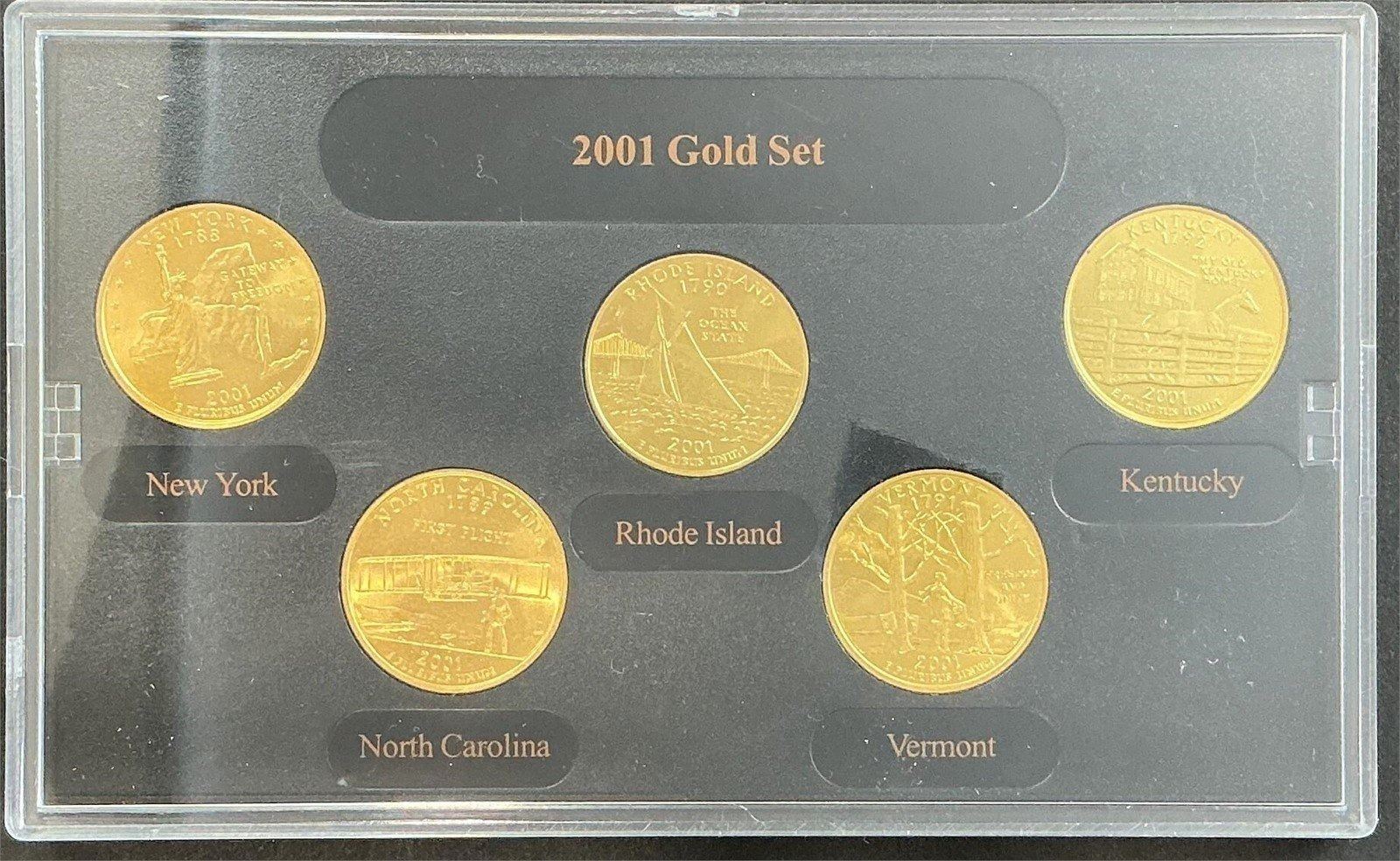
If you have a Vermont quarter that possesses a brilliant golden luster, you are looking at a piece of "aftermarket" numismatics. During the height of the State Quarters craze in the early 2000s, many private mints and marketing companies (such as the Littleton Coin Company or various TV shopping networks) purchased bulk quantities of uncirculated quarters from the U.S. Mint. They then applied a microscopic layer of 24k gold through a process called electroplating. These were marketed as "exclusive" or "limited edition" collectibles to the general public.
The Science of Electroplating
Electroplating involves placing the coin in a chemical bath and using an electric current to fuse a thin layer of gold onto the surface of the copper-nickel substrate. While the gold used is often real 24k gold, the layer is so incredibly thin—often measured in microns—that the actual melt value of the gold is negligible. In the eyes of serious numismatists (coin collectors), this plating is viewed as damage or an "altered surface," which actually lowers the coin's value compared to a pristine, un-plated specimen of the same grade.
Value Analysis: What is a 2001 Gold Vermont Quarter Worth in 2026?
In the current 2026 market, the value of these coins has remained relatively stagnant for over two decades. Because they were produced in such massive quantities by private marketing firms, they are not rare.
Circulation and Novelty Value
If you find a gold-plated 2001 Vermont quarter in your pocket change, it is technically worth its face value of 25 cents. Most banks and vending machines will accept it as a standard quarter because its weight and dimensions remain nearly identical to a standard coin.
To a novelty collector or someone looking for a "conversation piece," the coin might sell for:
- Raw/Loose: $0.50 to $1.25
- In Original Marketing Display/Case: $2.00 to $5.00
- Complete 50-State Gold-Plated Set: $40.00 to $75.00
The "Melt" Fallacy
A common misconception is that because the coin is "gold," it must be worth its weight in bullion. However, the amount of gold used in the plating process usually amounts to less than $0.05 worth of precious metal at 2026 gold prices. Refining companies will not typically accept these coins for melting because the cost of the chemicals and energy required to strip the gold from the nickel exceeds the value of the gold recovered.
Technical Specifications and Identification
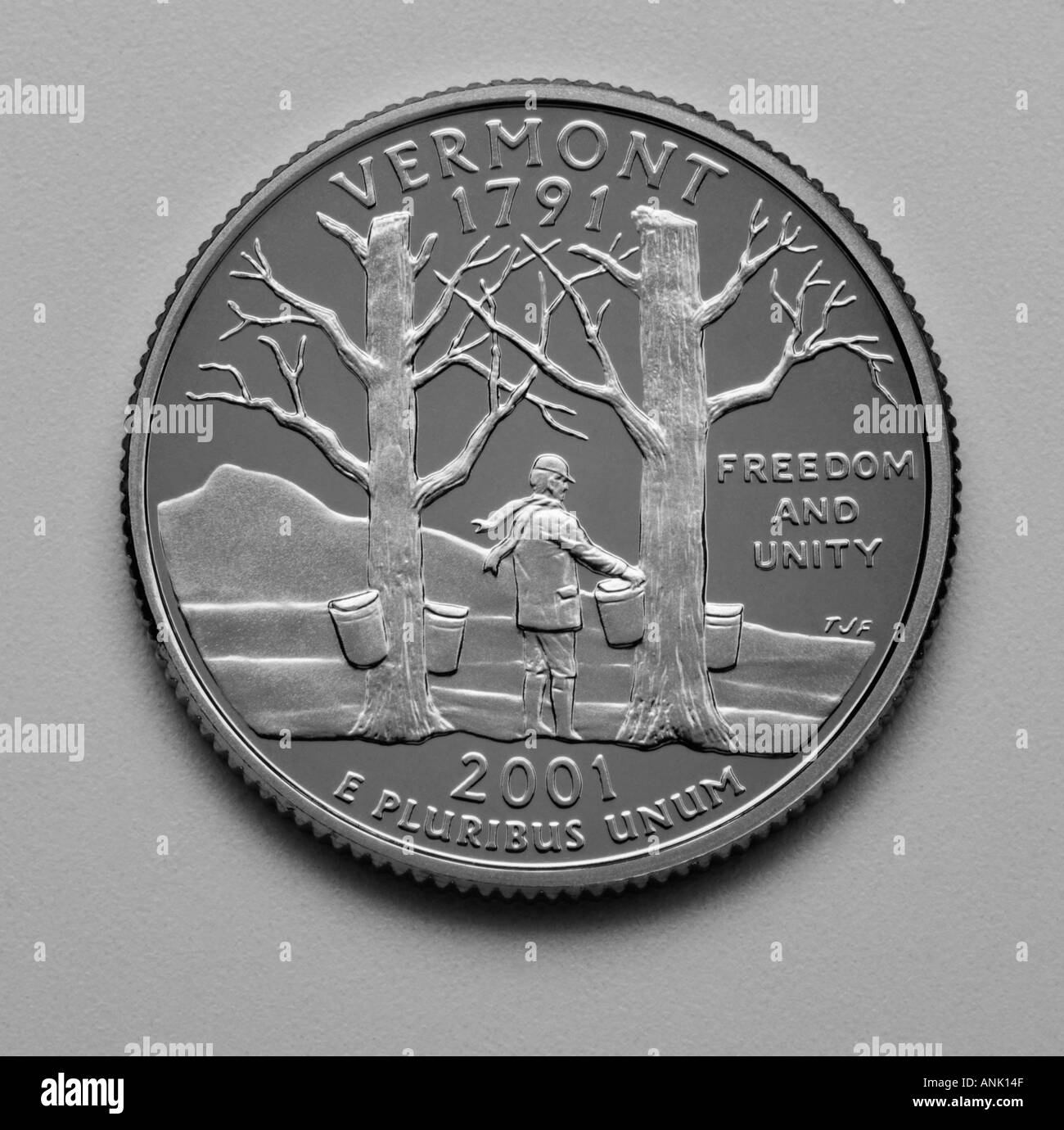
To properly value your coin, you must first identify which version of the Vermont quarter you have. The 2001 Vermont quarter features a design by T. James Ferrell, depicting two maple trees with sap buckets in the foreground and Camel’s Hump Mountain in the background. The inscription reads "Freedom and Unity."
Official U.S. Mint Versions vs. Plated Versions
| Feature | Standard Clad (P/D) | Silver Proof (S) | Gold-Plated (Aftermarket) |
|---|---|---|---|
| Composition | 91.67% Copper, 8.33% Nickel | 90% Silver, 10% Copper | Plated over Clad or Silver |
| Edge | Visible Copper Stripe | Solid Silver Appearance | Gold/Yellow Throughout |
| Weight | 5.67 grams | 6.25 grams | ~5.68 - 5.70 grams |
| Mint Mark | P (Philadelphia) or D (Denver) | S (San Francisco) | P, D, or S |
| 2026 Value | $0.25 (Circulated) | $10.00 - $15.00 | $0.50 - $2.00 |
| Numismatic Status | Official Currency | Official Collectible | Altered/Novelty |
How to Identify Your Coin's Origin
- Check the Mint Mark: Look at the obverse (the side with George Washington) to the right of his ponytail.
- P or D: These are standard business-strike coins intended for circulation. If it is gold, it was definitely plated later.
- S: This indicates the San Francisco Mint. If the coin is gold-plated, someone took a high-quality proof coin (either clad or silver) and plated it.
- The Drop Test (Not Recommended): Silver coins have a higher-pitched ring than copper-nickel coins. However, because plating can slightly dampen the sound, this is unreliable.
- Weight: Using a precision jewelry scale is the best way to determine if the base coin is silver. A silver quarter weighs 6.25g, while a standard one weighs 5.67g. Plating adds less than 0.03g of weight.
The Vermont Quarter Design History
Vermont was admitted to the Union on March 4, 1791, as the 14th state. The quarter, released in 2001, pays homage to the state's natural beauty and its famous maple syrup industry.
Symbolism of the Imagery
- Maple Trees and Sap Buckets: Vermont is the leading producer of maple syrup in the United States. The buckets represent the traditional "tapping" of trees that occurs in early spring.
- Camel’s Hump Mountain: One of the most recognizable peaks in the Green Mountains, it provides a rugged backdrop that symbolizes the "Freedom and Unity" of the state’s residents.
- The Motto: "Freedom and Unity" is the official state motto of Vermont, adopted in 1788. It reflects the balance between individual liberty and the common good of the community.
The selection process for this design involved thousands of suggestions from Vermont citizens. Governor Howard Dean eventually narrowed the choices down to three finalists, and the "Maple Sugaring" design won by a significant margin in a state-wide poll.
Why "Gold" Quarters Often Deceive Beginners
The secondary market for gold-plated coins thrives on the lack of technical knowledge among new hobbyists. When these coins were first sold in 2001, marketing materials often used phrases like "Layered in Pure 24-Karat Gold." While factually true, it is misleading because "layered" implies a microscopic coating rather than a solid gold composition.
In 2026, many of these coins are appearing in estate sales and "jars of change" left by the original purchasers. Heirs often see the gold color and assume they have found a rare error or a special minting. It is important to remember that the U.S. Mint did not start producing 24k gold versions of standard coins until the American Buffalo Gold Coin in 2006, and these are clearly marked with their weight and purity.
Can a Gold Vermont Quarter be a "Mint Error"?
There is a theoretical possibility of a "wrong planchet" error, where a quarter is struck on a gold blank intended for another coin. However, this is extremely unlikely for the Vermont quarter. In 2001, the U.S. Mint was not striking any gold coins that shared the size or diameter of a quarter.
If a 2001 Vermont quarter were a genuine mint error struck on a gold planchet, it would:
- Weigh significantly more than 6 grams (Gold is much denser than copper or silver).
- Lack the copper stripe on the edge.
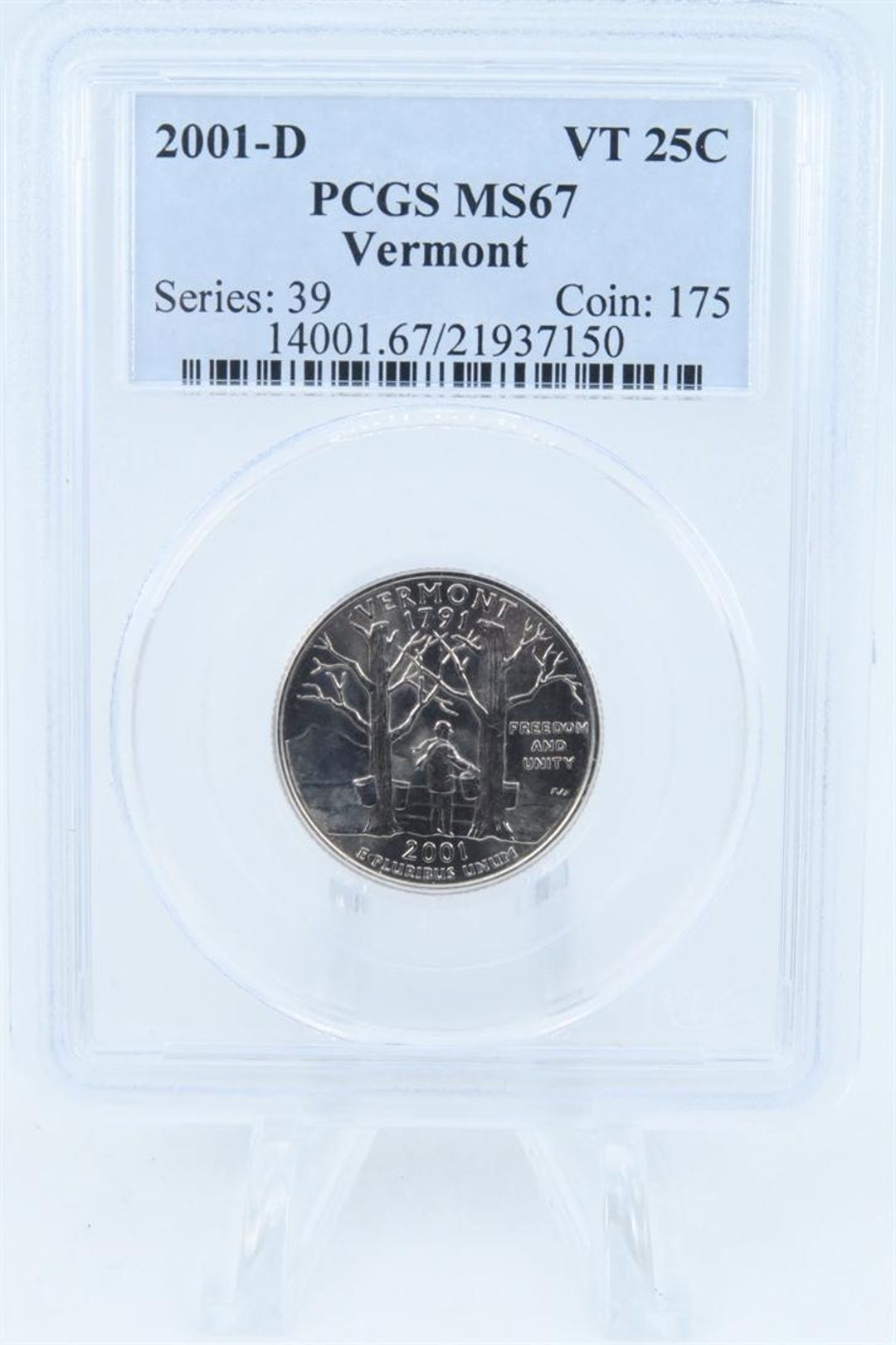
- Require authentication from a service like PCGS (Professional Coin Grading Service) or NGC (Numismatic Guaranty Company).
- Be worth thousands of dollars.
If you suspect your coin is a genuine error rather than a plated coin, the first step is weighing it to three decimal places. If it weighs exactly 5.67g or 6.25g, it is a plated standard issue.
How to Care for a Gold-Plated Quarter
If you enjoy the aesthetic of the gold Vermont quarter and wish to keep it as a curiosity, proper care is necessary. The gold layer is extremely soft and thin.
- Avoid Polishing: Polishing the coin with a cloth will likely rub the gold plating off, revealing the silver-colored nickel or copper beneath.
- Use Capsules: Store the coin in an airtight acrylic capsule to prevent environmental oxidation from affecting the base metal underneath the plating.
- Handle by Edges: Oils from your skin can react with the plating over time, leading to "spotting" or discoloration.
Selling Your 2001 Gold Vermont Quarter
If you are looking to sell your coin in 2026, your options are somewhat limited due to the low market value.
- Local Coin Shops: Most reputable dealers will not buy gold-plated quarters because they cannot resell them to serious collectors.
- Online Auctions (eBay): This is your best bet. You can list the coin as a "novelty" or "gold-plated" item. Note that shipping costs may exceed the value of the coin itself.
- Flea Markets: These are popular items for "budget" collectors or children getting started in the hobby.
Frequently Asked Questions
Did the U.S. Mint ever make solid gold Vermont quarters?
No. The U.S. Mint has never produced a solid gold Vermont state quarter. Any gold-colored 2001 Vermont quarter you find was altered by a private third party.
Is it legal to gold-plate a U.S. quarter?
Yes, it is legal to plate or decorate U.S. currency as long as there is no intent to defraud (e.g., trying to pass it off as a different denomination or a solid gold coin). Because these are sold as "collectibles" or "art," they do not violate federal laws regarding the mutilation of currency.
How much gold is actually on the coin?
The amount of gold is typically less than 0.01 troy ounces. The layer is so thin that if you were to scrape it with a needle, the silver-colored metal beneath would be immediately visible.
Why does my gold quarter have an 'S' mint mark?
The 'S' mint mark means the coin was originally a Proof coin from the San Francisco Mint. Proof coins are struck twice on specially polished blanks. Private companies often plated these because the mirror-like finish of the Proof coin makes the gold plating look even more brilliant and "expensive."
Should I get my 2001 gold Vermont quarter graded?
No. Major grading services like PCGS and NGC will return the coin as "Genuine - Altered Surfaces." They do not award numerical grades (like MS-65 or PF-70) to coins that have been plated after they left the mint. The cost of grading (usually $30-$60) is significantly higher than the value of the coin.
Are there any rare 2001 Vermont quarters to look for?
While the gold-plated version isn't rare, look for "doubled die" errors on the reverse (the sap buckets or trees) or "die cracks." An un-plated Vermont quarter in a very high grade (MS-68 or higher) can be worth hundreds of dollars, but these are difficult to find in circulation.
Final Recommendation
If you have a 2001 gold Vermont quarter, treat it as a fun historical curiosity rather than a financial investment. Its value in 2026 remains primarily sentimental or decorative. For those looking to build a valuable coin collection, focus on acquiring official U.S. Mint Proof Sets or uncirculated coins that have not been altered. If you are ever in doubt about a coin's composition, a simple weight test is the most reliable way to distinguish between a common plated quarter and a rare mint error.