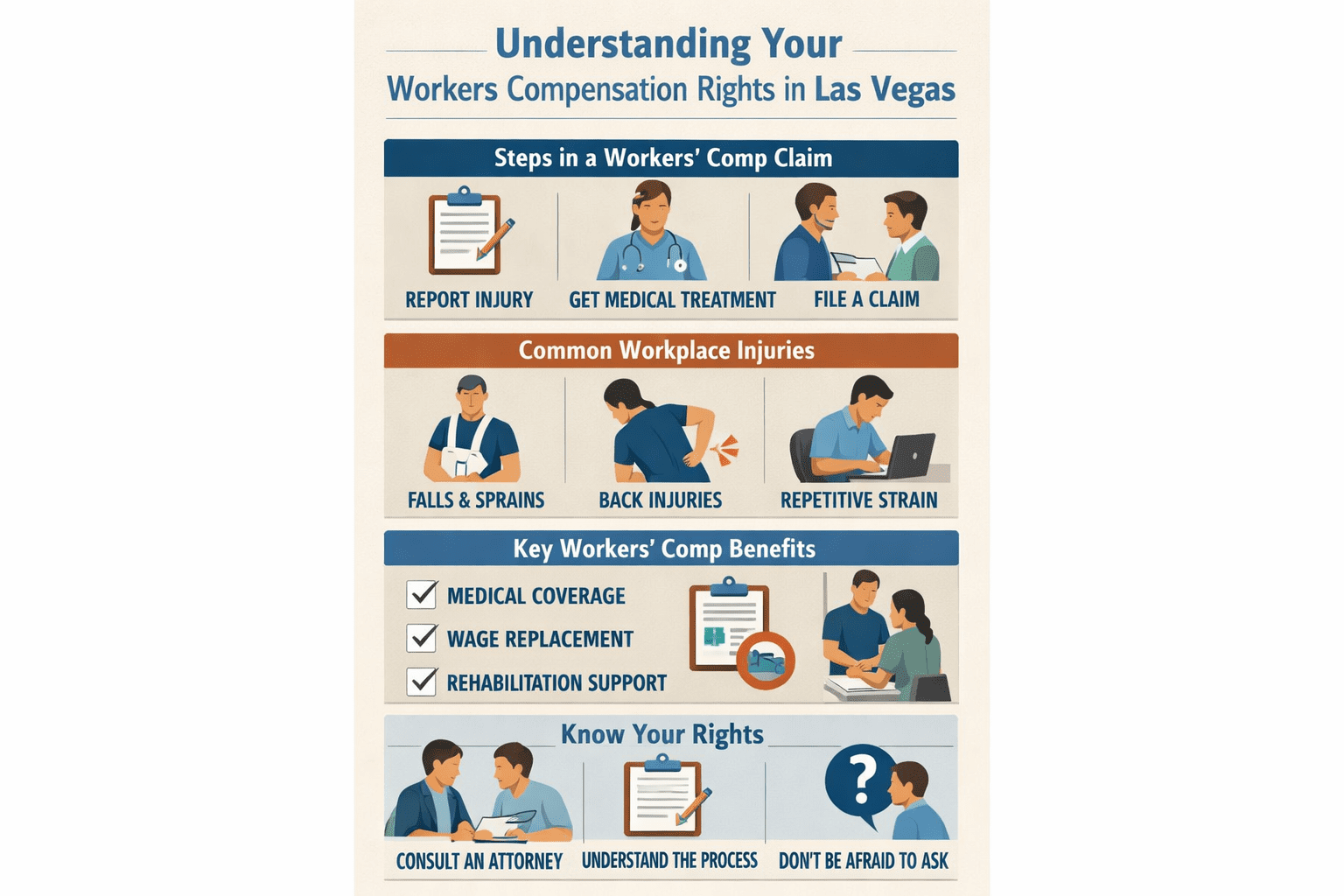
To ensure your workers' compensation claim is handled effectively, you must ask questions regarding an attorney's specific experience with your injury type, their fee structure, the estimated timeline for your case, and their strategy for handling medical evidence. Clarifying communication expectations and understanding potential case challenges early on will help you secure the best possible legal representation.
Entering a workers' compensation consultation can be an overwhelming experience, especially when you are dealing with the physical and emotional toll of a workplace injury. In 2026, the legal landscape for workers' compensation continues to be a complex web of state-specific statutes, insurance company maneuvers, and medical evaluations. While the system is theoretically "no-fault," obtaining the full benefits you deserve—such as Temporary Total Disability (TTD) or Permanent Partial Disability (PPD) payments—often requires rigorous legal advocacy.
The initial consultation is your opportunity to interview the attorney just as much as they are evaluating your case. Because most workers' compensation lawyers work on a contingency fee basis, they are looking for cases they believe they can win. Conversely, you are looking for a partner who will navigate the bureaucratic hurdles of the insurance carrier and the state's workers' compensation board. To make the most of this meeting, you need a structured approach to your inquiries.
Evaluating Attorney Experience and Specialization
Not all personal injury lawyers are well-versed in the nuances of workers' compensation. While a general practitioner might understand the basics of a tort claim, workers' compensation is a specialized administrative law field with its own set of rules, judges, and evidence requirements.
How much of your practice is dedicated specifically to workers' compensation?
You want to ensure that the attorney isn't just taking your case as a "side project." A dedicated workers' compensation lawyer will be familiar with the specific administrative law judges in your district and the common tactics used by local insurance defense firms. Ideally, you want someone whose practice is at least 75% focused on workers' compensation.
Have you handled cases involving my specific type of injury or industry?
A repetitive stress injury (like carpal tunnel) requires a different evidentiary approach than an acute injury (like a fall from a scaffold). If you suffer from an occupational disease or a toxic exposure claim, the medical evidence required is significantly more complex. Asking this question helps you gauge if the lawyer understands the specific medical terminology and expert witnesses needed for your unique situation.
What is your experience with "Section 32" settlements or your state's equivalent?
In many jurisdictions, a "Section 32" waiver agreement allows a claimant to settle their entire case for a lump sum, effectively closing the medical portion of the claim. You need to know if the attorney has experience negotiating these complex agreements, as they involve projecting future medical costs and Social Security offsets.
Understanding Case Assessment and Strategy
Once you have established the attorney’s credentials, the conversation should shift to the specifics of your claim. A transparent lawyer will provide a realistic assessment rather than promising a "windfall."
What are the primary strengths and weaknesses of my claim?
Every case has hurdles. Perhaps there was a delay in reporting the injury, or maybe you had a pre-existing condition in the same body part. A good attorney will identify these issues immediately and explain how they plan to mitigate them. For instance, they might explain how they will use medical records to differentiate between an old injury and a new "aggravation" or "exacerbation."
What is the estimated timeline for my case in 2026?
While no lawyer can predict the future, they should be able to give you a range based on current administrative backlogs. In 2026, many states have moved toward digital hearings and expedited trials, but medical recovery still dictates much of the timeline. You need to know how long it usually takes to reach Maximum Medical Improvement (MMI), as this is a critical turning point for permanency awards.
How do you handle disputes regarding medical treatment?
Insurance companies frequently deny specific procedures, such as MRIs or surgeries, using Utilization Review (UR) or Independent Medical Examinations (IME). Ask the attorney how they challenge these denials. Do they have a network of medical experts they can consult? How do they handle the "Medical Treatment Guidelines" that govern what care is considered "reasonable and necessary"?
Financial Transparency and Fee Structures
Understanding how your attorney is paid is vital to avoiding surprises at the end of your case. In workers' compensation, fees are almost always regulated by state law.
How are attorney fees calculated and when are they paid?
In most states, workers' compensation attorneys are paid a percentage of the "moving" or "back" benefits they secure for you, or a percentage of the final settlement. This is typically capped (e.g., 10% to 20% depending on the jurisdiction). You should ask if the fee is deducted from your weekly checks or only from a final lump sum.
Who pays for "litigation costs" up front?
Litigation costs are different from attorney fees. They include the costs of ordering medical records, hiring expert witnesses, and court reporter fees for depositions. You must ask:
- Do I have to pay these costs upfront?
- If we lose the case, am I still responsible for these expenses?
- Are these costs deducted from my portion of the settlement before or after the attorney takes their percentage?
| Expense Category | Typical Responsibility | Notes for 2026 |
|---|---|---|
| Attorney Fees | Contingency-based | Usually 10-25% of the award; capped by state law. |
| Medical Record Fees | Law Firm (Advanced) | Digital records are cheaper, but voluminous files still incur costs. |
| Expert Witness Fees | Law Firm (Advanced) | Often the most expensive part of a contested claim. |
| Filing Fees | None/State Funded | Most workers' comp boards do not charge the claimant to file. |
| Deposition Costs | Law Firm (Advanced) | Includes court reporter fees and transcriptions. |
Communication and Case Management
One of the most common complaints against attorneys is a lack of communication. Establishing a protocol during the consultation can prevent frustration later.
Who will be my primary point of contact?
In large firms, you might meet with a senior partner during the consultation but be assigned to a junior associate or a paralegal for the duration of the case. It is important to know who will be answering your day-to-day questions. If a paralegal is your main contact, ensure they are experienced in workers' compensation procedures.
How often will I receive updates on my case?
Ask about their communication policy. Will you get a monthly status report? Will they call you every time the insurance company files a form? Understanding whether they prefer email, phone calls, or a secure client portal (common in 2026) will help align your expectations.
What is the process for preparing me for hearings or IMEs?
An Independent Medical Examination (IME) is a high-stakes event where an insurance-hired doctor evaluates you. You should ask if the attorney provides a preparation session to explain what to expect, what to say, and—more importantly—what not to say during these examinations.
Identifying Potential Red Flags
During the consultation, pay attention to how the attorney responds to your questions. Certain behaviors can indicate that the firm might not be the right fit for a high-stakes workers' compensation claim.
- Guaranteed Outcomes: If a lawyer promises a specific dollar amount or guarantees a win, be cautious. Workers' compensation outcomes depend on medical evidence that can change over time.
- Pressure to Sign: You should never feel pressured to sign a retainer agreement on the spot. A reputable attorney will encourage you to take the paperwork home and review it.
- Lack of Specificity: If the lawyer gives vague answers about their experience or refuses to discuss their fee structure in detail, they may not have the expertise you need.
- High Volume, Low Touch: If the office seems chaotic or the attorney seems rushed and distracted, your case might not get the individual attention it requires to maximize its value.
Essential Information to Bring to Your Consultation
To help the attorney provide the most accurate answers to your questions, you should arrive prepared with specific documentation. In 2026, having digital copies of these documents can speed up the intake process significantly.
- The First Report of Injury: Any document you or your employer filed immediately following the accident.
- Medical Records: Specifically, the initial emergency room or urgent care report and the notes from your primary treating physician.
- Insurance Correspondence: Any letters, emails, or "Notice of Controversy" forms received from the insurance carrier.
- Wage Information: Pay stubs from the 52 weeks prior to your injury, which are used to calculate your Average Weekly Wage (AWW).
- Witness Contact Info: A list of anyone who saw the accident or can testify to the conditions that led to your injury.
Frequently Asked Questions
What happens if I disagree with the attorney’s strategy?
You are the owner of your claim. While the attorney provides legal expertise, you have the final say on whether to accept a settlement. If there is a fundamental disagreement on strategy, you generally have the right to change attorneys, though the first attorney may still be entitled to a portion of the fee for the work they completed (known as a lien).
Do I have to pay for the initial consultation?
Most workers' compensation attorneys offer free initial consultations. This is standard practice because the attorneys want to "screen" cases for viability before committing their time and resources. Always confirm the consultation is free when scheduling the appointment.
Can I handle a workers' compensation claim without a lawyer?
Technically, yes. However, if your claim is "contested" (denied), involves surgery, or results in a permanent disability, the insurance company will have a team of professional adjusters and lawyers working to minimize your payout. Statistically, represented claimants tend to receive significantly higher settlements than those who go pro se.
What if my injury was partially my fault?
Workers' compensation is a "no-fault" system. In most cases, it does not matter if you were clumsy or made a mistake, as long as you were acting within the scope of your employment and were not intoxicated or intentionally trying to hurt yourself. You should ask the attorney how they handle "contributory negligence" arguments if the insurance company tries to use them.
How does the 2026 digital filing system affect my case?
By 2026, most state boards utilize comprehensive electronic case management systems. This means your attorney can file motions, view insurance company filings, and receive judge's decisions almost instantaneously. Ask the attorney if they use these systems to monitor your case daily, as this can prevent delays in benefit payments.
Can I be fired for hiring a workers' compensation lawyer?
In most jurisdictions, it is illegal for an employer to retaliate against an employee for filing a workers' compensation claim or hiring legal counsel. This is known as a "Section 120" violation in some states or a "retaliatory discharge" claim. If you are concerned about job security, ask the attorney how they protect clients from employer harassment.
Next Steps for the Injured Worker
After your consultation, take a moment to reflect on the experience. Did the attorney listen to your concerns? Did they answer your questions clearly, or did they hide behind legal jargon? A workers' compensation case can last months or even years, so it is essential to choose someone you trust and feel comfortable communicating with.
Your next action should be to compare the notes from your consultation against the legal requirements in your specific state. You can find official guidelines and worker rights through the U.S. Department of Labor or your state's Workers' Compensation Board website. If the attorney's answers align with the official procedures and you feel confident in their expertise, you can move forward with signing the retainer agreement to begin the formal legal process of securing your benefits.