Compulsory auto insurance laws require all vehicle owners to maintain a minimum level of liability coverage before operating a vehicle on public roads, yet critics argue these mandates artificially inflate consumer costs, restrict personal financial freedom, and fail to eliminate uninsured driving entirely. While proponents view these mandates as a necessary social safeguard to ensure accident victims receive compensation, opponents challenge the fundamental premise of forced purchasing and point to alternative liability systems that prioritize individual choice and market competition.
The Philosophical and Economic Foundations of Compulsory Insurance
The debate surrounding mandatory motor vehicle coverage begins at the intersection of individual liberty and public safety. In modern legal frameworks, the state frequently intervenes in private commerce to protect third parties from harm. Compulsory auto insurance operates on the principle that operating a motor vehicle is a potentially hazardous activity that imposes external risks on the general public. Consequently, governments mandate that motorists internalize these risks by purchasing third-party liability protection.
Critics of this mandate approach the issue from a classical liberal or libertarian economic perspective. They argue that forcing citizens to enter into private contracts with corporate entities infringes upon personal autonomy. Under a voluntary framework, individuals weigh the risks and rewards of their actions, deciding whether to purchase protection based on their personal risk tolerance and financial capacity. When the state removes this choice, it creates a government-sanctioned monopoly or oligopoly for private insurance carriers, compelling citizens to transfer wealth to corporate balance sheets under threat of fines, license suspension, or vehicle impoundment.
Furthermore, economists opposing these mandates highlight the issue of market distortion. When a product is legally required, consumer demand becomes inelastic. Insurance companies face less downward pressure on pricing from competitive market forces because buyers cannot legally opt out if prices rise. This dynamic can lead to higher baseline premiums across the board, affecting low-income drivers disproportionately and transforming a standard consumer purchase into a regressive financial burden.
Financial Burden and Regressive Impacts on Low-Income Drivers
One of the most persistent arguments against compulsory auto insurance is its disproportionate financial impact on economically vulnerable populations. For low-income individuals and families, the cost of maintaining legal coverage can consume a significant percentage of disposable income. In many jurisdictions, auto insurance premiums are tied not only to driving records but also to geographic zip codes, credit scores, and vehicle types—metrics that frequently correlate with socioeconomic status.
When states mandate coverage, they create a legal barrier to employment and mobility for individuals who cannot afford the premiums. A person living paycheck to paycheck may find themselves forced to choose between paying for housing and food or maintaining legal auto insurance. If they choose the former and continue driving to work, they face severe legal penalties, including misdemeanor charges, escalating fines, driver's license suspension, and even jail time. Critics argue that this creates a destructive cycle of debt and legal entanglement, turning poverty into a criminal offense through the mechanism of mandatory compliance laws.
| Insurance Requirement Aspect | Proponent Perspective | Opponent Perspective |
|---|---|---|
| Primary Goal | Ensures accident victims receive financial compensation for injuries and property damage. | Protects personal liberty and prevents government-mandated corporate enrichment. |
| Market Dynamics | Stabilizes the risk pool by requiring all drivers to contribute financially. | Creates inelastic demand, reducing competitive pressure and driving up premium costs. |
| Socioeconomic Impact | Protects low-income drivers from catastrophic debt after an at-fault accident. | Imposes regressive financial burdens that restrict mobility and employment access for the poor. |
| Uninsured Motorists | Reduces the overall rate of uninsured drivers on public roadways. | Fails to stop chronic evaders, who drive uninsured regardless of legal mandates. |
The Persistence of Uninsured Motorists Despite Legal Mandates
A central justification offered by legislators for enacting compulsory insurance laws is the reduction or elimination of uninsured motorists on the road. However, empirical data across various jurisdictions demonstrates that mandatory laws do not eliminate the problem. A significant percentage of drivers continue to operate vehicles without insurance, rendering the legal mandate partially ineffective at achieving its primary stated objective.
Drivers choose to drive uninsured for several primary reasons:
- Prohibitive premium costs that exceed their monthly budgetary capacity.
- Poor driving records, previous accidents, or major traffic violations that place them in high-risk categories with exorbitant rates.
- Immigration status or lack of documentation preventing them from accessing standard insurance markets.
- General disregard for legal mandates, particularly when enforcement mechanisms like roadside cameras or active police checks are infrequent.
Because chronic evaders ignore the law entirely, compulsory insurance laws frequently penalize law-abiding citizens while failing to catch those the laws were ostensibly designed to target. To compensate for uninsured drivers, compliant policyholders must purchase uninsured motorist (UM) and underinsured motorist (UIM) coverages, effectively forcing responsible drivers to pay twice: once for their own mandated liability, and again to protect themselves against those who flout the mandate.
Alternative Models: No-Fault Systems, Bonds, and Self-Insurance
The existence of compulsory insurance does not mean it is the only way to manage roadway risk. Several alternative models offer different balances of consumer freedom, financial accountability, and victim compensation. Examining these alternatives highlights the structural limitations of standard compulsory liability insurance.
Financial Responsibility Laws and Surety Bonds
Before widespread compulsory insurance, many jurisdictions relied on financial responsibility laws. Under these frameworks, drivers were not required to carry insurance continuously. However, if they were involved in an at-fault accident, they were legally required to prove they could pay for the damages. If they could not pay, their driving privileges were revoked. Alternatively, motorists could post a surety bond with the state or deposit cash or securities of a specified value. This approach allowed individuals with sufficient capital to self-insure, avoiding mandatory payments to private insurance companies while still holding them accountable for roadway negligence.
Pure Tort and Comparative Negligence Frameworks
In jurisdictions without strict no-fault or compulsory mandates, the traditional tort system holds drivers financially accountable through civil litigation. Critics of compulsory insurance argue that returning to a pure liability framework, coupled with robust asset protection and judgment enforcement, encourages safer driving habits. When drivers know their personal assets are directly on the line for negligent behavior—rather than a third-party insurance policy absorbing the blow—they may exercise greater caution behind the wheel.
Legal, Jurisdictional, and Policy Limitations
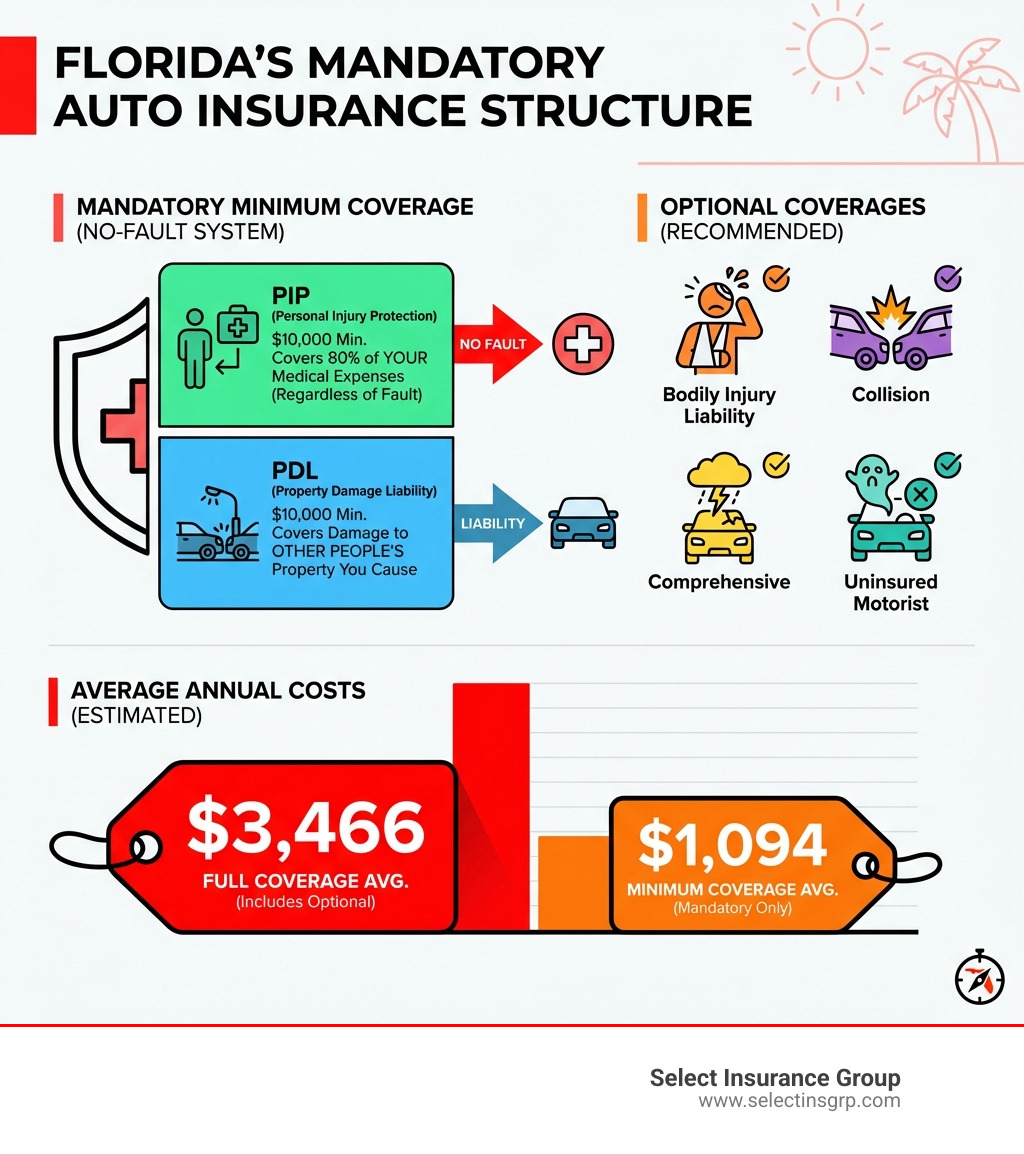
When analyzing compulsory auto insurance, it is essential to recognize the jurisdictional boundaries of these laws. In the United States and Canada, insurance regulation is managed at the state or provincial level. Requirements vary dramatically. For example, New Hampshire does not legally require most drivers to carry auto insurance, though motorists must prove financial responsibility if they are involved in an accident. Conversely, states like Florida enforce strict no-fault laws requiring Personal Injury Protection (PIP), while others rely solely on bodily injury and property damage liability minimums.
These regional variations demonstrate that a universal mandate is not an absolute prerequisite for a functioning transportation system. Furthermore, consumers should consult local departments of motor vehicles and licensed insurance professionals to understand the exact statutory requirements and penalties applicable in their specific state or province. Legal frameworks change through legislative updates, and individual circumstances may alter compliance obligations.
Frequently Asked Questions
Do compulsory auto insurance laws actually lower overall insurance rates?
No, empirical studies indicate that mandatory insurance laws often increase average premiums. When every driver is legally required to purchase a product, insurers face reduced market pressure to compete on price. Furthermore, the inclusion of high-risk drivers in the insured pool can drive up claim payouts, costs that carriers pass along to all consumers through higher baseline rates.
How do uninsured motorist coverages interact with compulsory laws?
Even in states with strict compulsory insurance laws, a significant portion of drivers remain uninsured. Consequently, compliant drivers purchase Uninsured Motorist (UM) coverage as an add-on to protect themselves in collisions caused by drivers violating the mandate. This means insured drivers effectively pay twice: once to comply with the legal mandate and again to cover the risk of those who ignore it.
What alternatives exist for drivers who cannot afford mandatory premiums?
Depending on the jurisdiction, alternatives may include state-sponsored assigned risk pools for high-risk drivers, low-income auto insurance programs offering subsidized rates, or alternative financial responsibility filings such as surety bonds or cash deposits with the state treasurer. However, availability varies significantly by region.
Does New Hampshire require auto insurance?
New Hampshire is unique among U.S. states in that it does not generally make auto insurance compulsory for all resident drivers. However, motorists who choose not to carry coverage must still prove they possess sufficient financial resources to satisfy potential judgments arising from an accident, and they must purchase coverage if they have certain driving infractions on their record.
Are there constitutional challenges to compulsory auto insurance?
Critics and legal scholars have periodically challenged compulsory insurance on substantive due process and equal protection grounds, arguing that forcing citizens to purchase private commercial products exceeds the legitimate police power of the state. However, courts have consistently upheld these mandates, ruling that regulating motor vehicle operation falls well within the state's authority to protect public health and safety.
Conclusion and Next Actions
Understanding the arguments against compulsory auto insurance reveals a complex tension between collective risk management and individual economic freedom. While mandatory laws attempt to ensure victim compensation, they simultaneously impose heavy financial burdens on low-income drivers, fail to eliminate uninsured motorists, and create inelastic insurance markets. Motorists seeking to optimize their coverage while navigating these mandates should review their local state or provincial Department of Motor Vehicles guidelines, evaluate optional add-ons like uninsured motorist protection, and consult independent insurance brokers to explore all legally permitted financial responsibility options.