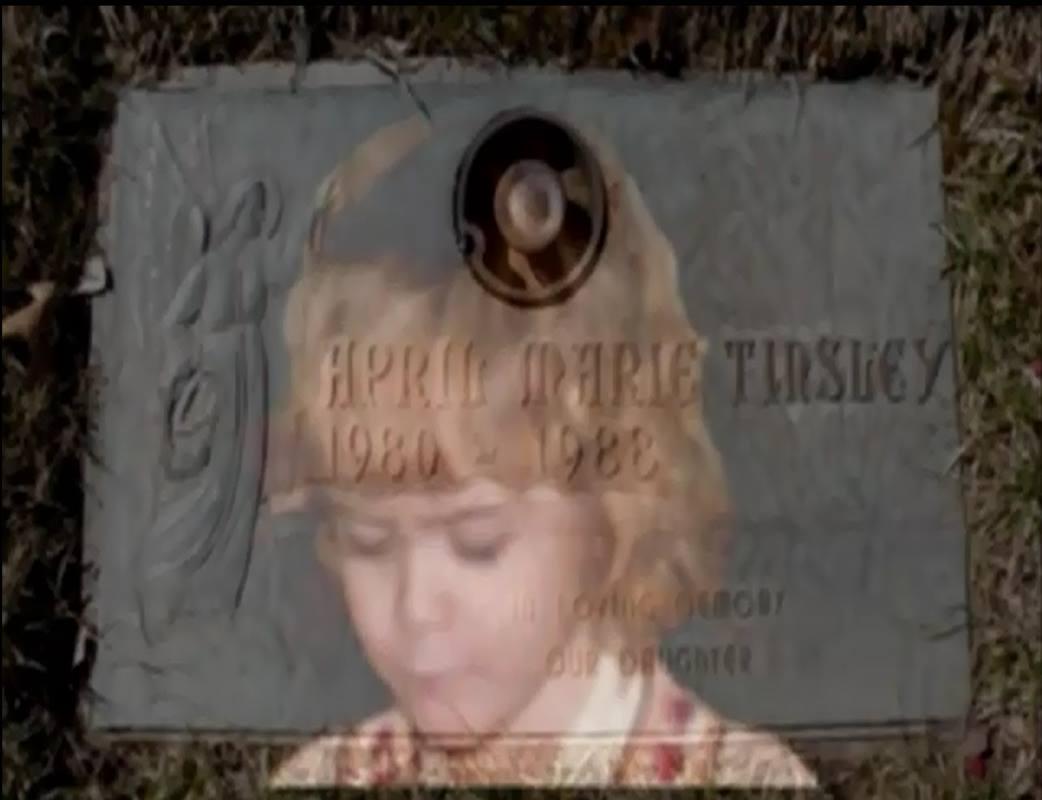
The "barn writing" refers to taunting messages discovered in 1990 on a barn in St. Joseph Township, Indiana, where the killer of eight-year-old April Marie Tinsley confessed to the 1988 crime. This graffiti, along with later notes, provided essential behavioral clues that eventually led to the 2018 arrest of John Miller via genetic genealogy.
The abduction and murder of April Marie Tinsley remains one of the most harrowing cold cases in Indiana's history. For decades, the investigation was defined not just by the tragic loss of a young life, but by a series of chilling communications left by the perpetrator. Among these, the "barn writing" stands as a pivotal moment where the killer transitioned from a silent predator to an active taunter of law enforcement. This behavioral shift provided investigators with a "signature" that would eventually link physical evidence to a specific suspect.
The Disappearance and Discovery (1988)
On April 1, 1988, eight-year-old April Marie Tinsley was walking in her Fort Wayne neighborhood when she vanished. She had been playing with friends and was only a few blocks from her home on Hoagland Avenue. When she failed to return for dinner, a massive search effort was launched, involving local police, volunteers, and eventually the FBI.
Three days later, a jogger discovered April’s body in a ditch along a rural road in DeKalb County, approximately 20 miles north of where she was abducted. The autopsy revealed she had been sexually assaulted and strangled. The crime scene yielded limited physical evidence at the time, as the technology for DNA profiling was in its infancy. However, investigators noted that one of April's shoes was missing—a detail that the Fort Wayne Police Department (FWPD) deliberately withheld from the public to help vet future tips or confessions.
The 1990 Barn Writing: The Killer Breaks His Silence
Two years after the murder, the investigation took a surreal and disturbing turn. In May 1990, a property owner in St. Joseph Township discovered graffiti scrawled on the door of a barn. The site was located only a few miles from where April’s body had been recovered two years prior.
The writing was crude but specific. It stated: "I kill 8 year old April Marie Tinsley did you find the shoe." It also included a threat: "I will kill again."
The Significance of the "Shoe" Reference
The mention of the shoe was the most critical aspect of the barn writing. Because the police had kept the fact of the missing shoe a "hold-back" detail, the graffiti served as a verified confession from the actual killer. It eliminated the possibility that the writing was a prank by a local teenager or a "copycat" looking for attention. This confirmed for the FWPD and the FBI Behavioral Science Unit that the killer was not only still in the area but was actively monitoring the case and seeking to exert power over the authorities by taunting them.
Behavioral Analysis of the Graffiti
Criminal profilers analyzed the barn writing to build a psychological sketch of the offender. The act of returning to a location near the body dump site to leave a message suggested a high level of "risk-taking" and a need for "post-offense recognition." The killer was likely a local resident who felt a sense of ownership over the crime. The direct address to the police ("did you find the shoe") indicated a desire to engage in a "cat-and-mouse" game, a trait often seen in organized offenders who view their crimes as a source of pride.
Escalation: The 2004 Taunting Notes
For fourteen years following the barn writing, the case remained cold, despite thousands of leads. That changed in 2004 when the killer re-emerged with a new series of communications. In June 2004, four separate notes were found in the Fort Wayne area—three in mailboxes and one left on a young girl's bicycle in the town of Grabill.
These notes were significantly more graphic and threatening than the 1990 barn writing. They were written on yellow lined paper and placed inside plastic bags. Crucially, some of the bags contained used condoms, providing investigators with a fresh source of DNA evidence. The text of these notes explicitly referenced the 1988 murder and threatened to kidnap and kill more children.
The 2004 notes allowed the FBI to confirm through DNA testing that the person who left the condoms was the same individual who had left DNA on April’s clothing in 1988. This definitively linked the 1988 murder, the 1990 barn writing, and the 2004 taunts to a single "unsub" (unidentified subject).
The Evolution of Forensic Communications
The killer's communications evolved over time, moving from public graffiti to targeted notes left in residential areas. The following table compares the two primary instances of the killer's "writing."
| Feature | 1990 Barn Writing | 2004 Residential Notes |
|---|---|---|
| Location | Rural barn door, St. Joseph Township | Mailboxes and bicycles, Fort Wayne/Grabill |
| Medium | Paint/Marker on wood | Ink on yellow lined paper in plastic bags |
| Key Content | Mention of the missing shoe | Explicit sexual threats and "I am watching" |
| Target Audience | Law enforcement and the public | Specific families and children |
| Forensic Evidence | Handwriting and behavioral signature | Handwriting, DNA from condoms, and fingerprints |
| Psychological Intent | Recognition and validation of the crime | Intimidation, power, and renewed predatory intent |
The Breakthrough: Genetic Genealogy (2018)
Despite having a full DNA profile from the 2004 notes, investigators could not find a match in CODIS (the Combined DNA Index System), which only contains profiles of individuals previously convicted of certain crimes. The case stalled until 2018, when the FWPD partnered with Parabon NanoLabs and renowned genetic genealogist CeCe Moore.
The Process of Investigative Genetic Genealogy
Genetic genealogy differs from traditional forensic DNA testing. Instead of looking for an exact match in a criminal database, it uses Single Nucleotide Polymorphism (SNP) testing to look for relatives in public GEDmatch databases.
- DNA Extraction: DNA from the 2004 condom evidence was uploaded to genealogical websites.
- Mapping the Tree: Moore identified several distant cousins of the suspect.
- Narrowing the Field: By building out family trees, investigators narrowed the suspect pool to two brothers: John Miller and his sibling.
- Surveillance and Collection: Investigators monitored John Miller and collected discarded DNA (trash) from his residence in Grabill, Indiana.
The DNA from the discarded trash matched the DNA from the 1988 crime scene and the 2004 notes. On July 15, 2018, police arrested 59-year-old John D. Miller.
Confession and Legal Resolution
When confronted by investigators, John Miller's first question was reportedly, "April Tinsley?" He quickly confessed to the abduction, rape, and murder of the eight-year-old. He admitted to the 1990 barn writing and the 2004 notes, explaining that he had "urges" and had planned to strike again.
In December 2018, Miller pleaded guilty to murder and child molesting. He was sentenced to 80 years in prison. As of 2026, John Miller remains incarcerated in the Indiana Department of Correction. The resolution of the case brought a sense of closure to the Tinsley family and the Fort Wayne community, while also validating the persistence of the detectives who had chased the "writer" for thirty years.
The Role of Handwriting and Behavioral Evidence
While DNA was the tool that ultimately identified John Miller, the barn writing and the 2004 notes were essential for maintaining the momentum of the investigation. Handwriting analysis (graphology) was used extensively in the 1990s and early 2000s to compare the barn writing against thousands of potential suspects.
Furthermore, the "signature" of leaving notes is a rare trait among child abductors. Most seek to minimize contact with the public or police. Miller’s compulsion to write and taunt suggests a personality characterized by narcissism and a deep-seated need to relive his crimes. Without these communications, the case might have been categorized as a random act of violence, but the writing proved it was the work of a calculated, serial-minded predator who remained a localized threat for decades.
Frequently Asked Questions
What did the April Marie Tinsley barn writing say?
The writing on the barn door in 1990 stated: "I kill 8 year old April Marie Tinsley did you find the shoe." It also contained a chilling promise that the killer would kill again. This message was vital because it mentioned the missing shoe, a detail that was not public knowledge at the time.
How was the barn writing linked to John Miller?
The barn writing was linked to Miller through a "behavioral bridge." In 2004, the killer left notes that matched the style and content of the barn writing. These notes were found with used condoms that contained Miller's DNA. When Miller was arrested in 2018, he officially confessed to both the murder and the various taunting messages left over the years.
Where was the barn located?
The barn was located in St. Joseph Township, Indiana, just outside of Fort Wayne. This area was close to the rural location in DeKalb County where April Tinsley’s body had been discovered in 1988. The proximity suggested the killer was familiar with the rural outskirts of the city.
Why did the killer wait until 2004 to leave more notes?
While there is no definitive answer, criminal profilers suggest that "cooling-off periods" can vary based on the offender's life circumstances, such as marriage, employment, or moving. In 2004, something likely triggered Miller’s "urges," leading him to re-engage with his crime through taunting notes. This re-emergence provided the DNA that eventually solved the case.
Is John Miller still alive in 2026?
Yes, as of 2026, John Miller is serving his 80-year sentence in an Indiana state prison. He was approximately 59 years old at the time of his arrest in 2018, making him in his late 60s today. Given the nature of his crimes and his sentence, he is not expected to be released during his lifetime.
Practical Recommendations for Following Cold Case Developments
The April Tinsley case serves as a landmark example of how traditional detective work and modern science intersect. For those interested in the ongoing evolution of cold case investigations, consider the following:
- Monitor Genetic Genealogy Regulations: As of 2026, the use of genetic genealogy (like the method used to catch Miller) is subject to evolving privacy laws and terms of service on platforms like GEDmatch and 23andMe. Staying informed on these legal boundaries is crucial for understanding how future cases will be solved.
- Support Cold Case Units: Many jurisdictions have dedicated cold case squads that rely on public tips. If you have information regarding historical crimes, contact the local FBI field office or the National Center for Missing & Exploited Children (NCMEC).
- Review Official Documentation: For a deeper understanding of the behavioral analysis used in this case, the FBI’s "The Stranger Danger" reports and profiling manuals often cite cases like Tinsley’s to explain offender communication patterns.
The resolution of the April Marie Tinsley case highlights that no detail—not even a sentence scrawled on a barn door—is too small to eventually lead to justice.