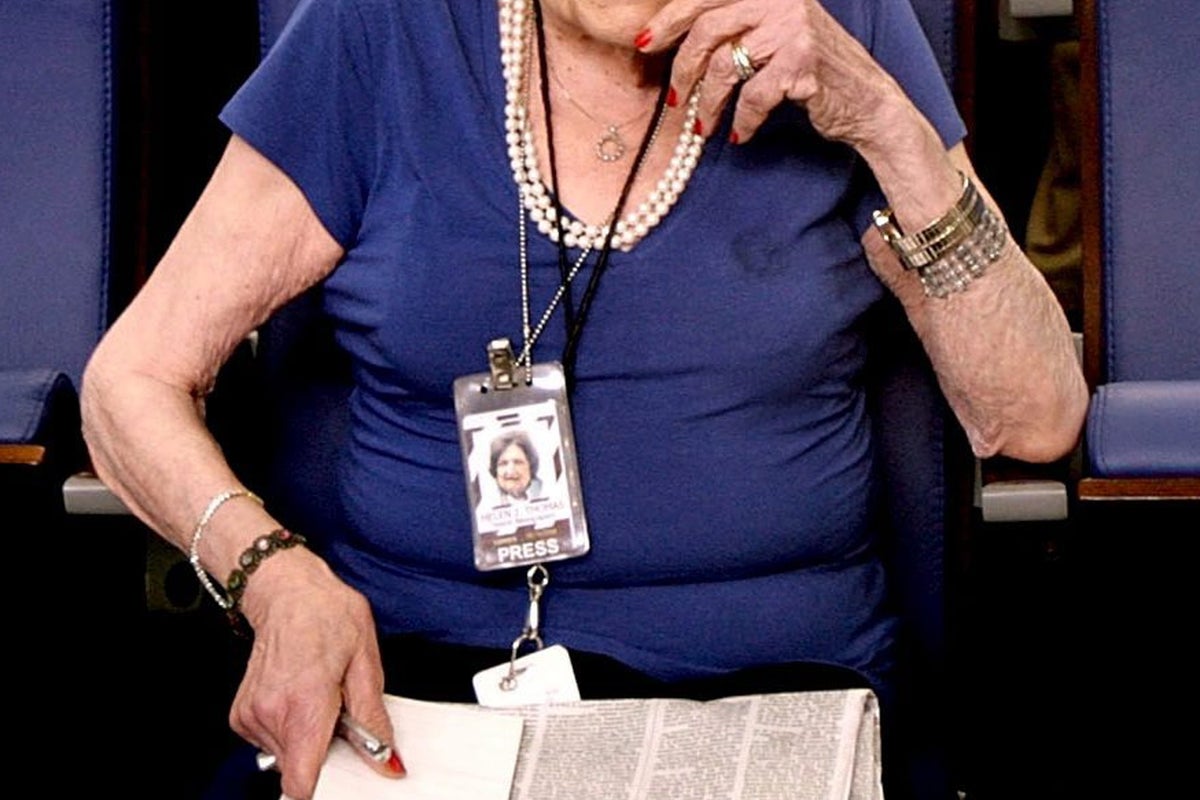
April D. Ryan is a trailblazing journalist who has served as a White House correspondent since 1997, covering five presidential administrations. Currently the White House Correspondent for TheGrio and a CNN political analyst, she is renowned for her persistent questioning on urban issues, racial justice, and the intersection of policy and the African American community.
The Evolution of a White House Mainstay
The career of April D. Ryan is a study in journalistic endurance and the evolution of the American media landscape. Beginning her tenure during the Bill Clinton administration, Ryan arrived at 1600 Pennsylvania Avenue at a time when the White House Press Corps was significantly less diverse than it is today. As a representative of the American Urban Radio Networks (AURN), she served as a critical conduit between the executive branch and a demographic that often felt overlooked by mainstream "legacy" media.
Ryan’s early years were defined by her commitment to the "urban" beat—a term that, in Washington parlance, often serves as shorthand for issues affecting Black and minority communities. While other reporters focused on macro-economic trends or geopolitical shifts, Ryan consistently pivoted the conversation toward how those policies would manifest in the streets of Baltimore, Chicago, and Atlanta. This focus was not merely a niche interest; it was a necessary expansion of the national discourse, ensuring that the White House remained accountable to all its citizens.
By 2026, her tenure has surpassed a quarter-century, making her one of the longest-serving members of the White House press corps. Her presence in the James S. Brady Press Briefing Room is not just a personal achievement but a symbol of the institutional memory required to hold power to account across decades of shifting political ideologies.
Navigating Administrations: From Clinton to the Present
To understand April D. Ryan’s impact, one must analyze her interactions across the vastly different political climates of the last five presidencies. Each era presented unique challenges for a correspondent focused on civil rights and urban policy.
The Clinton and Bush Eras: Building a Foundation
During the Clinton administration, Ryan established her reputation as a reporter who wouldn't be ignored. The 1990s were a period of significant policy shifts, including the 1994 Crime Bill and welfare reform, both of which had profound effects on Black communities. Ryan’s questioning during this time forced the administration to address the sociological fallout of these legislative choices.
The transition to the George W. Bush administration brought new challenges, particularly following the events of September 11, 2001, and the subsequent Hurricane Katrina disaster in 2005. During the Katrina aftermath, Ryan’s role became even more pivotal. She was a vocal presence in the briefing room, demanding answers about the slow federal response in New Orleans—a crisis that many viewed through the lens of racial and economic disparity.
The Obama Years: A New Set of Expectations
The election of Barack Obama in 2008 created a complex dynamic for Ryan. As the most prominent Black woman in the press corps covering the first Black president, she faced the delicate task of maintaining journalistic objectivity while the public—and sometimes the administration—expected a more harmonious relationship.
Ryan did not shy away from the difficult questions. She famously pressed President Obama on the "urban agenda," asking why specific policies aimed at the Black community were not more central to his platform. Her persistence during this era reinforced the idea that representation in the press corps is not about favoritism, but about ensuring that the unique concerns of all populations are voiced to the leader of the free world.
The Trump Era: A Flashpoint for Press Freedom
Perhaps the most visible period of Ryan’s career occurred during the Donald Trump administration. The relationship between the White House and the press corps became historically adversarial, and Ryan was often at the center of the storm. High-profile exchanges with press secretaries Sean Spicer and Sarah Huckabee Sanders, as well as with President Trump himself, highlighted the growing tensions.
In 2017, Spicer’s "stop shaking your head" comment to Ryan became a viral moment that sparked national conversations about the treatment of Black women in professional spaces. Later, Ryan was frequently targeted by the President in public statements, leading to concerns about her safety and the broader implications for the First Amendment. Despite these pressures, she remained a fixture in the briefing room, a testament to her professional resilience.
Strategic Career Shifts: AURN to TheGrio and CNN
In recent years, Ryan’s career has seen significant strategic shifts that reflect the changing nature of media consumption. For 23 years, she served as the White House Bureau Chief for American Urban Radio Networks, a role that defined her career. However, her move to TheGrio in 2020 marked a transition into the digital-first era of journalism.
As the White House Correspondent for TheGrio, Ryan now reaches a global audience through digital platforms that prioritize video, social media, and long-form web content. This move allowed her to expand her reach beyond radio listeners to a younger, more digitally savvy demographic. Simultaneously, her role as a political analyst for CNN has provided her with a platform to offer real-time commentary on breaking news, cementing her status as a national thought leader.
These roles have allowed her to leverage her historical knowledge of the White House to provide context that younger reporters might lack. When a new policy is announced in 2026, Ryan is often the one to point out how it mirrors—or contradicts—efforts made twenty years prior.
Literary Contributions: April Ryan as an Author
Beyond her daily reporting, Ryan has authored several books that delve deeper into the intersection of race and politics. Her writing provides a more intimate look at the presidency and the challenges of being a Black woman in the upper echelons of political journalism.
- The Presidency in Black and White: This book offers a behind-the-scenes look at her time covering three presidents (at the time of publication), detailing the racial nuances of the White House.
- At Mama's Knee: Here, Ryan explores the "talk" that Black mothers have with their children about race and the police, juxtaposing these personal narratives with her professional observations from the White House.
- Under Fire: This work focuses on the Trump administration and the specific threats faced by the free press during that era.
- Black Women Will Save the World: Published in 2022, this book is a tribute to the leadership and resilience of Black women in America, from the voting booth to the briefing room.
These publications have established Ryan as a public intellectual, moving beyond the short-form constraints of a press briefing to provide comprehensive sociological analysis.
The Technical Reality of the White House Press Corps
To appreciate Ryan’s longevity, one must understand the technical and procedural requirements of the White House Press Corps. Membership in this elite group is not merely a matter of interest; it requires rigorous vetting and institutional recognition.
Credentials and Access
Reporting from the White House requires a "Hard Pass," issued by the Secret Service after a background check. Furthermore, access to the Briefing Room is governed by the White House Correspondents' Association (WHCA). The seating chart in the briefing room is a highly political and scrutinized document; Ryan’s seat is a reflection of her seniority and the importance of the outlet she represents.
The Mechanics of the Briefing
A typical day for a correspondent like Ryan includes:
- The "Gaggle": An informal, often off-camera briefing with the Press Secretary.
- The Formal Briefing: The televised event where questions are asked on the record.
- Pool Rotations: Reporters take turns serving as the "pool" reporter, following the President to events and providing a unified report to all other news organizations.
| Feature | Description | Importance for April Ryan |
|---|---|---|
| Institutional Memory | Knowledge of past administration policies. | Allows her to spot inconsistencies in current rhetoric. |
| Beat Specialization | Focus on urban and racial justice issues. | Ensures marginalized voices are part of the official record. |
| Platform Versatility | Radio (AURN), Digital (TheGrio), TV (CNN). | Maximizes the impact of her reporting across demographics. |
| Authorial Depth | Four published books on race and politics. | Establishes her as a subject matter expert beyond daily news. |
| WHCA Membership | Long-standing member of the association. | Provides a seat at the table for press freedom advocacy. |
Awards, Recognition, and Professional Legacy
April D. Ryan’s contributions have been recognized by numerous prestigious organizations. In 2017, the National Association of Black Journalists (NABJ) named her the Journalist of the Year. This award was a recognition of her persistence during a particularly volatile period in American politics.
She has also received the Freedom of the Press Award from the Reporters Committee for Freedom of the Press. These accolades are not just personal trophies; they serve as a validation of the "urban" beat. For decades, reporters focusing on racial issues were often marginalized within their own industry. Ryan’s success has paved the way for a new generation of diverse journalists to enter the White House with the confidence that their perspective is essential to the national interest.
Common Challenges for Diverse Correspondents
The path for a veteran correspondent like Ryan has not been without significant obstacles. The White House Press Corps has historically been a white, male-dominated space. For a Black woman, the challenges are often twofold: navigating the systemic biases of the political institution and the internal biases of the media industry itself.
One recurring challenge is the pigeonholing of "Black issues." Ryan has often spoken about the need to explain that issues like voting rights, criminal justice, and economic opportunity are not "special interest" topics—they are American topics. Her career has been a long-form argument against the compartmentalization of news.
Furthermore, the rise of social media has brought a new level of public scrutiny. As a visible critic of certain administration policies, Ryan has faced online harassment and threats. The ability to maintain professional composure and continue reporting under such circumstances is a requirement of the modern era that Ryan has mastered.
FAQ
How long has April Ryan been at the White House?
April Ryan began covering the White House in January 1997, starting during the second term of President Bill Clinton. As of 2026, she has covered six different presidential administrations, including those of Bush, Obama, Trump, Biden, and the current administration.
Which news outlets does April Ryan work for?
Currently, April Ryan serves as the White House Correspondent for TheGrio. She is also a long-standing political analyst for CNN. For the majority of her career (1997–2020), she was the White House Bureau Chief for the American Urban Radio Networks (AURN).
What books has April Ryan written?
She has written four major books: The Presidency in Black and White, At Mama's Knee, Under Fire, and Black Women Will Save the World. Each explores the intersection of the U.S. presidency, race, and her personal experiences as a reporter.
What is April Ryan’s primary area of focus?
While she covers all aspects of the White House, she is specifically known for her focus on urban issues, civil rights, and policies that disproportionately affect African Americans. She is often the primary voice in the briefing room asking about racial equity and social justice.
Has April Ryan won any awards?
Yes, she has received numerous honors, most notably being named the 2017 NABJ Journalist of the Year. She is also a recipient of the Freedom of the Press Award and holds several honorary doctorates for her contributions to journalism and civil rights.
Recommendation for Aspiring Journalists
For those looking to follow in the footsteps of April D. Ryan, the primary lesson is the value of tenacity and specialization. Ryan did not become a veteran correspondent by trying to blend in; she became one by identifying a critical gap in White House coverage—the urban and racial perspective—and filling it with unwavering consistency.
Aspiring reporters should focus on building institutional knowledge. In 2026, the media moves faster than ever, but the ability to cite a policy shift from twenty years ago provides a level of authority that cannot be replicated by an algorithm. Study the history of the White House Correspondents' Association and understand the technical requirements of the beat. Most importantly, find the "unasked question" in the room. As April Ryan has demonstrated for nearly thirty years, the most important questions are often the ones that the people in power are least prepared to answer.