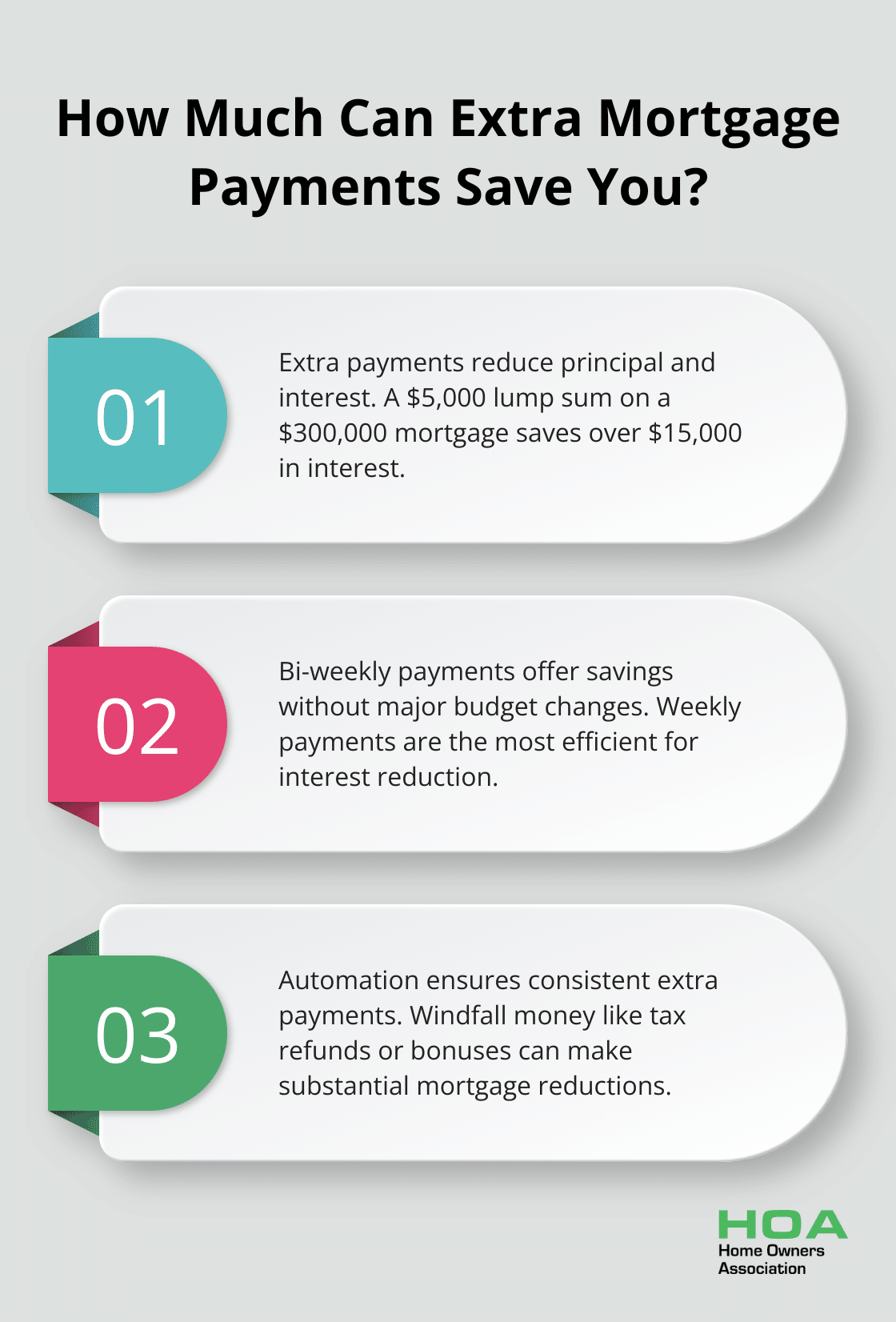
Paying off your mortgage faster requires a strategic focus on reducing your loan's principal balance as early as possible. By making extra payments, switching to a bi-weekly schedule, or utilizing mortgage recasting, you can significantly decrease the total interest paid and shorten your loan term by years.
Owning a home is a central pillar of financial stability, but the standard 30-year amortization schedule is designed to maximize the interest banks collect over time. In 2026, with shifting economic landscapes and evolving lending practices, homeowners are increasingly looking for ways to build equity faster and eliminate debt. While a mortgage is often considered "good debt" due to its relatively lower interest rates compared to credit cards, the sheer volume of interest paid over three decades can be staggering.
To move toward debt-free homeownership, you must understand the mechanics of amortization. In the early years of a loan, the vast majority of your monthly payment goes toward interest rather than the principal. By shifting this balance through intentional strategies, you can save tens of thousands of dollars.
1. Implement Bi-Weekly Payments
One of the most effective and seamless ways to accelerate your mortgage payoff is to transition from monthly payments to bi-weekly payments. This strategy works by taking your standard monthly mortgage payment, dividing it in half, and paying that amount every two weeks.
Because there are 52 weeks in a year, a bi-weekly schedule results in 26 half-payments. This is equivalent to 13 full monthly payments per year instead of the usual 12. This "extra" payment is applied directly to the principal balance, which compounds the interest savings over the life of the loan.
How to implement it: Before you begin, contact your loan servicer. Some banks have specific programs for bi-weekly payments, while others may charge a processing fee. If your lender does not offer a formal bi-weekly program, you can achieve the same result by manually making an extra payment once a year or adding 1/12th of a payment to your monthly bill.
The Impact: On a $400,000, 30-year fixed mortgage at 6%, switching to a bi-weekly schedule can shave roughly four to five years off the loan term. This simple shift requires no major lifestyle changes, as the "extra" payment is spread out throughout the year.
2. Make Dedicated Principal-Only Payments
Standard mortgage payments include principal, interest, taxes, and insurance (PITI). When you pay more than the minimum amount due, you must specify that the excess funds be applied to the principal balance.
If you simply send a larger check without instructions, some lenders may apply the extra money toward the next month’s interest or hold it in an escrow account. To maximize the benefit, you must ensure the money reduces the debt itself. Reducing the principal immediately lowers the base upon which the next month’s interest is calculated.
The Strategy:
- The "Dollar-a-Day" Method: Adding a small, consistent amount—even $30 or $100 extra per month—can have a massive cumulative effect.
- The 1/12th Rule: Take your total monthly principal and interest payment, divide it by 12, and add that amount to every monthly payment. This effectively automates the 13th payment strategy mentioned in the bi-weekly tip without needing a special bank program.
3. Leverage "Found Money" and Windfalls
Throughout the year, many homeowners receive "windfalls"—lump sums of money that are outside their regular salary. In 2026, as tax laws and corporate bonus structures continue to fluctuate, utilizing these bursts of liquidity can drastically alter your amortization schedule.
Common sources of windfalls include:
- Income tax refunds
- Year-end work bonuses
- Inheritances
- Cash gifts
- Profits from selling unused assets (e.g., a car or high-value collectibles)
Applying a $5,000 tax refund directly to your principal once a year may seem small, but when done early in the mortgage term, it removes that $5,000 from the interest-bearing balance for the remaining 20+ years. The Consumer Financial Protection Bureau (CFPB) emphasizes that paying down principal early is the most effective way to reduce the total cost of a loan.
4. Consider Mortgage Recasting
If you have a significant lump sum—perhaps from the sale of a previous home or a large inheritance—but you don't want to refinance your entire loan, mortgage recasting is a powerful alternative.
Unlike refinancing, which replaces your current loan with a new one at a new interest rate, recasting keeps your existing loan and interest rate intact. You pay a large sum toward the principal (usually $5,000 to $10,000 minimum), and the lender "re-amortizes" the remaining balance.
Benefits of Recasting:
- Lower Monthly Payments: Unlike extra principal payments, which keep your monthly bill the same but shorten the term, recasting lowers your required monthly payment for the remainder of the loan.
- Lower Fees: Recasting usually costs a few hundred dollars in administrative fees, whereas refinancing involves thousands in closing costs.
- Preserve Low Rates: If your current mortgage has a lower interest rate than the 2026 market rates, recasting allows you to keep that rate while still benefiting from a large principal reduction.
5. Shorten the Loan Term Through Refinancing
If interest rates in 2026 are lower than when you originally purchased your home, or if your income has significantly increased, refinancing from a 30-year mortgage to a 15-year mortgage is a definitive way to pay off the debt faster.
A 15-year mortgage typically offers a lower interest rate than a 30-year mortgage. However, because the repayment window is halved, the monthly payments are substantially higher.
Comparison of 15-Year vs. 30-Year: While the monthly commitment is higher, the total interest paid over the life of the 15-year loan is often less than half of what you would pay on a 30-year loan. Before choosing this route, ensure your cash flow can handle the higher obligation. A common "middle ground" strategy is to keep the 30-year mortgage for the sake of flexibility but pay it as if it were a 15-year mortgage. This provides a safety net; if you have a tight month, you can revert to the lower 30-year payment without penalty.
6. Eliminate Private Mortgage Insurance (PMI) Early
If you purchased your home with a down payment of less than 20%, you are likely paying Private Mortgage Insurance (PMI). This insurance protects the lender, not you, and it adds a significant monthly cost that does nothing to reduce your debt.
In 2026, home values in many regions have seen steady appreciation. Once your loan-to-value (LTV) ratio reaches 80%, you can request that your lender cancel the PMI.
Steps to Remove PMI:
- Monitor your equity: Keep track of your payments and local home values.
- Request an appraisal: If your home's value has increased significantly, you might reach 20% equity much sooner than your original amortization schedule predicted.
- Check the Homeowners Protection Act: By law, lenders must automatically terminate PMI when your LTV reaches 78%, but you can proactively request it at 80%.
Once the PMI is removed, do not spend the "found" money. Instead, redirect that exact amount back into your monthly principal payment. Since you were already accustomed to paying it, your budget won't feel the difference, but your mortgage balance will.
7. Audit Your Budget for "Small Wins"
The final tip is a psychological and behavioral shift. Many homeowners view their mortgage as a fixed, immovable expense. By auditing your monthly spending, you can identify "leaks" that can be redirected toward your home equity.
This might include:
- Canceling unused subscription services.
- Redirecting a portion of a recent raise or cost-of-living adjustment.
- Using "spare change" apps that round up purchases and send the difference to a savings account, which you then use for an annual mortgage payment.
Even an extra $50 a month can make a difference. Over a 30-year loan, that $50 a month could save you over $20,000 in interest and shorten the loan by over two years, depending on your interest rate.
Comparison of Payoff Strategies
The following table illustrates the impact of different strategies on a hypothetical $350,000 mortgage with a 6.5% interest rate and a 30-year term.
| Strategy | Extra Monthly Payment | Total Interest Saved | Years Shaved Off Loan |
|---|---|---|---|
| Standard Payment | $0 | $0 | 0 |
| Bi-Weekly Payments | Equiv. to 1 extra/year | ~$78,000 | ~5 Years |
| +$100 Per Month | $100 | ~$55,000 | ~3.5 Years |
| +$500 Per Month | $500 | ~$195,000 | ~11.5 Years |
| One-time $10k (Year 1) | N/A | ~$42,000 | ~1.5 Years |
Note: These figures are estimates based on standard amortization formulas. Actual savings depend on the timing of payments and specific lender policies.
Common Pitfalls to Avoid
While the goal of paying off a mortgage early is noble, there are several technicalities to keep in mind to ensure you don't accidentally waste money.
Prepayment Penalties
Some older mortgage contracts or specific "subprime" style loans contain prepayment penalties. These are fees charged by the lender if you pay off a large portion of the loan or the entire balance before a certain date. While the Internal Revenue Service (IRS) and the CFPB have limited the use of these penalties on modern residential mortgages, you should always check your original loan estimate and closing disclosure.
Opportunity Cost
In a 2026 economic environment, you must consider the "opportunity cost" of your capital. If your mortgage interest rate is 3% but a high-yield savings account or a diversified index fund is returning 7%, you might actually build more net worth by investing your extra cash rather than paying down the mortgage. However, for many, the psychological peace of mind of a debt-free home outweighs the mathematical edge of investing.
Escrow Shortages
When you make extra principal payments, your loan balance drops faster than anticipated. This does not automatically change your property tax or insurance obligations. Ensure your escrow account remains funded correctly, especially if you move toward a full payoff, as you will eventually become responsible for paying taxes and insurance directly to the municipality and provider.
Frequently Asked Questions
Does paying bi-weekly really make a difference?
Yes, because of how interest compounds. By making bi-weekly payments, you apply principal more frequently and, more importantly, you complete one extra full payment each year. Over 30 years, those 30 extra payments significantly reduce the principal, which in turn reduces the amount of interest that can accrue each month.
Should I pay off my mortgage or invest in my 401(k)?
Generally, you should ensure you are meeting any employer match in your 401(k) before putting extra money toward a mortgage. The "guaranteed return" of an employer match is usually 50% to 100%, which far exceeds the interest savings of a mortgage payoff. Once the match is met, the decision depends on your risk tolerance and interest rate.
Can I skip a mortgage payment if I paid extra last month?
No. Making "principal-only" payments does not count as "pre-paying" your future monthly obligations. Even if you paid $10,000 extra last month, you are still required to make your regular monthly payment the following month. If you want the ability to skip payments, you should keep your extra cash in a high-yield savings account instead.
How do I ensure my extra payment goes to the principal?
The most reliable way is to use your lender's online portal and select the "Principal Only" or "Additional Principal" option. If paying by check, write your loan number and "Apply to Principal" clearly on the memo line and include a separate note if necessary.
Will paying off my mortgage early hurt my credit score?
Initially, you might see a small, temporary dip in your credit score when the mortgage account is closed, as it changes your "mix of credit" and the average age of your accounts. However, the long-term benefit of a lower debt-to-income ratio and increased net worth far outweighs a minor, temporary fluctuation in a credit score.
Practical Recommendation
To begin paying off your mortgage faster, start with the 1/12th Rule. Calculate 1/12th of your monthly principal and interest payment and add that amount to your automated monthly transfer. This method is low-risk, requires no interaction with bank fees, and effectively shortens your loan by several years. Once you are comfortable with this change, you can begin applying annual windfalls like tax refunds to the principal to accelerate the process even further. Always maintain an emergency fund of 3–6 months of living expenses before aggressively paying down low-interest debt to ensure you aren't "house rich but cash poor."