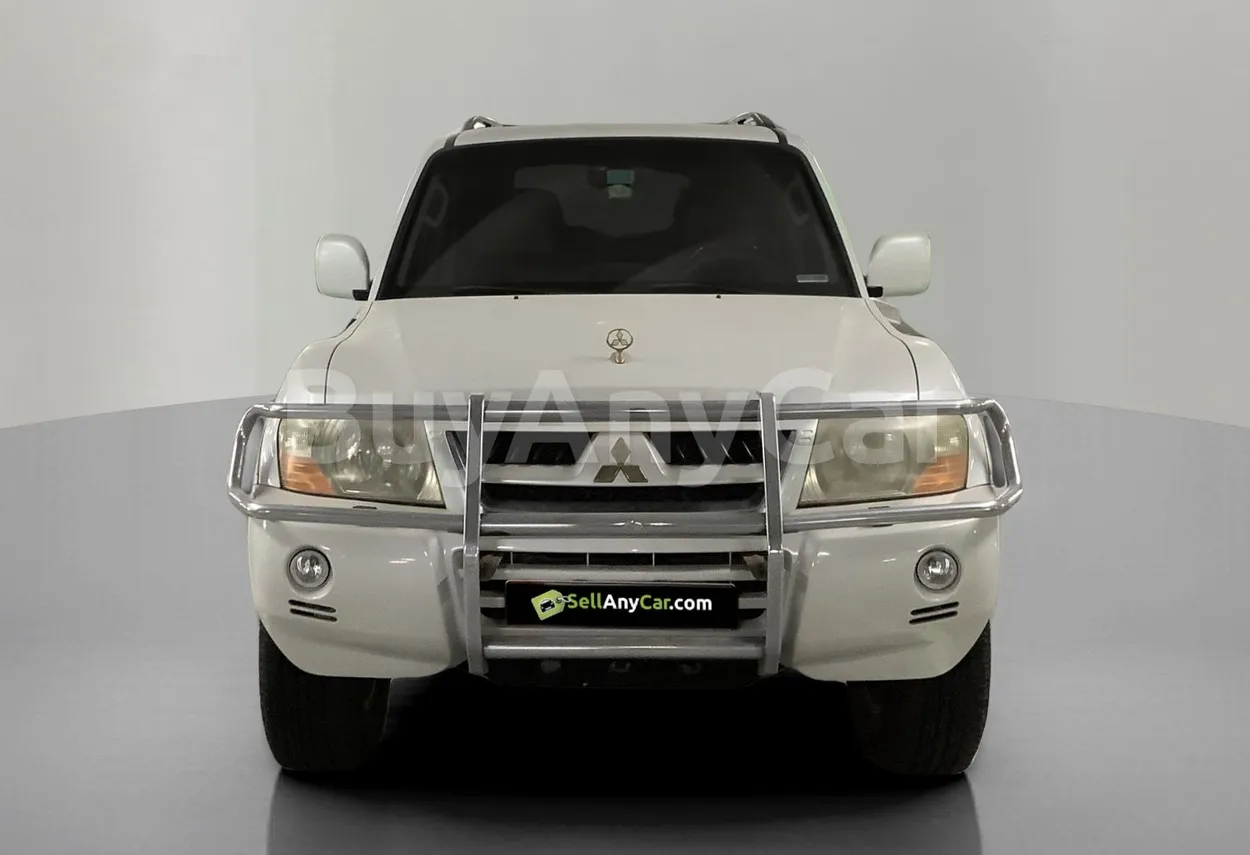
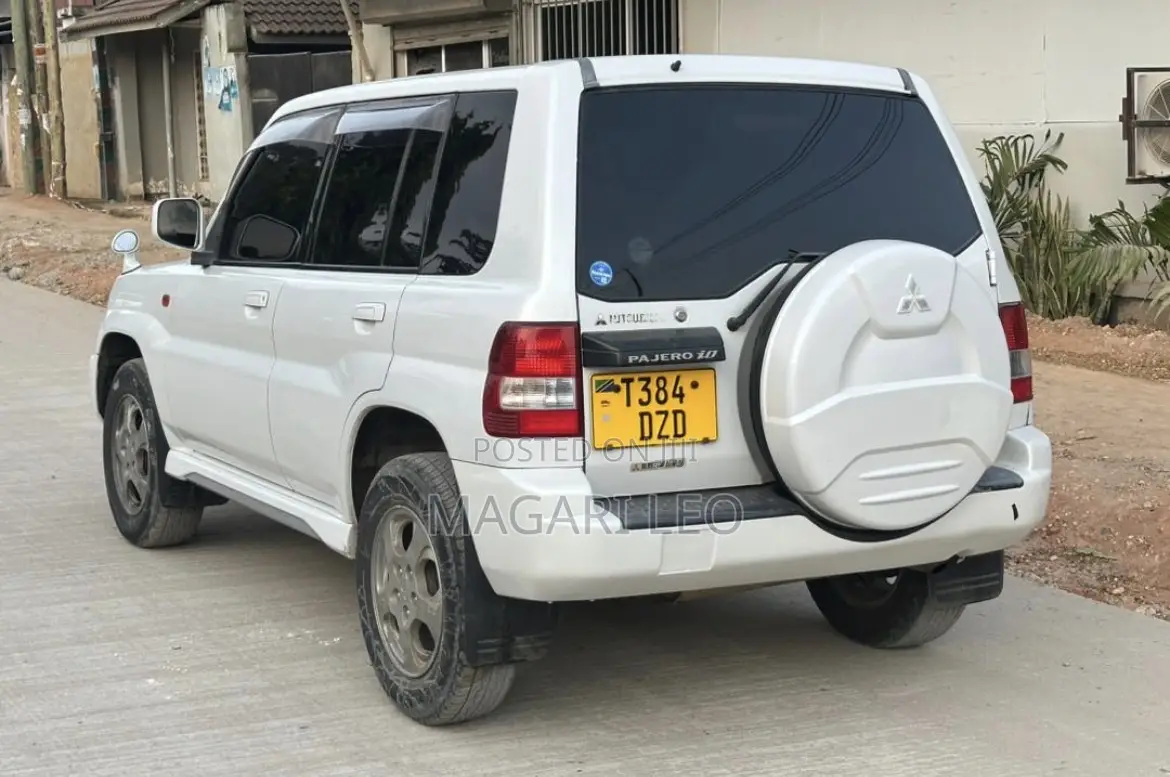
The 2005 Mitsubishi Pajero, internationally renowned as the Montero or Shogun in certain markets, represents a pinnacle of the vehicle's third-generation evolution, offering a blend of rugged body-on-frame-derived monocoque stability, advanced Super Select II 4WD capability, and diverse engine options ranging from dependable turbo-diesels to robust petrol V6 powerplants.
Evolution and Market Context of the 2005 Mitsubishi Pajero
The mid-2000s marked a definitive era for large-scale, heavy-duty utility vehicles. By 2005, the Mitsubishi Pajero had fully settled into its third generation, which originally debuted at the Paris Motor Show at the turn of the millennium. Unlike its ladder-frame predecessors, the third-generation Pajero adopted a sturdy built-in ladder frame integrated with a monocoque body structure. This engineering shift dramatically improved torsional rigidity, reduced overall body flex during articulation, and refined on-road driving dynamics without sacrificing the model's legendary off-road pedigree.
Understanding the market standing of the 2005 model requires examining its positioning against contemporaries like the Toyota Land Cruiser Prado (J120) and the Nissan Patrol (Y61). While the Patrol leaned heavily into traditional heavy-duty commercial utility and solid-axle ruggedness, and the Land Cruiser focused on plush long-distance cruising, the Pajero carved out a niche as an agile, technologically advanced dual-purpose machine. It featured independent suspension all around—a bold move for a serious 4x4 at the time—which provided superior high-speed gravel stability and cornering composure.
As a pre-owned purchase today, the 2005 Pajero appeals to overlanding enthusiasts, budget-conscious buyers seeking towing capacity, and drivers requiring genuine four-wheel-drive capability in adverse weather conditions. However, evaluating a nearly two-decade-old vehicle requires a deep dive into its original technical architecture, engine variants, trim levels, and contemporary market valuation.
Powertrain Options and Mechanical Specifications
The 2005 Mitsubishi Pajero was offered with multiple engine configurations depending on the regional market—including Australia, the Middle East, Europe, Japan, and parts of Asia, Africa, and South America. These configurations generally split between high-torque diesel units and smooth multi-valve petrol engines.
1. 3.2-Liter Di-D (Direct Injection Diesel) Turbo-Diesel (4M41)
The 3.2-liter four-cylinder turbo-diesel engine is widely considered the workhorse of the lineup. Utilizing a high-pressure direct-injection system, this powerplant was engineered for low-end grunt and long-distance durability.
- Configuration: Inline-4, dual overhead cam (DOHC), 16-valve, turbocharged with an intercooler.
- Displacement: 3,200 cc (3.2 L).
- Power Output: Approximately 160 hp (120 kW) at 3,800 rpm.
- Torque: 373 Nm (275 lb-ft) at 2,000 rpm (manual) or 381 Nm at 2,000 rpm (automatic).
- Transmission: 5-speed manual or 5-speed INVECS-II automatic with sequential shift mode.
2. 3.8-Liter V6 Petrol (6G75)
For markets favoring petrol refinement and higher horsepower outputs, the 3.8-liter V6 served as the flagship motor, replacing or supplementing the older 3.5-liter GDI engine in many territories.
- Configuration: V6, single overhead cam (SOHC) per bank, 24-valve.
- Displacement: 3,828 cc (3.8 L).
- Power Output: Approximately 203 hp (151 kW) at 5,000 rpm.
- Torque: 325 Nm (240 lb-ft) at 3,250 rpm.
- Transmission: 5-speed manual or 5-speed INVECS-II automatic.
(Note: Depending on the specific market, a 3.0-liter V6 [6G72] or a 2.5-liter turbo-diesel [4D56] might also be found in base-spec export or domestic Japanese domestic market [JDM] models.)
Drivetrain and Off-Road Engineering: Super Select II 4WD
One of the defining characteristics of the 2005 Pajero is its Super Select II 4WD (SS4-II) system. Unlike part-time four-wheel-drive systems that cannot be used on high-traction surfaces like dry pavement, Super Select II allows the driver to switch between modes on the fly at speeds up to 100 km/h.
The system features a transfer case with a viscous coupling center differential, providing five distinct driver-selectable modes:
- 2H (2WD High Range): Rear-wheel drive only. Ideal for optimal fuel efficiency on dry tarmac and normal highway driving.
- 4H (4WD High Range with Open Differential): Full-time four-wheel drive with torque distributed between front and rear axles via a center differential. Essential for rain, snow, loose gravel, or mixed traction surfaces.
- 4HLc (4WD High Range with Locked Center Differential): Locks the center differential 50:50. Designed for deep snow, sand, or thick mud where maximum straight-line traction is required.
- 4LLc (4WD Low Range with Locked Center Differential): Engages a heavy reduction gear multiplier (approx. 1.9:1) alongside the locked center diff. Used for steep rock crawling, heavy towing recovery, and severe off-road obstacles.
- Neutral: Disengages power transfer entirely, often utilized for flat-towing behind a heavy motorhome.
Additionally, many 2005 models were equipped with a Rear Differential Lock, which electronically locks the rear axle shafts together to ensure both rear wheels rotate at the exact same speed, preventing one-wheel spin when suspended in ruts or loose terrain.
Dimensions, Capacities, and Body Styles
The 2005 Pajero was manufactured in two primary body styles: the 3-door (Short Wheelbase) and the 5-door (Long Wheelbase). The 5-door variant is by far the most common due to its utility and passenger capacity.
| Specification | 5-Door Long Wheelbase (LWB) | 3-Door Short Wheelbase (SWB) |
|---|---|---|
| Overall Length | ~4,795 mm (188.8 in) | ~4,220 mm (166.1 in) |
| Overall Width | ~1,895 mm (74.6 in) | ~1,875 mm (73.8 in) |
| Overall Height | ~1,855 mm (73.0 in) | ~1,845 mm (72.6 in) |
| Wheelbase | ~2,780 mm (109.4 in) | ~2,545 mm (100.2 in) |
| Seating Capacity | 7 seats (configurable) | 5 seats |
| Fuel Tank Capacity | 90 Liters | 74 Liters |
| Kerb Weight | ~2,100 – 2,250 kg | ~1,900 – 2,000 kg |
| Towing Capacity (Braked) | Up to 3,500 kg (varies by market/spec) | Up to 2,500 kg |
Interior Features, Comfort, and Trim Levels
The interior of the 2005 Pajero reflects mid-2000s automotive design, prioritizing functional ergonomics over digital minimalism. Depending on the trim level—which ranged from utilitarian GL and GLS models to the plush Exceed and VR-X variants—equipment lists varied significantly.
- Seating and Space: Higher trims offered leather upholstery, power-adjustable front seats, and wood-grain dashboard accents. The 5-door featured a third-row bench seat that could be folded completely flat or removed entirely from the vehicle to maximize cargo volume.
- Climate Control: Dual-zone climate control with dedicated rear roof-mounted vents for second- and third-row passengers was standard on mid-to-high tiers.
- Instrumentation and Electronics: Standard instrument clusters included an multi-information display showing barometric pressure, altitude, outside temperature, compass, and instant fuel consumption. Audio systems typically consisted of a factory AM/FM radio with a 6-disc CD changer, paired with branded premium audio systems in top-tier trims.
- Safety Equipment: Safety features for 2005 included dual front airbags, side curtain airbags (in select markets), Anti-lock Braking System (ABS) with Electronic Brakeforce Distribution (EBD), and traction control systems on high-end petrol variants.
Pricing Dynamics and Valuation Factors
Because the 2005 Mitsubishi Pajero is a mature pre-owned vehicle, current pricing depends heavily on geographic market, vehicle condition, mileage, maintenance history, and modifications. In secondary markets across Australia, South Africa, the Middle East, and parts of Europe, prices fluctuate widely.
General Valuation Considerations
- Baseline Value: Entry-level or high-mileage units (over 300,000 km) generally command modest pricing, often serving as dedicated farm vehicles or budget project rigs.
- Pristine/Low-Mileage Units: Well-maintained 5-door models with the 3.2-liter diesel engine and complete service records command a higher premium, particularly among overlanding enthusiasts who value pre--emission-control mechanical simplicity.
- Modifications: Aftermarket additions—such as all-terrain tires, bull bars, snorkel kits, suspension lifts, dual-battery systems, and roof racks—can either add value or signal heavy off-road use, requiring closer inspection of the chassis and suspension mounts.
Common Mechanical Issues and Maintenance Considerations
Evaluating a 2005 Pajero requires inspecting specific mechanical vulnerabilities known to affect this generation.
1. Timing Chain and Guide Wear (3.2L Diesel)
The 4M41 diesel engine utilizes a timing chain rather than a rubber belt, but the upper chain guides and tensioners are susceptible to wear over time. Preventive inspection and replacement around 200,000 to 250,000 km is critical to avoid catastrophic valve-to-piston contact.
2. Fuel Injection Pump Failures (Zexel / Bosch VE Systems)
Early versions of the 3.2L Di-D can experience fuel pump issues if subjected to poor-quality or contaminated diesel fuel. Upgrading fuel filtration and ensuring regular filter changes protect the sensitive rotary injection components.
3. Chassis Rust and Corrosion
Because the third-generation Pajero uses a hybrid monocoque frame, structural integrity depends on the lower chassis rails. Vehicles operated in coastal regions or areas that salt winter roads must be inspected thoroughly for rust accumulation around the rear subframe mounting points and wheel arches.
4. Suspension Bushings and Steering Racks
The independent multi-link suspension features numerous rubber bushings, ball joints, and control arms. Worn bushings manifest as vague steering response, clunking over bumps, or uneven tire wear, necessitating periodic suspension overhauls.
Frequently Asked Questions
Is the 2005 Mitsubishi Pajero reliable for long-distance overlanding?
Yes, the 2005 Pajero is widely regarded as a capable expedition vehicle due to its durable mechanical systems, robust Super Select II 4WD architecture, and comfortable highway ride. However, due to its age, thorough pre-purchase inspection of the cooling system, electrical wiring, and suspension is mandatory before embarking on remote trips.
What is the fuel economy of the 2005 Mitsubishi Pajero?
Fuel consumption varies by engine choice and driving conditions. The 3.2L turbo-diesel typically yields around 9.5 to 11.5 liters per 100 km (approx. 20–24 MPG US) in mixed driving. The 3.8L V6 petrol is significantly thirstier, averaging 13 to 16 liters per 100 km (approx. 15–18 MPG US) or higher under heavy load or city driving.
Can the third-row seats be completely removed?
Yes. In the 5-door long-wheelbase models, the third-row seats can either be folded flat and stowed into a recessed floor compartment or completely unbolted and removed from the vehicle to provide an expansive, flat cargo floor for camping gear and tools.
How does the Pajero differ from the Mitsubishi Montero or Shogun?
They are fundamentally the same vehicle. Mitsubishi marketed the exact same vehicle under different names depending on the region: "Pajero" was used in most global markets (including Australia, Europe, and Asia), "Montero" was used in North America and Spain (to avoid linguistic overlap with an offensive Spanish slang term), and "Shogun" was used in the United Kingdom.
What towing capacity does the 2005 model support?
When properly equipped with a heavy-duty tow bar and trailer brakes, the 5-door 3.2L diesel variant is rated to tow up to 3,500 kg (7,716 lbs), making it suitable for hauling caravans, boat trailers, and utility loads.
Conclusion and Buying Recommendation
The 2005 Mitsubishi Pajero remains a versatile, structurally sound, and mechanically capable sport utility vehicle that bridges the gap between daily driving comfort and rugged off-road exploration. For buyers searching the pre-owned market, prioritizing a well-maintained 3.2-liter turbo-diesel model with a documented service history provides the best balance of longevity, torque, and towing capability. Always conduct a comprehensive mechanical inspection focusing on the chassis, timing components, and transmission shifting behavior before finalizing a purchase.