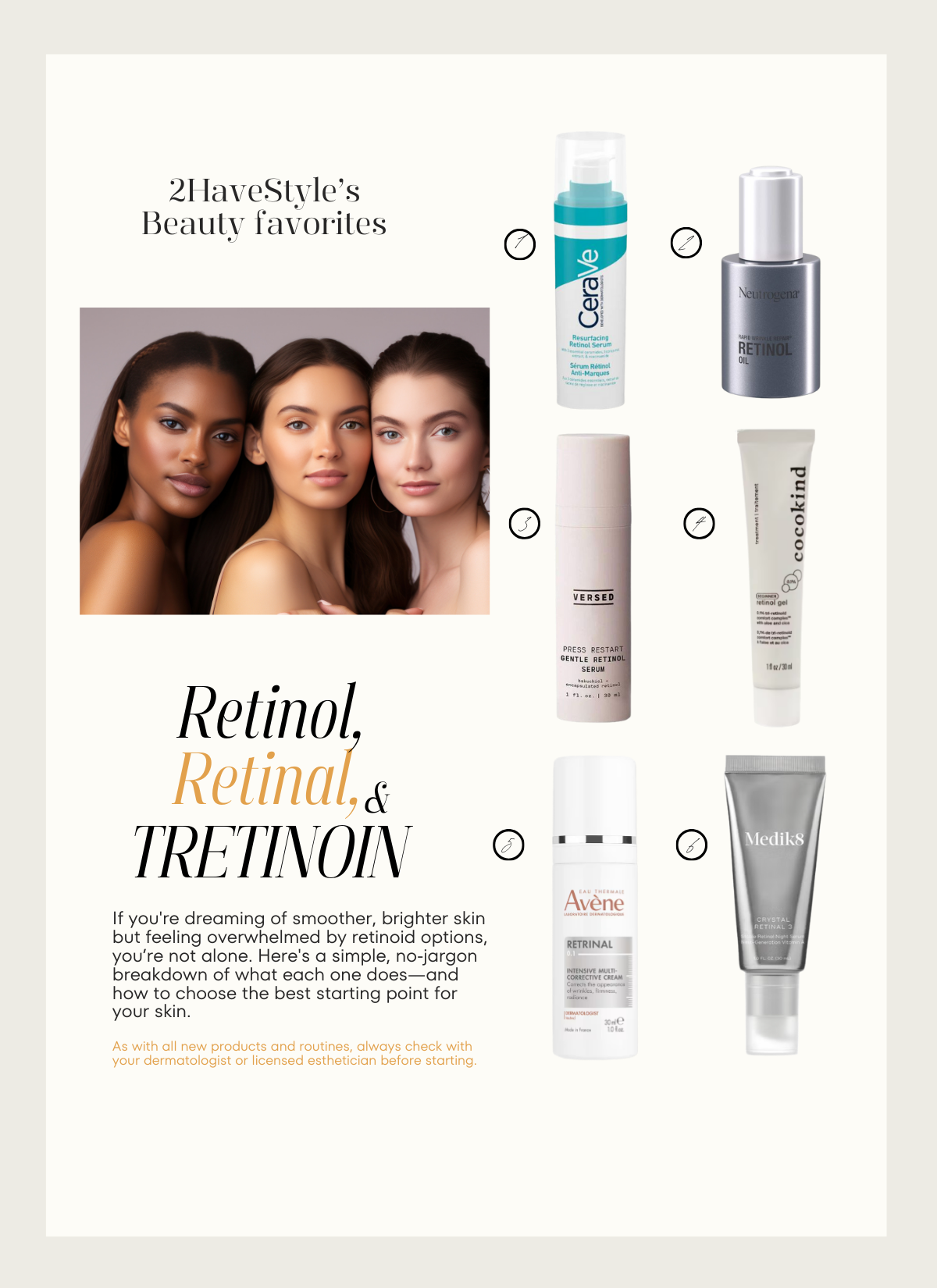
Selecting the right retinol product requires balancing your skin’s tolerance, the specific derivative used in the formulation, and the desired clinical outcome. Whether you are addressing fine lines, textural irregularities, or acne, identifying the appropriate concentration and delivery system is essential to achieving visible results while minimizing common side effects like irritation, dryness, and sensitivity.
Understanding Retinol and the Retinoid Family
Retinol belongs to the retinoid family, which encompasses a broad spectrum of Vitamin A derivatives. To understand your product options, you must distinguish between these variants. When you apply a topical retinoid, the molecule must undergo conversion within the skin into retinoic acid to become biologically active.
- Retinyl Palmitate: The mildest ester, requiring three conversion steps to reach retinoic acid. It is ideal for individuals with extremely sensitive skin or those just beginning a maintenance regimen.
- Retinol: A more potent version that requires two conversion steps. It is the gold standard for over-the-counter (OTC) anti-aging and skin-refining products.
- Retinaldehyde (Retinal): Significantly more potent than retinol, requiring only one conversion step. It works faster but carries a higher risk of irritation.
- Tretinoin (Retinoic Acid): A pharmaceutical-grade retinoid that is available by prescription only. Because it requires no conversion, its effects are immediate and intense, making it the standard for treating severe photoaging and cystic acne.
Factors Influencing Product Choice
When browsing product options in 2026, you will encounter diverse delivery technologies. These are not merely marketing terms; they dictate how the active ingredient penetrates your skin and how quickly it reaches the target cells.
Encapsulation Technology
Many premium retinol products now feature encapsulated delivery systems. In these formulations, the retinol molecule is wrapped in a protective lipid bilayer. This serves two purposes: it prevents the ingredient from degrading when exposed to light and air, and it allows for a "time-release" effect. By releasing the retinol gradually over several hours rather than all at once, these products significantly reduce the likelihood of the inflammatory response commonly associated with retinization.
Concentration vs. Efficacy
A common misconception is that higher percentages of retinol are always superior. While 1% retinol is widely considered the ceiling for effective, well-tolerated OTC care, many users find better long-term results starting at 0.025% or 0.05%. Consistency is the most critical variable. A lower-strength product used every night is more likely to yield long-term benefits than a high-strength formula used sporadically due to irritation.
Vehicle and Base
The "base" of the product—whether it is a cream, serum, oil, or gel—alters its performance.
- Creams: Often formulated with ceramides, peptides, or fatty acids, these provide an occlusive barrier that helps buffer the drying effects of retinol.
- Serums: Generally lighter and designed for deep penetration. These are best suited for oily or combination skin types that do not require additional heavy moisture.
- Oils: Retinol-in-oil formulations are increasingly popular for dry or mature skin, providing nourishment alongside the active ingredient.
Comparative Overview of Retinol Delivery Systems
| Delivery System | Primary Benefit | Best For | Typical Irritation Level |
|---|---|---|---|
| Encapsulated Retinol | Sustained release | Beginners, Sensitive skin | Low |
| Retinol Cream | Built-in moisture | Dry, Mature skin | Low to Moderate |
| Retinol Serum | Fast absorption | Oily, Combination skin | Moderate |
| Retinaldehyde | Rapid conversion | Experienced users | High |
Strategic Implementation and Safety
Introducing retinol into your routine is a deliberate process. The goal is to reach "retinization"—a state where your skin has adapted to the increased cellular turnover—without compromising the integrity of your moisture barrier.
The Gradual Integration Method
Do not begin by applying retinol every night. Start by using a pea-sized amount twice a week. If your skin does not show signs of excessive redness, peeling, or stinging after two weeks, increase the frequency to every other night. Only transition to nightly use once your skin demonstrates total tolerance.
The "Sandwich" Technique
For those with reactive skin, the sandwich method is an effective troubleshooting strategy. Apply a thin layer of a gentle, non-comedogenic moisturizer to clean, dry skin, followed by your retinol product, and finish with a final layer of moisturizer. This creates a buffer that slows down absorption without neutralizing the efficacy of the retinol.
Necessary Precautions and Limitations
Retinoids increase the rate of desquamation (the shedding of dead skin cells), which leaves the underlying new skin more vulnerable to ultraviolet radiation. You must wear a broad-spectrum sunscreen with an SPF of at least 30 every day. Failure to do so may result in hyperpigmentation or increased sun damage, essentially negating the benefits of the treatment.
Additionally, certain ingredients should be avoided concurrently with retinol to prevent chemical burns or severe dryness. Do not combine retinol with other exfoliating acids (such as AHAs or BHAs) or high-strength Vitamin C in the same application, unless specifically instructed otherwise by a dermatologist.
Troubleshooting Common Challenges
Even with careful application, you may encounter obstacles. The most common is the "retinol uglies"—a period of purging or dryness.
- Peeling and Flaking: If you experience mild flaking, incorporate a hydrating serum containing hyaluronic acid or glycerin. If peeling is severe, skip your retinol application for 2–3 nights and focus exclusively on barrier repair using products containing ceramides or panthenol.
- Redness and Stinging: This usually indicates that you are using a product that is too strong or applying it too frequently. Reduce the frequency of use and ensure you are not applying the product on damp skin, as water increases penetration and irritation.
- No Visible Improvement: Retinoids are not "quick fixes." It typically takes 12 weeks of consistent use to see significant changes in texture and fine lines. If you have been using a product consistently for six months with no results, it may be time to consult a dermatologist for a prescription-strength retinoid, which is significantly more potent than any OTC option.
Medical and Safety Considerations
Retinol use is not appropriate for everyone. Individuals who are pregnant or breastfeeding are generally advised by medical professionals to avoid all forms of retinoids due to potential developmental risks. Furthermore, if you are undergoing professional skin procedures such as chemical peels, laser resurfacing, or waxing, you must discontinue retinol use several days to weeks beforehand, depending on your provider's instructions, to avoid post-procedure trauma.
While retinol is available in thousands of consumer products, it is classified as a cosmetic ingredient in many jurisdictions. Always purchase from reputable retailers to ensure product authenticity and shelf-life stability. Because retinol is light-sensitive and oxidizes when exposed to air, prefer products packaged in opaque, airless pumps rather than jars, which expose the formula to contamination and degradation every time you open them.
Frequently Asked Questions
Can I use retinol if I have rosacea or eczema? It is possible, but caution is paramount. Individuals with compromised skin barriers should consult a dermatologist before starting. Often, a prescription-strength, non-retinol alternative or a very low-concentration encapsulated retinaldehyde is preferred to minimize the risk of triggering a flare-up.
Does applying more retinol lead to faster results? No. Over-application does not accelerate the conversion process; it only increases the likelihood of irritation and barrier damage. A pea-sized amount is sufficient for the entire face. More product simply results in more waste and potential inflammation.
How do I know if my retinol product has expired? Most retinol products carry a Period After Opening (PAO) symbol, often a small jar icon with a number (e.g., 6M or 12M). If the product has significantly changed color, developed a rancid odor, or lost its typical texture, it has likely oxidized and lost its efficacy.
Is it safe to use retinol around the eyes? The skin around the eyes is thinner and more sensitive than the rest of the face. Many standard retinol products are too harsh for this area. Look for dedicated "eye-specific" retinol creams that feature lower concentrations and calming ingredients specifically designed for the ocular region.
Next Actions for Your Regimen
To begin your journey with retinol, assess your skin's current health. If your skin is currently irritated or compromised, prioritize a two-week barrier-repair phase before introducing any active Vitamin A. Once your barrier is healthy, select an encapsulated retinol serum at a low concentration (0.03% to 0.05%). Commit to a simple, consistent routine: cleanse, apply retinol (only at night), and moisturize. Monitor your skin's reaction closely, and remember that patience is the primary ingredient in any successful skincare transformation.