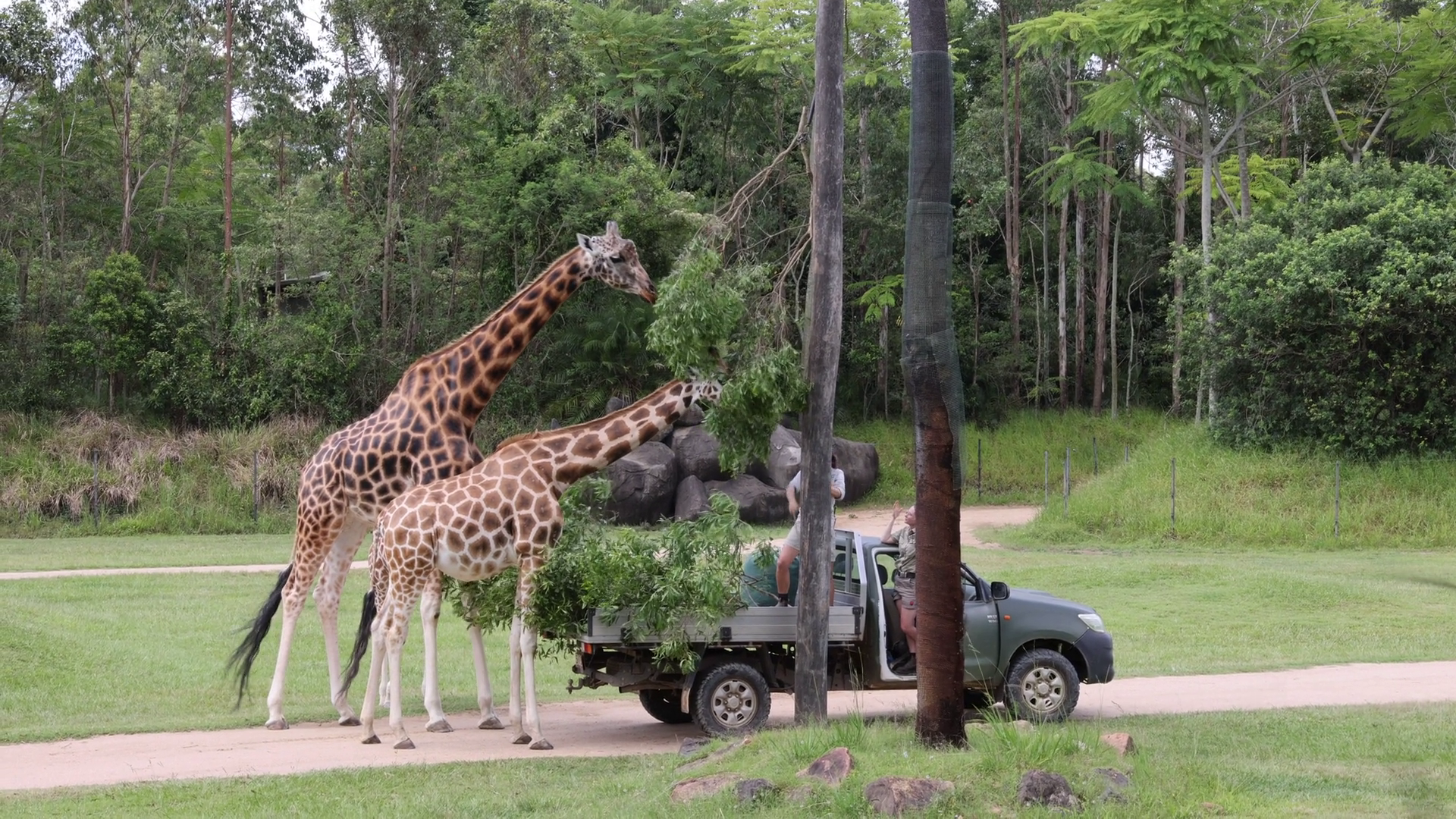
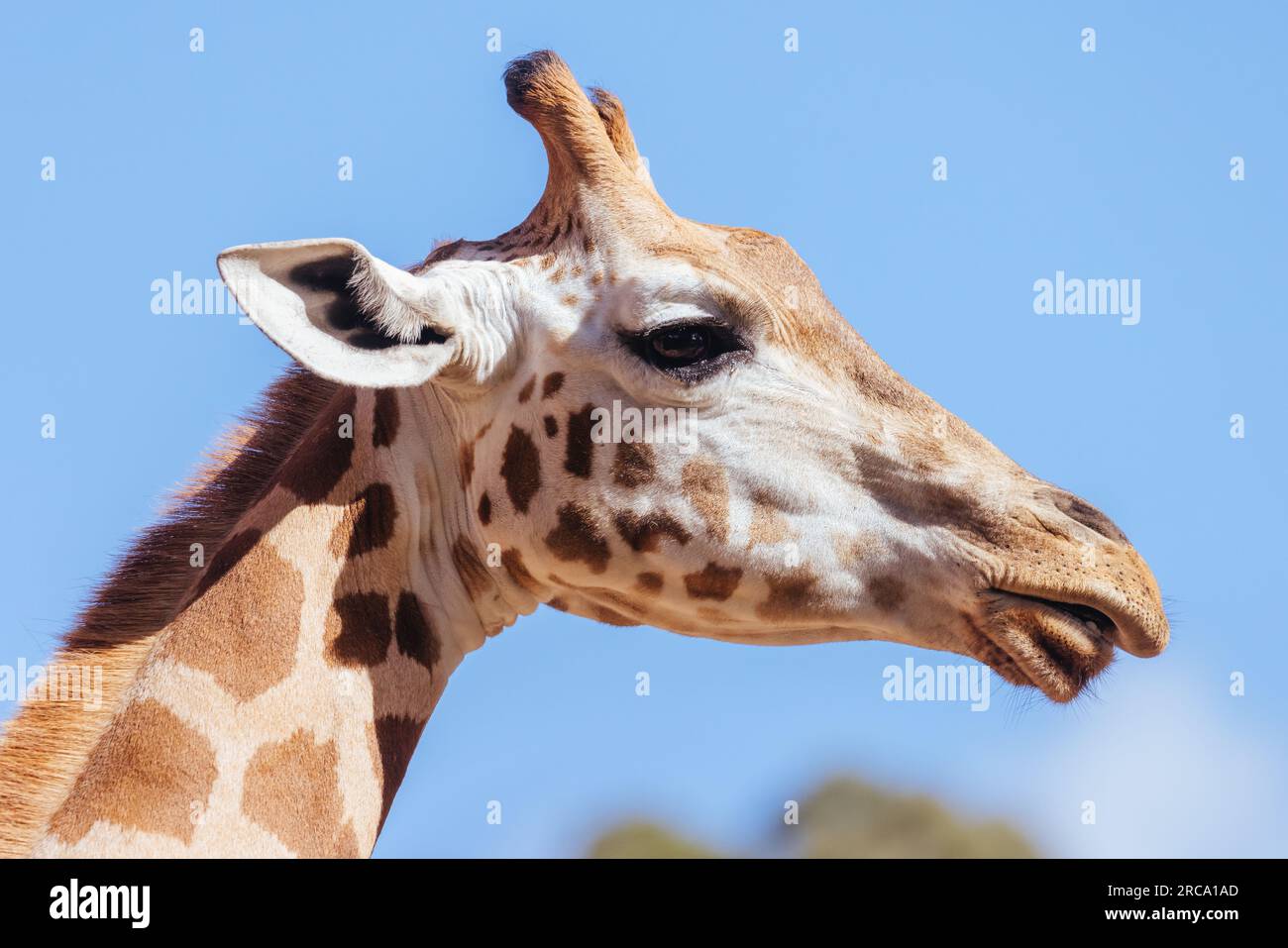
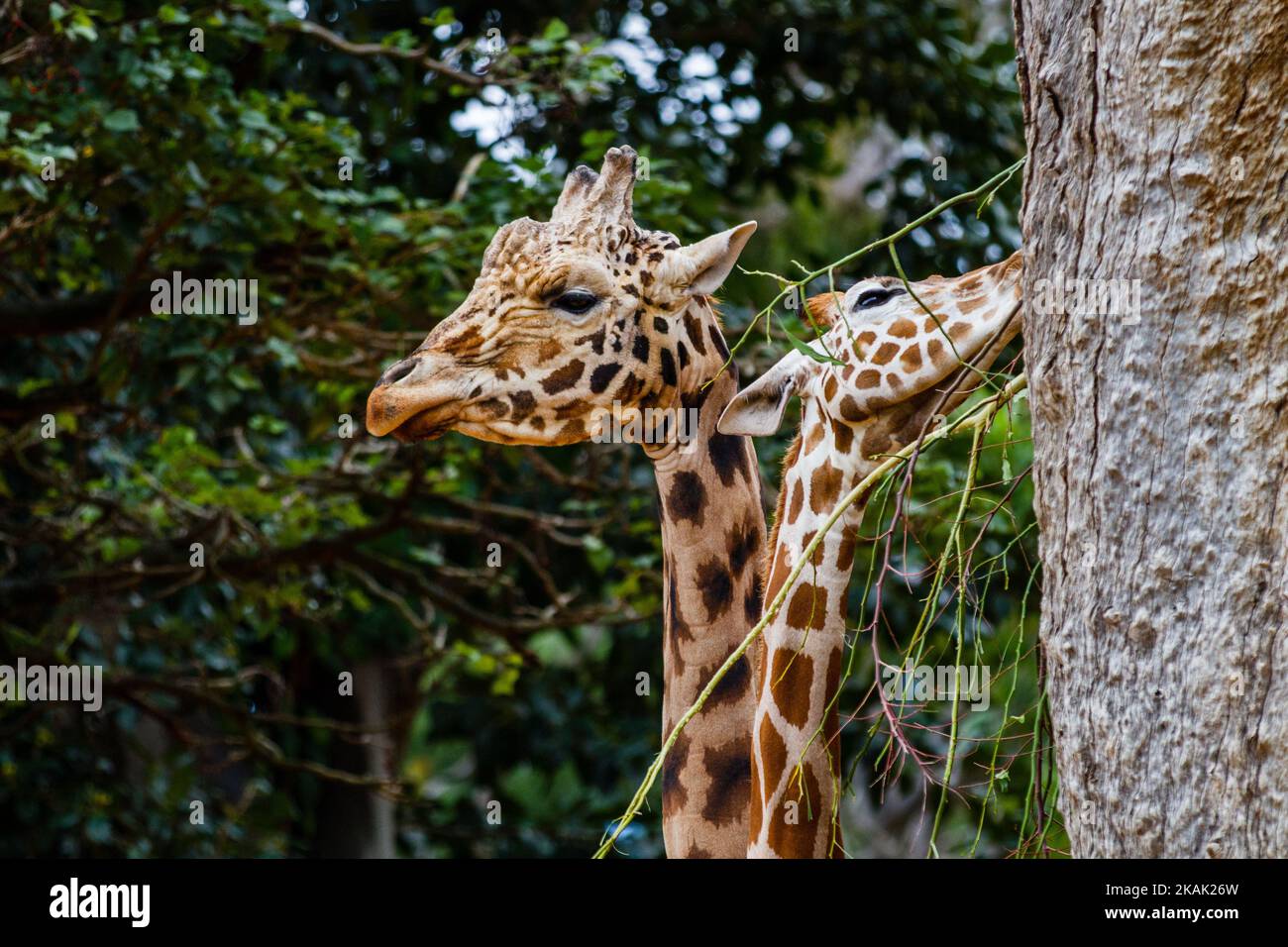
Australia has no wild or native giraffes. Giraffes (Giraffa) are endemic solely to the African continent. However, Australia is home to a thriving captive population housed across major accredited zoos, wildlife sanctuaries, and expansive open-range safari parks, where they participate in coordinated regional conservation breeding programs and public educational encounters.
Native Distribution vs. Captive Presence: Setting the Record Straight
The question of whether giraffes exist in Australia often stems from viral photographs of herds grazing against seemingly arid, red-dirt backgrounds that closely resemble the Australian Outback. While those scenes are real, they are taken inside human-managed wildlife facilities rather than the wild Australian bush.
Giraffes have never existed as native fauna on the Australian continent. In their natural range, wild giraffes inhabit the savannas, grasslands, and open woodlands of Sub-Saharan Africa, distributed across countries such as Kenya, Tanzania, South Africa, Namibia, Botswana, and Niger.
In Australia, every giraffe lives under managed human care. These animals reside in facilities accredited by the Zoo and Aquarium Association of Australasia (ZAA) and are governed by state and federal animal welfare and biosecurity regulations. Australia's captive giraffe population plays an active role in international ex-situ conservation efforts, serving as an educational ambassador species and maintaining a genetically viable insurance population away from the poaching, habitat fragmentation, and civil unrest threatening wild African herds.
Why Australia Never Evolved Native Giraffes
To understand why giraffes do not roam wild in the Australian landscape, one must look at plate tectonics and evolutionary biology spanning tens of millions of years.
- Supercontinent Pangaea
- Gondwana (Split ~180–140 Million Years Ago)
- Africa (Placental Mammal Evolution)
- Pecora / Giraffidae (~20–15 Ma)
- Australasia (Isolated ~45-35 Ma)
- Marsupials Diversify (Diprotodon, Kangaroos)
- Africa (Placental Mammal Evolution)
- Gondwana (Split ~180–140 Million Years Ago)
The Breakup of Gondwana and Continental Isolation
Hundreds of millions of years ago, the landmasses that comprise modern Africa, South America, Antarctica, India, and Australia were joined in the supercontinent Gondwana. By the time the early ancestors of modern hoofed mammals (ungulates) began to evolve, Australia had already severed its direct terrestrial connections.
Australia completely separated from Antarctica roughly 35 to 45 million years ago, drifting northward in complete geographical isolation. Because this rift occurred before the emergence of advanced placental ungulates, ancestral artiodactyls (even-toed ungulates) never reached the Australian landmass.
Marsupials and Convergent Ecological Niches
While Africa saw the radiation of large placental herbivores—eventually giving rise to the family Giraffidae during the Miocene epoch (roughly 15 to 20 million years ago)—Australia’s isolated ecosystem evolved along an entirely distinct evolutionary trajectory dominated by metatherians (marsupials).
In Australia, the ecological roles of browsing and grazing were filled by herbivorous marsupials:
- Macropods: Ancestors of modern red kangaroos, grey kangaroos, and wallabies occupied open grazing niches.
- Pleistocene Megafauna: Extinct species such as Diprotodon optatum (a giant wombat-like herbivore reaching two tonnes) and Palorchestes azael (a marsupial with tapir-like browsing adaptations) consumed mid-to-high-level foliage.
- High Browsers: Unlike Africa, where the giraffe evolved an elongated cervical spine to feed on tall Acacia (now Vachellia) canopies above the reach of other herbivores, Australia did not produce an ultra-tall mammalian browser. Instead, arboreal marsupials such as koalas (Phascolarctos cinereus) and various possum species climbed directly into the eucalypt canopy to access high foliage.
The deep oceanic trenches separating the Indo-Malayan and Australasian faunal realms—collectively known as the Wallace Line—served as an impassable marine barrier for large terrestrial mammals throughout the Cenozoic era. Consequently, no wild giraffid has ever crossed into Australasia naturally.
Where to See Giraffes in Australia
Australia is home to several world-class zoological institutions featuring large herds and open-range exhibits where visitors can observe giraffes in expansive settings.
1. Monarto Safari Park (South Australia)
Located roughly an hour's drive east of Adelaide, Monarto Safari Park is the largest open-range safari experience outside of Africa, spanning more than 1,500 hectares.
- The Experience: Monarto maintains one of the largest and most successful giraffe breeding herds in Oceania. Because the facility features broad, undulating mallee plains, visitors can observe giraffes moving across vast paddocks that mimic an authentic African savanna.
- Encounters: Monarto offers behind-the-scenes walking tours and specialized feeding programs where guests hand-feed browse (leafy branches) directly to the herd from elevated platforms.
2. Taronga Western Plains Zoo (Dubbo, New South Wales)
Situated in central-western New South Wales, Taronga Western Plains Zoo is a 300-hectare facility designed around expansive, open-air enclosures separated by concealed moats rather than visible fencing.
- The Experience: The climate in Dubbo features hot, semi-arid summers and temperate winters, closely approximating conditions found in parts of southern and eastern Africa. Giraffes share vast multi-species savanna exhibits with zebra, eland, and rhinos.
- Overnight Stays: Guests staying at the on-site Zoofari Lodge or Savannah Cabins can view giraffes grazing against sunrise and sunset backdrops from private deck areas.
3. Werribee Open Range Zoo (Victoria)
Located approximately 30 minutes southwest of Melbourne's central business district, Werribee Open Range Zoo covers roughly 225 hectares along the Werribee River.
- The Experience: Werribee focuses heavily on an immersive African savanna presentation. Visitors board open-sided safari buses that transit directly through open paddocks where giraffes, plains zebras, southern white rhinoceroses, and ostriches freely mingle.
- Specialized Access: The zoo operates small-group off-road vehicle safaris, providing lower-angle photographic opportunities and educational discussions led by ungulate keepers.
4. Taronga Zoo (Sydney, New South Wales)
Taronga Zoo’s historic main facility occupies prime real estate overlooking Sydney Harbour in Mosman.
- The Experience: While Taronga Sydney does not have the sprawling acreage of its sister zoo in Dubbo, its giraffe enclosure is globally famous for its backdrop. The elevated habitat allows visitors to view giraffes browsing in the foreground against clear panoramic views of the Sydney Harbour Bridge, Sydney Opera House, and the central skyline.
- Educational Focus: Taronga uses this urban juxtaposition to drive home the contrast between human metropolitan development and global wildlife habitat loss.
5. Australia Zoo (Beerwah, Queensland)
Located on Queensland's Sunshine Coast, Australia Zoo features an open-range "African Safari" precinct covering several hectares.
- The Experience: Giraffes inhabit a mixed-species grassland alongside white rhinos and zebras. Australia Zoo emphasizes interactive experiences, allowing daily public hand-feeding sessions under keeper supervision.
6. Perth Zoo (Western Australia)
Perth Zoo houses giraffes within its African Savannah precinct, located within suburban South Perth.
- The Experience: Perth Zoo has long maintained a productive breeding line, participating directly in Australasian studbook exchanges. An eye-level viewing ramp accommodates accessible public viewing and structured daily feedings.
7. National Zoo & Aquarium (Canberra, Australian Capital Territory)
Canberra’s zoological park offers close-proximity wildlife interactions, most notably through Jamala Wildlife Lodge.
- The Experience: Select luxury suites at Jamala are built directly into or adjacent to the giraffe habitat, allowing guests to feed a giraffe from an adjoining balcony or bedroom window.
Comparison of Giraffe Experiences Across Australia
The table below outlines the primary locations, enclosure styles, and visitor encounter options available for viewing giraffes throughout Australia:
| Facility | Location | Enclosure Format | Encounter Types Offered | Notable Feature |
|---|---|---|---|---|
| Monarto Safari Park | Murray Bridge, SA | Massive Open-Range (Multi-hectare savanna) | Hand-feeding, VIP small-group vehicle tours | Largest giraffe herd in the Australasian region |
| Taronga Western Plains Zoo | Dubbo, NSW | Expansive Open-Range (Paddock systems) | Daily public feeds, keeper talks, overnight lodge views | Multi-species mixed exhibits with rhinos and zebras |
| Werribee Open Range Zoo | Werribee, VIC | Open-Range Savanna (Bus transit) | Guided bus tours, off-road private safaris | Immersive safari-bus experience through natural grassland |
| Taronga Zoo Sydney | Sydney, NSW | Traditional Elevated Urban Enclosure | Keeper talks, limited private encounters | World-renowned panoramic backdrop of Sydney Harbour |
| Australia Zoo | Beerwah, QLD | Open Savanna Walk-around | Daily hand-feeding sessions, photography passes | Integrated into the wider Queensland conservation center |
| Perth Zoo | South Perth, WA | Suburban Savannah Complex | Elevated boardwalk viewing, feeding encounters | Long-standing contributor to the regional breeding program |
| National Zoo & Aquarium | Canberra, ACT | Integrated Interactive Enclosure | Balcony feeding, luxury overnight immersive suites | Direct interaction options via Jamala Wildlife Lodge |
Conservation and Breeding: The Role of the Australasian Program
Giraffes are not kept in Australian zoos merely for exhibition. Captive populations are strictly managed through regional frameworks designed to support global biodiversity.
The Australasian Species Management Program (ASMP)
Every giraffe in an accredited Australian zoo is registered in an official regional studbook administered through the Zoo and Aquarium Association (ZAA). The ASMP operates on strict genetic criteria:
- Pedigree Tracking: The regional studbook records the lineage, age, health profiles, and breeding history of every individual.
- Maintaining Genetic Heterozygosity: Zoos avoid inbreeding depression by systematically transferring individuals between institutions across state borders, ensuring genetic diversity remains above target thresholds (typically 90% or higher over a 100-year window).
- Controlling Surplus Reproduction: Reproductive management plans determine which bulls and cows breed each season, utilizing contraception or physical separation when necessary to keep herd sizes within sustainable enclosure capacities.
Taxonomic Classifications Managed in Australia
Historically, zoos classified all giraffes under a single species (Giraffa camelopardalis) with nine distinct subspecies. Under this classical taxonomy, most giraffes brought to Australia over past decades were cataloged as Rothschild’s giraffes (Giraffa camelopardalis rothschildi) or reticulated giraffes (Giraffa camelopardalis reticulata).
Modern genomic research published by the Giraffe Conservation Foundation (GCF) and international geneticists indicates that giraffes comprise four distinct species:
- Northern giraffe (Giraffa camelopardalis)
- Reticulated giraffe (Giraffa reticulata)
- Southern giraffe (Giraffa giraffa)
- Masai giraffe (Giraffa tippelskirchi)
Australian regional facilities utilize these evolving genetic insights to evaluate their populations, prioritizing the protection of distinct bloodlines and ensuring captive herds remain conservation-relevant rather than hybridized.
Supporting In-Situ African Projects
Australian zoological organizations channel substantial funding directly to anti-poaching units, habitat protection, and community education in Africa. For instance, the Taronga Conservation Society Australia and Zoos South Australia partner with field initiatives like the Giraffe Conservation Foundation and the Biliqo-Bulesa Conservancy in Kenya to safeguard wild populations against illegal hunting, snaring, and habitat fragmentation.
Biosecurity, Quarantine, and Welfare Regulations
Australia maintains some of the most rigorous biosecurity and quarantine protocols in the world, managed by the federal Department of Agriculture, Fisheries and Forestry (DAFF). These legal frameworks apply stringently to non-native megaherbivores.
- Import Assessment (DAFF)
- Pre-Export Quarantine & Diagnostic Testing (Foot-and-Mouth, Blue Tongue, Tuberculosis)
- Supervised Air Transport
- Post-Arrival Quarantine Facility (30+ Days)
- Integration into ZAA-Accredited Institution
Import and Quarantine Controls
Because Australia is free from numerous devastating livestock diseases prevalent in other parts of the world—such as foot-and-mouth disease (Aphthovirus), rinderpest, and bovine tuberculosis—importing exotic ungulates requires complex administrative oversight:
- Veterinary Clearances: Any live giraffe imported into Australia must undergo rigorous health testing, serological screenings, and certified parasite-elimination protocols in its country of origin prior to dispatch.
- Arrival Quarantine: Upon landing, animals are placed into state-monitored post-arrival quarantine facilities for an extended observational window (typically at least 30 days) to verify that no latent pathogens enter the local agricultural or natural ecosystem.
- Movement Records: Transfers of adult giraffes across state lines require coordinated interstate transport permits, veterinary health certificates, and specialized, high-clearance transport crates equipped with remote camera feeds, climate control, and non-slip suspension.
Climate Adaptation and Enclosure Standards
Giraffes adapt remarkably well to Australia's varied climates, but institutions must satisfy stringent state-mandated exhibitor guidelines (such as the Exhibited Animals Protection Act in New South Wales or its equivalents in Victoria, Queensland, and South Australia).
- Heat Management: During intense Australian summers, where inland temperatures in regions like Dubbo or Monarto can exceed 40°C (104°F), enclosures must provide extensive shade structures, mature canopy trees, misting stations, and unrestricted access to cool water troughs.
- Winter Protection: In regions subject to frosty winter nights, such as Canberra or regional Victoria, holding night barns are built with radiant overhead heating, insulated wind barriers, and deep-bedded straw or wood-shaving flooring to prevent cold-stress or hypothermia.
- Dietary Requirements: Keepers feed captive giraffes hundreds of kilograms of daily forage per animal, primarily high-protein lucerne (alfalfa) hay supplemented with mineral-rich browser pellets and freshly trimmed branches of giraffe-safe browse, including Acacia, willow, mulberry, and tagasaste (Cytisus proliferus). Eucalypt species are generally avoided or fed with caution due to high oil and tannin contents that giraffes do not consume in their native habitats.
Frequently Asked Questions
Did Australia ever have native prehistoric giraffes?
No. Australia never had any native giraffe species. During the Miocene, Pliocene, and Pleistocene epochs, when giraffids flourished across parts of Africa, Europe, and Asia, Australia was an isolated island continent. The high-browsing and grazing niches that giraffes and other large placental mammals occupied elsewhere were filled in Australia by herbivorous marsupials, including extinct megafauna like Diprotodon and Palorchestes, as well as modern macropods and arboreal marsupials.
Can giraffes escape into the Australian bush and establish a feral population?
It is extraordinarily unlikely for giraffes to establish a feral population in Australia. Captive giraffes are kept in heavily fortified, double-fenced, or deep-moated containment zones monitored daily by professional keepers. Even if a breeding pair were to escape, their massive height makes them visible over great distances, allowing rapid recovery. Additionally, giraffes require specific high-volume, non-toxic browse and year-round water supplies that are sparse across much of the dry Australian interior, meaning an introduced wild herd could not quietly survive undetected.
Can private citizens own a pet giraffe in Australia?
No. Australian federal and state legislation strictly prohibits private individuals from keeping exotic megafauna like giraffes as personal pets. Non-native mammals of this scale are categorized as high-risk, dangerous exotic animals. They can only be legally imported, possessed, and managed by licensed zoological institutions, scientific research facilities, or recognized circuses/sanctuaries that meet comprehensive criteria for veterinary support, containment security, public liability insurance, and professional staff training.
How are giraffes transported across Australia?
Giraffes are moved between Australian facilities inside custom-built, heavy-duty transport trailers featuring adjustable roofs. Because adult giraffes can reach heights of up to 5.8 meters (19 feet), route planners must work alongside state road authorities to chart transit paths that avoid low-clearance bridges, overhead electrical wires, and low-hanging urban tree branches. Keepers train giraffes for weeks prior to transport through positive-reinforcement conditioning so the animals step voluntarily into the crates, minimizing stress during the voyage.
What do giraffes eat in Australian zoos?
In Australian zoos, giraffes consume a carefully balanced herbivorous diet composed primarily of high-quality lucerne (alfalfa) hay, certified browser pellets containing vitamins and minerals, and fresh branches cut from non-toxic trees. Preferred species include willow (Salix), tagasaste (tree lucerne), mulberry, and various local Acacia species that resemble their native African forage. Keepers mount browse and hay nets high on exhibit poles and feeding towers to encourage natural feeding postures and tongue exercise.
Planning Your Visit: Recommended Next Actions
If you plan to view or interact with giraffes during your time in Australia, advance preparation is essential:
- Book Encounters in Advance: Zoo admission tickets generally include general viewing of giraffe habitats, but interactive experiences (such as feeding platforms and off-road safaris) usually sell out weeks or months ahead. Check the official ticketing portal of your chosen institution (such as Zoos SA for Monarto, or Taronga Conservation Society for Dubbo/Sydney) before your visit.
- Aim for Morning Viewing: Giraffes are most active during the cooler morning hours. During the heat of the midday Australian sun, they frequently rest in shaded zones or chew their cud (ruminate), offering fewer active behavioral displays.
- Choose an Open-Range Facility for Realistic Context: To observe natural herd dynamics, social grooming, and gait mechanics, prioritize open-range parks such as Monarto Safari Park (SA), Taronga Western Plains Zoo (NSW), or Werribee Open Range Zoo (VIC). These large-scale environments offer an educational look at how these iconic browsers live, move, and socialize across vast expanses.