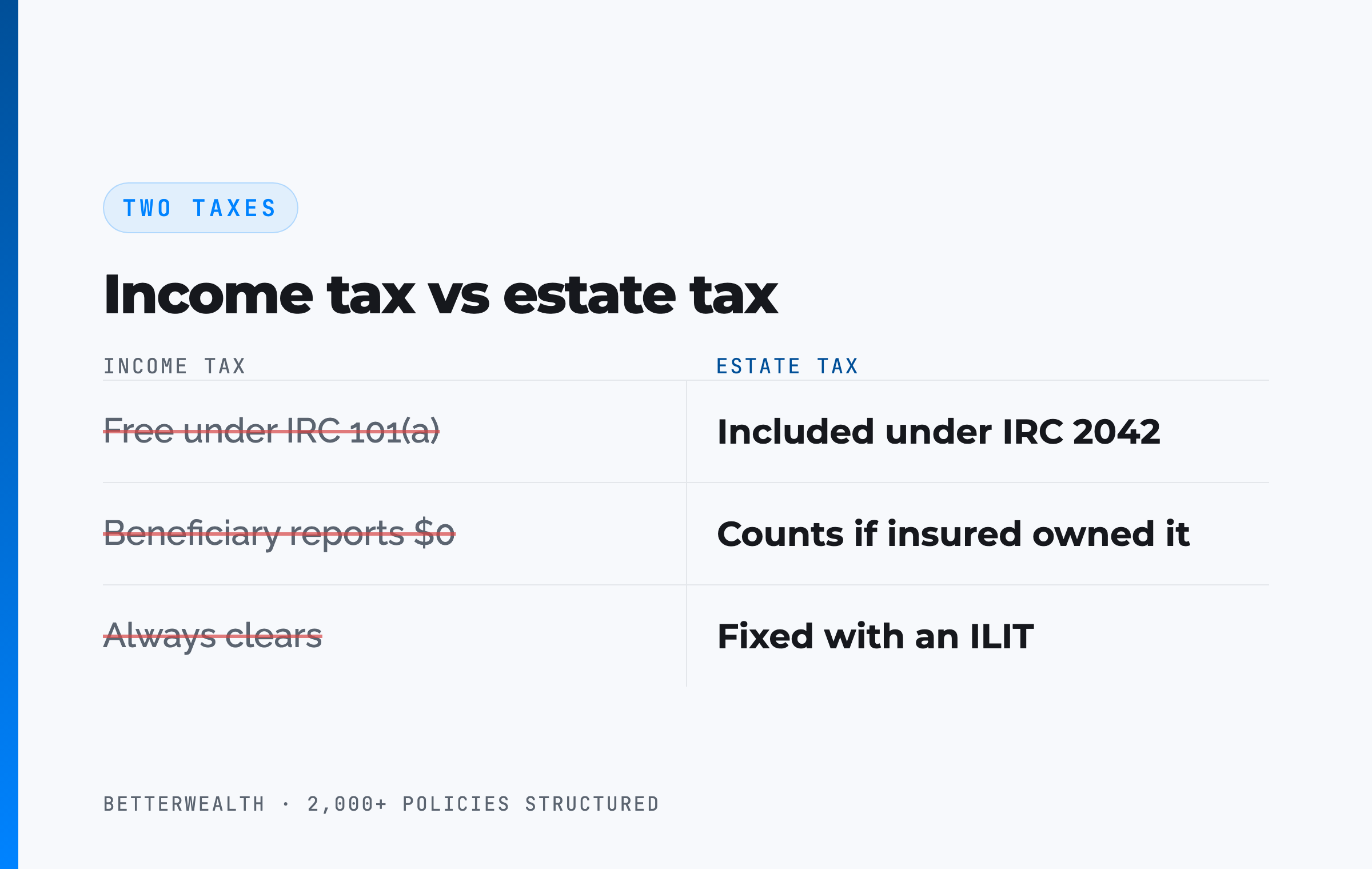
Life insurance proceeds paid out upon a death are generally not subject to Income Tax for the beneficiary in Ireland, but they may be subject to Capital Acquisitions Tax (CAT) depending on the relationship between the policyholder, the life assured, and the person receiving the benefit. Understanding how these proceeds are treated requires a careful analysis of the specific type of policy, the payer of the premiums, and the legal category of the beneficiary under Irish tax law.
The Fundamental Distinction in Irish Tax Law
To determine if life insurance proceeds are taxable, one must distinguish between the two primary taxes that could potentially apply: Income Tax and Capital Acquisitions Tax (CAT), which is commonly referred to as inheritance or gift tax.
Under current Irish tax legislation, life insurance payouts are rarely subject to Income Tax. This is because the premiums paid for such policies are typically made from net (post-tax) income, and the payout is viewed as a capital sum rather than taxable income. However, the application of CAT is a critical area where many beneficiaries find themselves liable for tax payments. CAT is governed by the Capital Acquisitions Tax Consolidation Act 2003, and it applies to the transfer of property (including cash sums) where no consideration is paid in return.
Understanding Capital Acquisitions Tax (CAT) on Life Insurance
The liability to CAT on a life insurance payout depends heavily on the "Section 72" or "Section 73" rules, or more commonly, the standard relationship between the deceased and the beneficiary.
In Ireland, the Revenue Commissioners apply three distinct group thresholds for CAT. Every person has a "lifetime tax-free threshold" regarding the total value of gifts and inheritances they receive from a specific class of person. If the insurance proceeds, when added to other inheritances or gifts received since December 5, 1991, exceed the relevant threshold, the excess is subject to CAT at a rate of 33% (as of 2026).
The Relationship Groups for CAT
- Group A: Includes children (including foster children in specific circumstances). The threshold is currently €400,000 (reflecting the indexation policies applicable as of 2026).
- Group B: Includes parents, siblings, nephews, nieces, and grandchildren. The threshold is €32,500.
- Group C: Includes anyone else (strangers). The threshold is €16,250.
If the life insurance policy was "assigned" or paid for in a way that creates a transfer of wealth—for example, if a parent pays the premiums on a policy that pays out to their adult child—the proceeds will count toward the child’s Group A lifetime limit.
Section 72 Policies: A Specific Exemption
One of the most important concepts for individuals looking to mitigate tax liability is the "Section 72 policy." This is a specific type of life insurance policy that is approved by the Revenue Commissioners.
A Section 72 policy is designed specifically to provide the funds to pay a potential inheritance tax bill. If you take out a life insurance policy and nominate it to be used exclusively for the payment of inheritance tax on your estate, the proceeds of that policy—to the extent that they are actually used to pay the tax—are exempt from CAT. This is a common planning tool used by individuals with significant assets who wish to ensure their heirs are not forced to sell family homes or businesses to cover an inheritance tax liability.
To qualify for this exemption, the policy must meet stringent criteria:
- The policy must be taken out specifically for the purpose of paying inheritance tax.
- It must be a single-life policy or a joint-life policy.
- The proceeds must be used to pay the tax liability of the estate within a specific timeframe dictated by Revenue regulations.
The Role of Premium Payers and Beneficiary Arrangements
The "who paid the premiums" rule is vital. If an individual pays for their own life insurance policy, and the proceeds are paid to their estate or a named beneficiary, the tax treatment can vary.
If the policyholder is the life assured and they pay the premiums themselves, the proceeds are typically considered part of their estate. If those proceeds then pass to a beneficiary via a will or under the rules of intestacy, they are treated as an inheritance and subject to the standard CAT thresholds mentioned earlier.
However, if the policy is structured as a "Life of Another" policy, where person A pays the premium for a policy on the life of person B, and the benefit is paid to person A upon the death of person B, the proceeds are generally not considered an inheritance because the recipient is the person who essentially owned the policy. This is a complex area of tax law, and individuals are often advised to seek a review by a tax consultant to ensure the policy structure matches their estate planning goals.
Comparison of Tax Implications by Policy Structure
| Scenario | Primary Tax Concern | Applicability |
|---|---|---|
| Standard Term Insurance | CAT (Inheritance Tax) | Proceeds count toward lifetime threshold. |
| Section 72 Policy | Exempt | If used specifically to pay inheritance tax. |
| Life of Another Policy | Likely None | Benefit stays with the policy owner. |
| Pension-Linked Life Cover | Income Tax | Often treated as taxable pension income. |
When Life Insurance Proceeds are Taxable as Income
While most personal life insurance policies result in tax-free capital sums, there are instances where the payout is treated as income. This most frequently occurs with pension-related life insurance, such as "Death in Service" benefits or policies funded directly by an employer as part of a remuneration package.
If your life cover is provided through a pension scheme (Approved Retirement Fund or PRSA), the tax treatment is dictated by the rules of the pension trust. In many cases, these benefits are paid as a lump sum, but they may be subject to different tax treatments compared to private life assurance policies. Specifically, if the death benefit is treated as part of the pension pot, it may be subject to specific pension-related taxation rather than CAT.
Common Pitfalls and Administrative Errors
One of the most common mistakes is failing to keep accurate records of past inheritances and gifts. Because CAT thresholds are cumulative, you must know exactly how much you have received from a specific "Group" since 1991. If you receive a life insurance payout today, you must aggregate it with all previous gifts and inheritances from that specific person. Failing to declare this correctly can lead to interest and penalties from the Revenue Commissioners.
Another error is assuming that "spouse-to-spouse" transfers are always exempt. While transfers between spouses are generally exempt from CAT, this does not always extend to life insurance proceeds if the policy was not structured correctly or if it was held in a way that falls outside the standard spousal exemptions. Always verify the specific contract details with the insurance provider.
Essential Steps for Beneficiaries and Policyholders
- Verify the Policy Status: Request the "Policy Schedule" and "Terms and Conditions" from the insurance provider. Determine who the "Policy Owner" is versus the "Life Assured."
- Check the Beneficiary Nomination: Ensure that the nominated beneficiary is still correct. A nomination on a life insurance policy can sometimes supersede a will, which significantly changes how the assets are distributed and taxed.
- Calculate Cumulative Gifts: Use the Revenue Commissioners' online portal to track your lifetime receipt of gifts and inheritances.
- Consult a Professional: If the payout is substantial or if there is any doubt regarding the tax status, engage a qualified tax advisor or a CERTIFIED FINANCIAL PLANNER™ (CFP) to review the situation before filing a return.
- Section 72 Planning: If you are the policyholder and you want to ensure your beneficiaries don't face a tax burden, speak to your broker about re-structuring your existing policy to meet Section 72 criteria.
Frequently Asked Questions
Are life insurance proceeds considered part of my total estate for tax purposes? Yes. In many cases, life insurance proceeds are legally considered part of the deceased's estate. Whether they are subject to CAT depends on whether the proceeds pass to an exempt beneficiary (such as a spouse) or a non-exempt beneficiary, and whether that beneficiary has remaining capacity in their tax-free lifetime threshold.
Do I have to pay Income Tax on the money I receive from a life policy? Generally, no. Life insurance payouts in Ireland are considered capital sums, not income. Unless the policy is specifically linked to an employment pension or a similar structured product that pays out in a taxable manner, you will not pay Income Tax on the lump sum.
What happens if the insurance payout exceeds my CAT threshold? If the total value of the inheritance (including the life insurance proceeds) exceeds your available lifetime Group threshold, you must pay CAT at the current rate of 33% on the excess amount. You are responsible for filing a return with the Revenue Commissioners by the relevant deadline.
Is it possible to set up a policy that is exempt from inheritance tax? Yes, by utilizing a Section 72 policy, the proceeds can be exempt from inheritance tax, provided the funds are used specifically to pay the inheritance tax liability of the estate.
Does a spouse have to pay tax on life insurance proceeds? In Ireland, transfers between spouses are generally exempt from CAT. Therefore, if you receive the proceeds from your spouse's life insurance policy, it is typically tax-free. However, always confirm the specific structure of the policy with your financial advisor to ensure no unusual trust structures are in place.
Professional Guidance and Next Actions
Tax laws in Ireland are subject to annual changes via the Finance Act. While the principles of CAT and the treatment of insurance remain relatively stable, the thresholds and administrative requirements can be updated. If you are currently dealing with a claim, or if you are planning your estate, it is essential to rely on the current year’s guidelines from the Revenue Commissioners.
Your next step should be to obtain a statement from the life insurance company confirming the type of policy, the identity of the policy owner, and the total benefit amount. If this amount, when combined with your history of inheritances, potentially exceeds your threshold, contact a tax consultant immediately to prepare for a "Form IT38" filing. Proactive planning, particularly regarding Section 72 policies, remains the most effective way to ensure your financial legacy is preserved according to your wishes.