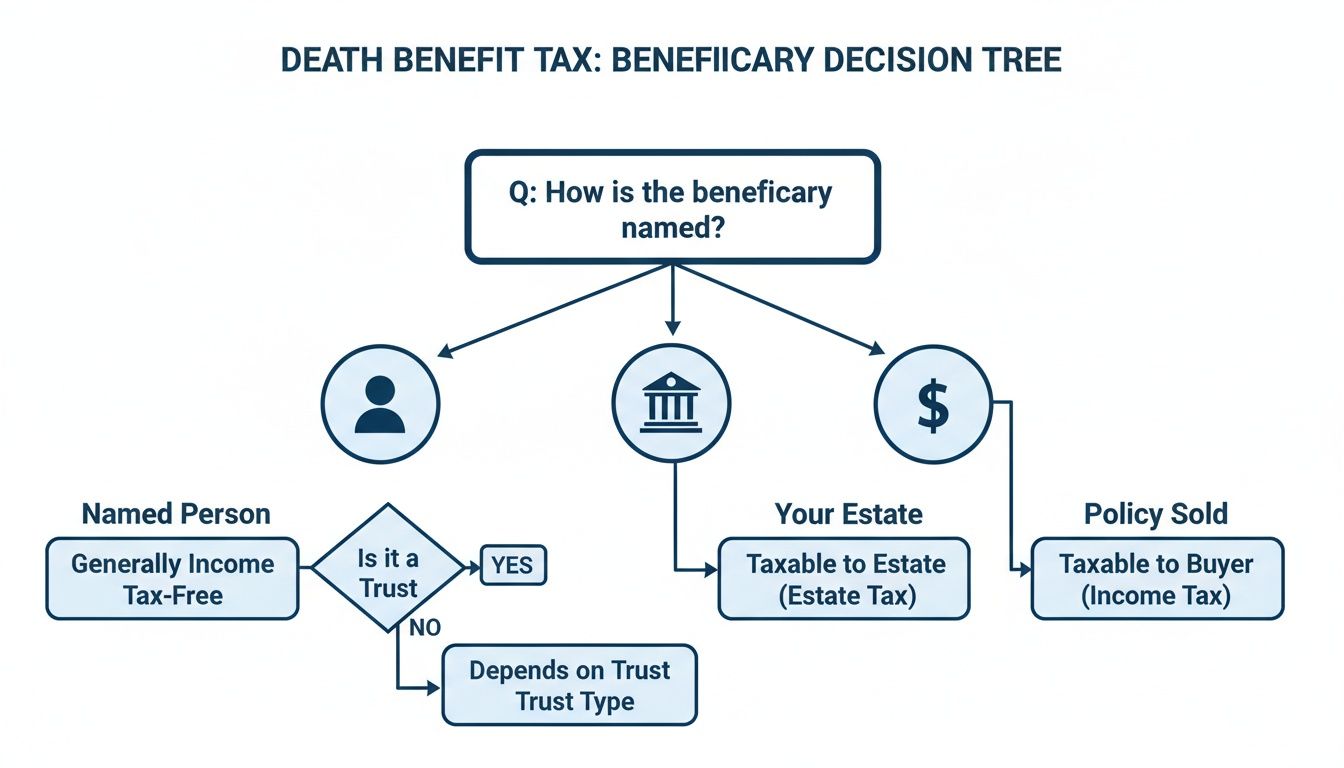
Whether a life insurance policy settlement—often referred to as a life settlement—is taxable in the United States depends on the amount of gain realized from the transaction. Generally, the portion of the proceeds that exceeds your "cost basis" (the total premiums paid into the policy) is considered taxable income. Understanding these tax implications is essential for policyholders considering selling their life insurance coverage for a lump sum.
Understanding Life Settlements
A life settlement is the sale of an existing life insurance policy to a third party, typically an institutional investor, for a cash amount that is less than the death benefit but greater than the policy's cash surrender value. In the United States, this secondary market for life insurance provides a way for policyholders to extract liquidity from a policy they may no longer need, can no longer afford, or simply wish to liquidate for other financial purposes.
While the appeal of a lump-sum payment is clear, the financial profile of these transactions is governed by the Internal Revenue Code (IRC). Unlike the death benefit of a life insurance policy—which is typically received income-tax-free by beneficiaries—the proceeds from a life settlement are treated as a commercial transaction. From the perspective of the Internal Revenue Service (IRS), selling a policy is essentially selling an asset, and the gain from that sale is subject to federal income tax.
Calculating the Taxable Gain
To determine if your settlement is taxable, you must calculate the gain realized from the transaction. The fundamental formula used by the IRS involves subtracting your investment in the contract from the amount you received for the settlement.
The Cost Basis Formula
Your "cost basis" is the total of all premiums paid to keep the policy in force over the years. However, this figure must be adjusted. You must subtract any dividends or withdrawals you have previously received from the policy. The adjusted basis is the net amount you have effectively invested.
The Calculation:
- Gross Settlement Amount: The total cash payment received from the buyer.
- Adjusted Basis: Total premiums paid minus any previous tax-free distributions (dividends, partial withdrawals, or loans not previously repaid).
- Taxable Gain: Gross Settlement Amount minus the Adjusted Basis.
If the amount you receive is less than your adjusted basis, you have realized a loss. Under current tax laws, this loss is generally considered a personal loss and is typically not deductible against your ordinary income.
Tax Treatment: Ordinary Income vs. Capital Gains
One of the most complex aspects of life settlement taxation is determining how the gain is categorized. Historically, there was significant ambiguity regarding whether the gain should be taxed as ordinary income or as a capital gain.
Following the Tax Cuts and Jobs Act of 2017, the IRS clarified the treatment for many life settlement scenarios. Generally, the portion of the proceeds representing the "gain" (the amount over your basis) is treated as ordinary income. This is because the IRS views the gain as representing the interest or earnings that have built up within the policy, rather than the appreciation of a capital asset. However, specific nuances depend on the type of policy (e.g., universal life versus whole life) and the specific nature of the sale. Because tax law is subject to interpretation and individual circumstances, it is highly recommended to consult with a tax professional or CPA who has experience in life insurance taxation.
Comparison of Tax Scenarios
The table below illustrates how different policy outcomes affect your potential tax liability. These scenarios are simplified for illustrative purposes and do not account for state-level taxation, which may apply in addition to federal taxes.
| Scenario | Premiums Paid | Settlement Amount | Taxable Gain | Tax Status |
|---|---|---|---|---|
| Simple Gain | $50,000 | $70,000 | $20,000 | Taxable as Income |
| Loss | $100,000 | $80,000 | $0 | Non-Deductible |
| Basis Recovery | $60,000 | $60,000 | $0 | Tax-Free |
| High Gain | $40,000 | $100,000 | $60,000 | Taxable as Income |
Factors Affecting Your Tax Obligations
Several factors can influence the final tax impact of a life insurance settlement. Being aware of these variables will help you manage expectations during the sale process.
1. State Income Taxes
While federal tax laws provide the baseline for income tax, your state of residence may impose its own income tax on the gain from a life settlement. Some states follow federal guidelines closely, while others have unique provisions. If you move between states or if the insurance company is domiciled in a different state, you should verify if local tax laws create additional obligations.
2. Policy Loans
If you have outstanding policy loans, they can complicate the calculation of your cost basis. When you sell the policy, the buyer typically assumes the liability or deducts the loan balance from the settlement offer. If you have an outstanding loan that you never paid back, the IRS may consider the relief of that debt as part of the proceeds received, which can increase your taxable gain.
3. Terminally Ill vs. Chronically Ill Exceptions
There is a critical exception for individuals who are terminally or chronically ill. Under Section 101(g) of the IRC, proceeds from a "viatical settlement"—which is a sale of a policy by a person who is terminally or chronically ill—may be excluded from gross income. This is an important distinction to make, as it is a specific medical exception designed to provide tax relief to those facing significant health challenges. To qualify, you must meet strict medical criteria defined by the IRS, and the buyer must generally be a licensed viatical settlement provider.
Common Mistakes and Compliance
Navigating the sale of an insurance policy is a complex financial move. Avoiding common pitfalls is essential to ensure you remain compliant with the IRS.
- Failure to Track Premiums: Many policyholders lose track of the exact total of premiums paid over decades. Maintaining accurate records is essential to prove your cost basis. Without documentation, the IRS may deem your entire settlement proceeds as taxable income.
- Assuming All Cash is Tax-Free: People often mistakenly believe that because life insurance death benefits are income-tax-free, the sale of the policy is also tax-free. As noted, the sale of the policy during your lifetime is treated as a commercial transaction, not a death benefit payout.
- Ignoring 1099 Forms: If you sell your policy, you will likely receive a Form 1099-LS (Reportable Policy Sale). This form informs the IRS of the sale. Discrepancies between what you report on your tax return and what is reported on the 1099-LS can trigger an audit.
Steps to Take Before Proceeding
If you are considering a life settlement, follow these steps to ensure you have a clear picture of the tax impact:
- Request an In-Force Illustration: Contact your insurance carrier to obtain an "in-force illustration." This document provides details on your current policy status, including cumulative premiums paid and current cash value.
- Verify Your Adjusted Basis: Go through your records to confirm total premiums paid, minus any dividends or prior withdrawals. If you are missing records, check with your insurance company to see if they can provide a summary of payments.
- Consult a Professional: Engage a tax advisor or financial planner. Explain that you are considering a life settlement. They can help you calculate the projected tax liability and determine if the net cash you receive after taxes is sufficient for your financial needs.
- Review the Offer: Carefully review the settlement offer. Compare the "net" amount (the offer minus estimated taxes) against other options, such as taking a policy loan or a partial surrender of the policy.
Frequently Asked Questions
Is the entire settlement amount taxable?
No. Only the portion of the settlement that exceeds your cost basis (the total premiums paid) is considered taxable. You are allowed to recover your investment in the policy tax-free.
Are viatical settlements taxed the same as life settlements?
Generally, no. Viatical settlements—where the policyholder is terminally or chronically ill—are often exempt from federal income tax under IRC Section 101(g), whereas standard life settlements are typically taxable.
What happens if I sell my policy at a loss?
If you sell your policy for less than your total premiums paid, the loss is generally treated as a personal loss and cannot be deducted from your other income on your federal tax return.
Do I have to report the sale to the IRS?
Yes. You will receive a Form 1099-LS reporting the transaction. You must report the sale on your tax return. Failure to report the income can lead to penalties and interest.
Does the age of the policy affect taxes?
The age of the policy influences the size of your potential gain. Older policies often have significantly higher accumulated value relative to premiums paid, which can result in a higher taxable gain when sold.
Can I reduce the tax impact?
There is no standard "deduction" to eliminate taxes on a life settlement gain. However, ensuring your basis is calculated correctly is the most effective way to ensure you are not overpaying taxes by failing to account for every dollar of premiums paid.
Final Recommendation
The decision to sell a life insurance policy is a significant financial event. Before finalizing a settlement, calculate your specific tax exposure by verifying your adjusted cost basis. Because individual financial situations vary, you should consult with a tax professional to understand your specific obligations. For those who are terminally or chronically ill, verify whether your circumstances allow you to qualify for tax-exempt viatical settlement status. Always prioritize obtaining a written offer and reviewing it with a professional before signing any transfer agreements.