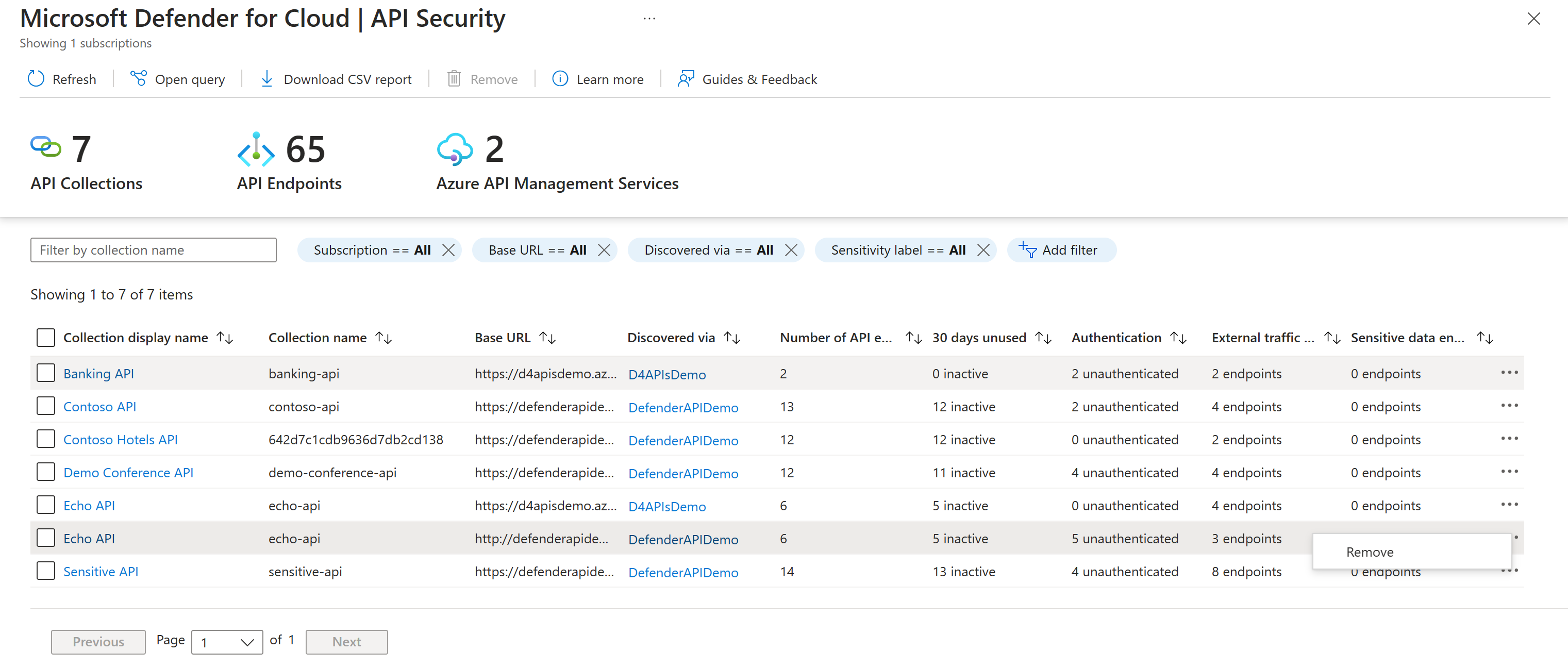
API security software for cloud environments discovers, monitors, and protects Application Programming Interfaces (APIs) across public, private, and multi-cloud infrastructures. Unlike traditional web application firewalls, cloud API security tools continuously map managed and unmanaged (shadow) APIs, validate schema compliance, enforce context-aware authorization controls, and detect runtime attacks like Broken Object Level Authorization (BOLA) across microservices, containers, and serverless environments.
The Evolving Cloud API Threat Landscape
Modern cloud-native architectures rely almost entirely on APIs to connect microservices, serverless functions, cloud storage buckets, and third-party SaaS integrations. As organizations migrate applications to services like Amazon Web Services (AWS), Microsoft Azure, and Google Cloud Platform (GCP), the perimeter of the application changes. The perimeter is no longer a centralized network firewall; it is thousands of discrete API endpoints exposing application logic and sensitive data to internal microservices and external clients.
This architectural shift creates distinct security challenges that legacy security software cannot address. Traditional Web Application Firewalls (WAFs) and Next-Generation Firewalls (NGFWs) were built to inspect static traffic patterns and detect known signature-based exploits, such as SQL injection (SQLi) or Cross-Site Scripting (XSS). However, modern API threats operate primarily within the realm of business logic abuse.
An attacker targeting a cloud API often presents valid authentication credentials and syntactically correct HTTP requests. The malicious nature of the request lies in unauthorized access attempts—such as altering a resource ID within a REST request path or exploiting GraphQL query parameters to exfiltrate database records. Standard network controls treat these calls as legitimate traffic.
Furthermore, cloud environments amplify visibility challenges. Rapid CI/CD deployment cycles mean microservices continuously create, modify, and deprecate API endpoints. Without dedicated API security software engineered for cloud environments, security operations teams quickly lose track of active endpoints, leading to orphaned (zombie) APIs and unmanaged (shadow) APIs running undetected in public subnets.
Core Capabilities of Cloud API Security Platforms
To secure APIs effectively across modern cloud architectures, enterprise API security platforms provide four primary capabilities: automated discovery, posture management, runtime threat protection, and shift-left testing.
- Cloud API Security Platform
- Discovery & Inventory
- Posture Management & Schema Security
- Runtime Threat Protection
- Shift-Left Testing
1. Automated API Discovery and Inventory Mapping
Continuous inventory management forms the foundation of cloud API security. Advanced tools interface directly with cloud control planes, API gateways (such as Kong, Apigee, AWS API Gateway, and Azure API Management), Kubernetes ingress controllers, and service meshes (such as Istio and Linkerd).
Key discovery functions include:
- Shadow and Zombie API Identification: Automatically tagging active endpoints missing from official documentation or OpenAPI/Swagger specifications.
- Data Classification: Inspecting payload contents to flag endpoints transferring Personally Identifiable Information (PII), Payment Card Industry (PCI) data, or Protected Health Information (PHI).
- Protocol Support: Cataloging RESTful endpoints, GraphQL schemas, gRPC interfaces, WebSockets, and SOAP services.
2. Posture Management and Misconfiguration Detection
API Security Posture Management (APISPM) focuses on evaluating the design, configuration, and authorization state of API infrastructure before an attacker exploits a vulnerability.
These software tools continuously scan cloud environments to identify structural weaknesses, such as:
- Endpoints allowing unauthenticated or anonymous access.
- Misconfigured CORS (Cross-Origin Resource Sharing) policies exposed to external domains.
- Insecure authentication schemes, such as basic HTTP authentication or weak JSON Web Token (JWT) signature verification algorithms (e.g.,
alg: none). - Schema drift, where live runtime payload structures deviate from defined OpenAPI blueprints.
3. Runtime Threat Detection and Prevention
Runtime protection uses contextual behavioral analysis and machine learning models to monitor live API traffic. By establishing a baseline of normal user behaviors, payload structures, request frequencies, and sequence patterns, the platform detects anomalies in real time.
Unlike static rule engines, runtime protection analyzes context across multiple requests to identify sophisticated business logic attacks, automated credential stuffing, high-velocity scraping, and authorization violations. When a threat is confirmed, the software can trigger automated mitigation—such as rate-limiting requests, revoking access tokens, blocking client IPs, or alerting Security Operations Centers (SOC) through SIEM/SOAR integrations.
4. Shift-Left Security Testing in CI/CD Pipelines
Integrating API security early in the software development lifecycle prevents vulnerable code from reaching production servers. API security software suites offer automated testing capabilities that plug into CI/CD pipelines (e.g., GitHub Actions, GitLab CI, Jenkins).
These engines perform static schema analysis, dynamic API security testing (DAST), and fuzz testing against staging or ephemeral cloud environments. By testing for authorization flaws, input sanitization bugs, and data leakage during build phases, developers can remediate flaws early without interrupting production workloads.
Cloud Deployment Architectures: Inline, Out-of-Band, and eBPF
Choosing the right deployment architecture for API security software is one of the most critical decisions cloud security architects face. The deployment model dictates performance latency, operational complexity, and whether the platform can actively block threats or operate strictly as a detection engine.
- Inline Deployment Model
- Client -> API Gateway / Proxy / Sidecar -> Cloud Microservice
- API Gateway / Proxy / Sidecar inspects and blocks via API Security Engine
- Out-of-Band (Mirrored) Model
- Client -> Cloud Microservice
- Traffic Mirroring / Logs -> API Security Engine (Detection & Out-of-Band Response)
- Kernel-Level (eBPF) Model
- Client -> Linux Kernel (eBPF Probe) -> Containerized Pod
- Linux Kernel (eBPF Probe) performs zero-copy inspection via API Security Daemon Engine
Inline Architecture (Gateways, Agents, and Sidecars)
In an inline deployment model, the API security software sits directly in the data path of incoming and outgoing requests. This is achieved using API gateway plugins, web server modules, proxy appliances, or sidecar containers inside Kubernetes pods (e.g., Envoy proxies).
- How it Works: Every HTTP/gRPC request passes through the security engine before reaching the backend application. The inline agent evaluates the request headers, authorization context, and payload against policy rules and runtime threat models.
- Advantages: Offers inline blocking capabilities. If an attack pattern or unauthorized request is detected, the proxy drops the connection immediately, protecting the backend microservice.
- Disadvantages: Introduces latency to cloud API calls. If the inline inspection module fails or experiences resource saturation, it can create a single point of failure (SPOF) for production applications.
Out-of-Band Architecture (Traffic Mirroring and Log Ingestion)
Out-of-band (OOB) deployment decouples the API security platform from the active data path. The software ingests copies of API traffic using cloud-native traffic mirroring features (such as AWS VPC Traffic Mirroring or GCP Packet Mirroring), API gateway telemetry streams, or log aggregator feeds.
- How it Works: The application processes requests without waiting for external analysis. Concurrently, a mirrored copy of the network packet or transaction log is routed to the API security engine for asynchronous analysis.
- Advantages: Zero latency impact on production application performance. Zero risk of breaking application workflows if the security engine fails. Fast, simple deployment across complex multi-cloud environments.
- Disadvantages: Real-time inline blocking is not natively possible. To mitigate threats, out-of-band platforms must rely on automated API calls back to cloud firewalls, WAFs, or identity providers (IdPs) to terminate active sessions or block IP addresses, resulting in a slight response delay.
eBPF Architecture (Kernel-Level Inspection)
Extended Berkeley Packet Filter (eBPF) technology represents a modern approach for containerized cloud environments, particularly those orchestrated by Kubernetes.
- How it Works: eBPF allows sandboxed programs to run directly inside the Linux kernel without changing kernel source code or loading external kernel modules. API security software using eBPF places probes at the kernel socket layer to capture network calls across containers and pods with minimal overhead.
- Advantages: Provides deep visibility into microservice-to-microservice (east-west) traffic without requiring application code changes, sidecar injection, or complex proxy reconfiguration. Operates with lower resource overhead than application-layer sidecars.
- Disadvantages: Requires access to modern Linux kernels (typically Linux kernel 4.18+ or 5.x+). It is specific to Linux host environments and requires elevated privileges (
CAP_SYS_ADMINorCAP_BPF) to load eBPF programs into the kernel.
Mitigating the OWASP API Security Top 10
Dedicated cloud API security software is engineered to address the critical vulnerabilities detailed in the OWASP API Security Top 10 framework. Below is an overview of how cloud API security tools address key vulnerabilities.
| OWASP API Vulnerability | Primary Mitigation Mechanism |
|---|---|
| Broken Object Level Authorization | Contextual Token & Parameter Mapping |
| Broken Function Level Authorization | RBAC Enforcement & Method Validation |
| Unrestricted Resource Consumption | Adaptive Rate Limiting & Quota Rules |
| Server-Side Request Forgery (SSRF) | Outbound Network & URL Validation |
| Unrestricted Access to Business Flows | Behavioral Anomaly & Bot Analysis |
Broken Object Level Authorization (BOLA)
BOLA (often referred to as Insecure Direct Object References or IDOR) occurs when an API endpoint exposes an object identifier without verifying whether the requesting user has permission to access that specific object. For example, a request to /api/v1/users/1002/billing might allow User 1005 to read User 1002's invoice simply by altering the numeric ID in the URI.
How Software Protects Against BOLA: API security engines track contextual state across sessions. By linking authentication context (such as the subject claim within a validated OAuth 2.0 JWT) to requested object IDs in the URL path or payload body, the platform flags and blocks attempts where a user attempts to access resources belonging to another entity.
Broken Function Level Authorization (BFLA)
BFLA vulnerabilities exist when an API fails to enforce access restrictions based on user roles when executing administrative or sensitive functions. An attacker might change an HTTP verb from GET /api/v1/users to DELETE /api/v1/users/1002 or append /admin paths to standard endpoints, gaining access to privileged actions due to weak authorization checks.
How Software Protects Against BFLA: The software analyzes role-based access control (RBAC) policies and correlates user identity metadata against requested API methods and endpoints. It identifies policy anomalies where non-administrative tokens trigger administrative functions.
Unrestricted Resource Consumption
Without strict controls on request volume, payload size, or query complexity, cloud APIs are exposed to Denial of Service (DoS) attacks, cloud infrastructure cost explosion, and data scraping. This is particularly troublesome for GraphQL endpoints, where a single nested query can exhaust backend database resources.
How Software Protects Against It: Cloud API security software enforces adaptive rate limiting, inspects request payload limits, calculates GraphQL query depth/complexity metrics, and flags anomalous request bursts from single actors before microservices suffer degradation.
Server-Side Request Forgery (SSRF)
SSRF occurs when an API endpoint fetches a remote resource based on a user-supplied URL without proper validation. In cloud environments, SSRF can lead to serious breaches if an attacker forces the API to make requests to the internal cloud metadata service (such as http://169.254.169.254 on AWS/GCP/Azure) to retrieve IAM instance credentials.
How Software Protects Against SSRF: Modern security platforms monitor outbound network calls generated by microservices, validating destinations against strict destination allowlists and blocking attempts to contact internal metadata endpoints or private subnet CIDR blocks.
Architectural Comparison Matrix
| Deployment Model | Inspection Mechanism | Latency Impact | Blocking Capability | Operational Complexity | Ideal Cloud Use Case |
|---|---|---|---|---|---|
| Inline (Gateway Plugin / WAF) | L7 Application Layer Parsing | Low-Medium (+2ms to +15ms) | Immediate / Native | Low (if gateway exists) | Monolithic APIs, Public Edge Gateways, Strict Compliance Environments |
| Inline (Sidecar Proxy) | Pod-level Proxy (e.g., Envoy) | Low-Medium (+3ms to +10ms) | Immediate / Native | High (Requires service mesh management) | Zero-trust Kubernetes microservices (East-West traffic control) |
| Out-of-Band (Traffic Mirroring) | Asynchronous Packet/VPC Mirroring | Zero (+0ms) | Indirect (via Webhook / IdP / Gateway API) | Medium | Multi-cloud enterprise environments prioritizing performance and zero operational disruption |
| Out-of-Band (Log Ingestion) | Telemetry Stream Parsing | Zero (+0ms) | Indirect (Delayed) | Low | Centralized monitoring of heterogeneous legacy services and third-party SaaS APIs |
| Kernel-Level (eBPF) | System Call & Socket Layer Tracing | Negligible (<1ms) | Selective (Kernel socket drops / TCP resets) | Medium | Modern Linux-based Kubernetes deployments seeking low-overhead native visibility |
Step-by-Step Implementation Strategy for Securing Cloud APIs
Deploying an API security solution in an enterprise cloud infrastructure requires a phased approach to prevent application downtime while maximizing security coverage.
- Phase 1: Visibility
- Deploy Sensors
- Map Endpoints
- Classify Data
- Phase 2: Posture
- Fix Auth Flaws
- Align Schemas
- Restrict Access
- Phase 3: Runtime
- Deploy Engines
- Baseline Flow
- Enable Blocking
- Phase 4: Pipeline
- DAST / SAST
- Block Vulnerable Builds in CI
Phase 1: Automated Discovery and Baseline Visibility
- Integrate Infrastructure Interfaces: Connect the API security platform to cloud environment control planes (AWS IAM/VPC, Azure Resource Manager, GCP Cloud IAM), API gateways, and Kubernetes cluster controllers.
- Generate Comprehensive API Inventory: Allow the discovery engine to run passively for 7–14 days to identify active endpoints, HTTP methods, protocol usages, parameters, and sensitive data paths.
- Establish Data Classification Tags: Classify endpoints transmitting sensitive data (PII, credit cards, credentials) to establish prioritized protection boundaries.
Phase 2: Posture Assessment and Remediation
- Compare Against OpenAPI/Swagger Schemas: Import existing API specifications into the tool to calculate schema coverage gaps and identify undocumented (shadow) endpoints.
- Audit Authentication Controls: Review security posture reports to pinpoint endpoints operating without authentication, using deprecated TLS versions, or exposing permissive CORS policies.
- Remediate Structural Flaws: Work with development teams to update misconfigured API gateways, enforce mandatory JWT signature checks, and prune deprecated zombie APIs.
Phase 3: Runtime Protection and Anomaly Detection
- Train Behavioral Models: Run the security platform in passive detection mode to allow machine learning engines to learn standard baseline traffic, user access paths, request frequencies, and parameter values.
- Configure Incident Alerting: Route high-confidence security alerts (e.g., BOLA exploitations, account takeover attempts, mass data exfiltration) into existing SIEM tools (such as Splunk, Datadog, or Microsoft Sentinel) and PagerDuty alert queues.
- Enforce Automated Blocking Policies: Transition high-risk endpoints from passive alerting to active inline blocking or out-of-band automated response (e.g., triggering API Gateway token revocation APIs).
Phase 4: CI/CD DevSecOps Integration
- Embed AST in Pipelines: Add API security testing steps into CI/CD build scripts to scan OpenAPI spec files for security flaws prior to code deployment.
- Automate Dynamic Security Testing: Run pre-production dynamic API scans within staging environments to validate authorization rules and catch input handling bugs before release.
- Enforce Deployment Guardrails: Configure CI/CD gates to fail builds automatically if high-severity API security vulnerabilities are introduced in code updates.
Evaluation Criteria for Enterprise Selection
When evaluating API security software vendors for cloud workloads, engineering and security teams should weigh the following technical criteria:
Multi-Cloud and Hybrid Support
The software must operate seamlessly across multiple cloud providers (AWS, Azure, GCP) and hybrid on-premises environments (OpenShift, VMware Tanzu). Avoid tools tied strictly to a single cloud provider's proprietary gateway if your enterprise operates a multi-cloud strategy.
Native Support for Cloud Protocols
Modern enterprise stack environments extend beyond standard REST APIs. Ensure the vendor offers deep inspection support for:
- GraphQL: Introspection controls, query depth limits, and object authorization validation.
- gRPC / Protocol Buffers: Capability to parse binary gRPC payloads traveling over HTTP/2.
- WebSockets: Stateful monitoring for persistent, bidirectional connections.
Ecosystem Integration Capabilities
An isolated API security tool creates operational silos. Evaluate out-of-the-box integrations with:
- Identity Providers (IdPs): Okta, Ping Identity, Microsoft Entra ID (Azure AD), Auth0.
- API Gateways & Ingress Controllers: Kong, Apigee, AWS API Gateway, NGINX, Traefik, Envoy.
- SIEM / SOAR Platforms: Splunk, Datadog, Palo Alto Cortex XSOAR, AWS Security Hub.
- Developer Workflows: Jira, GitHub Actions, GitLab, Slack/Microsoft Teams notifications.
Data Privacy and Compliance Controls
Since API security tools inspect application payloads, they frequently interact with sensitive data. The software must support on-premises or localized data processing, automated PII obfuscation/masking before logging payload data, and compliance certifications like SOC 2 Type II, ISO 27001, and HIPAA compliance readiness.
Common Pitfalls to Avoid
Pitfall 1: Relying Solely on Web Application Firewalls (WAFs)
Assuming a WAF provides sufficient API protection is a frequent cause of breaches. WAFs excel at signature matching for web attacks (like SQLi and XSS), but they lack awareness of user context, API state, schema structure, and logical relationship workflows necessary to prevent BOLA, BFLA, and business logic abuse. Dedicated API security tools must complement or integrate with existing WAF deployments.
Pitfall 2: Treating API Documentation as Truth
Relying manually on developer-supplied OpenAPI/Swagger specs leads to blind spots. Developers often update code without updating documentation, leaving endpoints exposed. Always use automated, traffic-based discovery tools to verify actual runtime endpoint inventories against static documentation.
Pitfall 3: Ignoring East-West Microservice Traffic
Focusing API security entirely on the north-south boundary (traffic entering from the public internet) leaves internal microservice-to-microservice communication unmonitored. If an attacker breaches an edge service, they can easily pivot laterally across unmonitored internal APIs. Implement eBPF or sidecar-based API security within Kubernetes clusters to protect internal east-west traffic paths.
Pitfall 4: Overwhelming Development Teams with Noise
Deploying strict blocking rules or flooding developers with thousands of low-severity static code warnings on day one causes friction and leads to ignored alerts. Focus first on high-confidence runtime threats (BOLA, unauthenticated PII exposure) and gradually tune alerting thresholds in partnership with application teams.
Frequently Asked Questions
How does API security software differ from an API Gateway?
An API Gateway acts as a traffic router and management proxy responsible for request routing, rate limiting, SSL/TLS termination, and basic authentication. While gateways provide basic security controls, API security software provides deep behavioral analysis, continuous API discovery, business logic threat detection (like BOLA), schema drift analysis, and contextual anomaly monitoring that gateways are not built to perform.
Can API security software inspect encrypted HTTPS/TLS traffic in the cloud?
Yes. To inspect encrypted payloads, inline API security software terminates TLS connections or integrates directly into the application server, API gateway, or service mesh proxy where traffic is decrypted. Out-of-band solutions receive decrypted payloads via API gateway plugins, proxy log streams, or eBPF socket monitoring directly on host systems.
Does out-of-band traffic mirroring affect API response times for end users?
No. Out-of-band traffic mirroring operates asynchronously. The primary network path delivers requests directly to cloud services without waiting for security analysis. A copy of the packet is processed separately, ensuring zero added latency for end users.
How do API security tools handle GraphQL APIs differently than REST APIs?
REST APIs use distinct endpoints (URIs) and standard HTTP methods (GET, POST, DELETE) for different operations, making them easy to segment. GraphQL uses a single HTTP endpoint (typically /graphql) accepting complex query payloads. API security software parses GraphQL schemas, evaluates query depth to block resource exhaustion attacks, and enforces field-level authorization checks within single POST requests.
What is the role of eBPF in cloud API security?
eBPF (Extended Berkeley Packet Filter) allows security software to run lightweight monitoring code directly inside the Linux kernel of cloud host instances or Kubernetes nodes. This enables zero-code, highly performant visibility into all network traffic passing between application containers without requiring proxy sidecars or modifying application source code.
Actionable Next Steps
To build a robust API security posture in your cloud environment:
- Conduct an Initial Discovery Audit: Start by running a non-intrusive, out-of-band API security trial or eBPF discovery engine to map every active endpoint running in your cloud subnets. Compare this runtime inventory against your official developer documentation to catalog shadow and zombie APIs.
- Prioritize High-Risk Vulnerabilities: Audit discovered endpoints for weak authentication schemes and unencrypted PII transfers. Ensure all publicly accessible endpoints require strong authentication (such as OAuth 2.0 with validated JWTs).
- Evaluate Integration Requirements: Determine whether your performance requirements favor an out-of-band (zero-latency) approach or an inline/eBPF model capable of native threat blocking. Select a vendor that supports your existing cloud infrastructure, API gateways, and CI/CD pipelines.