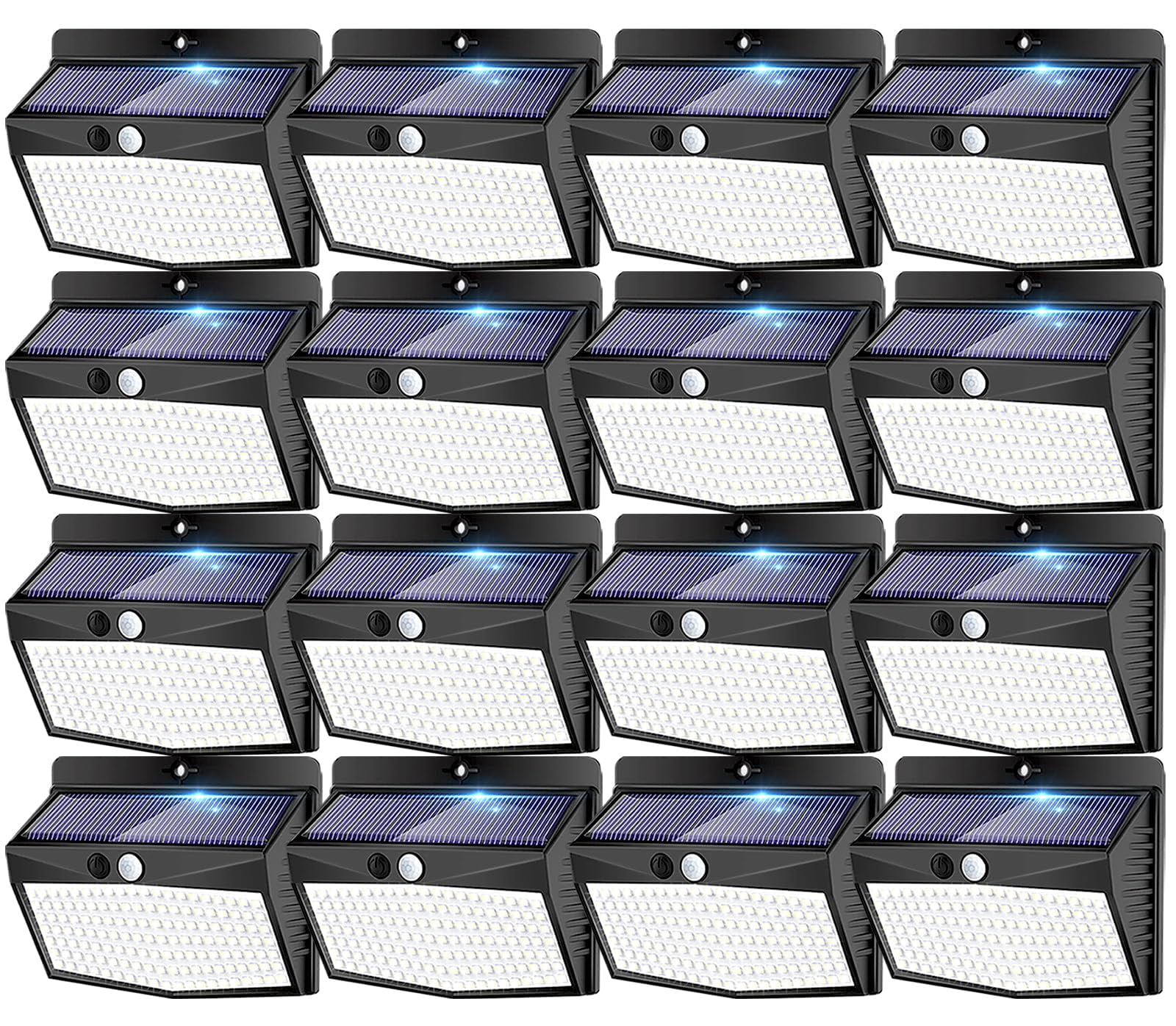
ApexPower solar outdoor light sales offer significant discounts on renewable exterior lighting, including motion-activated floodlights, pathway markers, and heavy-duty solar streetlights. Finding the best deal requires evaluating photovoltaic panel efficiency, battery chemistries like Lithium Iron Phosphate (LiFePO4), IP weather resistance ratings, and lumen output to ensure reliable performance across all seasons.
Understanding the ApexPower Solar Outdoor Light Sale Ecosystem
Upgrading residential or commercial exterior spaces with solar-powered illumination eliminates the need for expensive electrical trenching, conduit runs, and monthly utility costs. Promoted sales on ApexPower solar outdoor lights frequently draw attention from homeowners, facility managers, and landscape professionals seeking cost-effective security and accent lighting. However, navigating promotional discounts requires understanding what distinguishes a high-value sale item from budget-grade hardware.
Solar-powered fixtures combine four primary components into a single unit or split system: a photovoltaic (PV) solar panel, an energy storage battery, a light-emitting diode (LED) array, and an intelligent control system featuring passive infrared (PIR) motion sensors or dusk-to-dawn photodiode sensors. During promotional sales, ApexPower units are typically discounted across several categories, ranging from low-lumen pathway stakes to industrial-grade 3,000-lumen security floodlights.
Evaluating a sale price against technical specifications ensures that discounted fixtures deliver sufficient runtimes, withstand regional weather extremes, and illuminate designated zones effectively. Buying low-quality lighting simply because it is on sale often results in short battery lifespans, premature moisture failure, and inadequate winter charging performance.
Critical Technical Specifications to Check Before Buying
Discounted price tags can obscure important performance metrics. To verify that an ApexPower solar outdoor light meets your site requirements, analyze the following engineering specifications prior to purchase.
- Solar Light Power System Architecture:
- Input / Control Components:
- Solar Panel (Monocrystalline)
- PIR / Dusk Sensor (Control Module)
- Charge Controller / BMS Protection Board
- Energy Storage Battery (LiFePO4 Chemistry)
- High-Efficiency LED Chipset (Lumens Output)
- Input / Control Components:
Solar Panel Technology: Monocrystalline vs. Polycrystalline
The efficiency of the integrated or remote solar panel dictates how quickly the battery recharges during daylight hours.
- Monocrystalline Silicon Panels: Recognized by their uniform dark appearance, these panels offer energy conversion efficiencies between 19% and 23%. They perform significantly better in low-light, cloudy conditions and in limited physical footprints. Premium ApexPower security lights and streetlights utilize monocrystalline panels to maximize charge capture during short winter days.
- Polycrystalline Silicon Panels: Identifiable by a speckled blue hue, polycrystalline panels have lower conversion efficiencies (typically 15% to 17%). While cheaper to manufacture, they require larger surface areas to generate equivalent wattage and degrade faster under high thermal stress.
Energy Storage and Battery Chemistry
Battery capacity and chemistry dictate how many hours the light remains operational after dark, as well as how many years the unit functions before performance degrades.
- Lithium Iron Phosphate ($\text{LiFePO}_4$): The gold standard for outdoor solar fixtures. $\text{LiFePO}_4$ batteries offer an exceptional thermal operating range ($-4^\circ\text{F}$ to $140^\circ\text{F}$ / $-20^\circ\text{C}$ to $60^\circ\text{C}$) and sustain 2,000 to 3,000 charge-discharge cycles before dropping to 80% capacity. This yields an operational life of 5 to 8 years.
- Lithium-Ion (NMC / Cobalt-based): Commonly found in budget solar lights, standard lithium-ion cells provide high energy density but degrade rapidly in extreme outdoor temperatures. They typically handle only 500 to 800 charge cycles (1.5 to 2.5 years of daily use) before experiencing severe capacity fade.
Always check battery capacity expressed in milliamp-hours ($\text{mAh}$) or Watt-hours ($\text{Wh}$). To convert $\text{mAh}$ to $\text{Wh}$, multiply $\text{mAh}$ by nominal battery voltage and divide by 1,000:
$$\text{Energy (Wh)} = \frac{\text{Capacity (mAh)} \times \text{Voltage (V)}}{1000}$$
For example, a $3.2\text{V}$, $6000\text{mAh}$ $\text{LiFePO}_4$ battery provides $19.2\text{Wh}$ of continuous power reserves.
Luminous Flux and LED Chipset Efficiency
Never rely on advertised "equivalent Wattage" claims when evaluating outdoor solar lights. Instead, examine lumens—the true measure of visible light emitted.
- Pathway Lighting: 50 to 300 lumens per fixture provides adequate accent illumination without creating blinding glare along walkways.
- Landscape Sconces & Wall Lights: 200 to 600 lumens creates clear structural highlighting around entry doors, perimeter fences, and garage flanks.
- Security Floodlights & Area Lighting: 1,000 to 3,000+ lumens is necessary to fully illuminate wide driveways, open backyards, or commercial staging zones.
Check the Color Rendering Index (CRI); a CRI above 80 ensures colors appear natural at night. Correlated Color Temperature (CCT) options generally range from warm white ($3000\text{K}$) for residential ambiance to cool daylight ($6000\text{K}$–$6500\text{K}$) for high-contrast security monitoring.
Ingress Protection (IP Ratings) and Enclosure Durability
Outdoor solar fixtures are continuously exposed to rain, driven snow, dust, and ultraviolet degradation. The fixture's Ingress Protection (IP) rating defines its mechanical resistance to environmental intrusion:
- IP65: Fully dust-tight and protected against low-pressure water jets from any direction. Suitable for standard wall sconces and eave-mounted floodlights under partial protection.
- IP66: Dust-tight and protected against powerful high-pressure water jets. Recommended for exposed security lights in areas prone to heavy rainstorms and wind-driven debris.
- IP67: Fully dust-tight and capable of surviving temporary water immersion up to 1 meter depth for 30 minutes. Ideal for low-lying ground lights, garden stakes exposed to sprinkler systems, and marine/coastal environments.
Look for enclosures made from die-cast aluminum or UV-stabilized polycarbonate rather than thin ABS plastic, which warps and cracks after prolonged sun exposure.
ApexPower Solar Outdoor Lighting Categories & Feature Comparison
During promotional sale events, ApexPower models are listed across four distinct functional categories. Understanding the operational parameters of each helps align purchases with specific outdoor lighting requirements.
- Security Floodlights (1,000 - 3,000 Lumens)
- Multi-panel PIR sensing, high-power output
- Integrated Street/Area Lights (2,000 - 5,000 Lm)
- Die-cast aluminum, pole-mount, dusk-to-dawn
- Wall & Fence Sconces (200 - 600 Lumens)
- Low profile, decorative architectural lights
- Pathway & Garden Stakes (50 - 300 Lumens)
- Ground-mounted accent and navigation lights
1. Motion-Activated Security Floodlights
These units feature dual or triple adjustable LED heads coupled with an independent solar panel connected via a 15-foot cable. The separate panel permits optimal roof or fascia mounting while placing the light fixture beneath shaded eaves. Integrated PIR sensors detect thermal motion up to 35 feet away across a $120^\circ$ to $180^\circ$ arc.
2. Integrated Solar Street and Commercial Area Lights
Designed for broad spatial coverage over driveways, private roads, and parking pads, these commercial-style units combine an oversized solar panel, heavy-duty $\text{LiFePO}_4$ battery pack, and high-density surface-mount device (SMD) LED arrays into a single weather-sealed housing. Most models include multi-function wireless remote controls to set continuous output hours or adjust motion sensitivity curves.
3. Wall Sconces and Perimeter Fence Lights
Compact fixtures designed to mount directly onto wood posts, masonry walls, or vinyl fencing. They generally function on a continuous low-level ambient glow ($10%$ to $20%$ brightness) from dusk onward, switching to $100%$ full illumination for 20 to 30 seconds when an approaching person is detected.
4. Pathway and Landscape Garden Stakes
Low-profile fixtures anchored via ground spikes. Because these units house small internal panels, their primary purpose is non-glare guidance lighting along garden paths, steps, and drive borders. Quality ApexPower pathway units utilize glass lens housing rather than plastic to prevent yellowing caused by solar UV radiation.
Comprehensive ApexPower Model Comparison Table
The following table summarizes performance metrics across common ApexPower solar outdoor light configurations available during promotional sales.
| Model Category | Lumens Output | Battery Specs & Chemistry | Solar Panel Rating | Ingress Protection | Operational Modes | Ideal Application | Typical Sale Price Range (USD) |
|---|---|---|---|---|---|---|---|
| ApexPower Pro Security Floodlight | $1,500 - 3,000\text{ lm}$ | $3.2\text{V } 6,000\text{mAh}$ $\text{LiFePO}_4$ | $6\text{V} / 5\text{W}$ Monocrystalline (Detached) | IP66 | PIR Motion Activation, Dusk-to-Dawn Standby | Driveways, garage flanks, side yards | $$35 - $65$ |
| ApexPower Commercial Street Light | $3,000 - 5,000\text{ lm}$ | $3.2\text{V } 12,000\text{mAh}$ $\text{LiFePO}_4$ | $6\text{V} / 12\text{W}$ Monocrystalline (Integrated) | IP67 | 100% Motion, Timed Constant On (3h/5h/8h), Remote | Private roads, pole mounts, staging yards | $$75 - $140$ |
| ApexPower Architectural Wall Sconce | $300 - 600\text{ lm}$ | $3.7\text{V } 2,200\text{mAh}$ Li-ion | $5.5\text{V} / 1.5\text{W}$ Monocrystalline | IP65 | Continuous Dim Glow ($20%$) + Motion Boost ($100%$) | Patio walls, entryway doors, deck posts | $$20 - $35$ (2-Pack) |
| ApexPower Pathway Light Stake | $50 - 200\text{ lm}$ | $1.2\text{V } 1,200\text{mAh}$ NiMH / Li-Fe | $2\text{V} / 0.5\text{W}$ Polycrystalline | IP65 / IP67 | Dusk-to-Dawn Auto On/Off | Walkways, garden borders, floral beds | $$25 - $45$ (4-Pack) |
Step-by-Step Installation and Performance Optimization
Proper physical placement directly impacts how well a solar light performs, especially during periods of short daylight or overcast winter weather. Follow these installation procedures to ensure maximum charging efficiency and hardware longevity.
- Optimal Solar Angle Calibration Setup:
- Sun Path (South Facing)
- Monocrystalline Solar Panel (Tilt Angle = Latitude + 15°, Optimized for Winter Sun)
- Mounting Pole / Wall Bracket
Step 1: Conduct a Sun Exposure Site Audit
Before drilling holes or setting mounting posts, evaluate the location’s solar exposure throughout the day.
- Identify true geographic South (if located in the Northern Hemisphere) or true North (if located in the Southern Hemisphere).
- Ensure the selected installation point receives at least 6 to 8 hours of direct, unshaded sunlight daily.
- Check for obstruction shadows cast by roof overhangs, tall trees, neighboring structures, and chimney stacks. Note that trees without leaves in autumn will block light once full foliage returns in spring.
Step 2: Calculate and Set the Optimal Panel Tilt Angle
Fixed solar panels achieve peak annual efficiency when tilted at an angle equal to the local latitude. However, because winter features lower sun angles and shorter days, adjusting the tilt angle improves performance during critical low-light months:
- Standard Year-Round Angle: $\text{Tilt} = \text{Local Latitude}$
- Winter Optimized Angle: $\text{Tilt} = \text{Local Latitude} + 15^\circ$
- Summer Optimized Angle: $\text{Tilt} = \text{Local Latitude} - 15^\circ$
For detached ApexPower solar panels, mount the panel assembly high on the roofline or fascia facing South, utilizing the provided adjustable bracket to set the optimal inclination angle.
Step 3: Complete the Initial Conditioning Charge
Do not rely on factory pre-charge straight out of the box.
- Unpack the light and turn the main power switch to the OFF position.
- Mount or position the solar panel in direct sunlight for 24 to 48 continuous hours.
- This process fully conditions the $\text{LiFePO}_4$ battery cells and balances cell voltage across internal protection circuits prior to initial discharge.
- Turn the power switch to the ON position or select your desired operating profile via the remote control after conditioning is complete.
Step 4: Calibrate PIR Motion Sensors and Mounting Heights
For motion-activated security lights, mounting height determines both sensor detection range and light beam dispersion:
- Recommended Mounting Height: Install security lights between 8 and 12 feet above the ground. Mounting higher than 12 feet reduces PIR motion sensitivity to small targets (such as pets or walking individuals).
- Sensor Angle Adjustment: Angle the PIR sensor downward slightly ($10^\circ$ to $15^\circ$) toward the primary approach path. Avoid pointing motion sensors directly at street traffic or swaying tree branches, which trigger false alarms and drain battery reserves prematurely.
Seasonal Maintenance, Troubleshooting, and Battery Care
Even high-efficiency solar outdoor lights require routine maintenance to preserve charge efficiency and prevent operational failures over time.
- Solar Troubleshooting Flow:
- Does light illuminate at night?
- NO: Is solar panel clean and free of debris?
- NO: Clean panel with microfiber cloth.
- YES: Perform 48hr conditioning charge cycle.
- YES: Check continuous output duration after dark.
- Runtimes under 4 hours? Battery degraded or panel insufficiently angled.
- NO: Is solar panel clean and free of debris?
- Does light illuminate at night?
Photovoltaic Surface Cleaning
Dust, pollen, bird droppings, ocean salt spray, and winter road dirt create an opaque film over solar panel glass, reducing charging output by $15%$ to $35%$.
- Clean solar panels every three to six months using soft microfiber cloths, mild soap, and warm water.
- Never use abrasive scouring pads, harsh chemical solvents, or high-pressure power washers, which micro-fracture tempered solar glass and strip anti-reflective coatings.
- Clear accumulated snow from panels immediately following winter storms.
Diagnosing Short Operational Runtimes
If your ApexPower light turns on at dusk but shuts off after only two to three hours:
- Check for Ambient Light Interference: Ensure nearby streetlights, porch fixtures, or interior window lights are not shining directly onto the light's photo-sensor, which tricks the circuit into sensing daylight.
- Re-evaluate Winter Solar Gains: Lower sun arcs combined with shorter daylight hours reduce daily power yield. Switch the unit to a PIR sensor-only mode rather than a continuous dusk-to-dawn dim mode to conserve stored power.
- Inspect for Moisture Ingress: Remove the lens housing cover and check for droplets or fogging inside the housing. If water is present, wipe internal electronic boards with isopropyl alcohol, dry thoroughly, and replace silicone rubber gaskets. Apply clear exterior silicone sealant along housing seams to re-establish an airtight seal.
Battery Replacement Procedures
When an integrated $\text{LiFePO}_4$ battery eventually reaches the end of its service life (typically after 3,000 cycles):
- Unscrew the battery compartment door located on the rear or underside of the fixture.
- Unclip the standard JST electrical connector connecting the battery pack to the main circuit board.
- Replace with a matched battery pack matching identical voltage ($3.2\text{V}$ or $3.7\text{V}$) and equivalent or higher milliamp-hour ($\text{mAh}$) capacity.
- Safely recycle old lithium batteries at designated municipal electronic waste collection centers.
Frequently Asked Questions
What should I look for during an ApexPower solar outdoor light sale to ensure a good deal?
Examine core specifications rather than relying solely on advertised percentage discounts. Verify that the unit uses monocrystalline solar panels, a $\text{LiFePO}_4$ (Lithium Iron Phosphate) battery chemistry, an IP65 or higher ingress rating, and clear lumen ratings appropriate for your application. Ensure the sale item includes warranty coverage from the seller or manufacturer.
Do ApexPower solar outdoor lights work effectively in winter and on cloudy days?
Yes, modern monocrystalline panels continue charging under diffuse ambient sunlight, though power output drops to roughly $10%$ to $25%$ of peak direct-sun performance. Units equipped with $\text{LiFePO}_4$ batteries maintain operation in freezing temperatures down to $-4^\circ\text{F}$ ($-20^\circ\text{C}$). To maximize winter performance, set fixtures to motion-sensor activation mode rather than continuous lighting profiles.
What is the practical difference between IP65 and IP67 ratings on outdoor solar lights?
An IP65 rating means the light is dust-tight and resistant to low-pressure water sprays, making it suitable for wall-mounted sconces and under-eave floodlights. An IP67 rating indicates complete protection against high-pressure water jets and temporary immersion in water up to 1 meter deep. IP67 fixtures are superior for exposed garden stakes, ground-level lights, and coastal installations subjected to severe weather.
Can I replace the internal battery in ApexPower solar outdoor lights when performance degrades?
Most medium- and high-capacity ApexPower security lights and streetlights feature accessible battery compartments with standardized wiring harnesses. You can extend the lifespan of the fixture by replacing degraded cells with new $\text{LiFePO}_4$ battery packs of matching voltage and equal or higher capacity. Lower-cost, sealed stake lights may feature soldered cells that are not designed for simple replacement.
How high should I mount an ApexPower solar security floodlight for optimum motion coverage?
Mount security floodlights between 8 and 12 feet above ground level. This placement ensures the passive infrared (PIR) motion sensor captures human and vehicular movement effectively up to 35 feet away while spreading the LED floodlight beam broad enough to illuminate driveways, walkways, or entry points without creating excessive glare.
Strategic Verdict and Next Actions
Purchasing ApexPower solar outdoor lights during promotional sales allows you to upgrade property security, safety, and curb appeal without adding to your monthly electric bill or incurring costly electrical wiring expenses.
To ensure long-term satisfaction with your purchase:
- Select monocrystalline panels paired with $\text{LiFePO}_4$ battery chemistry for maximum service life and reliable low-temperature performance.
- Confirm that the light’s lumen output and IP rating match the installation site (e.g., IP66/IP67 for exposed areas; 1,500+ lumens for security coverage).
- Complete a mandatory 48-hour initial charging cycle in direct sunlight before switching the light into active nightly service.
- Position panels facing true South tilted at an inclination angle equal to your local latitude plus $15^\circ$ for optimized winter performance.
By grounding your purchase decisions in technical specs rather than marketing claims, you can take full advantage of promotional pricing while acquiring a reliable, long-lasting exterior solar lighting system.