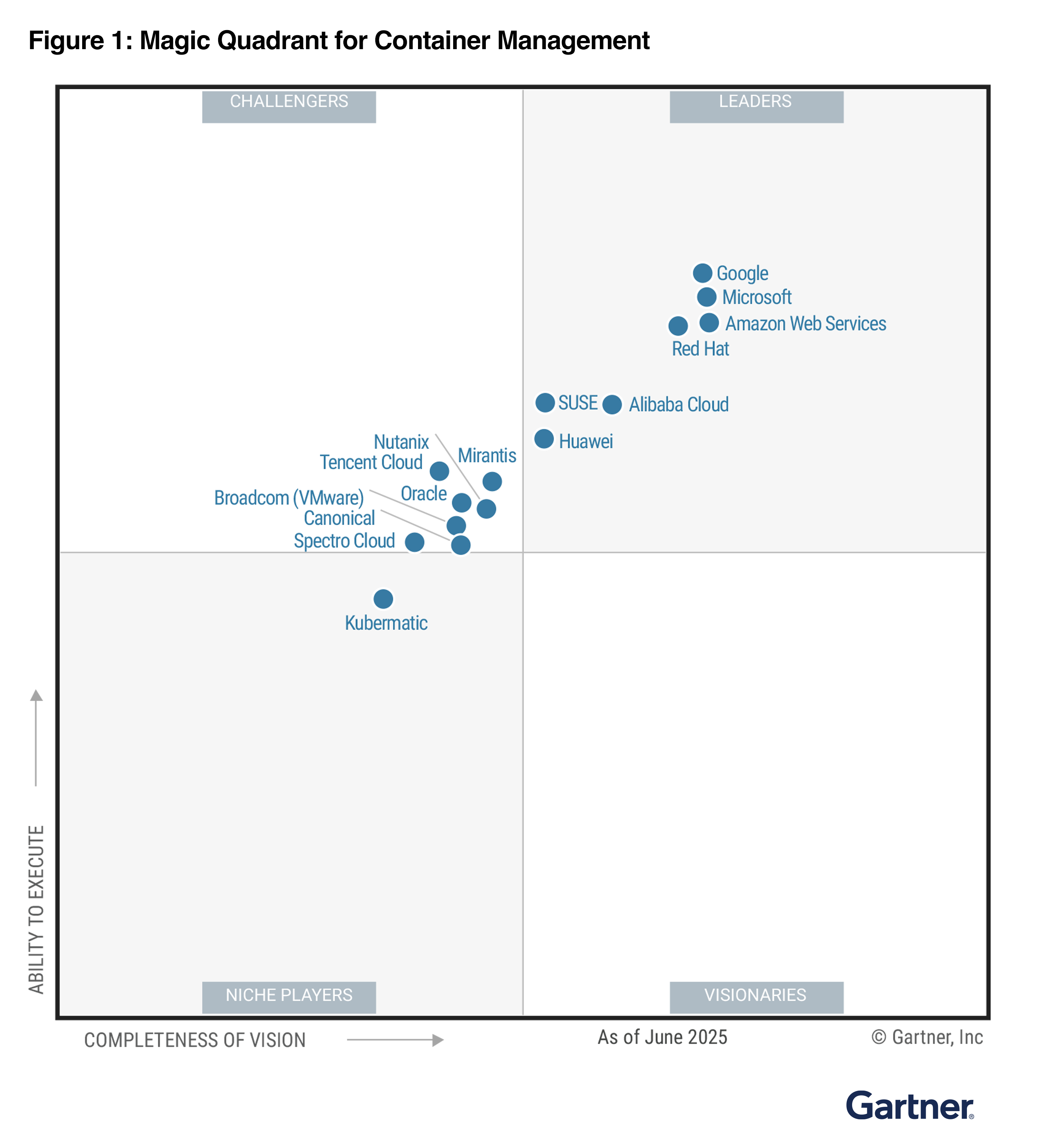
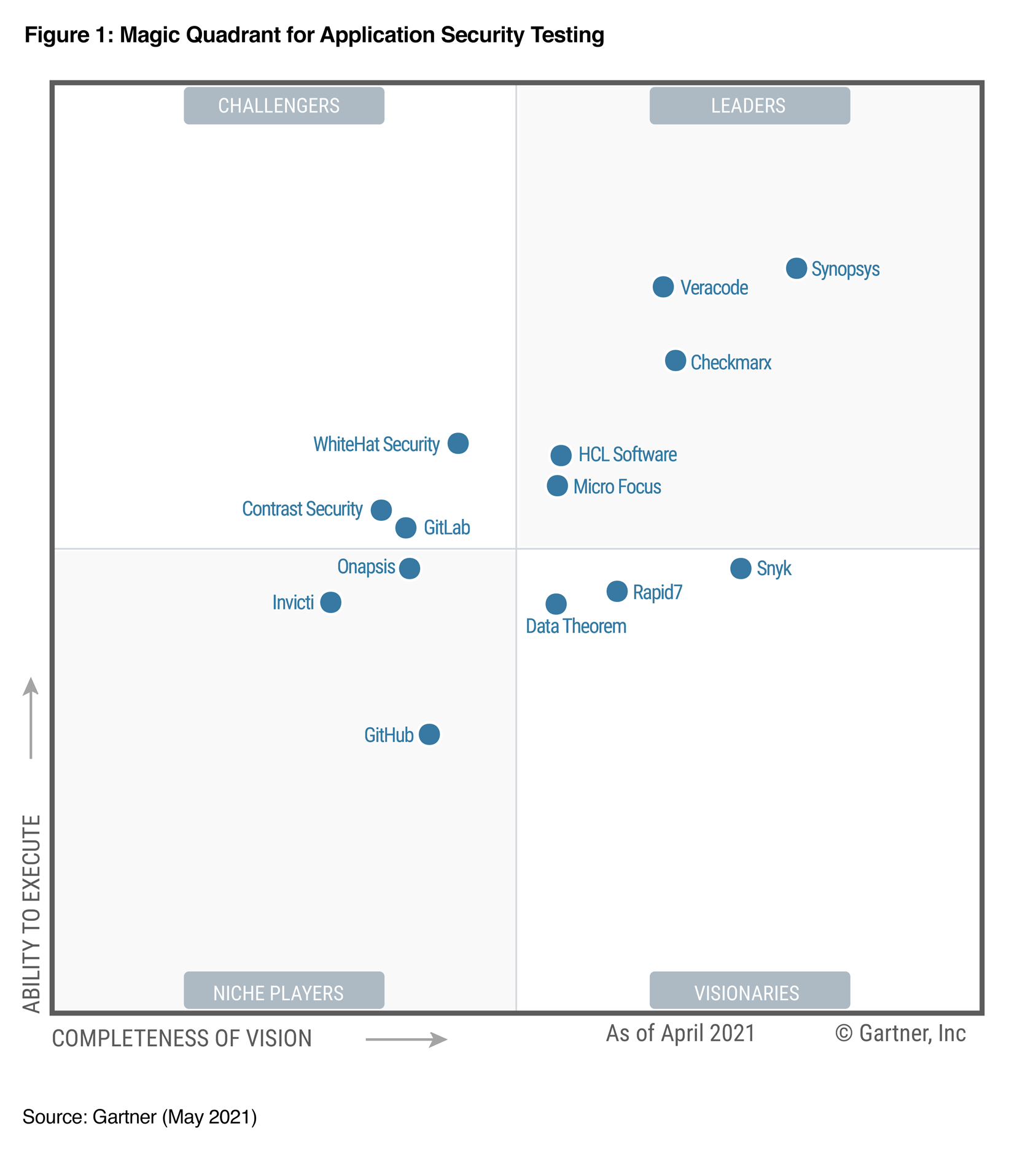
The Gartner Magic Quadrant for API Management serves as a definitive market evaluation framework for enterprise software buyers, assessing technology vendors based on their Completeness of Vision and Ability to Execute. It categorizes platform providers into Leaders, Visionaries, Challengers, and Niche Players, giving enterprise architects, chief information officers (CIOs), and engineering leaders an objective benchmark to select API platforms that support hybrid integration, microservices architectures, and modern API governance.
What is the Gartner Magic Quadrant for API Management?
The Gartner Magic Quadrant (MQ) is a proprietary research methodology developed by Gartner Inc. that provides a graphical competitive positioning of technology providers in fast-growing enterprise markets. In the context of API management, the report analyzes vendors that offer platforms designed to publish, secure, govern, analyze, and monetize application programming interfaces across multi-cloud and on-premises environments.
Enterprise API management has evolved beyond basic gateway routing and simple developer portals. Modern API platforms must manage complex technical ecosystems comprising legacy web services, microservices, event-driven architectures, and artificial intelligence model endpoints. Gartner evaluates software providers across two primary axes:
- Ability to Execute: Assesses financial viability, market responsiveness, customer satisfaction, product functionality, pricing models, and overall sales execution.
- Completeness of Vision: Evaluates the vendor's market understanding, product roadmap, innovation rate, geographic expansion, and alignment with emerging architecture paradigms such as federated governance and generative AI integration.
- Completeness of Vision vs. Ability to Execute:
- Top-Left: Visionaries
- Top-Right: Leaders
- Bottom-Left: Niche Players
- Bottom-Right: Challengers
The Four Quadrants Defined
- Leaders: Vendors in this quadrant demonstrate high scores across both execution and vision. They offer comprehensive end-to-end API lifecycle management suites, possess substantial enterprise market share, and consistently deliver innovative features that anticipate market shifts.
- Challengers: These providers deliver exceptionally reliable execution, high operational stability, and robust core functionality. However, they may lack cutting-edge vision in areas like advanced edge management, automated API discovery, or novel monetization strategies compared to Leaders.
- Visionaries: Visionary vendors introduce groundbreaking technical innovations—such as native AI API orchestration, deep eBPF-based security inspection, or advanced event-driven support—but may have a smaller customer base, limited geographical reach, or less mature enterprise support infrastructure.
- Niche Players: Niche vendors focus on specific enterprise verticals, localized geographic markets, or highly specialized technical requirements, such as ultra-low latency edge deployments or embedded industrial IoT gateways.
Key Architectural Trends Reshaping Enterprise API Management
Evaluating API management platforms requires understanding the fundamental shifts in how organizations build, deploy, and secure software services. Modern enterprise architectures demand capabilities that extend well beyond traditional centralized REST API gateways.
1. Federated API Management and Control Plane Separation
Historically, enterprise IT deployed a single, monolithic API gateway to route and control all internal and external traffic. As organizations adopt multi-cloud strategies across platforms like AWS, Microsoft Azure, and Google Cloud, centralized routing introduces network latency, egress costs, and operational bottlenecks.
Modern platforms decouple the control plane (governance, policy configuration, developer portals, and analytics) from the data plane (the actual runtime gateways processing request/response payloads). Federated API management allows organizations to run lightweight data plane instances directly inside microservices clusters (e.g., Kubernetes via ingress controllers), at the network edge, or across hybrid environments, while maintaining a single, central administrative control plane for security and compliance.
2. Integration of API Security & WAAP Convergence
API security has transitioned from basic authentication (API keys and basic tokens) to advanced runtime threat protection. Gartner's evaluation heavily emphasizes how platforms handle vulnerability discovery, sensitive data exposure, and automated bot attacks.
Modern platforms integrate directly with Web Application and API Protection (WAAP) solutions and API Security Posture Management (APISM) tools. Key security requirements include:
- Strict Authentication & Authorization: Enforcing standards such as OAuth 2.0 (RFC 6749) and OpenID Connect alongside Mutual TLS (mTLS) for microservices-to-microservices communication.
- Runtime Anomaly Detection: Utilizing machine learning to detect anomalous consumption patterns, rate limit bypass attempts, and complex logic flaws like Broken Object Level Authorization (BOLA).
- Payload Inspection & Data Masking: Automatically identifying Personally Identifiable Information (PII) or credit card data in request headers or body payloads to prevent data leakage.
- Zero Trust Governance: Aligning with established frameworks such as NIST SP 800-207 Zero Trust Architecture to continuously re-verify API consumer identity and context.
3. Generative AI & LLM API Gateway Adaptation
The rapid adoption of Large Language Models (LLMs) and generative AI services has introduced new requirements for API gateways. Managing calls to AI models differs significantly from conventional CRUD (Create, Read, Update, Delete) services due to non-deterministic responses, streaming payloads (Server-Sent Events), and variable compute costs.
Specialized AI API management capabilities now include:
- Token-Based Rate Limiting: Enforcing rate limits based on tokens per minute (TPM) rather than traditional requests per minute (RPM).
- Prompt & Response Guardrails: Filtering harmful content, preventing prompt injection attacks, and auditing AI interactions for regulatory compliance.
- Cost Allocation & Fallback Routing: Tracking LLM expenditures per department, dynamically routing requests across multiple model providers (e.g., OpenAI, Anthropic, open-source hosted models) to ensure high availability and cost optimization.
4. AsyncAPI, Event-Driven Architecture, and GraphQL Support
Enterprise integration extends beyond synchronous HTTP REST endpoints. Organizations routinely utilize asynchronous protocols such as Apache Kafka, RabbitMQ, WebSockets, and MQTT for real-time data streaming.
Leading API management platforms support the OpenAPI Specification alongside the AsyncAPI specification, allowing enterprise architects to document, govern, and apply access policies to event streams with the same rigor used for traditional web services. Furthermore, support for GraphQL federation enables organizations to unify disparate back-end services into a single, performant query interface without introducing architectural technical debt.
Evaluating Market Vendor Categories
When interpreting the Gartner Magic Quadrant, decision-makers should recognize that vendors typically originate from one of three structural lineages. Each category brings distinct technical strengths and trade-offs.
- ENTERPRISE API MARKETPLACE
- Hyper-scalers (AWS, Azure, Google Cloud)
- Dedicated Platforms (Kong, Axway, Tyk, Gravitee)
- Integration Suites (MuleSoft, IBM, Software AG)
Hyper-scaler Native Gateways
Cloud service providers embed API gateways directly into their cloud ecosystems (e.g., AWS API Gateway, Azure API Management, Google Cloud Apigee).
- Strengths: Deep, native integration with cloud-native identity providers, serverless compute (e.g., AWS Lambda, Azure Functions), monitoring tools, and unified billing.
- Considerations: Potential cloud vendor lock-in; reduced flexibility when orchestrating workflows that span competing cloud providers or complex legacy on-premises datacenters.
Dedicated, Cloud-Native API Platforms
Independent software vendors focus exclusively on high-performance API gateways and control systems (e.g., Kong, Axway, Tyk, Gravitee).
- Strengths: Exceptional raw execution performance, low latency overhead, lightweight footprint, and multi-cloud deployment portability across bare metal, virtual machines, and Cloud Native Computing Foundation (CNCF) Kubernetes clusters.
- Considerations: May require additional integration effort to pair with third-party enterprise service buses (ESB) or legacy middleware platforms.
Enterprise Integration & iPaaS Suites
Broad enterprise software vendors deliver API management as a component of a comprehensive Integration Platform as a Service (iPaaS) or enterprise service bus suite (e.g., Salesforce MuleSoft, IBM, Software AG webMethods).
- Strengths: Exceptional capability for complex data transformations, legacy mainframe connectivity, automated workflow orchestration, and rich pre-built enterprise connectors (e.g., SAP, Salesforce).
- Considerations: Typically higher Licensing TCO (Total Cost of Ownership) and potentially higher resource overhead compared to minimalist edge gateways.
Enterprise Evaluation Framework & Technical Comparison
To streamline vendor selection beyond quadrant placement, enterprise evaluation committees should benchmark platforms across core technical criteria:
| Evaluation Dimension | Core Architectural Criteria | High-Volume Enterprise Requirement | Edge & Hybrid Cloud Requirement |
|---|---|---|---|
| Gateway Performance | Request latency overhead, throughput (RPS), memory footprint | Sub-5ms latency penalty under heavy load; multi-region active-active routing | C-based, Rust-based, or optimized Go runtime engines with minimal memory footprint |
| Deployment Flexibility | Multi-cloud control, hybrid data planes, Kubernetes ingress | Centralized governance with distributed hybrid gateways across heterogeneous environments | Containerized micro-gateways run natively inside service meshes (e.g., Istio, Linkerd) |
| Security & Compliance | OAuth2, OIDC, mTLS, WAF integration, BOLA protection | Automated zero-trust enforcement, dynamic policy execution, dynamic payload inspection | Hardware Security Module (HSM) support, local cryptographic key validation |
| Developer Experience | API catalog, interactive documentation, SDK generation | Self-service developer portals, automated API key approval, customized role-based access | GitOps workflow integration, Declarative YAML configuration parsing |
| Governance & Lifecycle | OpenAPI/AsyncAPI linting, versioning, deprecation control | Automated CI/CD pipeline integration, policy-as-code validation (e.g., OPA) | Local fallback cached policies for offline gateway resiliency |
| GenAI / LLM Readiness | Token rate limiting, model routing, prompt safety guardrails | Real-time token consumption tracking, multi-LLM failover, PII stripping | High-throughput streaming response parsing (SSE, gRPC) |
Step-by-Step Selection Methodology for Enterprise Architects
Choosing an API platform directly from a Gartner Magic Quadrant report without internal context often leads to misaligned implementations. Enterprise teams should execute a systematic, five-stage evaluation process.
- STAGE 1: Architectural Mapping & Inventory Discovery
- STAGE 2: Security, Identity & Governance Standard Definition
- STAGE 3: Total Cost of Ownership (TCO) & Licensing Evaluation
- STAGE 4: Proof of Concept (PoC) & Benchmark Testing
- STAGE 5: Deployment Strategy & Migration Roadmap Execution
Stage 1: Architectural Mapping & Inventory Discovery
Before reviewing external vendor reports, audit your current application ecosystem:
- Catalog all existing internal, external, and partner APIs.
- Identify target protocol requirements: REST, SOAP, GraphQL, gRPC, and event streams (Kafka, WebSockets).
- Classify deployment environments: On-premises datacenters, public cloud environments, hybrid edge locations, and private cloud Kubernetes clusters.
Stage 2: Security, Identity & Governance Standard Definition
Define non-negotiable security requirements to filter candidate vendors quickly:
- Ensure compatibility with existing Enterprise Identity Providers (IdPs) such as Okta, Ping Identity, or Microsoft Entra ID.
- Require native policy-as-code execution using engine standards such as Open Policy Agent (OPA).
- Verify compliance requirements specific to your operating region and vertical (e.g., PCI-DSS for payment processing, HIPAA for healthcare, GDPR/CCPA for personal privacy).
Stage 3: Total Cost of Ownership (TCO) & Licensing Evaluation
API management pricing models vary significantly across providers:
- Usage-Based Pricing: Billed per million API calls or per gigabyte of data processed. Ideal for unpredictable or scaling workloads, but requires strict financial governance to avoid unexpected costs.
- Core/Node-Based Licensing: Billed per CPU core or gateway instance deployed. Provides predictable operational costs for stable, high-throughput enterprise applications.
- Tiered Subscription Suites: Billed based on bundled enterprise capabilities, administrative seats, and developer portal active users.
Calculate the 3-year to 5-year TCO, factoring in infrastructure hosting costs, initial implementation services, ongoing maintenance, training, and specialized support add-ons.
Stage 4: Proof of Concept (PoC) & Benchmark Testing
Never finalize a platform selection based purely on documentation or vendor demonstrations. Conduct a structured, time-boxed Proof of Concept using your actual application traffic patterns:
- Deploy the gateway runtime in a isolated sandbox environment mirroring production infrastructure.
- Execute automated load testing to evaluate latency distribution (P95 and P99 metrics) under heavy concurrent traffic.
- Simulate failure modes, such as control plane disconnection, cloud region outages, and identity provider timeouts, to verify data plane resilience.
- Test developer onboarding efficiency by having application teams publish, document, and consume a mock service using self-service workflows.
Stage 5: Deployment Strategy & Migration Roadmap Execution
After final vendor selection, establish an incremental rollout plan:
- Implement a centralized API governance taxonomy before onboarding development teams.
- Migrate low-risk, internal non-critical microservices first to refine operational playbooks.
- Utilize canary deployments and traffic shadowing to validate high-volume public APIs before executing cutover transitions.
Common Pitfalls When Using Magic Quadrant Reports
While Gartner Magic Quadrant reports provide industry analysis, decision-makers often make critical errors when interpreting their contents.
Selecting a "Leader" Without Contextual Fit
A common management error is selecting a vendor strictly because it appears in the top-right corner of the Magic Quadrant. The "Leader" position reflects broad general market execution and strategic vision, but it does not guarantee that the solution matches your specific architectural constraints.
For example, a enterprise requiring ultra-low latency C-based edge processing for embedded industrial devices may find a lightweight Niche Player or Visionary far more effective than a feature-heavy enterprise suite optimized for complex banking middleware.
Underestimating Operational Overhead & Developer Friction
A platform loaded with enterprise features can create friction if it imposes cumbersome administrative workflows on engineering teams. If configuring an API routing rule or publishing documentation requires manual approval tickets or complex internal forms, developers will often bypass the gateway entirely, introducing shadow APIs and security blind spots. Prioritize platform automation, declarative configuration (YAML/GitOps), and seamless CLI tool integration.
Ignoring Vendor Lock-in & Egress Costs
When choosing hyper-scaler native API gateways, compute costs can escalate rapidly as transaction volume grows. Furthermore, deeply embedding platform-specific custom plugins or proprietary routing logic makes migrating across cloud providers difficult. Architectural designs should abstract gateway logic using standard OpenAPI definitions and open specification plugins wherever feasible.
Frequently Asked Questions
How often does Gartner publish the Magic Quadrant for API Management?
Gartner typically updates and publishes its Magic Quadrant research reports annually or every 12 to 18 months, depending on market maturity, technology evolution, and vendor acquisition activities within the enterprise software sector.
What is the difference between an API Gateway and an API Management Platform?
An API Gateway is a runtime networking component that accepts incoming client requests, enforces security policies (e.g., authentication, rate limiting), and routes traffic to back-end services. An API Management Platform is a full lifecycle suite that includes the API Gateway alongside developer portals, analytics dashboards, policy configuration tools, API cataloging, monetization modules, and lifecycle governance frameworks.
Can an open-source solution perform as well as a Gartner-recognized enterprise platform?
Yes. Many recognized enterprise API platforms built their foundations on robust open-source engines (e.g., Envoy Proxy, NGINX). Open-source platforms can deliver world-class latency and flexibility. However, enterprise software buyers often opt for commercial versions or Gartner-recognized enterprise platforms to secure commercial SLAs, dedicated round-the-clock support, advanced compliance certifications, and out-of-the-box administrative GUIs.
How does API Management relate to Service Mesh architecture?
API Management primarily governs North-South traffic (traffic flowing into the datacenter or cloud cluster from external users, applications, or partner systems). A Service Mesh primarily handles East-West traffic (service-to-service communication within an internal Kubernetes cluster or microservice boundary). Modern architectures increasingly combine both, using an API gateway as the ingress controller for the service mesh.
What role does API Security play in Gartner's evaluation criteria?
API security is a major evaluation factor in modern Gartner API management assessments. Gartner specifically evaluates how natively platforms provide threat defense, vulnerability scanning, automated OWASP Top 10 API vulnerability mitigation (such as BOLA and broken authentication), and integration capability with dedicated API security posture management (APISM) tools.
Next Steps & Strategic Recommendations
To maximize your investment in an API management platform, transition from high-level market analysis to practical execution:
- Establish an Internal API Center of Excellence (CoE): Form a cross-functional team consisting of enterprise architects, security engineers, and DevOps leads to define unified API design standards, security policies, and governance rules.
- Download the Full Gartner Critical Capabilities Report: Pair the Magic Quadrant overview with Gartner's companion "Critical Capabilities" report, which ranks vendors across specific operational use cases (e.g., Internal API Management, External Developer Portals, Multi-Cloud Governance).
- Draft a Declarative Architecture Roadmap: Define your target deployment model (centralized, federated, or service-mesh ingress) and mandate OpenAPI 3.x and AsyncAPI compliance across all business units.
- Initiate Vendor Selection Benchmark: Select 2 to 3 candidate solutions across different quadrants—testing for developer usability, latency under load, and policy-as-code automation—before signing multi-year enterprise license agreements.