In the context of science and mathematics, the term antiparallel refers to two lines, vectors, or molecular strands that run parallel to one another but are oriented in opposite directions. While parallel lines remain equidistant and point the same way, antiparallel components maintain that equidistance while moving toward opposing poles or terminals, a configuration essential for the stability of DNA, protein structures, and electromagnetic systems.
The Fundamental Concept of Antiparallelism
To understand the antiparallel meaning, one must first distinguish it from simple parallelism. In a standard parallel arrangement, two entities—whether they are physical lines on a graph or tracks on a railway—share the same orientation. If you were to place an arrow on each line, both arrows would point toward the same destination.
In an antiparallel arrangement, the geometric relationship remains parallel (the lines never meet), but the directional vectors are 180 degrees apart. If one "arrow" points north, the other must point south. This distinction is not merely academic; it governs how molecules bond, how forces interact in physics, and how data is transmitted through modern electrical circuits as of 2026.
Geometric and Vector Mathematics
In the realm of vector calculus and linear algebra, two vectors are considered antiparallel if they are directed in opposite directions and the angle between them is exactly 180 degrees ($\pi$ radians). Mathematically, if you have two vectors, A and B, they are antiparallel if:
A = kB
where k is a negative scalar.
The dot product of two antiparallel vectors will always be the negative product of their magnitudes ($A \cdot B = -|A||B|$), representing the maximum possible opposition between two forces or paths. This is a foundational concept in mechanics, where opposing forces acting along parallel lines of action create couples or moments, influencing how structures handle torque and rotational equilibrium.
Antiparallel Meaning in Genetics: The DNA Double Helix
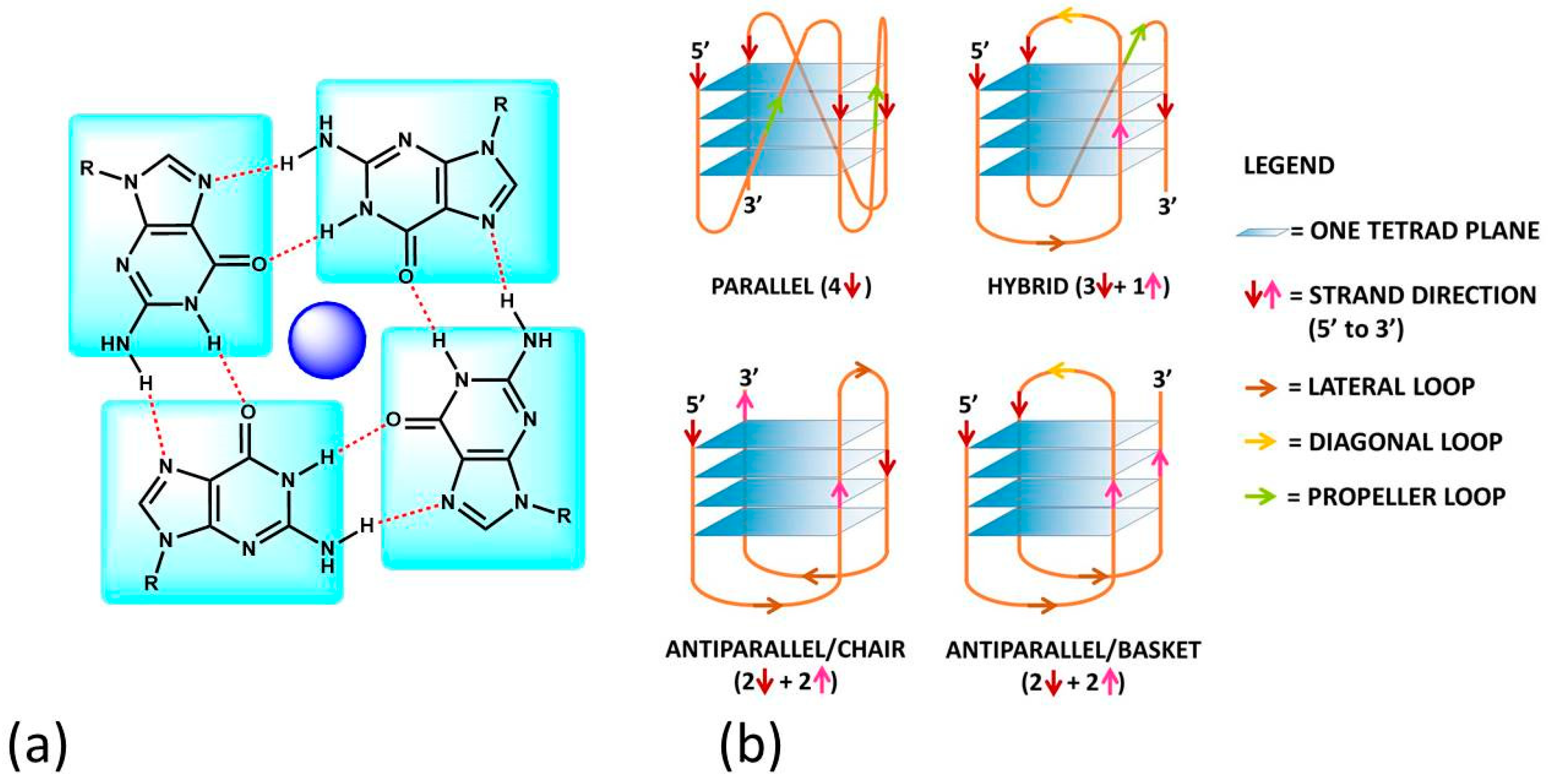
The most famous application of the antiparallel concept is found in molecular biology. When James Watson and Francis Crick proposed the double-helix model of DNA, a core component of their discovery was that the two strands of the DNA molecule are antiparallel.
The 5' and 3' Orientation
Each strand of DNA has a "chemical polarity." This is determined by the numbering of the carbon atoms in the deoxyribose sugar molecule. One end of a DNA strand is called the 5' (five-prime) end, which terminates in a phosphate group attached to the fifth carbon. The other end is the 3' (three-prime) end, which terminates in a hydroxyl (-OH) group attached to the third carbon.
In a DNA double helix:
- Strand A might run in a 5' to 3' direction (top to bottom).
- Strand B must run in a 3' to 5' direction (top to bottom).
This flipped orientation is what allows the nitrogenous bases (Adenine, Thymine, Cytosine, and Guanine) to face each other and form hydrogen bonds. If the strands were parallel, the chemical groups would not align properly to allow for the specific base-pairing (A with T, C with G) that holds the ladder together.
Biological Implications of Antiparallel Strands
The antiparallel nature of DNA is not just a structural quirk; it dictates how life functions at a cellular level. During DNA replication, the enzyme DNA polymerase can only add new nucleotides to the 3' end of a growing strand.
Because the two original strands are antiparallel, the replication process must happen differently on each strand. This leads to the creation of a "leading strand," which is synthesized continuously, and a "lagging strand," which must be synthesized in short bursts known as Okazaki fragments. Without the antiparallel arrangement, the entire mechanism of genetic inheritance and cellular division would require a completely different biochemical pathway.
Antiparallel Structures in Biochemistry: Protein Folding
Beyond DNA, the concept of antiparallelism is vital in understanding protein secondary structures, specifically beta-pleated sheets ($\beta$-sheets). Proteins are made of chains of amino acids, and these chains can fold back on themselves to form stable surfaces.
Antiparallel vs. Parallel Beta-Sheets
A $\beta$-sheet is formed when two or more segments of a polypeptide chain align side-by-side. These can be arranged in two ways:
- Parallel $\beta$-sheets: All bonded strands run in the same N-terminal to C-terminal direction.
- Antiparallel $\beta$-sheets: Neighboring strands alternate directions (N-to-C, then C-to-N).
From a stability standpoint, antiparallel $\beta$-sheets are generally more robust. In the antiparallel configuration, the hydrogen bonds between the strands are straight and perpendicular to the axis of the chain. This direct alignment creates a stronger "zipper" effect. In parallel sheets, the hydrogen bonds are slanted or skewed, which results in a slightly weaker overall structure. This difference is critical for structural biologists and drug designers who, in 2026, continue to model protein interactions to combat neurodegenerative diseases associated with protein misfolding.
Antiparallel Meaning in Electrical Engineering and Physics
In physics and engineering, the term describes the flow of current or the orientation of magnetic moments.
Current Flow and Signal Integrity
In electrical engineering, antiparallel circuits are often used to cancel out electromagnetic interference (EMI). When two wires carry equal current in opposite directions (an antiparallel flow), the magnetic fields generated by each wire tend to cancel each other out. This principle is the basis for twisted-pair cabling, such as the Ethernet cables used for high-speed internet. By ensuring the signals are antiparallel, engineers can transmit data over longer distances without the signal being degraded by external "noise."
Electromagnetism and Particle Spin
In quantum mechanics and magnetism, particles such as electrons have a property called "spin." When two electrons occupy the same orbital, they must have antiparallel spins (one spin-up, one spin-down) according to the Pauli Exclusion Principle.
Similarly, in antiferromagnetism, the magnetic moments of atoms or molecules align in a regular pattern with neighboring spins pointing in opposite directions. This results in a material that, on a macroscopic level, exhibits no net magnetic field, despite being ordered at the atomic level. This is distinct from ferromagnetism, where spins are parallel and create a strong collective magnetic field.
Comparison of Parallel and Antiparallel Configurations
The following table summarizes the key differences between these two orientations across different scientific disciplines:
| Discipline | Parallel Configuration | Antiparallel Configuration | Significance of Antiparallelism |
|---|---|---|---|
| Mathematics | Vectors point in the same direction ($\theta = 0^\circ$). | Vectors point in opposite directions ($\theta = 180^\circ$). | Results in a negative dot product; maximum opposition. |
| Genetics (DNA) | Strands run 5' $\to$ 3' and 5' $\to$ 3'. | Strands run 5' $\to$ 3' and 3' $\to$ 5'. | Essential for hydrogen bonding and base pairing. |
| Biochemistry | Protein $\beta$-sheets run N $\to$ C and N $\to$ C. | Protein $\beta$-sheets run N $\to$ C and C $\to$ N. | Increased structural stability via straight H-bonds. |
| Electronics | Current flows in the same direction in adjacent wires. | Current flows in opposite directions in adjacent wires. | Reduces EMI and crosstalk; used in differential signaling. |
| Magnetism | Magnetic moments align in the same direction. | Magnetic moments align in opposite directions. | Defines antiferromagnetic properties; net zero magnetism. |
Why Antiparallelism Matters: A Solution-Oriented View
Identifying an antiparallel relationship is often the first step in solving complex problems in design and analysis. Whether you are a student or a professional, recognizing this orientation allows you to predict behavior.
Identifying Orientations in Lab Work
For those working in biotechnology or clinical diagnostics, understanding the 5' to 3' directionality is critical for techniques like PCR (Polymerase Chain Reaction). If a researcher designs a primer (a short strand of DNA) that is not antiparallel and complementary to the target sequence, the primer will fail to bind, and the diagnostic test will yield a false negative.
Troubleshooting Electrical Interference
In 2026, as devices become smaller and more densely packed, managing "crosstalk" between circuits is a primary challenge. If a circuit board is experiencing high levels of interference, engineers look for parallel traces carrying signals in the same direction. By rerouting these to be antiparallel or using differential signaling, they can often eliminate the noise without adding bulky shielding.
Frequently Asked Questions
What is the simplest definition of antiparallel?
The simplest definition is "parallel but moving or oriented in opposite directions." If two lines stay the same distance apart but one goes "up" and the other goes "down," they are antiparallel.
Why is DNA antiparallel instead of parallel?
DNA is antiparallel because of the asymmetric shape of the nucleotides. To allow the nitrogenous bases (the "rungs" of the ladder) to form stable hydrogen bonds with their partners, the two sugar-phosphate backbones must face opposite directions. This ensures the atoms within the bases are positioned at the correct angles and distances to bond effectively.
Can two vectors be antiparallel if they are not on the same line?
Yes. In vector mathematics, vectors are defined by magnitude and direction, not their starting position. Two vectors on different, parallel lines are still considered antiparallel if they point in exactly opposite directions.
What is the difference between antiparallel and perpendicular?
Perpendicular lines meet at a 90-degree angle. Antiparallel lines do not meet (they are parallel) but have a 180-degree difference in their directional orientation.
Is an antiparallel orientation more stable in proteins?
Yes, typically. In antiparallel beta-sheets, the hydrogen bonds that hold the structure together are straight, which is a lower-energy, more stable configuration than the skewed bonds found in parallel beta-sheets.
How does antiparallelism relate to 5' and 3' ends?
The 5' and 3' labels refer to the carbon atoms in the sugar ring of the DNA backbone. "Antiparallel" means that if you follow the two strands of a DNA molecule from one end to the other, one strand will "start" with the 5' carbon and "end" with the 3', while its partner strand will "start" with the 3' and "end" with the 5'.
Practical Recommendation: Analyzing Directionality
When encountering a system described as antiparallel, your first action should be to identify the orientation markers.
- In Biology, look for the 5' (phosphate) and 3' (hydroxyl) ends.
- In Physics, identify the vector arrows or the positive/negative terminals of a current source.
- In Geometry, determine the scalar factor between the vectors; a negative value confirms an antiparallel relationship.
Understanding this concept allows you to grasp the "why" behind the structure of life and the efficiency of modern technology. By recognizing that opposition in direction can lead to stability and balance, you gain a deeper insight into the physical world.