Navigating an AmTrust workers' compensation claim in Texas requires a clear understanding of state insurance regulations, strict statutory deadlines, and specific claim-reporting protocols. AmTrust Financial is a major carrier of commercial coverage for small and mid-sized businesses, administering medical and income benefits for injured workers while defending policyholder interests under state oversight.
Disclaimer: This guide provides general informational coverage of insurance practices and Texas administrative processes. It does not constitute formal legal, medical, or financial advice. For specific legal counsel or policy disputes, consult a licensed Texas attorney or the Texas Department of Insurance.
Overview of Texas Workers' Compensation and AmTrust's Role
Texas operates a unique workers' compensation framework compared to the rest of the United States. Under the Texas Workers' Compensation Act, private employers are not statutorily mandated to carry workers' compensation insurance. Employers who choose not to carry coverage are designated as "non-subscribers" and forfeit common-law defenses if sued by injured employees. Conversely, businesses that elect to subscribe purchase formal policies through private carriers such as AmTrust Financial.
When a Texas employer secures a workers' compensation policy through AmTrust, the carrier operates within the regulatory framework established by the Texas Department of Insurance, Division of Workers' Compensation (TDI-DWC). AmTrust assumes financial liability for covered workplace injuries, occupational diseases, and repetitive trauma claims. In exchange for this protection, injured workers receive statutory medical treatment and wage replacement benefits regardless of fault, while subscribing employers gain broad immunity from personal injury lawsuits related to workplace accidents.
AmTrust manages claims through dedicated claims adjusters, nurse case managers, and third-party bill administrators. For both policyholders and injured workers, successful claim resolution depends on adhering strictly to TDI-DWC procedural rules and AmTrust’s corporate intake requirements.
Step-by-Step Process for Filing an AmTrust Claim in Texas
Processing a workers' compensation claim with AmTrust involves parallel duties for both the employee and the employer. Missing a required administrative step can lead to denied benefits or regulatory penalties.
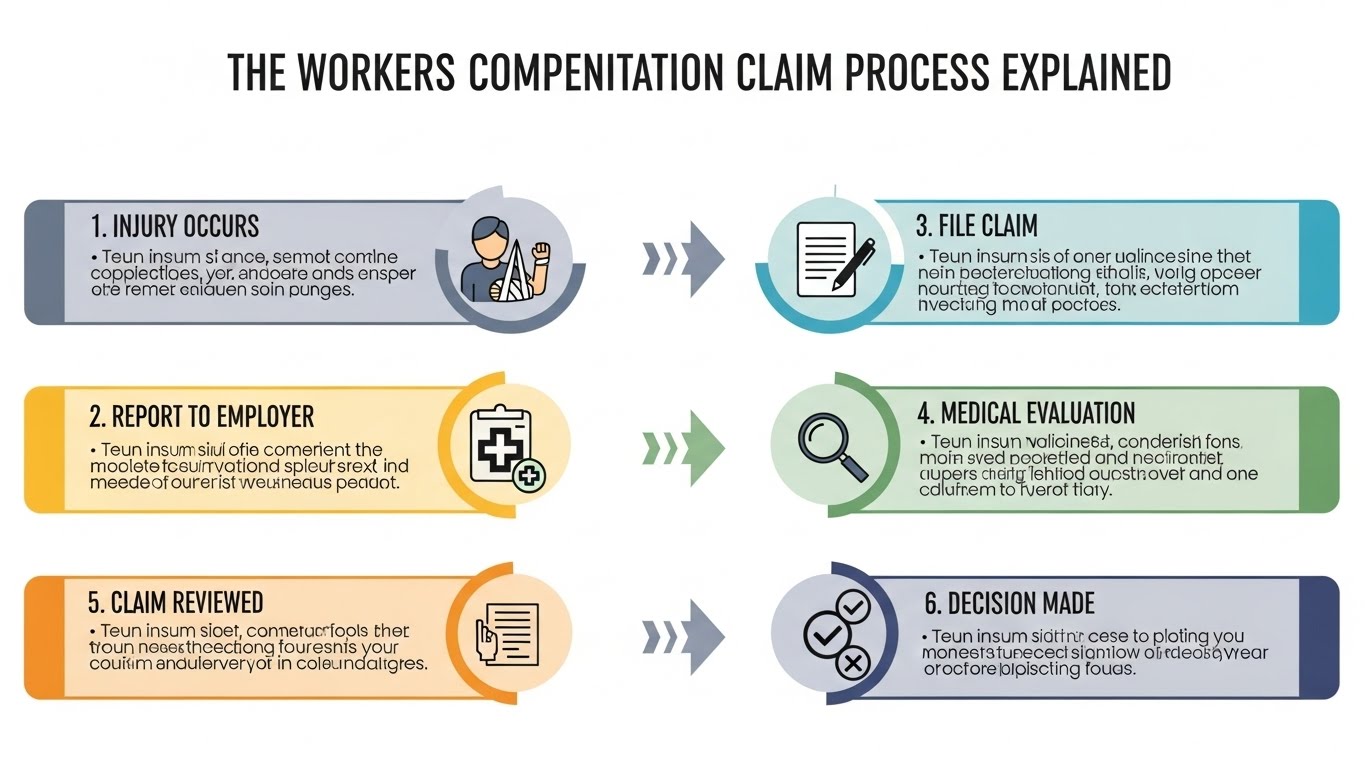
- Workplace Injury Occurs
- Employee Gives Notice to Employer (Must occur within 30 Days)
- Employer Submits Claim to AmTrust & TDI-DWC (DWC Form-001 within 8 Days of Lost Time)
- AmTrust Assigns Adjuster & Issues Claim Number
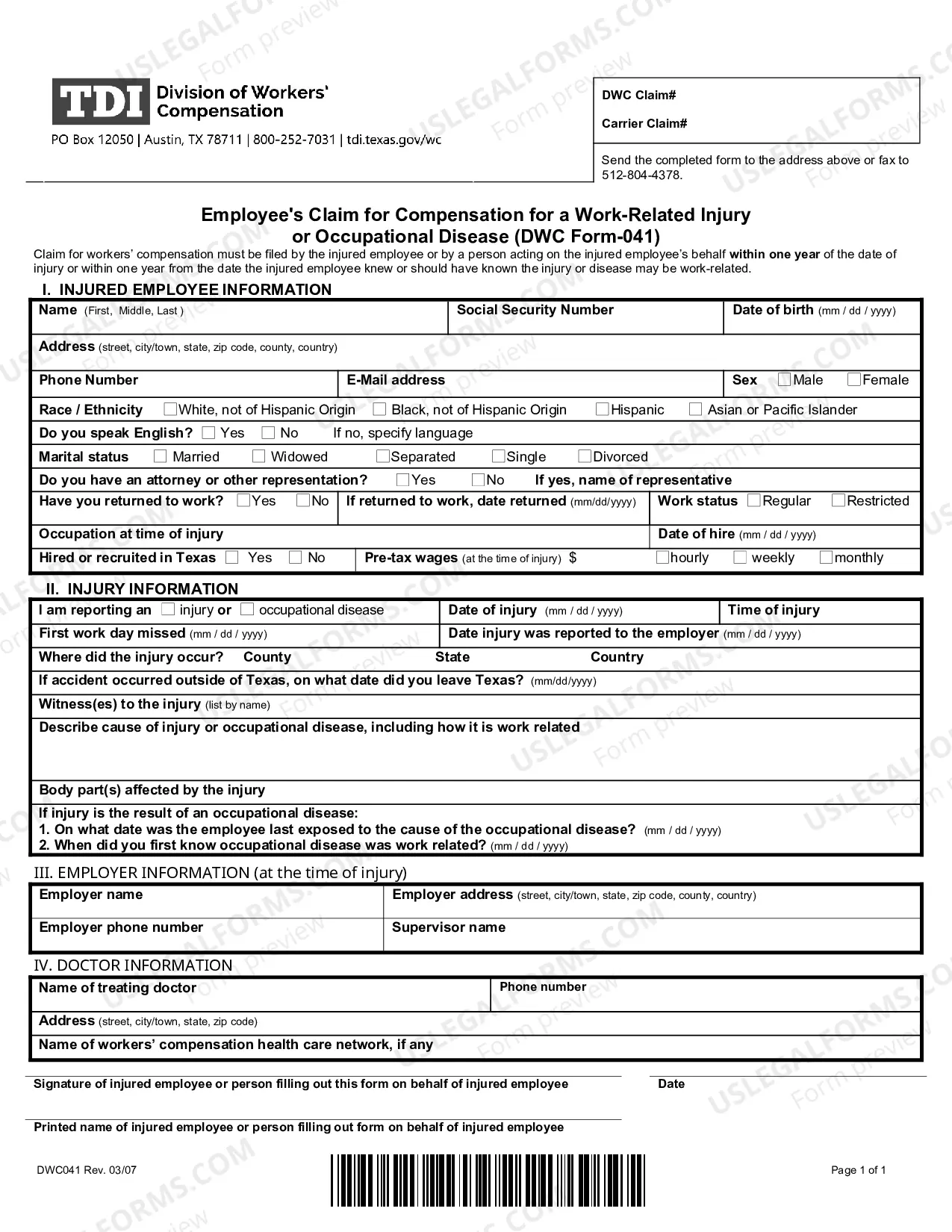
- Employee Files Formal State Claim (DWC Form-041 within 1 Year)
1. Immediate Notice of Injury (Employee Duty)
Under Texas Labor Code § 409.001, an injured employee must notify their employer of a workplace injury no later than the 30th day after the date the injury occurred. If the claim involves an occupational disease or repetitive strain (such as carpal tunnel syndrome), the 30-day clock begins on the date the worker knew, or should have known, that the condition was work-related.
Notice can be verbal or written, but submitting written notice to a supervisor or risk management department creates documented proof. Failure to give timely notice to the employer can relieve AmTrust and the employer of all liability, unless the employer had actual knowledge of the injury or the TDI-DWC finds good cause for the delay.
2. Employer Reporting Requirements
Once notified, the employer must initiate the formal claim process with AmTrust and the state:
- Internal Intake: The employer documents the incident details, witness accounts, and physical conditions surrounding the injury.
- Filing DWC Form-001: If the injury results in more than one day of lost work or if the employee requests medical care, the employer must submit DWC Form-001 (Employer's First Report of Injury or Illness) to AmTrust and the TDI-DWC within 8 days of the accident or notification.
- Providing Employee Documentation: Employers must supply the injured worker with a written copy of their rights and responsibilities under the Texas Workers' Compensation System.
3. Submitting the Claim to AmTrust Financial
Employers must transmit the First Report of Injury directly to AmTrust to generate an official claim number. AmTrust Financial provides several intake channels:
- Online Claims Portal: Registered policyholders submit claims directly through the AmTrust Online portal for immediate automated routing.
- Toll-Free Claims Phone Line: Claims can be reported 24/7 by calling (866) 272-9005.
- Email Submission: Completed first reports of injury can be emailed to AmTrustclaims@amtrustgroup.com.
- Fax Submission: Policyholders may fax claim forms to dedicated regional intake numbers specified in their policy documentation.
4. Employee State Filing (DWC Form-041)
While the employer files the initial report, the injured worker must formally register their claim with the state by submitting DWC Form-041 (Employee's Claim for Compensation for a Work-Related Injury or Occupational Disease) to the TDI-DWC within 1 year from the date of injury. Filing this form preserves the employee's legal rights if AmTrust disputes benefit entitlement later in the process.
Required Forms and Statutory Timelines
Understanding which forms to use and when to submit them is essential for maintainable coverage and prompt benefit disbursement.
| Form Name | Originator | Recipient | Statutory / Policy Deadline | Primary Purpose |
|---|---|---|---|---|
| Notice of Injury | Injured Employee | Employer / Supervisor | Within 30 days of injury or diagnosis | Formally alerts the business to the work-related incident. |
| DWC Form-001 | Policyholder (Employer) | AmTrust & TDI-DWC | Within 8 days of lost time or notification | Reports initial injury facts, wage data, and employment details. |
| DWC Form-041 | Injured Employee | TDI-DWC | Within 1 year of injury date | Preserves state-level legal rights to income and medical benefits. |
| DWC Form-073 | Treating Doctor | Employer & AmTrust | After each medical evaluation | Outlines work restrictions, physical capacity, and disability status. |
| DWC Form-069 | Designated Doctor | TDI-DWC, AmTrust, Worker | Following evaluation date | Determines Maximum Medical Improvement (MMI) and impairment rating. |
AmTrust Benefit Structure under Texas Law
Once AmTrust approves a claim, benefits are paid according to statutory state maximums and minimums calculated annually by the TDI-DWC.
Medical Benefits
AmTrust is required to pay 100% of reasonable and necessary medical care related to the accepted compensable injury. There are no deductibles or copays for the injured worker. Covered expenses include:
- Emergency room visits and ambulance transportation.
- Doctor visits, surgical procedures, and hospital stays.
- Prescription medications linked directly to the injury.
- Physical therapy, occupational therapy, and medical equipment.
Medical benefits continue for as long as the work-related condition requires treatment, provided the treatment remains medically reasonable and necessary.
Income Benefits
If an injury prevents an employee from working or reduces their earning capacity, Texas law establishes four categories of indemnity benefits administered by AmTrust:
- Temporary Income Benefits (TIBs): Paid if the worker loses income for more than 7 days due to the injury. TIBs equal 70% (or 75% for workers earning less than $10 per hour) of the difference between the pre-injury Average Weekly Wage (AWW) and post-injury earnings, subject to state caps. TIBs end when the worker reaches Maximum Medical Improvement (MMI) or after 104 weeks.
- Impairment Income Benefits (IIBs): Initiated once an injured worker reaches MMI. A certified doctor assigns an Impairment Rating (IR) reflecting permanent physical damage. Worker receives 3 weeks of IIBs for every 1% of permanent impairment assigned.
- Supplemental Income Benefits (SIBs): Available to workers who receive an Impairment Rating of 15% or higher, have not returned to work (or earn less than 80% of their pre-injury wage), and actively search for employment. SIBs are paid quarterly for up to 401 weeks from the date of injury.
- Lifetime Income Benefits (LIBs): Reserved for catastrophic injuries such as total blindness, amputation of two major limbs, or severe traumatic brain injuries resulting in permanent disability.
Death and Burial Benefits
If a workplace fatality occurs, AmTrust pays death benefits to eligible surviving dependents (spouses, minor children, or dependent grandchildren) equal to 75% of the deceased worker’s pre-injury Average Weekly Wage. AmTrust also reimburses actual funeral expenses up to statutory state limits.
Navigating Texas Healthcare Networks (HCN) and Care Selection
Medical care management under AmTrust policies depends on whether the employer has adopted a certified Health Care Network (HCN) pursuant to Chapter 1305 of the Texas Insurance Code.
Is Employer Enrolled in an AmTrust Certified HCN?
- YES: Must select treating doctor from AmTrust HCN directory.
- NO: May choose any doctor who accepts TDI-DWC workers' comp.
In-Network Care Requirements
If the employer participates in an AmTrust-sponsored Certified Health Care Network (such as CorVel or Coventry networks authorized by AmTrust in Texas):
- The employee must receive written notice of network requirements and sign an acknowledgment form.
- The employee must choose a primary treating doctor from the certified network directory.
- Non-emergency medical care obtained out-of-network without prior authorization may be denied, leaving the employee financially liable.
Out-of-Network Rules
If the employer does not participate in an official HCN:
- The employee may select any treating doctor registered with the TDI-DWC to treat workers' compensation patients.
- The chosen physician oversees the treatment plan, issues DWC Form-073 duty status reports, and refers the worker to specialists within the workers' comp system as necessary.
Changing Primary Treating Doctors
If an injured worker is dissatisfied with their initial care, strict changing rules apply:
- Network Claims: The employee must submit a change request through the AmTrust HCN administrator to select a new network physician.
- Non-Network Claims: The employee must file DWC Form-053 (Employee’s Request to Change Treating Doctor) with the TDI-DWC, detailing legitimate medical reasons for the change (e.g., lack of improvement or specialized needs).
Common Reasons for AmTrust Claim Delays or Denials
AmTrust claims adjusters review submitted filings to ensure compliance with policy limits and state statutes. Understanding standard points of friction helps prevent unnecessary claim denials.
Late Reporting
Failing to report the injury to the employer within 30 days or failing to file DWC Form-041 within 1 year is the primary procedural ground for claim denial. AmTrust frequently issues formal denials for untimeliness unless clear documentation establishes an exception.
Course and Scope Disputes
AmTrust may deny a claim if there is insufficient proof that the injury occurred while performing work-related duties. Typical disputed scenarios include:
- Injuries sustained during personal errands or off-duty lunch breaks ("coming and going" rule).
- Injuries resulting from horseplay, voluntary recreational events, or physical altercations unrelated to job responsibilities.
- Incidents involving suspected drug or alcohol intoxication at the time of injury.
Pre-Existing Conditions
Adjusters closely analyze medical histories. If AmTrust determines that an employee's symptoms stem entirely from a pre-existing degenerative condition rather than an acute workplace trauma or work-aggravated condition, they will issue a Notice of Denial. Clear medical documentation from the treating physician distinguishing the workplace injury from prior medical history is necessary to counter this defense.
Dispute Resolution through the TDI-DWC
If AmTrust denies a claim, stops benefit payments, or disputes an Impairment Rating, the injured worker has recourse through the TDI-DWC administrative dispute resolution system.
Claim Denial or Benefit Dispute
Benefit Review Conference (BRC) (Informal Mediation by DWC)
- Agreement Reached: Dispute Resolved
Contested Case Hearing (CCH) (Formal Evidentiary Hearing)
- Decision Issued by Administrative Law Judge
Appeals Panel Review (State-Level Administrative Appeal)
District Court Judicial Review (State Civil Court Litigation)
Benefit Review Conference (BRC): An informal mediation session conducted by a TDI-DWC Benefit Review Officer. Both parties present evidence and negotiate to reach a binding agreement.
Contested Case Hearing (CCH): If the BRC fails to resolve the dispute, the case proceeds to a CCH before an Administrative Law Judge (ALJ). This formal proceeding includes sworn testimony, medical evidence submission, legal arguments, and cross-examination.
Appeals Panel Review: A party dissatisfied with the ALJ’s decision can file an administrative appeal within 15 business days. The Appeals Panel reviews the hearing record and issues a final administrative decision.
Judicial Review: If administrative remedies are exhausted without resolution, either party may file a lawsuit in a Texas District Court.
Practical Checklist for Employers and Injured Workers
To keep an AmTrust workers' compensation claim on track in Texas, follow this operational checklist:
For Injured Workers:
- Report the injury in writing to a supervisor immediately after the event.
- Seek emergency care if needed, and inform medical staff that the injury occurred at work.
- Confirm whether your employer utilizes an AmTrust Certified Health Care Network before attending follow-up appointments.
- Submit DWC Form-041 to the TDI-DWC to preserve state-level protections.
- Retain copies of every DWC Form-073, medical bill, work status note, and letter from AmTrust.
For Employers / Policyholders:
- Document all injury details, take photographs of the accident site, and gather witness statements.
- Submit DWC Form-001 to AmTrust and TDI-DWC within 8 days of lost time.
- Maintain clear communication channels with the assigned AmTrust claims adjuster.
- Offer light-duty or modified-duty work if authorized by the treating doctor's DWC Form-073 to minimize claim indemnity costs.
Frequently Asked Questions
Can an employee choose their own doctor for an AmTrust workers' comp claim in Texas?
It depends on whether the employer participates in an AmTrust Certified Health Care Network (HCN). If an active HCN applies, the employee must choose a treating physician from the network directory. If the employer does not use an HCN, the employee may choose any medical provider licensed in Texas who accepts workers' compensation patients.
What happens if an employer fails to file DWC Form-001 within 8 days?
Employers who fail to submit DWC Form-001 within the statutory 8-day deadline face administrative fines from the TDI-DWC reaching up to $25,000 per violation. Late filing can also delay benefit delivery, increasing carrier scrutiny and friction between the policyholder and the employee.
Does Texas require private employers to buy workers' compensation from AmTrust?
No. Texas is the only U.S. state where private commercial employers can opt out of the state workers' compensation system entirely ("non-subscribers"). However, businesses that opt out risk direct negligence lawsuits without common-law legal defenses. Purchasing an AmTrust policy provides statutory protection and limits legal exposure.
How long does AmTrust have to approve or deny a workers' comp claim in Texas?
Under Texas Labor Code § 409.021, AmTrust must initiate benefit payments or send a written notice of denial/dispute within 15 days of receiving written notice of the injury. If AmTrust does not contest the claim within 60 days of receiving notice, it may waive its right to contest compensability, absent newly discovered evidence.
What should an injured worker do if AmTrust stops paying Temporary Income Benefits (TIBs)?
If AmTrust terminates TIBs, review the reason provided on the notice of benefit change. TIBs usually stop because a doctor declared MMI, the worker returned to full-duty employment, or 104 weeks elapsed. If benefits were discontinued prematurely or incorrectly, file DWC Form-045 (Request to Schedule a Benefit Review Conference) with the TDI-DWC to challenge the termination.