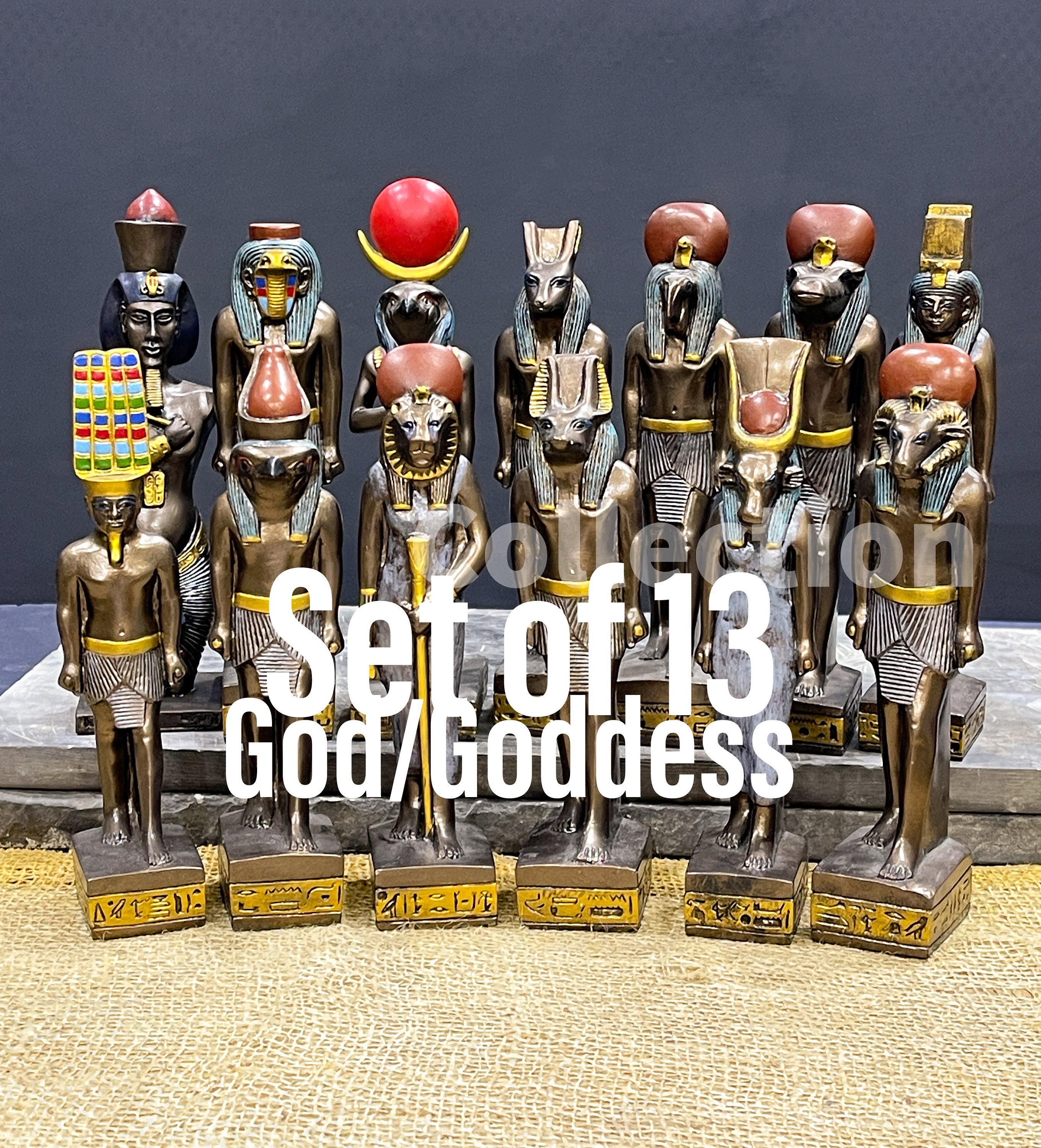
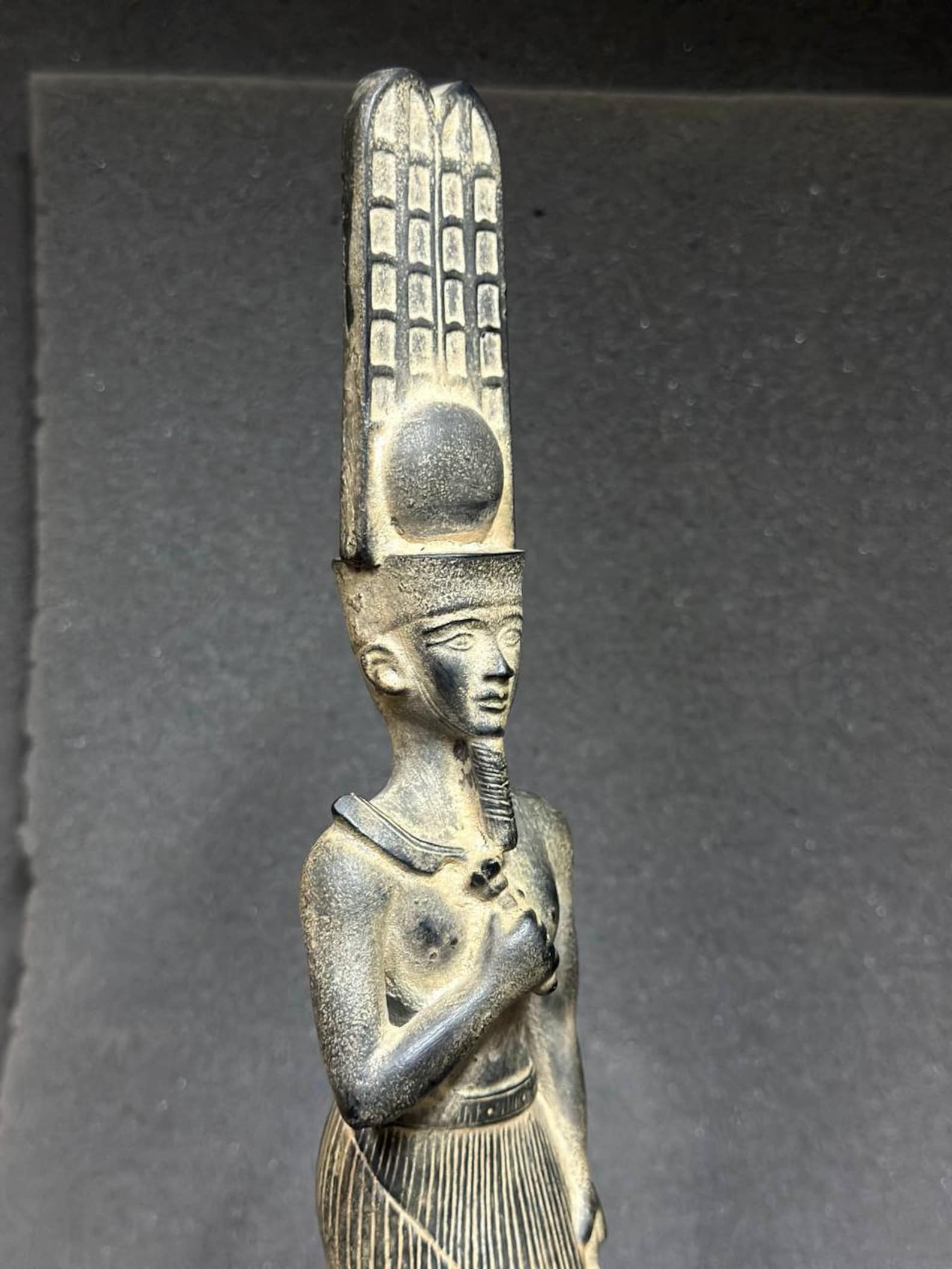
Amun-Ra, the supreme deity of the New Kingdom of ancient Egypt, represents the syncretism of two powerful solar and creator gods—Amun, the hidden local god of Thebes, and Ra, the ancient sun god of Heliopolis—whose combined theological force came to dominate Egyptian religion, politics, and monumental architecture at the height of the empire's power.
The Origins and Etymology of Amun and Ra
To understand Amun-Ra, one must first examine the two distinct deities who merged to form him. In the early periods of Egyptian history, Amun and Ra occupied very different spheres of influence within the religious landscape. Their eventual synthesis was not merely a theological accident, but a calculated political maneuver designed to unify a fractured country under a singular, supreme divine authority.
Amun: The Hidden One of Thebes
Amun, whose name translates to "The Hidden One" or "The Invisible," originated as a local patron deity of Thebes (modern-day Luxor). During the Old and Middle Kingdoms, Amun was a relatively minor fertility and air deity, often depicted with a distinctive plumed crown. However, as Theban princes grew in political power and successfully expelled the foreign Hyksos rulers at the beginning of the New Kingdom around the 16th century BCE, their local patron rose with them. Amun was soon elevated to the status of a state god, embodying the unseen, life-giving breath of wind that sustained all living things.
Ra: The Solar Creator of Heliopolis
In contrast, Ra was the primordial solar deity worshipped for millennia at Iunu (Heliopolis), the ancient center of Egyptian solar theology. Ra represented the blazing, visible disk of the sun, responsible for the cycle of day and night, the warmth that nurtured crops, and the cosmic order known as ma'at. According to Heliopolitan myth, Ra rose from the primordial waters of Nun, created himself, and subsequently generated the other elements of the cosmos. As the divine father of pharaohs, Ra held a foundational position in Egyptian state ideology long before the rise of Thebes.
The Fusion of Deities: The Rise of Amun-Ra
As the Theban-based Eighteenth Dynasty expanded Egypt's borders into an international empire, the priesthood of Amun sought a theological framework that could encompass both the mysterious, transcendent nature of their local god and the undeniable cosmic dominance of the traditional sun god, Ra.
Theological Syncretism in the New Kingdom
The Egyptians practiced syncretism fluidly, viewing different gods as manifestations of the same ultimate divine reality. By combining Amun and Ra into Amun-Ra, the priesthood achieved a theological masterstroke. Amun represented the hidden, spiritual, and unknowable essence of the universe—the wind and breath that could not be seen—while Ra represented the manifest, visible, and life-giving power of the sun.
This synthesis meant that Amun-Ra was simultaneously immanent and transcendent. He was both the hidden creator behind the cosmos and the blazing sun tracking across the sky every day. The official state theology framed Amun-Ra as the King of the Gods, a title that elevated him above all other regional and traditional deities.
Political and Economic Power of the Amun Priesthood
The rise of Amun-Ra directly correlated with the unprecedented accumulation of wealth by the Temple of Karnak at Thebes. Pharoahs funneled vast portions of military spoils, gold, land, and foreign tribute into the temples of Amun-Ra to legitimize their rule. Consequently, the High Priests of Amun at Karnak amassed political influence that occasionally rivaled or even surpassed that of the pharaohs themselves, leading to intense internal power struggles, most notably during the Amarna Period.
Attributes, Iconography, and Depictions
Amun-Ra's visual representations evolved to reflect his dual nature and supreme status. Artists and scribes combined the traditional iconography of both constituent gods to create an instantly recognizable and imposing figure.
| Iconographic Element | Symbolic Meaning |
|---|---|
| Plumed Crown | Two tall ostrich feathers representing breath and wind |
| Solar Disk | Ra's fiery sun disc, often resting atop the crown |
| Human Form | Seated or standing king, holding the ankh and was sceptre |
| Ram-Headed Form | Fertility, virility, and the ancient animal aspect of Amun |
The Double-Plumed Crown and Solar Disk
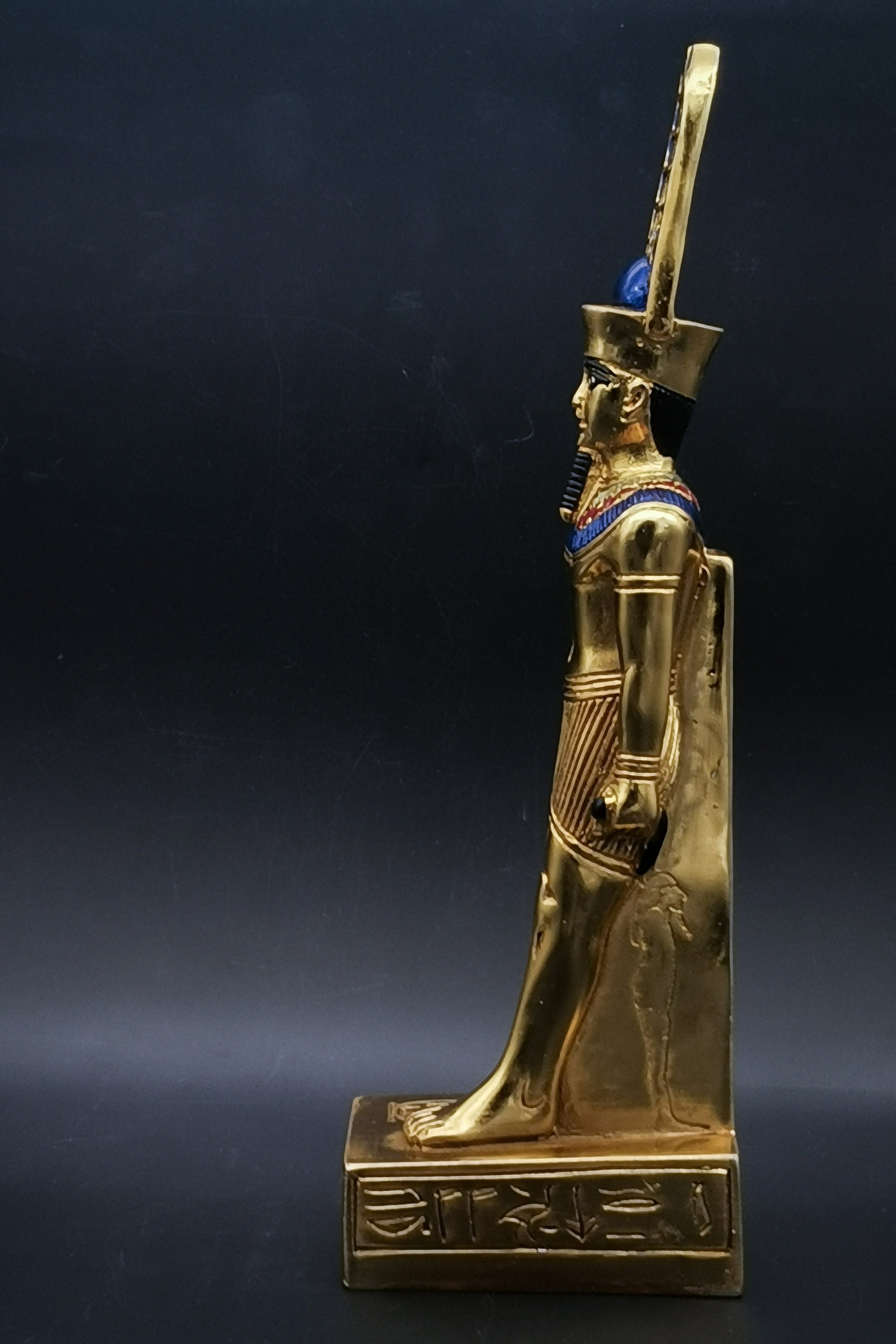
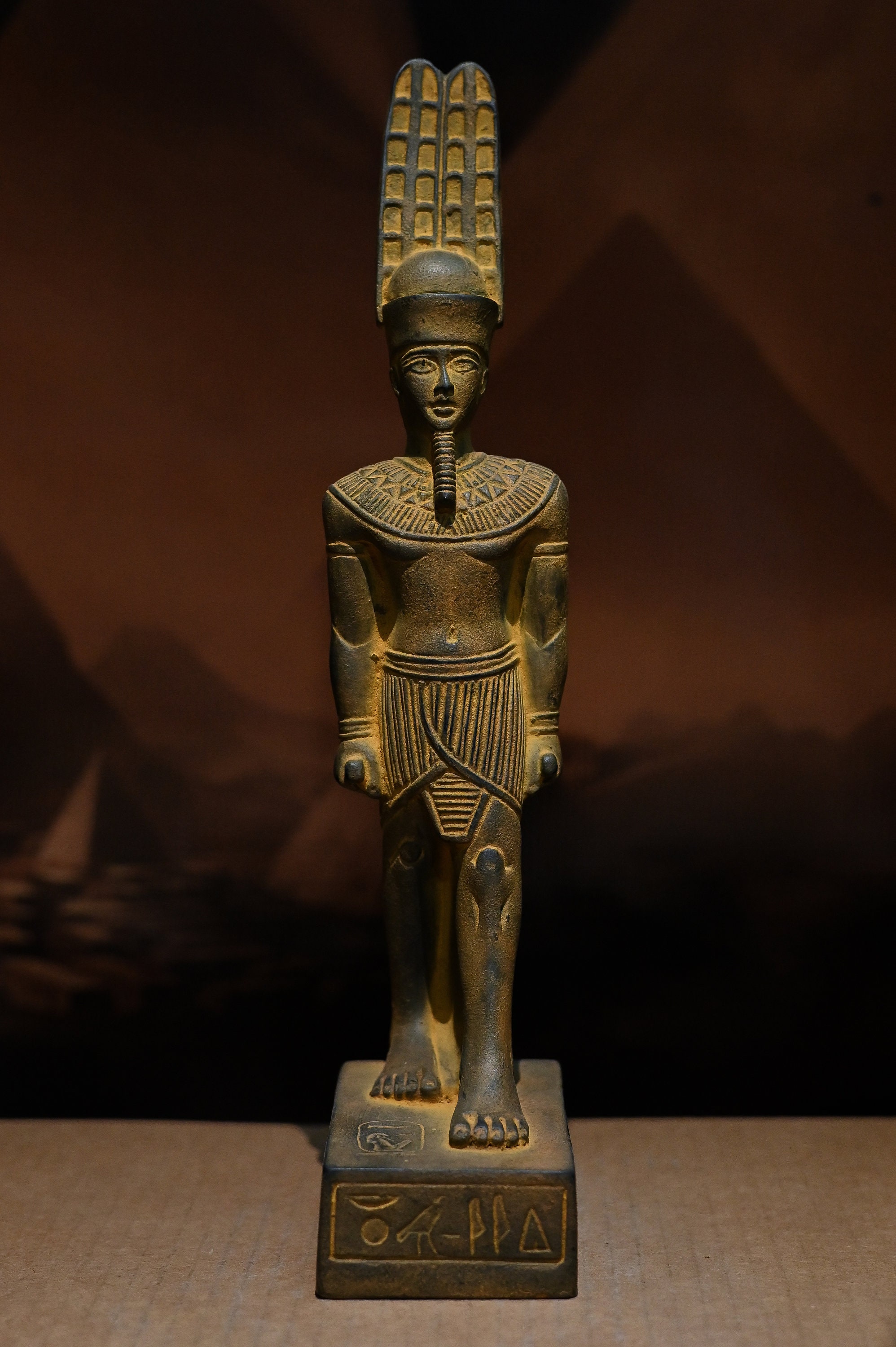
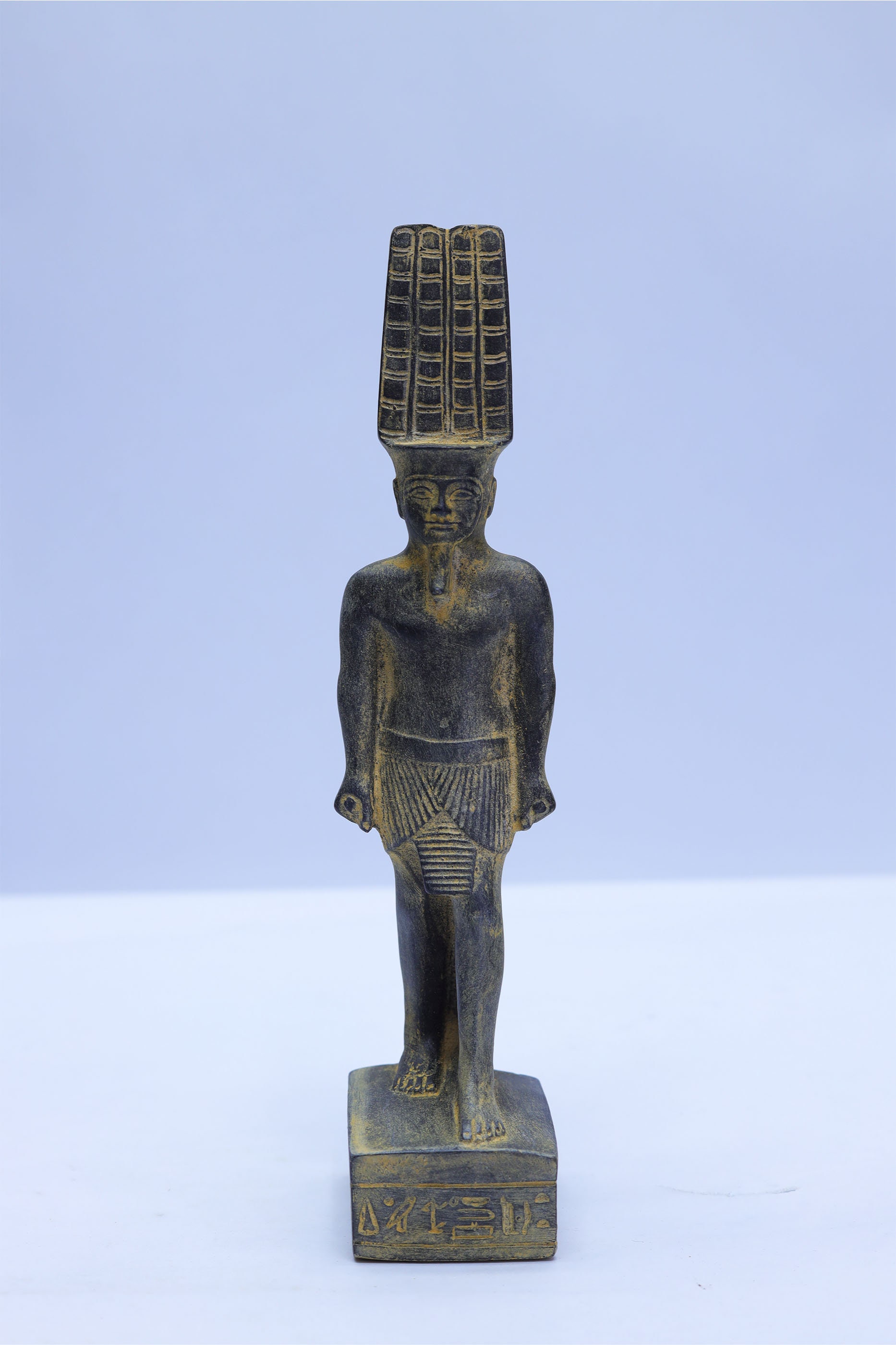
In his standard anthropomorphic form, Amun-Ra is depicted as a majestic king wearing a flat cap topped by two tall, vertical ostrich feathers. These feathers symbolize the wind and air that Amun commands. Frequently, a red solar disk encircled by a uraeus (sacred cobra) is placed between or behind the plumes, explicitly signaling his union with Ra.
Animal Manifestations: The Ram and the Goose
Amun-Ra was also closely associated with specific animals that carried deep symbolic weight. The ram with curved horns was sacred to Amun, representing creative force and fertility. Numerous statues at Karnak depict rows of ram-headed sphinxes lining the processional avenues, guarding the sacred precincts of the god. The goose, another creature associated with the primordial creator god in local mythologies, also served as an animal avatar or manifestation of Amun-Ra.
Major Cult Centers and Monumental Architecture
The worship of Amun-Ra required architectural spaces of staggering scale to reflect his status as King of the Gods. Egypt invested monumental labor and resources into building and expanding sanctuaries dedicated to him.
The Karnak Temple Complex at Thebes
The Karnak Temple Complex, located just north of modern Luxor, stands as the ultimate architectural monument to Amun-Ra. Constructed, expanded, and embellished over more than a thousand years by successive pharaohs, Karnak was the religious heart of the Egyptian Empire.
- The Hypostyle Hall: Containing 134 massive stone columns arranged in 16 rows, this architectural marvel was designed to mimic a primordial papyrus swamp rising out of the waters of creation at the dawn of time, illuminated by the solar rays of Amun-Ra filtering through clerestory windows.
- The Sacred Lake: Used by priests for ritual purifications and symbolic reenactments of the solar journey across the primordial waters.
Luxor Temple
Situated a few kilometers south of Karnak, Luxor Temple (known in ancient times as the "Southern Sanctuary") was dedicated to Amun-Ra in his capacity as the divine fertility god and the cosmic counterpart to the king. Luxor Temple was the focal point of the annual Opet Festival, during which the sacred statues of Amun-Ra, his consort Mut, and their son Khonsu were transported in ceremonial barges down the Nile from Karnak to Luxor to renew the divine energy of the cosmos and legitimate the reigning pharaoh's right to rule.
Mythological Roles and Cosmic Functions
Amun-Ra did not merely inhabit the pantheon; he orchestrated the functioning of the universe, maintaining ma'at (truth, balance, and cosmic order) against the forces of chaos (isfet).
The Daily Journey and Defeat of Apep
As an iteration of the sun god, Amun-Ra made a perilous daily journey across the sky by day and through the dark, subterranean underworld by night. During the nocturnal voyage, Amun-Ra had to defeat Apep (Apophis), the chaotic serpent monster of the underworld who sought to swallow the solar barge and plunge the universe into eternal darkness. The survival of the cosmos depended entirely on Amun-Ra's victorious emergence at dawn, an event celebrated daily through complex temple liturgies.
Protector of the State and the Pharaoh
The relationship between Amun-Ra and the pharaoh was intimate and institutionalized. According to New Kingdom royal theology, the pharaoh was not merely a servant of the gods but the biological son of Amun-Ra, who manifested physically to unite with the reigning queen. This divine birth ideology granted the pharaoh absolute authority as Amun-Ra's earthly representative, commander-in-chief of the army, and high priest of all temples.
The Amarna Heresy and the Resilience of Amun-Ra
The absolute dominance of Amun-Ra faced a severe, unprecedented challenge during the mid-Fourteenth Century BCE under the reign of Pharaoh Akhenaten (Amenhotep IV).
Akhenaten's Monotheistic Experiment
Seeking to curb the immense political and economic power wielded by the priesthood of Amun at Thebes, Akhenaten instituted a radical religious revolution. He closed the temples of Amun-Ra, stripped the priesthood of its wealth, abandoned Thebes, and established a new capital city at Akhetaten (modern Amarna). In place of Amun-Ra, Akhenaten elevated Aten—the visible disk of the sun—as the sole, universal god, demanding that Egypt worship no other deity.
The Restoration of Amun-Ra
The Atenist experiment was short-lived. Following Akhenaten’s death, the traditional religious establishment quickly reasserted itself under young pharaoh Tutankhamun (whose original name, Tutankhaten, was changed to honor Amun) and General Horemheb. The temples of Amun-Ra were reopened, the old priesthoods restored to power, and the monuments of Akhenaten systematically dismantled. The swift return to the cult of Amun-Ra underscored how deeply ingrained the deity was in the cultural and political fabric of New Kingdom Egypt.
Decline, Legacy, and Later Interpretations
As the geopolitical fortunes of Egypt waned in the Third Intermediate Period and subsequent foreign invasions by Nubians, Libyans, Persians, and Greeks reshaped the Nile Valley, the cult of Amun-Ra underwent significant transformations.
Libyan and Nubian Dynasties
During the Twenty-Fifth Dynasty, the Kushite (Nubian) pharaohs of Napata adopted the theology of Amun-Ra with immense fervor, identifying their own local supreme deity with the Theban god. They built extensive temples to Amun at Jebel Barkal, viewing themselves as the rightful restorers of traditional Egyptian religious orthodoxy.
Hellenistic Syncretism: Zeus-Amun
Following the conquest of Egypt by Alexander the Great in 332 BCE, Greek rulers and scholars sought to equate Egyptian deities with their own Hellenic pantheon through interpretatio romana and interpretatio graeca. Amun-Ra was readily identified with Zeus by the Greeks and later Jupiter by the Romans, becoming Zeus-Amun. Alexander the Great famously made a perilous pilgrimage across the western desert to the Oracle of Amun at the Siwa Oasis, where the oracle confirmed his divine heritage as the son of Amun-Ra.
Frequently Asked Questions
Who were the parents of Amun-Ra?
Amun-Ra is a composite deity formed by the syncretism of Amun and Ra. Individually, Amun was often viewed as self-created or part of the primordial Hermopolitian Ogdoad (along with his female counterpart Amaunet), while Ra was believed to have spontaneously emerged from the primeval waters of Nun as the self-generated creator of the universe.
What is the difference between Amun and Amun-Ra?
Amun was originally a local wind and creation deity from Thebes focused on the unseen, hidden aspects of nature. Amun-Ra represents the theological fusion of Amun with Ra, the ancient sun god of Heliopolis. This merger combined Amun's hidden spiritual essence with Ra's visible solar power, creating a supreme state god of the Egyptian Empire.
Why was Amun-Ra considered the King of the Gods?
Amun-Ra earned the title "King of the Gods" because the New Kingdom pharaohs and the powerful Theban priesthood systematically elevated him to supreme status as the empire expanded. By merging the creator of the cosmos (Amun) with the life-giving sun god (Ra), he embodied all aspects of creation, governance, and divine protection, outranking older regional deities like Osiris and Ptah in state ideology.
Where was the primary center of worship for Amun-Ra?
The absolute center of worship for Amun-Ra was the massive Karnak Temple Complex in Thebes (modern Luxor). Luxor Temple served as the secondary southern sanctuary, specifically utilized during the annual Opet Festival to celebrate the divine renewal of the king and the cosmic order governed by Amun-Ra.
How did the Amarna Period affect the cult of Amun-Ra?
During the Amarna Period in the Fourteenth Century BCE, Pharaoh Akhenaten abolished the worship of all traditional gods, specifically targeting Amun-Ra by closing his temples, erasing his name from monuments, and replacing him with the monotheistic sun disk, Aten. However, this disruption was temporary; after Akhenaten’s death, the traditional priesthood restored Amun-Ra to his supreme position.
Conclusion and Historical Significance
Amun-Ra remains one of the most intellectually sophisticated conceptions of divinity in the ancient world, bridging the gap between abstract, transcendent mystery and tangible, life-sustaining reality. Through the architectural marvels of Karnak and Luxor, the complex theology of the New Kingdom priesthood, and the enduring geopolitical struggles of the pharaonic state, Amun-Ra defined the pinnacle of Egyptian imperial ambition. His legacy endures not only in the stone monuments that continue to captivate modern travelers along the Nile, but also as a testament to humanity's early efforts to conceptualize a supreme, unifying force governing the cosmos.