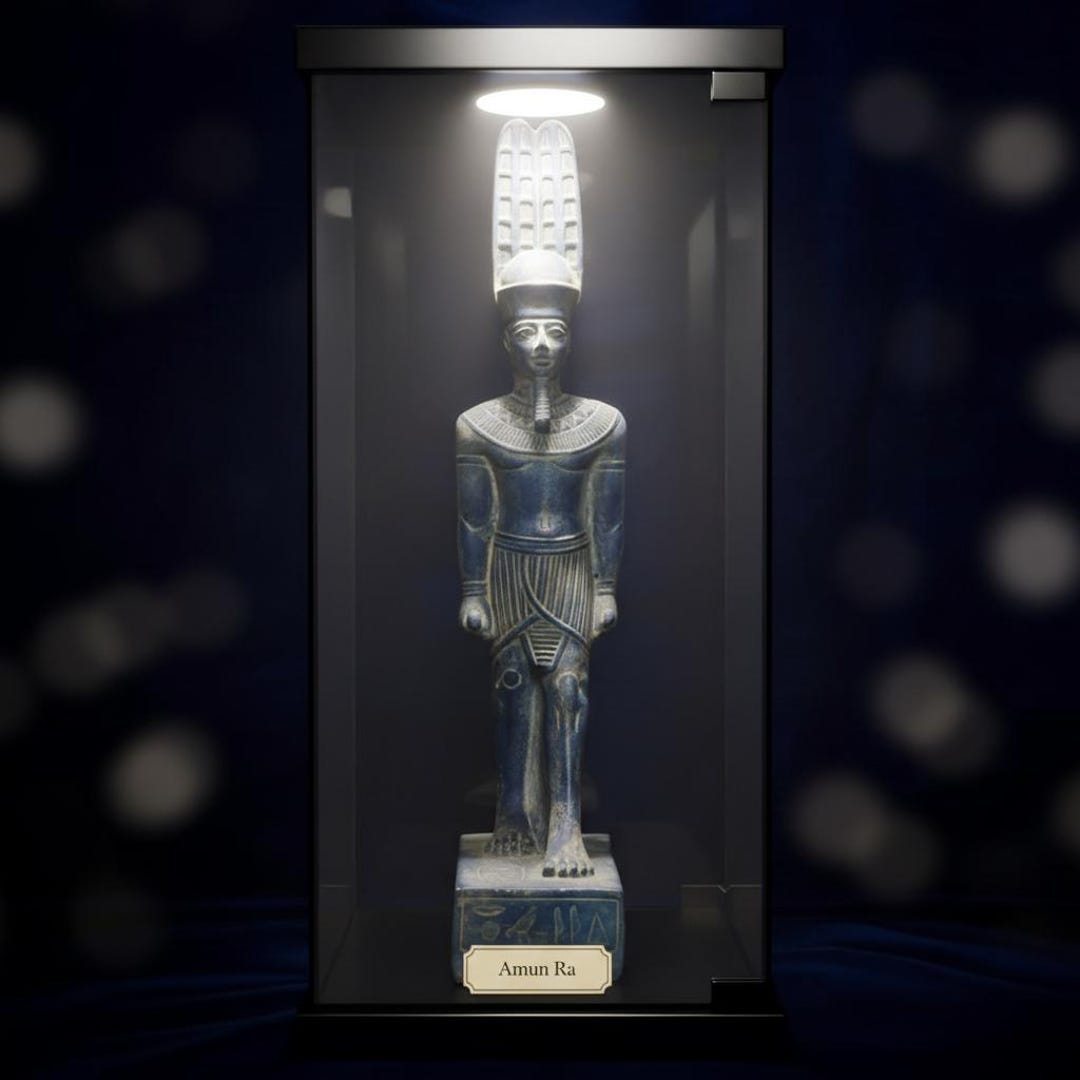
Amun held a complex and evolving theological position in ancient Egypt, eventually merging with the sun god Ra to become Amun-Ra, the supreme king of the gods. While Amun originally began as a local air and fertility deity of Thebes, his identity expanded over millennia to incorporate solar aspects, transforming him into a universal solar creator.
Introduction to the Complex Identity of Amun
Understanding the religious landscape of ancient Egypt requires looking past rigid, modern categorizations of deities. In Western mythology, gods often possess distinct, unchanging portfolios. In contrast, ancient Egyptian theology was fluid, allowing deities to merge, absorb traits, and evolve alongside political shifts. This theological phenomenon is particularly evident in the evolution of Amun, a deity who started as a local presence in the southern city of Thebes (modern Luxor) and rose to become the undisputed head of the Egyptian pantheon.
The phrase "Amun is the god of the sun" captures a late and dominant phase of his theological development rather than his absolute, unchanging origin. Originally, Amun was an invisible or hidden deity—his name literally translates to "The Hidden One." He embodied the formless power of the wind and the creative breath of life. However, as Thebes grew from a provincial town into the political and religious capital of the Egyptian Empire during the New Kingdom (c. 1550–1069 BCE), Amun's priests and pharaohs sought to elevate him to universal supremacy. To achieve this, Amun was syncretized with Ra, the ancient sun god of Heliopolis, creating the composite deity Amun-Ra. Through this union, the hidden god of the wind absorbed the brilliant, life-giving power of the solar disk, making him functionally and mythologically a preeminent sun god of the ancient world.
The Origins of Amun: The Hidden One and Creator of Breath
Long before he was associated with the scorching disk of the sun, Amun was worshipped as a primordial deity of air, wind, and invisible creative power. Documented as early as the Old Kingdom within the Pyramid Texts, Amun initially appeared as one of the eight primordial deities of the Hermopolitan Ogdoad. In this early theological framework, Amun and his female counterpart, Amaunet, represented the concept of hiddenness and the watery void before creation.
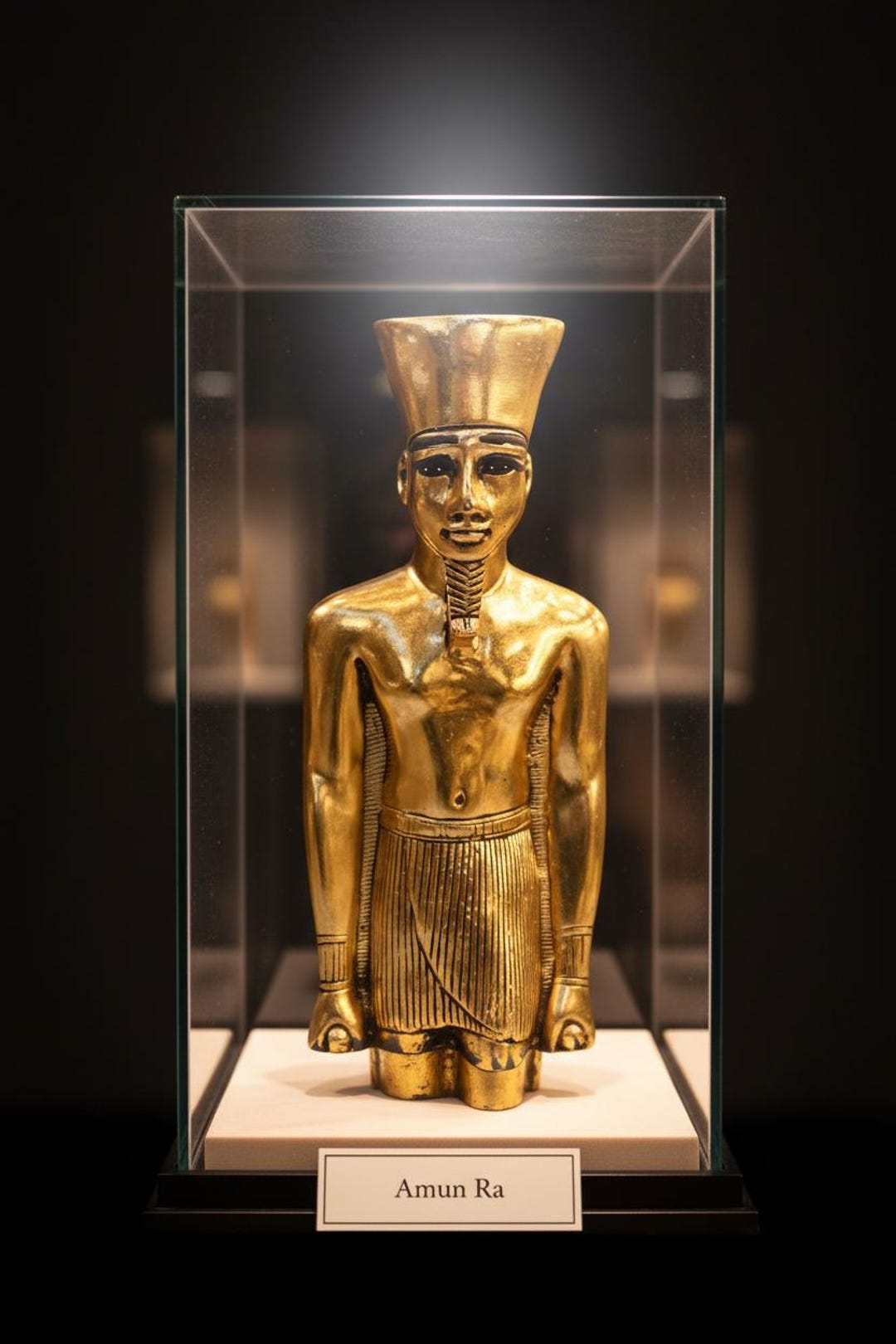
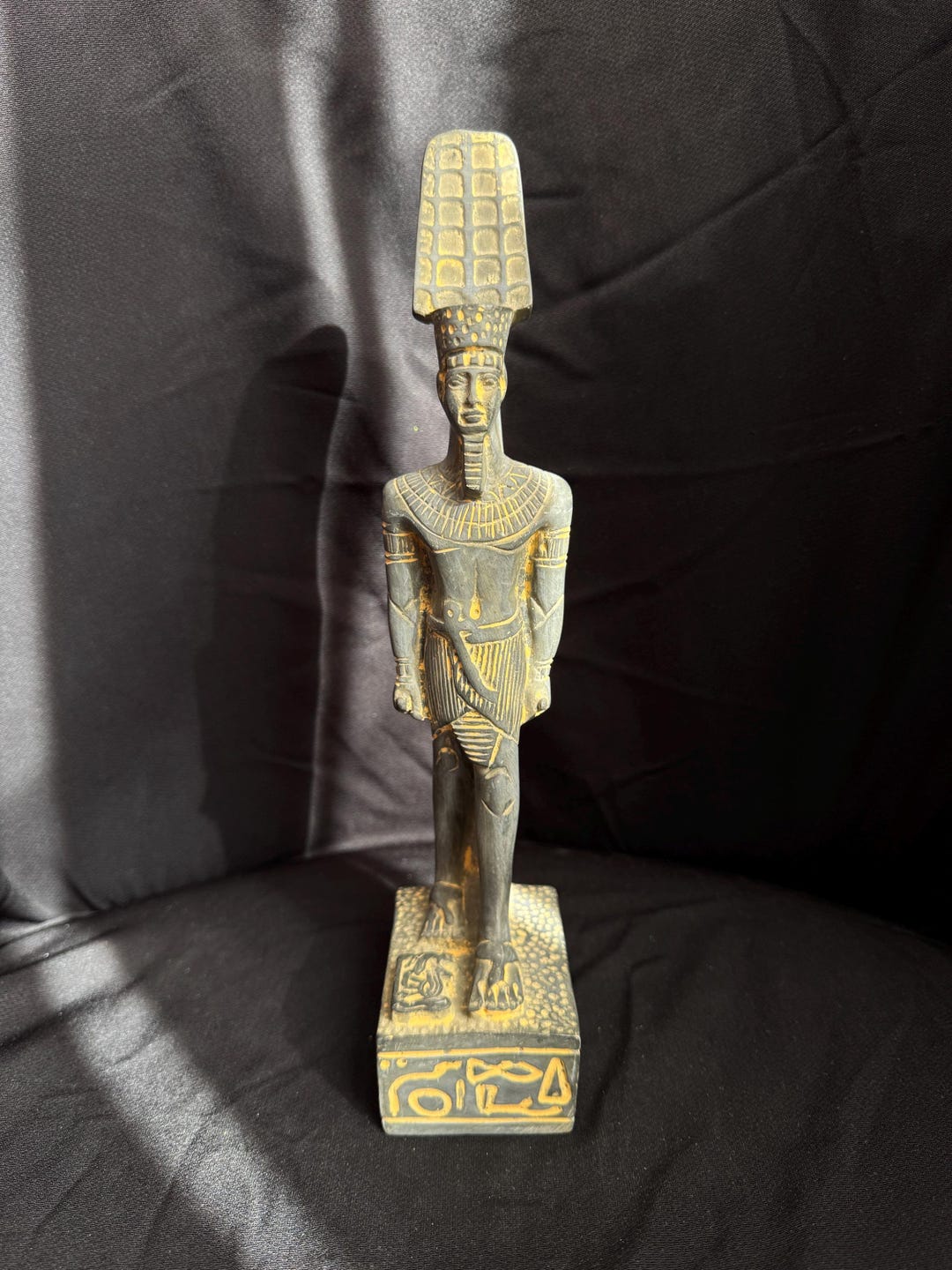
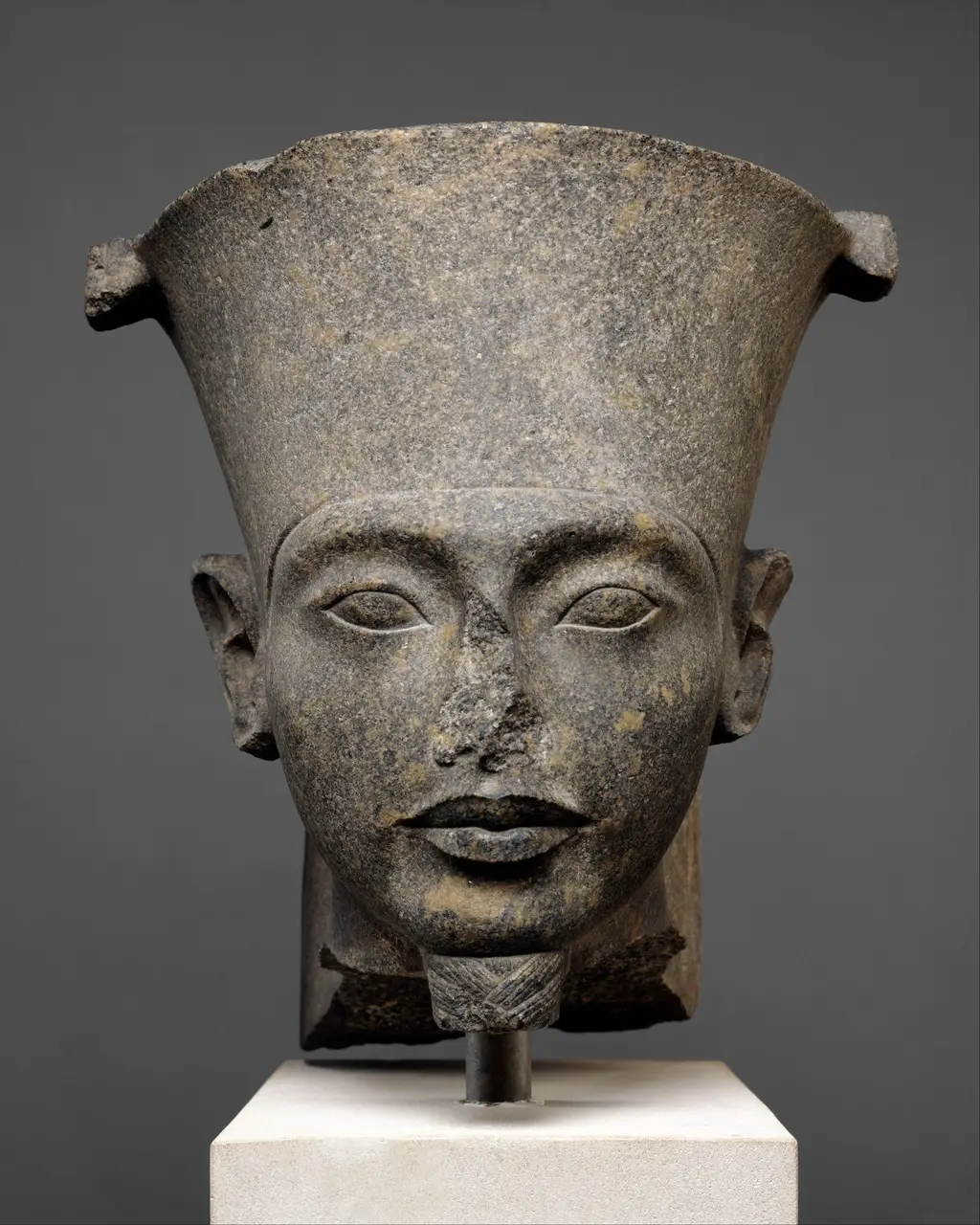
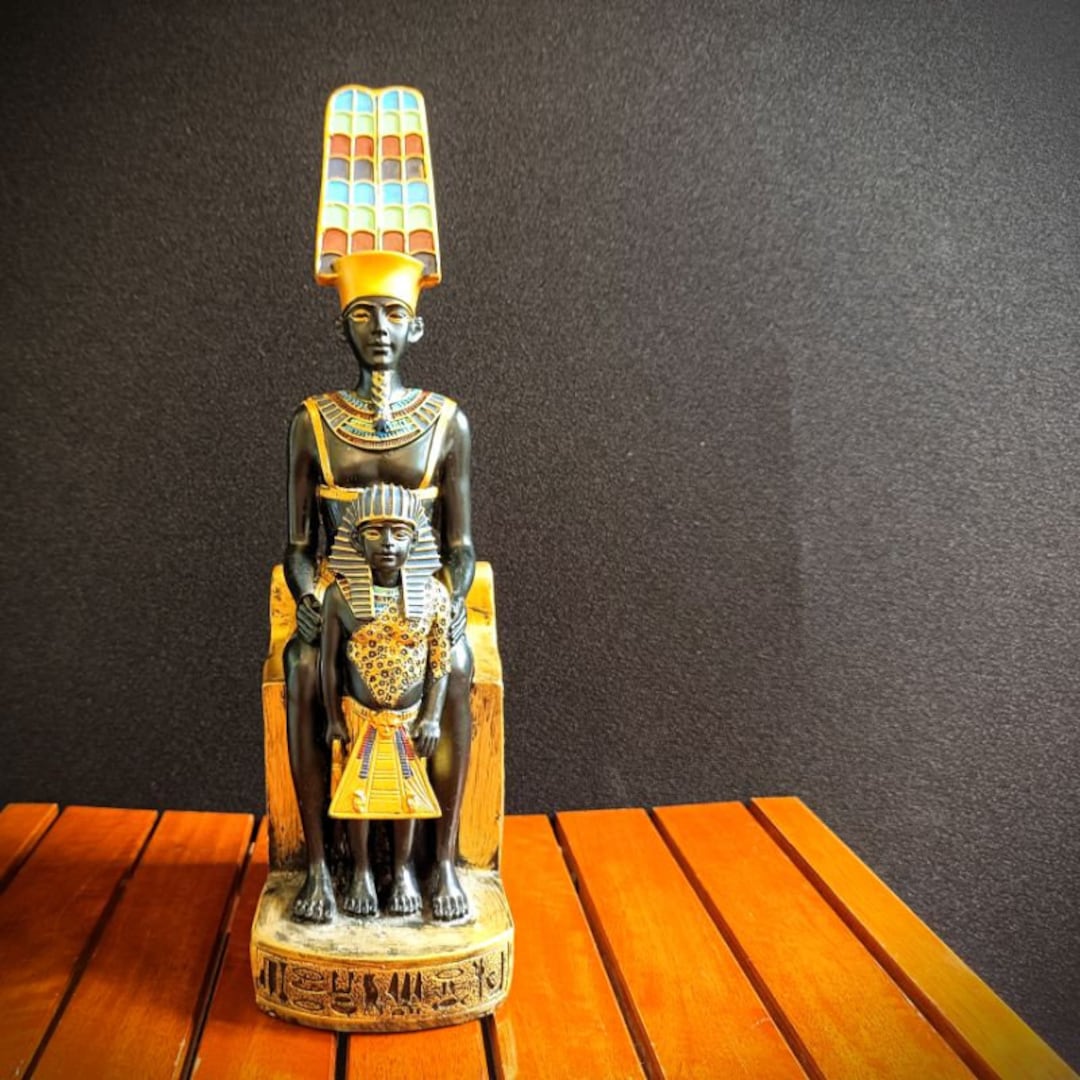
As the local patron of Thebes, Amun took on a more active role in human and agricultural life. Because wind and air are invisible yet essential for life, the ancient Egyptians perceived Amun as a pervasive force that animated all living things. Unlike Ra, who blazed visibly across the sky as the sun, Amun was mysterious and elusive. Iconographically, early depictions of Amun showed him as a man wearing a flat-topped crown surmounted by two tall parallel plumes—feathers that symbolized the rushing wind and his dominion over the sky without being tied to a physical celestial body.
The Rise of Thebes and the Syncretism with Ra
The political trajectory of Amun is inseparable from the fortunes of Thebes. Following the reunification of Egypt at the start of the New Kingdom, Theban princes established dynasties that expelled foreign rulers and built a vast empire. As their political power grew, so too did the prestige of their local god. The Theban priesthood argued that Amun had not merely aided their military victories; he was the ultimate source of all divine authority, eclipsing older cult centers like Memphis and Heliopolis.
Heliopolis had long been the intellectual capital of Egyptian sun worship, centered on Ra, Atum, and Horus. Rather than destroying the prestigious solar theology of Heliopolis, the Theban theologians absorbed it. They formulated the concept of syncretism—the fusion of two or more gods into a single entity—yielding Amun-Ra.
| Deity Attribute | Amun (Original Form) | Ra (Solar Form) | Amun-Ra (Synthesized Deity) |
|---|---|---|---|
| Primary Domain | Air, wind, fertility, hiddenness | Sun, daylight, cosmic order (Ma'at) | Creator of the universe, hidden power of the sun |
| Original Cult Center | Thebes (Upper Egypt) | Heliopolis (Lower Egypt) | Karnak and Thebes (Pan-Egyptian Empire) |
| Visual Iconography | Man with a double-plumed crown | Hawk-headed man wearing a solar disk | Combination of plumes, solar disk, and royal regalia |
| Theological Role | Breath of life and invisible spirit | Physical source of light and heat | Hidden transcendent spirit combined with visible solar majesty |
This synthesis allowed the priests of Amun to claim that their god possessed the best of both worlds: the visible, undeniable power of the sun combined with the mysterious, transcendent eternity of the wind. Amun-Ra was hailed as the "King of the Gods," uniting the visible cosmos with the unseen spiritual foundation of existence.
Architectural Manifestations: Karnak and Luxor
The theological supremacy of Amun-Ra required physical monuments that reflected his cosmic stature. During the New Kingdom, pharaohs funneled vast amounts of tribute, gold, and land into the construction and expansion of the Karnak Temple Complex near modern Luxor. Karnak became the largest religious building complex ever constructed, serving primarily as the earthly estate of Amun-Ra.
The architecture of Karnak was designed to mirror the mythical creation of the world. As visitors moved from the sun-drenched outer courtyards through increasingly dark, restricted hypostyle halls toward the inner sanctuary, they experienced a physical transition from the chaotic waters of Nun to the sacred mound where Amun-Ra first brought forth creation. Towering columns carved to resemble papyrus and lotus plants supported stone ceilings painted with stars and celestial bodies, emphasizing Amun-Ra's dominion over the entire cosmos.
Every year, the great Opet Festival celebrated the intimate relationship between Amun-Ra, the pharaoh, and the divine renewal of the king's rule. During this festival, sacred statues of Amun, his consort Mut, and their son Khonsu were transported in ceremonial barges along the Nile from Karnak to Luxor Temple. This ritual reaffirmed the king's divine right to rule and renewed Amun-Ra's cosmic energy, ensuring the fertility of the land and the stability of the Egyptian state.
Economic and Political Power of the Amun Priesthood
As Amun-Ra's popularity surged, the priesthood of Amun at Karnak amassed staggering economic power. Through royal endowments, military spoils, and extensive landholdings, the temple of Amun became a state within a state. By the late New Kingdom, the High Priests of Amun wielded authority that rivaled—and sometimes surpassed—that of the pharaohs themselves.
This immense concentration of wealth and political influence ultimately destabilized the central government. During the Twentieth Dynasty, high priests such as Herihor assumed direct control over Upper Egypt while pharaohs ruled from the north, effectively splitting the country. The worship of Amun-Ra thus transformed from a unifying national religion into an institutional power block that shaped the geopolitical collapse of the New Kingdom and the transition into the Third Intermediate Period.
Challenges to Amun's Supremacy: The Amarna Period
The unchecked dominance of the Amun priesthood faced one major, radical interruption during the Eighteenth Dynasty: the reign of Pharaoh Akhenaten (c. 1353–1336 BCE). Before his reign, Akhenaten was known as Amenhotep IV, a name honoring Amun ("Amun is satisfied"). However, in a revolutionary break with tradition, Akhenaten dismantled the polytheistic state religion, closed the temples of Amun, and erased his name from monuments across Egypt.
Akhenaten instituted the worship of the Aten—the physical disk of the sun. Unlike Amun-Ra, who possessed a complex mythology, human-animal iconography, and a powerful, wealthy priesthood, the Aten was depicted simply as a solar disk with rays ending in human hands, offering life and protection exclusively through the person of the pharaoh. This brief monolatristic or monotheistic experiment sought to break the political stranglehold of the Amun priesthood.
However, the Aten revolution proved short-lived. Following Akhenaten's death, his successors—most famously Tutankhamun (whose original name, Tutankhaten, was changed to honor Amun)—restored the traditional pantheon. The temples of Amun were rebuilt, the wealth of the priesthood was restored, and Amun-Ra reclaimed his position as the supreme king of the Egyptian gods until the gradual decline of native Egyptian religion under Greek and Roman rule.
Frequently Asked Questions
Was Amun originally a sun god?
No. Amun originally began as a local deity of air, wind, and invisible creation in Thebes. He was only associated with the sun much later, during the New Kingdom, when he was syncretized with Ra to form Amun-Ra.
What does the name Amun mean?
The name Amun translates to "The Hidden One" or "The Inscrutable One." This name reflected his original nature as an invisible, formless spirit of the wind and creation before he took on solar characteristics.
How does Amun-Ra differ from Ra?
While Ra was the original, traditional sun god of Heliopolis associated specifically with the visible solar disk and creation myths of the north, Amun-Ra combined Ra's solar attributes with Amun's universal, hidden, and wind-based creative power, making him a more transcendent and politically dominant deity for the Egyptian Empire.
Why was the Amun priesthood so powerful?
The priesthood of Amun accumulated vast wealth through royal patronage, extensive agricultural estates, and war booty captured during the New Kingdom. This economic leverage allowed them to wield immense political influence, eventually rivaling the authority of the pharaohs.
What happened to the worship of Amun during Akhenaten's reign?
During the Amarna Period, Pharaoh Akhenaten suppressed the worship of all traditional gods, particularly Amun. He closed Amun's temples, defaced his name on monuments, and mandated the worship of the Aten (the solar disk) instead. This religious reform was reversed shortly after Akhenaten's death.
Conclusion and Further Exploration
Amun's evolution from a local wind deity of Thebes into Amun-Ra, the supreme sun god of the Egyptian Empire, illustrates the dynamic and pragmatic nature of ancient Egyptian religion. By absorbing the traits of Ra and anchoring them in monumental architecture like Karnak, the priests and pharaohs created a theological powerhouse that defined an era. To explore this subject further, examine the primary inscriptions at the Karnak Temple Complex or study the administrative records of the New Kingdom priesthoods to understand how ancient theology and imperial politics continually shaped one another.