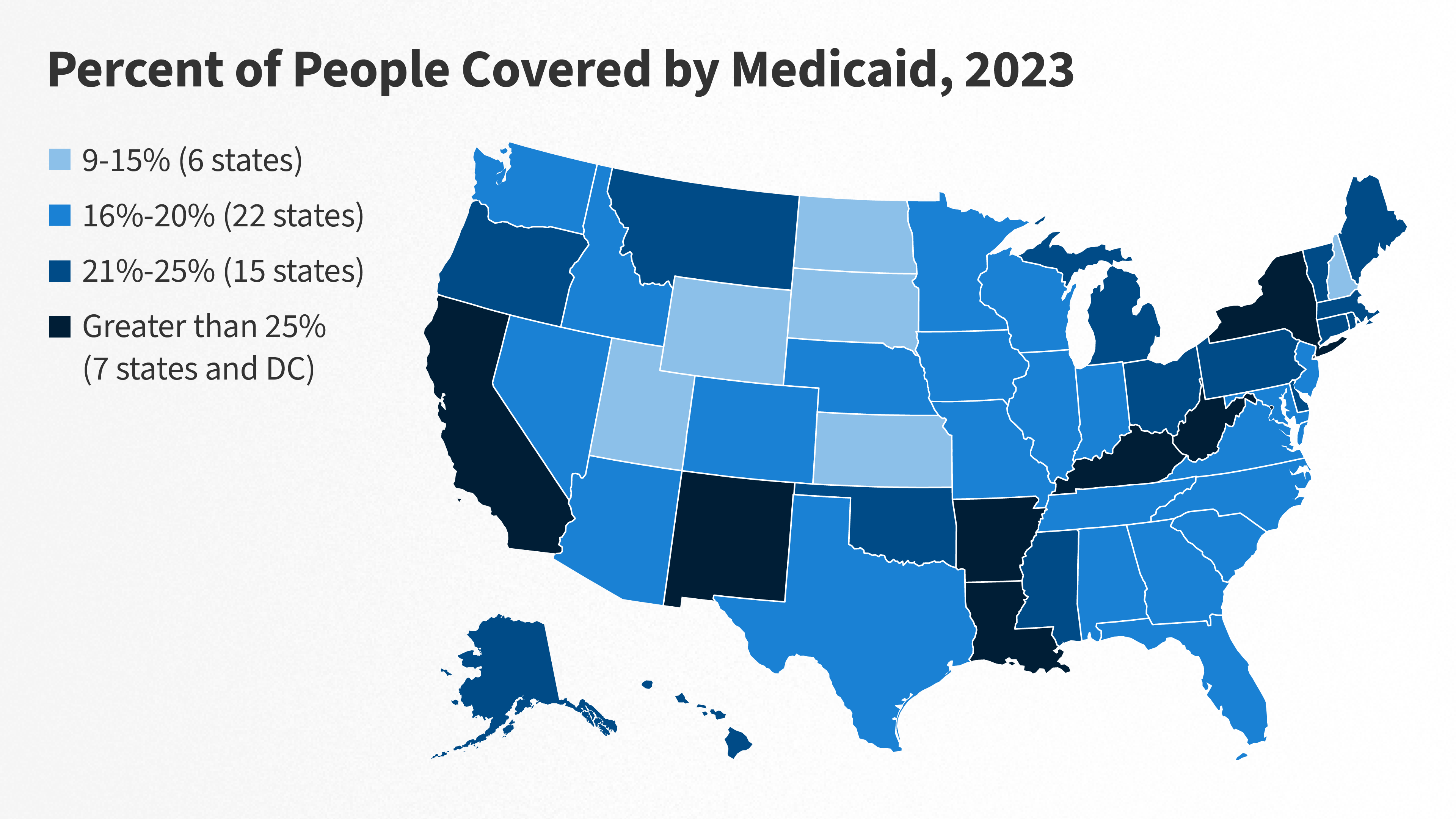
Medicaid is a joint federal and state program that provides essential health coverage to more than 85 million Americans, including low-income adults, children, pregnant women, elderly adults, and people with disabilities. Eligibility is primarily determined by household income relative to the Federal Poverty Level and specific state-governed categorical requirements.
As we move through 2026, Medicaid remains the backbone of the United States healthcare safety net. Following the significant "unwinding" process of the mid-2020s—where states transitioned back to routine eligibility redeterminations after the pandemic era—the program has reached a new state of equilibrium. For the millions of Americans on Medicaid today, the program is not just a source of insurance; it is a critical gateway to primary care, behavioral health services, and long-term support systems that would otherwise be financially unreachable.
The Landscape of Medicaid Enrollment in 2026
The number of Americans on Medicaid has seen significant shifts over the last several years. By 2026, the program covers roughly one in five Americans. This population is incredibly diverse, encompassing working families whose employers do not offer affordable insurance, seniors who require help with nursing home costs, and millions of children through the associated Children's Health Insurance Program (CHIP).
The current enrollment levels reflect a stabilized post-pandemic environment. During the early 2020s, continuous enrollment provisions kept people on the rolls regardless of changes in income. The subsequent "unwinding" period required states to re-verify every member's eligibility. In 2026, the system has largely shifted toward "ex parte" renewals—automated processes where state agencies use existing data sources, like tax filings or SNAP records, to confirm eligibility without requiring the member to submit paperwork. This technological shift has helped reduce the "churn" that historically saw eligible Americans lose coverage due to administrative hurdles.
Core Eligibility Requirements for 2026
Eligibility for Medicaid is not a single national standard; instead, it is a complex intersection of federal mandates and state-level discretion. Understanding whether an individual qualifies depends largely on two factors: financial status and categorical eligibility.
Financial Eligibility and the FPL
For most non-elderly adults, eligibility is based on Modified Adjusted Gross Income (MAGI). In 2026, the Federal Poverty Level (FPL) guidelines are updated annually to reflect inflation. In states that have adopted the Medicaid expansion under the Affordable Care Act (ACA), the income limit is generally set at 138% of the FPL. For a single individual in 2026, this often translates to an annual income threshold that allows many low-wage workers to remain covered.
Categorical Eligibility
Beyond income, Medicaid serves specific populations regardless of the expansion status of their state:
- Children: Medicaid and CHIP provide coverage for nearly half of all children in the U.S.
- Pregnant Women: Coverage typically extends through the pregnancy and, as of 2026, most states have adopted the option to provide 12 months of postpartum coverage.
- Seniors and People with Disabilities: These individuals may qualify based on Supplemental Security Income (SSI) status or other "medically needy" criteria, which often involve an asset test (limits on savings and property) in addition to income limits.
Medicaid Expansion vs. Non-Expansion States
The experience of an American on Medicaid varies significantly depending on their state of residence. As of 2026, the majority of states have expanded Medicaid to cover nearly all adults with incomes up to 138% of the FPL. However, a minority of states have chosen not to expand, creating what is known as the "coverage gap."
In non-expansion states, an adult without children or a qualifying disability may find it nearly impossible to qualify for Medicaid, even with zero income. These individuals often earn too much for traditional Medicaid but too little to qualify for subsidized private plans on the Healthcare.gov Marketplace. In contrast, expansion states have seen improved health outcomes and reduced uncompensated care costs for hospitals, as a larger portion of the low-income population has consistent access to preventative care.
Mandatory and Optional Benefits
Federal law requires that all state Medicaid programs cover a specific set of "mandatory" benefits. However, states have the flexibility to offer "optional" benefits, leading to a patchwork of coverage levels across the country.
Mandatory Benefits
These services must be provided by every state program to receive federal funding:
- Inpatient and outpatient hospital services.
- Physician services.
- Laboratory and X-ray services.
- Family planning services and supplies.
- Federally Qualified Health Center (FQHC) and Rural Health Clinic (RHC) services.
- Early and Periodic Screening, Diagnostic and Treatment (EPSDT) services for children.
Optional Benefits
In 2026, most states continue to offer a broad range of optional benefits because they are recognized as cost-effective in the long run. These include:
- Prescription Drugs: While technically optional, all states currently provide drug coverage.
- Physical and Occupational Therapy: Vital for rehabilitative care.
- Dental and Vision Care: Often limited for adults but mandatory for children.
- Behavioral Health: Increased federal incentives in 2026 have led more states to expand mental health and substance use disorder treatments.
Comparison of Public Healthcare Programs in 2026
To understand the role of Medicaid, it is helpful to compare it to other major public and subsidized health options available to Americans.
| Feature | Medicaid | Medicare | ACA Marketplace (Subsidized) |
|---|---|---|---|
| Primary Eligibility | Low income/Category-based | Age 65+ or Disability | Income 100%-400%+ FPL |
| Funding | Federal & State | Federal | Federal (Tax Credits) |
| Premiums | Usually $0 | Varies (Part B/D) | Varies by income |
| Long-Term Care | Yes (Nursing homes/HCBS) | Very limited (Short-term) | No |
| Dental/Vision | State-dependent (Adults) | Limited (Mostly private) | Optional add-ons |
The Application and Annual Redetermination Process
For Americans on Medicaid in 2026, the application process has become increasingly digital. Most states offer online portals where residents can apply, upload documents, and report changes in circumstances.
Initial Application
Applicants must provide proof of income (such as pay stubs or tax returns), proof of citizenship or legal residency, and identification. The "No Wrong Door" policy ensures that if an individual applies through the federal Marketplace but qualifies for Medicaid, their application is automatically transferred to the state agency.
The Renewal Cycle
Medicaid is not a "set it and forget it" program. Recipients must undergo a redetermination every 12 months. In 2026, states are increasingly using Automated Renewals. If the state can verify an individual’s income via electronic databases, the coverage is renewed automatically, and the member receives a notice in the mail. If the state cannot verify the info, the member receives a renewal packet that must be completed and returned within a specific timeframe (usually 30 days) to avoid a gap in coverage.
Medicaid’s Role in Long-Term Care
One of the most significant, yet often misunderstood, roles of Medicaid is its position as the primary payer for long-term care in the United States. While Medicare covers short-term rehabilitative stays in nursing facilities, it does not cover long-term custodial care.
For millions of elderly Americans, Medicaid is the only way to afford the exorbitant costs of nursing homes. To qualify, individuals must "spend down" their assets until they reach state-mandated limits (often as low as $2,000 for a single person). However, in 2026, there is a continued shift toward Home and Community-Based Services (HCBS). These programs allow Medicaid recipients to receive care in their own homes or assisted living facilities rather than being institutionalized, which is often preferred by patients and is more cost-effective for the state.
Current Challenges and Policy Issues in 2026
Despite its reach, being an American on Medicaid in 2026 comes with challenges. One of the primary issues is provider participation. Because Medicaid reimbursement rates to doctors are often lower than those of private insurance or Medicare, some specialists do not accept Medicaid patients. This can lead to longer wait times or the need to travel significant distances to find a participating provider.
Furthermore, the "benefit cliff" remains a concern. This occurs when a small increase in a worker's income pushes them just above the Medicaid eligibility threshold, causing them to lose coverage. While the ACA Marketplace is designed to catch these individuals, the transition can sometimes lead to changes in doctor networks or increased out-of-pocket costs, creating a disincentive for some workers to seek raises or more hours.
Professional Advice and Jurisdictional Limits
Medicaid rules are subject to frequent change through state legislation and federal waivers (Section 1115 waivers). The information provided here is for educational purposes and reflects the general status of the program in 2026. Because each state manages its own Medicaid program (often under unique names like Medi-Cal in California or TennCare in Tennessee), you should always consult your local state Medicaid agency or a qualified legal professional for specific eligibility determinations and legal advice. You can find your state's specific contact information at Medicaid.gov.
Frequently Asked Questions
Can I keep my Medicaid if I move to another state?
No, Medicaid coverage does not automatically transfer between states. Because each state has different eligibility rules and provider networks, you must close your case in your current state and re-apply in your new state of residence. It is recommended to do this as soon as you move to avoid a lapse in healthcare access.
What is "Medicaid Recovery" and does it affect me?
Federal law requires states to seek recovery from the estates of deceased Medicaid recipients who were 55 or older or who received long-term care services. This generally applies to assets like a home. However, there are many exceptions, such as when a surviving spouse or a disabled child still lives in the home.
Does Medicaid cover dental work for adults in 2026?
Dental coverage for adults is an optional benefit. While some states provide comprehensive dental care, others only cover emergency procedures (like extractions), and a few offer no adult dental at all. Children on Medicaid, however, are guaranteed dental coverage through the EPSDT mandate.
How does working affect my Medicaid eligibility?
In expansion states, you can work as much as you want as long as your total household income stays below 138% of the Federal Poverty Level. Some states have attempted to implement "work requirements," but these have faced significant legal challenges. Always report income changes to your state agency to ensure you are in the correct program.
Can I have both Medicare and Medicaid?
Yes. Individuals who qualify for both are known as "dual eligibles." In these cases, Medicare acts as the primary payer for medical services, while Medicaid covers costs that Medicare does not, such as premiums, co-pays, and long-term nursing care.
Final Recommendations for Medicaid Recipients
If you are currently on Medicaid or applying in 2026, the most important action you can take is to keep your contact information updated with your state’s Medicaid office. Most coverage losses occur because renewal notices are sent to old addresses. Additionally, utilize the preventative services available to you; Medicaid covers screenings, vaccinations, and wellness visits at no cost, which are essential for maintaining long-term health and avoiding expensive emergency room visits. If you face a denial of coverage, remember that you have the right to a "Fair Hearing" to appeal the decision.