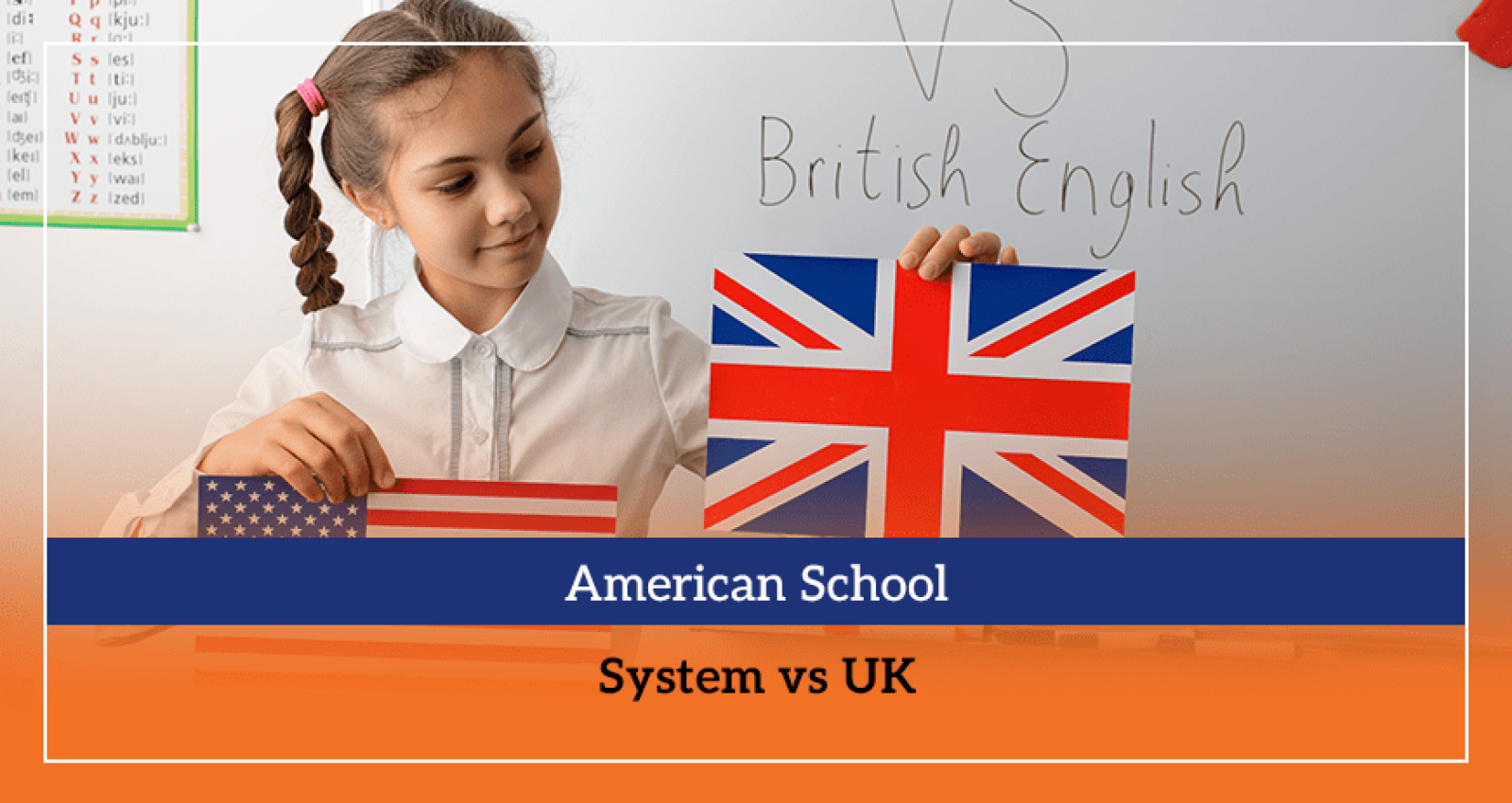
The primary difference lies in specialization: the US system emphasizes "breadth" through a liberal arts approach and a four-year undergraduate cycle, while the UK system focuses on "depth," requiring early specialization and a three-year intensive degree. Both offer world-class outcomes but differ significantly in admissions, costs, and academic terminology.
Philosophical Foundations: Breadth vs. Depth
The fundamental divergence between the American and British education systems begins with their core philosophies. In the United States, the educational journey is built on the principle of the "Liberal Arts." This model suggests that a well-rounded individual should be exposed to a wide variety of subjects—humanities, sciences, social studies, and the arts—before narrowing their focus. This philosophy extends well into the university years, where students are often not required to declare a "major" until their second year of study.
Conversely, the United Kingdom utilizes a "specialist" model. The British system operates on the belief that students should begin narrowing their focus during their mid-teens. By the age of 16, students have already selected a handful of subjects to study in depth, which directly prepare them for a specific university course. In the UK, a student applies to a specific subject (e.g., History or Engineering) and spends nearly 100% of their university time studying that single discipline.
As of 2026, these philosophical differences continue to shape how global employers perceive graduates. US graduates are often seen as versatile "generalists" with strong soft skills and interdisciplinary knowledge, while UK graduates are viewed as "specialists" with a high level of technical mastery in their chosen field at an earlier age.
The K-12 Pathway: Structural Differences
The journey from kindergarten to the end of secondary education follows different timelines and terminology in each country. Understanding these stages is crucial for families relocating or students looking to transition between systems.
The American K-12 System
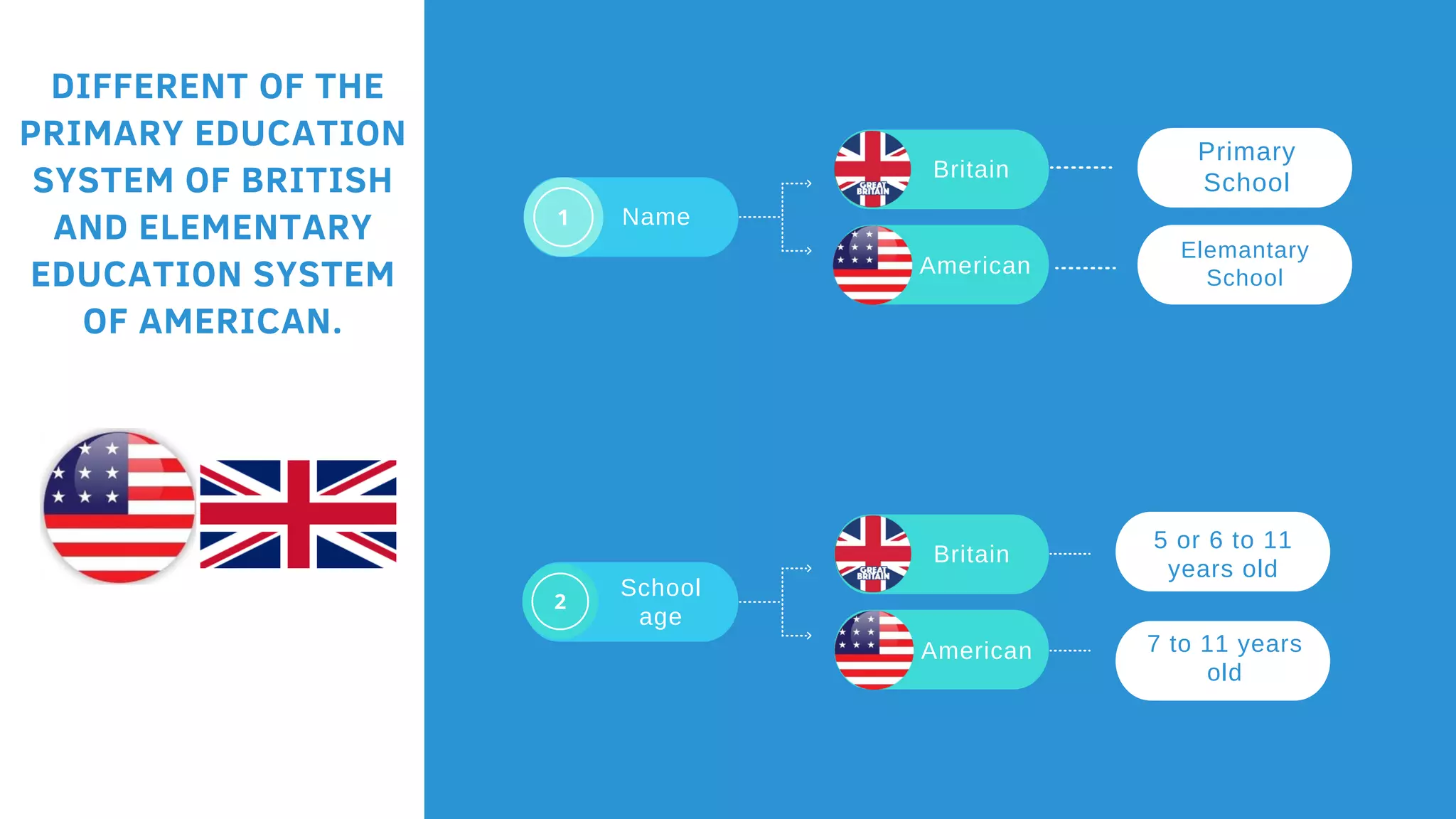
In the US, education is generally divided into three stages: Elementary School (Kindergarten through Grade 5), Middle School (Grades 6 through 8), and High School (Grades 9 through 12). Students graduate at age 18 with a High School Diploma.
The American curriculum is largely decentralized. While there are state standards and the "Common Core" in many regions, individual school districts have significant leeway in what they teach. Assessment is continuous; a student's final grade is a composite of homework, quizzes, class participation, and mid-term/final exams. This "Cumulative GPA" (Grade Point Average) is the most critical metric for university admissions.
The UK Key Stage System
The UK system (specifically in England) is divided into "Key Stages." Primary education covers Key Stages 1 and 2 (ages 5–11), while secondary education covers Key Stages 3 and 4 (ages 11–16). At age 16, students sit for the General Certificate of Secondary Education (GCSE) exams.
After GCSEs, students who wish to attend university move into "Further Education," typically known as "Sixth Form" or "College," for two years (ages 16–18). During this time, they study only three or four subjects for their A-Levels (Advanced Levels). Unlike the US system of continuous assessment, the UK system is heavily weighted toward high-stakes, external examinations at the end of the two-year cycle.
Higher Education: Duration and Degree Structure
The undergraduate experience represents perhaps the most visible difference between the two nations. For students applying in the 2026 cycle, the choice often comes down to how much time they wish to spend in school and how sure they are of their career path.
Degree Length and the "Major" System
In the US, a standard undergraduate degree takes four years. The first two years are largely comprised of "General Education" requirements. A student might be a Physics major but is still required to take classes in English literature, psychology, or a foreign language. This allows for significant flexibility; it is common for American students to "change their major" multiple times.
In the UK (excluding Scotland), an undergraduate degree typically takes only three years. Because students have already specialized during their A-Levels, they bypass general education entirely. A student studying Law in the UK starts Law on day one. This makes the UK degree more efficient and often more cost-effective, though it offers less room for exploration. It should be noted that in Scotland, the system more closely resembles the US model, with four-year degrees and a broader initial curriculum.
Post-Graduate Education
This pattern continues into post-graduate studies. A Master’s degree in the US is usually a two-year commitment, whereas in the UK, it is most often a one-year intensive program. For doctoral candidates, the US Ph.D. includes several years of coursework before the dissertation, often taking 5–7 years total. In the UK, a Ph.D. is almost entirely research-based and is generally completed in 3–4 years.
Admissions Processes: Holistic vs. Academic
The criteria used to select students for university differ sharply, reflecting the cultural values of each country.
The US "Holistic" Approach
American admissions officers at competitive institutions look at "the whole person." While grades and standardized test scores (like the SAT or ACT) are important, they are rarely the sole factor. Applications require multiple personal essays, letters of recommendation from teachers, and a comprehensive list of extracurricular activities. Demonstrating leadership, community service, or a unique talent (like music or athletics) can often compensate for slightly lower academic marks.
The UK "UCAS" Approach
The UK process is centralized through the Universities and Colleges Admissions Service (UCAS). Students apply to a maximum of five universities using a single "Personal Statement." In the UK, the focus is almost entirely academic. The personal statement should demonstrate a student's passion for and competence in their chosen subject. Extracurricular activities are only relevant if they relate to the field of study. Admissions offers are often "conditional," meaning a student is accepted only if they achieve specific grades in their final A-Level or IB exams.
Grading Systems and Academic Assessment
Grading scales are not directly equivalent, which can cause confusion during the 2026 application season for international transfers.
| Feature | United States (US) | United Kingdom (UK) |
|---|---|---|
| Grading Scale | 0.0 – 4.0 GPA / Letter Grades (A-F) | Classifications (1st, 2:1, 2:2, 3rd) |
| Undergraduate Length | Typically 4 Years | Typically 3 Years (4 in Scotland) |
| Specialization | Late (Year 2 or 3) | Early (Year 1) |
| Assessment Style | Continuous (Homework, Tests, Participation) | Examination-heavy (Finals-based) |
| Application Hub | Common App / Individual Portals | UCAS (Centralized) |
| Broad Curriculum | Required (General Education) | Not Required (Direct Entry) |
| Primary Secondary Focus | High School Diploma | GCSEs and A-Levels |
In the US, an "A" is usually 90% or above. In the UK, a mark of 70% is often considered "First Class" (the highest possible bracket) and is significantly harder to achieve than a 70% in an American classroom. This difference in "grade inflation" versus "rigorous capping" is a frequent point of discussion for the National Center for Education Statistics (NCES) and international credential evaluators.
Costs, Funding, and Student Support
The financial implications of choosing one system over the other are substantial, particularly as tuition rates and cost-of-living adjustments continue to evolve in 2026.
Tuition and Fees
US higher education is famously expensive, particularly at private "Ivy Plus" institutions where total costs (tuition, room, and board) can exceed $90,000 per year. However, the US also has a robust "high tuition/high aid" model. Many students receive significant institutional grants or "need-blind" financial aid that can make a private university cheaper than a public state school.
In the UK, tuition is capped for domestic students (around £9,250 per year), though these caps are subject to periodic government review by the Department for Education. For international students, fees are much higher, often ranging from £20,000 to £45,000 depending on the course and prestige of the university. While the sticker price in the UK may seem lower, there is generally much less "grant aid" available for international students compared to the US.
Living Styles and Culture
The "College Experience" is a distinct cultural phenomenon in the US. It often involves living in "dorms" (dormitories) on a self-contained campus, participating in Greek life (fraternities/sororities), and a heavy emphasis on collegiate sports.
UK student life is typically more independent. While "Halls of Residence" are provided for first-year students, they are often self-catered (students cook for themselves). The social life revolves around "Societies" and the Student Union rather than massive stadium sports or Greek organizations.
Key Differences in 2026: Trends to Watch
As we move through 2026, several trends are influencing the choice between these two systems:
- Digital and Hybrid Learning: Both systems have integrated permanent hybrid options, but US universities have been faster to adopt fully online, accredited degree paths that carry the same weight as on-campus equivalents.
- Standardized Testing: The US continues its shift toward "Test-Optional" or "Test-Blind" admissions, placing even more weight on the high school GPA and personal narrative. The UK remains firmly committed to standardized exam results (A-Levels/IB).
- Employability Focus: With the rising cost of education, both nations are facing pressure to prove "Value for Money." The UK’s Office for Students (OfS) has increased monitoring of graduate outcomes, while US schools are focusing on expanding "Co-op" programs and internships.
- Visa Regulations: For international students, the 2026 landscape of post-study work visas (such as the Graduate Route in the UK or OPT in the US) remains a deciding factor in where they choose to invest their tuition dollars.
Common Mistakes When Comparing Systems
One frequent error is assuming that a "College" in the UK is the same as a "College" in the US. In the US, "College" and "University" are often used interchangeably to refer to degree-granting institutions. In the UK, a "College" usually refers to a Further Education institution for ages 16–18 or a specific residential/academic constituent of a larger university (like the colleges at Oxford or Cambridge).
Another mistake is overlooking the "Transfer" culture. In the US, it is very common to spend two years at a community college and then transfer to a prestigious university. In the UK, transferring between universities is rare and often requires the student to start again from Year 1 because the specialized curricula are so distinct between institutions.
FAQs
Which system is better for undecided students?
The American system is significantly better for students who are undecided. The first two years of a US degree are designed to allow exploration across different departments. A student can take classes in film, biology, and economics before deciding on a major. In the UK, you must choose your subject at the point of application, making it difficult to change course later without restarting your degree.
Are UK degrees recognized in the United States?
Yes, UK degrees are widely recognized by US employers and graduate schools. However, because a UK degree is three years rather than four, some US graduate programs may require a "credential evaluation" to ensure the degree is equivalent to a US bachelor's degree. Most major UK universities meet this standard easily due to the intensity of their three-year programs.
Is it cheaper to study in the UK or the US?
For many international students, the UK is often cheaper because the degrees are shorter. Paying for three years of tuition and living expenses is generally more affordable than paying for four, even if the annual tuition is similar. However, the US offers more "merit-based" and "need-based" scholarships, which can sometimes bring the cost of a US education down to nearly zero for exceptionally talented students.
How does the grading differ for a Master's degree?
In the UK, Master's degrees are often graded as Pass, Merit, or Distinction. In the US, they follow the same A-F letter grading and GPA system as undergraduate degrees. The UK Master's is also much more focused on a final, major dissertation (often 15,000–20,000 words), whereas a US Master's may rely more on comprehensive exams or a series of smaller research projects.
Can I work while studying in both countries?
Both countries generally allow international students to work part-time (usually up to 20 hours per week during term time), but the regulations are strict. In the US, international students on an F-1 visa are often restricted to "on-campus" jobs for their first year. In the UK, students on a Student Visa have slightly more flexibility but must still adhere to strict hourly limits set by the Home Office.
Practical Recommendation
When choosing between the American and UK education systems in 2026, evaluate your own level of certainty regarding your career path. If you have a specific vocation in mind—such as becoming a doctor, lawyer, or specialized engineer—the UK system offers a faster, more focused, and often more affordable route to your goal. The early specialization ensures you gain deep technical expertise quickly.
However, if you value a broad intellectual foundation, wish to participate in a vibrant campus culture with diverse extracurriculars, or are still exploring your professional interests, the American system is superior. The four-year liberal arts model provides a safety net for self-discovery and develops a versatile skill set that is highly valued in the rapidly changing 2026 job market.