Investing in American stocks involves purchasing equity shares of companies listed on U.S. exchanges, primarily the New York Stock Exchange (NYSE) and the Nasdaq. As of 2026, these markets remain the world's largest by market capitalization, offering investors access to global leaders in technology, healthcare, and consumer goods through brokerage accounts.
The United States equity market is often considered the backbone of global finance. For decades, it has provided a platform for both domestic and international investors to participate in the growth of some of the most innovative companies on the planet. Whether you are looking for long-term wealth accumulation, dividend income, or exposure to cutting-edge industries like artificial intelligence and biotechnology, understanding the mechanics of the U.S. stock market is essential.
Understanding the U.S. Equity Ecosystem
The American stock market is not a single entity but a sophisticated network of exchanges, regulatory bodies, and financial institutions. At its core, a "stock" represents a fractional ownership interest in a corporation. When you buy shares of an American company, you are entitled to a portion of its assets and earnings, often distributed as dividends or realized through capital appreciation.
The primary reason for the dominance of American stocks is liquidity. Liquidity refers to the ease with which an asset can be bought or sold without affecting its price significantly. Because millions of participants trade on U.S. exchanges daily, investors can generally enter or exit positions with minimal friction. This environment is bolstered by the U.S. Securities and Exchange Commission (SEC), which enforces strict disclosure requirements, ensuring that listed companies provide transparent financial data to the public.
The Role of Major Exchanges
Most American stocks are traded on two primary exchanges:
- New York Stock Exchange (NYSE): Located on Wall Street, the NYSE is the world’s largest stock exchange by market capitalization. It traditionally hosted older, more established "blue-chip" companies in sectors like manufacturing, banking, and energy. It utilizes a hybrid model of electronic and floor-based trading.
- Nasdaq: Known for its heavy concentration of technology and growth-oriented companies, the Nasdaq is a completely electronic exchange. It is the home of many of the "Magnificent Seven" and other high-growth firms that have defined the economic landscape of the 2020s.
Beyond these, there are "Over-the-Counter" (OTC) markets for smaller or less liquid companies that do not meet the stringent listing requirements of the major exchanges. However, for most individual investors, the NYSE and Nasdaq represent the safest and most transparent venues for trading.
Leading Market Indices as Benchmarks
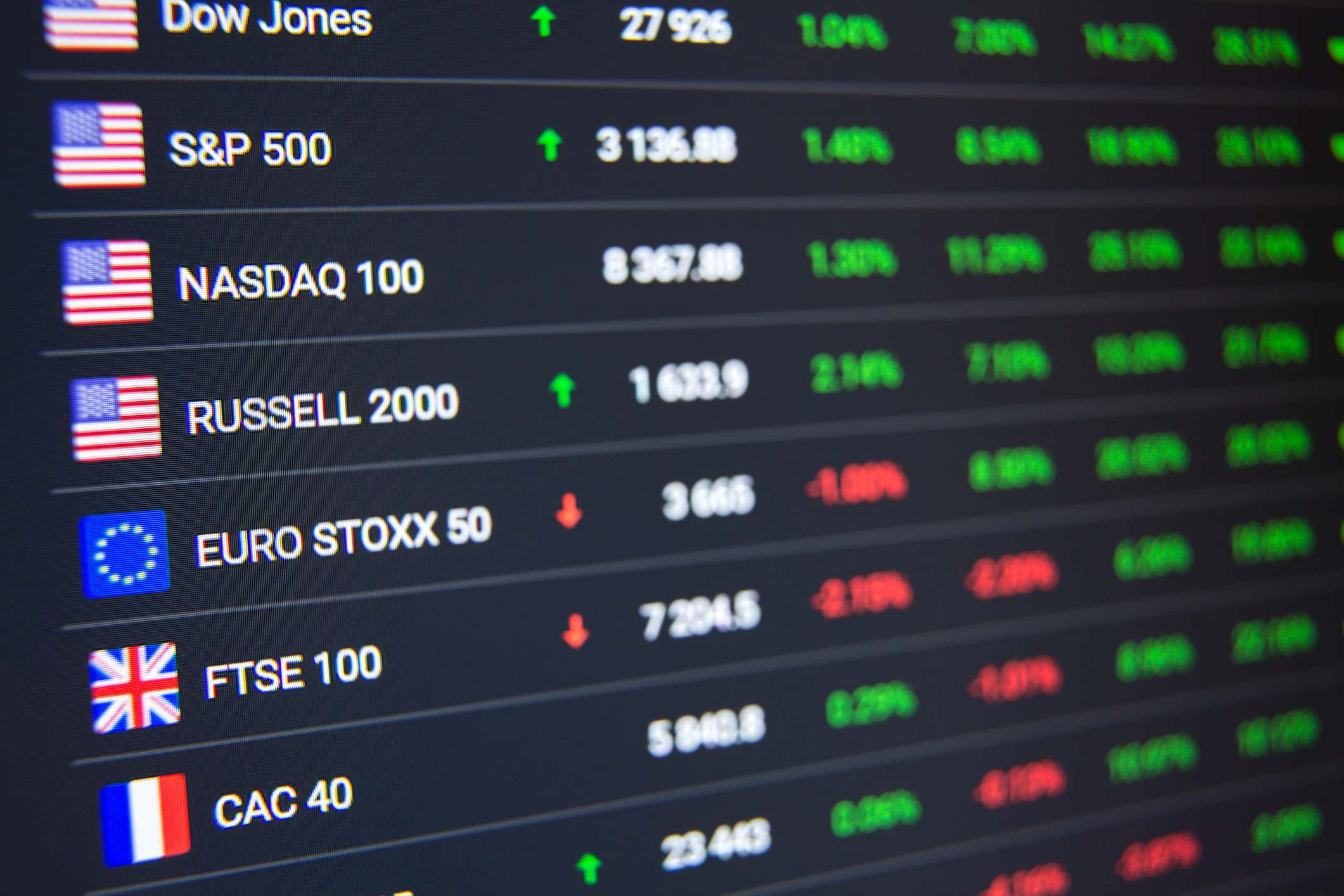
To gauge the performance of American stocks, investors look to indices. An index is a curated basket of stocks that represents a specific segment of the market or the economy as a whole.
The S&P 500 Index
The Standard & Poor’s 500 (S&P 500) is widely regarded as the best single gauge of large-cap U.S. equities. It includes 500 of the leading companies and covers approximately 80% of available market capitalization. Because it is float-adjusted and market-cap-weighted, larger companies like those in the technology sector have a more significant impact on the index's movement.
The Dow Jones Industrial Average (DJIA)
The "Dow" is one of the oldest and most cited indices. Unlike the S&P 500, it includes only 30 prominent companies and is price-weighted. This means companies with higher stock prices have more influence over the index, regardless of their actual size. While less comprehensive than the S&P 500, it serves as a snapshot of the health of industrial and established corporate America.
The Nasdaq Composite
This index includes almost all stocks listed on the Nasdaq stock exchange. Because the Nasdaq is the preferred destination for tech firms, this index is the primary benchmark for the technology and growth sectors. In 2026, it continues to be the focal point for investors tracking advancements in AI, semiconductors, and software-as-a-service (SaaS) models.
How to Invest in American Stocks in 2026
The process of buying American stocks has become significantly more accessible over the last decade. In 2026, the barriers to entry are lower than ever, with many brokerages offering zero-commission trades and fractional share ownership.
1. Selecting a Brokerage Platform
Your first step is opening a brokerage account. Investors generally choose between:
- Full-Service Brokers: These offer personalized advice and wealth management but often charge higher fees or require higher account minimums.
- Discount or Online Brokers: Platforms like Charles Schwab, Fidelity, or Vanguard provide robust tools and research for self-directed investors.
- Fintech Apps: Mobile-first platforms focus on ease of use and are popular for beginners, though they may offer fewer advanced charting tools.
2. Account Types and Prerequisites
For U.S. residents, you will typically choose between a taxable brokerage account or a tax-advantaged retirement account like an IRA (Individual Retirement Account) or a 401(k). International investors must ensure their chosen broker allows foreign accounts.
Requirements often include:
- Identification: A government-issued ID (Passport or Driver's License).
- Tax Information: A Social Security Number (SSN) for U.S. citizens or a completed W-8BEN form for non-U.S. citizens to certify their foreign status for tax withholding purposes.
- Funding: Linking a bank account for electronic fund transfers (ACH or Wire).
3. Understanding Order Types
When purchasing American stocks, you don't just "click buy." You must specify how you want the trade executed:
- Market Order: Instructs the broker to buy or sell immediately at the best available current price.
- Limit Order: Sets a specific price (or better) at which you are willing to trade. This protects you from price spikes in volatile markets.
- Stop-Loss Order: Automatically triggers a sale if the stock drops to a certain price, helping to limit potential losses.
4. Settlement Periods
As of May 2024, the U.S. moved to a T+1 settlement cycle. This means that when you sell a stock in 2026, the transaction officially settles, and the cash becomes available one business day after the trade date. This increased speed has improved market efficiency and reduced systemic risk.
Comparative Overview of Major U.S. Indices
The following table summarizes the key characteristics of the primary benchmarks for American stocks as of 2026.
| Index Name | Number of Constituents | Weighting Method | Primary Sector Focus |
|---|---|---|---|
| S&P 500 | ~500 | Market Cap Weighted | Diversified (Large Cap) |
| Dow Jones (DJIA) | 30 | Price Weighted | Industrial/Blue Chip |
| Nasdaq Composite | ~3,000+ | Market Cap Weighted | Technology & Growth |
| Russell 2000 | 2,000 | Market Cap Weighted | Small-Cap Companies |
| S&P 400 | 400 | Market Cap Weighted | Mid-Cap Companies |
Strategies for Investing in the American Market
Successful participation in the U.S. stock market requires a clear strategy. Investors generally fall into two camps: active and passive.
Passive Investing (ETFs and Mutual Funds)
Many investors prefer not to pick individual stocks. Instead, they buy Exchange-Traded Funds (ETFs) that track an index like the S&P 500. This provides instant diversification. For example, buying a single share of an S&P 500 ETF gives you exposure to 500 different companies. This approach is favored for long-term retirement planning due to its low cost and historical reliability.
Active Investing (Stock Picking)
Active investors seek to "beat the market" by identifying undervalued companies or those with superior growth prospects. In 2026, this often involves deep analysis of a company's "moat"—its competitive advantage. Common metrics include:
- P/E Ratio (Price-to-Earnings): Comparing the stock price to its per-share earnings.
- Dividend Yield: The annual dividend payment divided by the stock price.
- Revenue Growth: The year-over-year increase in total sales.
Growth vs. Value
- Growth Stocks: These companies are expected to grow at a rate significantly above the average for the market. They usually reinvest profits into research and expansion rather than paying dividends.
- Value Stocks: These are companies that appear to be trading for less than their intrinsic value. They are often mature companies with steady cash flows and consistent dividend payments.
Risks and Regulatory Framework
While American stocks offer significant opportunities, they are not without risk. Market volatility can be driven by interest rate changes by the Federal Reserve, geopolitical tensions, or economic shifts.
Diversification as a Shield
The most effective way to manage risk is through diversification. By spreading investments across different sectors (Tech, Healthcare, Utilities, Financials) and market caps (Small, Mid, Large), an investor reduces the impact of a single company's failure on their overall portfolio.
The SEC and Investor Protection
The U.S. Securities and Exchange Commission (SEC) regulates the markets to protect investors and maintain fair, orderly, and efficient markets. They require companies to file quarterly (10-Q) and annual (10-K) reports. Reviewing these documents on the SEC's EDGAR database is a vital step for any serious investor performing due diligence.
Tax Implications
Earnings from American stocks are subject to taxation.
- Capital Gains Tax: Applies to the profit made when selling a stock for more than its purchase price. Short-term gains (held for less than a year) are usually taxed at ordinary income rates, while long-term gains enjoy preferential lower rates.
- Dividend Tax: Qualified dividends are also taxed at the long-term capital gains rate.
Non-U.S. investors are typically subject to a 30% withholding tax on dividends, though this may be reduced if their home country has a tax treaty with the United States.
Sector Outlook for 2026
The landscape of American stocks in 2026 is heavily influenced by several key sectors that have shown resilience and innovation:
- Information Technology: The integration of generative AI into enterprise software has become a primary driver of earnings.
- Healthcare and Biotech: Aging demographics in the West continue to fuel demand for pharmaceutical innovation and medical devices.
- Energy Transition: Both traditional oil and gas firms and renewable energy companies are navigating the shift toward a lower-carbon economy, often representing a mix of value and growth opportunities.
- Financials: The banking sector remains a staple for value investors, benefiting from digitized services and stabilized interest rate environments.
Frequently Asked Questions
Can non-U.S. citizens buy American stocks?
Yes, non-U.S. citizens can invest in American stocks. Most major international brokerages offer access to U.S. exchanges. You will need to complete a W-8BEN form to manage tax withholding and comply with your local country's regulations regarding foreign investments.
What is the minimum amount of money needed to start?
In 2026, many brokerages allow you to start with as little as $1 to $5 through fractional shares. This allows you to buy a small piece of an expensive stock (like one that trades at $3,000 per share) without needing the full amount.
How are dividends paid out?
Dividends are typically paid in cash directly into your brokerage account on a quarterly basis. Many brokers offer a DRIP (Dividend Reinvestment Plan), which automatically uses those cash dividends to purchase more shares of the same stock, allowing for compound growth.
What are the trading hours for the U.S. stock market?
The standard trading hours for the NYSE and Nasdaq are Monday through Friday, 9:30 AM to 4:00 PM Eastern Time (ET). However, "Pre-Market" and "After-Hours" trading sessions are available through most brokers, though these periods often have lower liquidity and higher volatility.
What is an ADR?
An American Depositary Receipt (ADR) is a certificate issued by a U.S. bank that represents shares in a foreign company. While this guide focuses on American stocks (U.S. companies), ADRs allow you to trade international companies like Toyota or SAP on U.S. exchanges using U.S. dollars.
Practical Recommendation for New Investors
For those beginning their journey with American stocks in 2026, the most prudent "next action" is to establish a core-and-satellite portfolio. Start by allocating the majority (the "core") of your capital to a low-cost S&P 500 or Total Market ETF. This ensures you capture the broad growth of the U.S. economy. Once your foundation is set, you can allocate a smaller portion (the "satellites") to individual stocks or sector-specific ETFs that align with your personal research or high-conviction beliefs. Always maintain an emergency fund outside of the stock market to avoid being forced to sell your positions during a temporary market downturn.