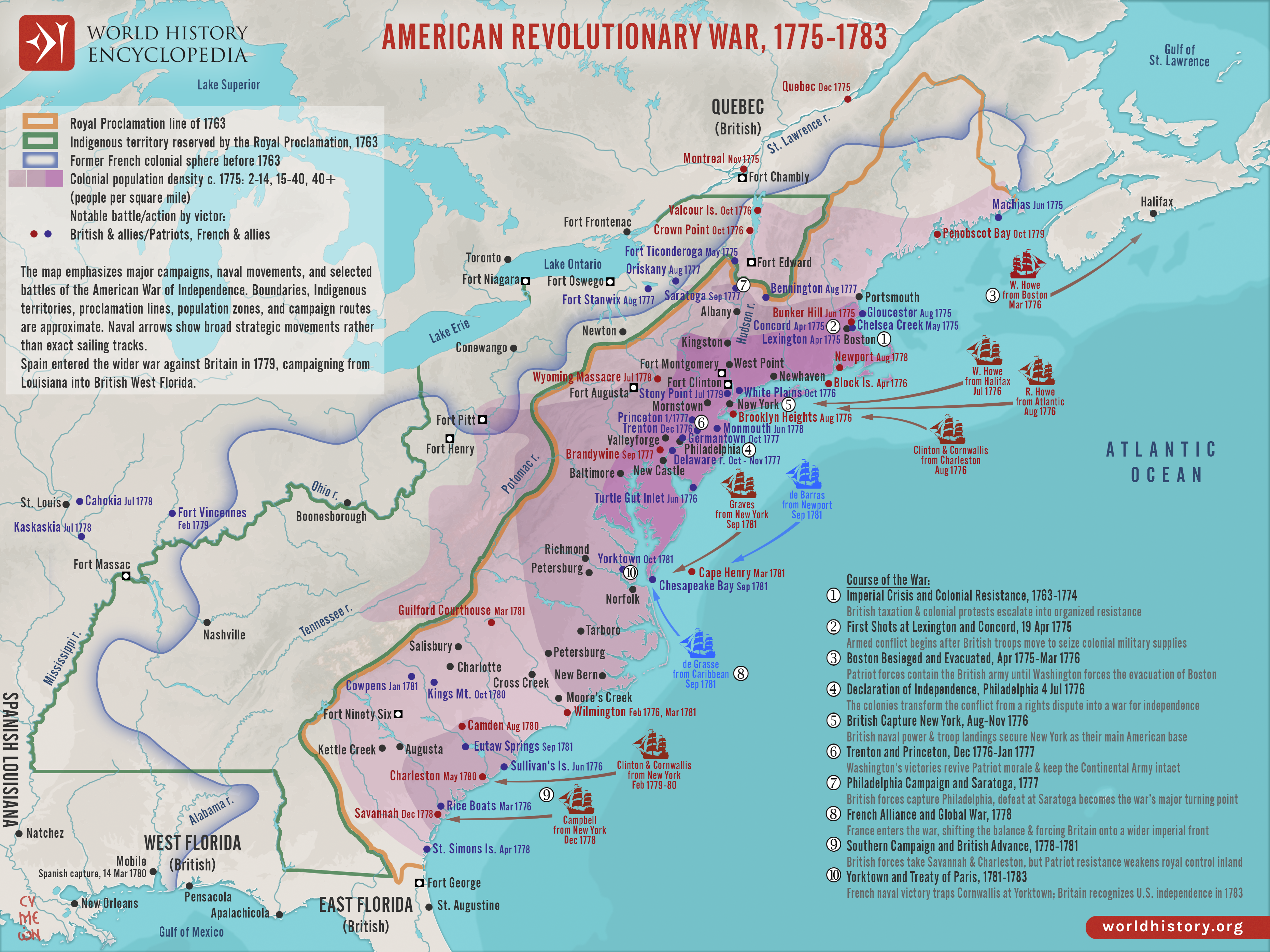
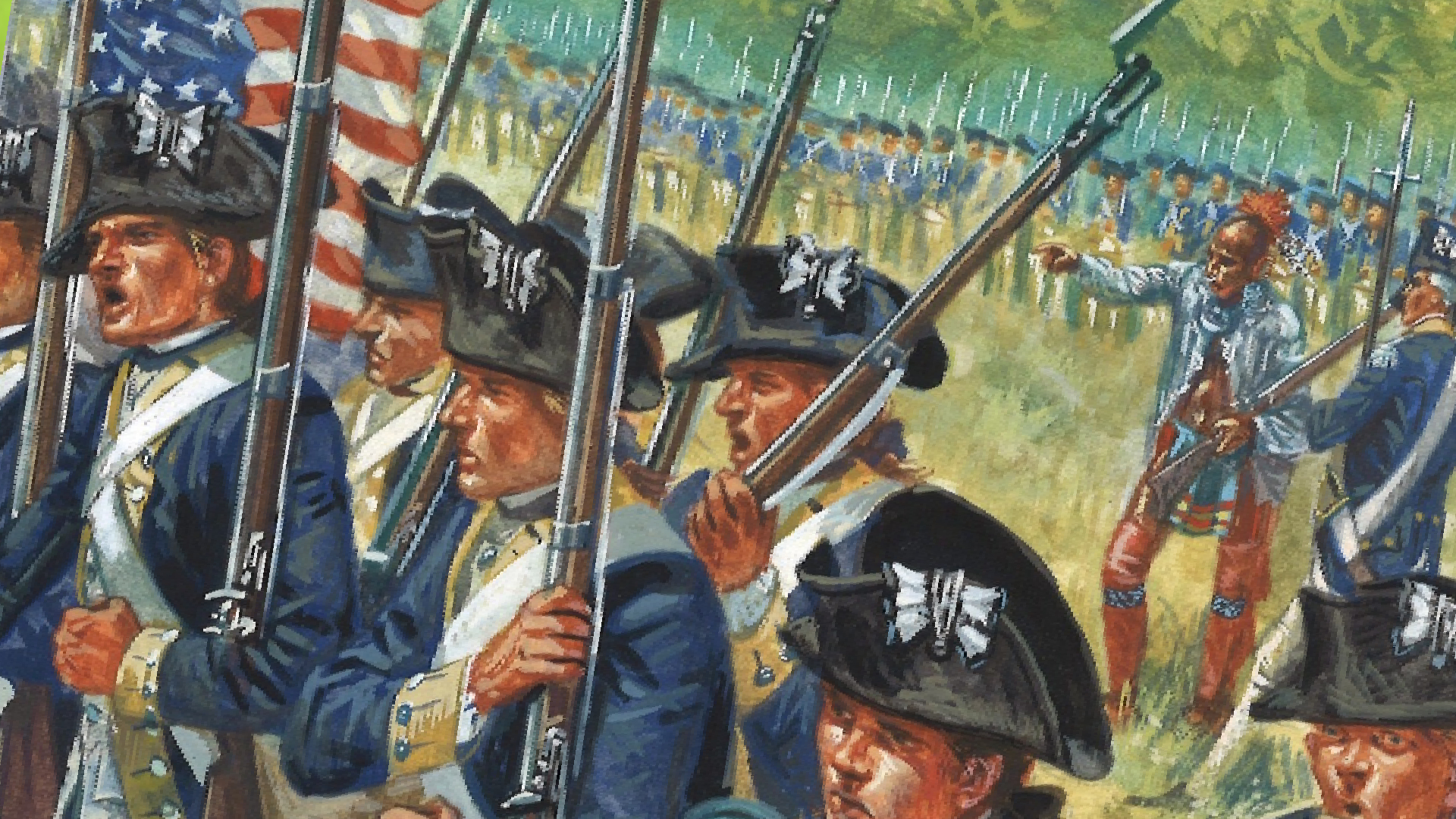
The American War of Independence, also known as the Revolutionary War, was the eight-year global conflict (1775–1783) through which thirteen North American colonies won political independence from Great Britain. It resulted in the formation of the United States of America, fundamentally altering the global geopolitical landscape and establishing a precedent for modern democratic governance based on Enlightenment principles.
The Roots of Colonial Discontent
The American War of Independence did not begin with a single event but was the culmination of over a decade of escalating tension between the British Crown and its American subjects. Following the end of the French and Indian War in 1763, Great Britain emerged as the dominant power in North America but was saddled with massive war debts. To alleviate this financial burden, the British Parliament began imposing a series of taxes and regulations on the colonies, starting with the Sugar Act (1764) and the Stamp Act (1765).
These measures were met with fierce resistance. The colonists, who had enjoyed a long period of "salutary neglect," argued that they could not be taxed by a Parliament in which they had no elected representatives. This sentiment was encapsulated in the slogan "No taxation without representation." Organizations like the Sons of Liberty formed to protest these acts, often through boycotts and civil disobedience.
The Royal Proclamation of 1763 further exacerbated tensions by forbidding colonial settlement west of the Appalachian Mountains. This was intended to prevent costly conflicts with Native American tribes, but many colonists viewed it as an infringement on their rights to expand and profit from the land they had helped win during the war against France.
Escalation and the Path to Armed Conflict
By the early 1770s, the relationship between Britain and the colonies had reached a breaking point. The Boston Massacre (1770), where British soldiers fired into a crowd of colonists, served as a powerful propaganda tool for those advocating for resistance. The subsequent Boston Tea Party (1773), a direct protest against the Tea Act, prompted the British government to pass the Coercive Acts—known in America as the Intolerable Acts.
These laws closed the Port of Boston, dissolved the Massachusetts provincial government, and allowed British troops to be quartered in private homes. In response, twelve of the thirteen colonies sent delegates to the First Continental Congress in 1774 to coordinate a unified response. While many still hoped for reconciliation, the colonies began forming militias and stockpiling weapons.
The first shots were fired on April 19, 1775, at Lexington and Concord, Massachusetts. British troops, sent to seize colonial military supplies and arrest rebel leaders, were met by local "minutemen." This "shot heard 'round the world" signaled the transition from political protest to open warfare.
The Declaration of Independence and Revolutionary Ideology
In June 1775, the Second Continental Congress appointed George Washington as the Commander-in-Chief of the newly formed Continental Army. Despite the ongoing fighting, many colonists remained hesitant to break away completely from the British Empire. However, the publication of Thomas Paine’s pamphlet Common Sense in early 1776 shifted public opinion by arguing that monarchy was an absurd form of government and that independence was the only logical course of action.
On July 4, 1776, the Continental Congress formally adopted the Declaration of Independence. Primary authored by Thomas Jefferson, the document drew heavily from the Enlightenment philosophy of John Locke. It asserted that all men are created equal and possess "unalienable rights" to life, liberty, and the pursuit of happiness. Crucially, it argued that when a government fails to protect these rights, the people have a duty to overthrow it and establish a new one. This document transformed a regional rebellion into a war for national self-determination.
Military Strategy and Key Turning Points
The American War of Independence was a conflict of attrition and contrasting strategies. The British possessed the world's most powerful navy and a highly disciplined professional army, supplemented by Hessian mercenaries. Their strategy focused on capturing major port cities like New York, Philadelphia, and Charleston to isolate the colonies and crush the rebellion through conventional warfare.
Conversely, the American forces were often underfunded, poorly supplied, and comprised of short-term volunteers. George Washington understood that he did not need to destroy the British army in a single decisive battle; he merely needed to keep the Continental Army intact and make the war too costly and politically unpopular for the British to continue.
The Battle of Saratoga (1777)
Perhaps the most significant turning point occurred in upstate New York in the autumn of 1777. American forces defeated and captured a major British army led by General John Burgoyne at the Battle of Saratoga. This victory was a massive morale boost and, more importantly, it convinced the French government under King Louis XVI that the Americans had a genuine chance of winning.
Following Saratoga, France entered into a formal alliance with the United States in 1778, providing crucial financial aid, military supplies, and naval support. Spain and the Dutch Republic eventually joined the conflict against Britain as well, escalating the American rebellion into a global war that forced Britain to divert military resources away from the North American theater to defend its other colonial interests.
The Southern Campaign
After the stalemate in the North, the British shifted their focus to the Southern colonies, believing they would find more support among Loyalists (colonists who remained loyal to the Crown). While they captured Savannah and Charleston, they faced a grueling war of movement and guerilla tactics led by American generals like Nathanael Greene. The British forces, under Lord Cornwallis, became increasingly exhausted and isolated from their supply lines.
The Siege of Yorktown and British Surrender
The culmination of the war occurred in 1781 at Yorktown, Virginia. Lord Cornwallis had moved his army to the Yorktown peninsula, expecting to be reinforced or evacuated by the British Navy. However, a French fleet commanded by Admiral de Grasse gained control of the Chesapeake Bay, cutting off Cornwallis's escape route.
Simultaneously, a combined American and French army led by George Washington and the Comte de Rochambeau marched south and besieged the British positions. Trapped and outnumbered, Cornwallis surrendered his entire army on October 19, 1781. While skirmishes continued for some time, Yorktown effectively ended major combat operations in North America.
The Treaty of Paris (1783)
Negotiations for peace began in Paris in 1782, with the American delegation including Benjamin Franklin, John Adams, and John Jay. The resulting Treaty of Paris, signed on September 3, 1783, formally ended the war.
Under the terms of the treaty:
- Great Britain recognized the United States as an independent and sovereign nation.
- The boundaries of the new nation were established, extending from the Atlantic Ocean west to the Mississippi River, and from Canada south to the 31st parallel (the northern border of Florida).
- Americans were granted fishing rights off the coast of Newfoundland.
- The treaty recommended that the states restore the rights and property of Loyalists, though this was rarely fully enforced.
| Feature | Continental Army (American) | British Army (Great Britain) |
|---|---|---|
| Primary Strength | Knowledge of local terrain; high ideological motivation. | Professional training; superior firepower; world-class navy. |
| Major Weakness | Chronic shortages of food, pay, and ammunition. | Long supply lines; unfamiliar territory; lack of clear political objective. |
| Tactics | Blend of conventional and "partisan" (guerrilla) warfare. | Linear formations and disciplined volleys; naval blockades. |
| Command Structure | Unified under Washington but hampered by state politics. | High-quality officers but often prone to internal rivalries. |
| Foreign Support | Essential aid from France, Spain, and the Netherlands. | Used Hessian (German) mercenaries; limited Loyalist support. |
The Global Legacy of the Revolution
The American War of Independence had repercussions far beyond the borders of the newly formed United States. It was the first time in modern history that a colonial people had successfully revolted against a European mother country to establish a republican government.
- Spread of Democratic Ideals: The principles articulated in the Declaration of Independence and later the U.S. Constitution (1787) inspired subsequent movements for liberty, most notably the French Revolution in 1789 and the Latin American wars of independence in the early 19th century.
- Social Shifts: While the revolution did not immediately end slavery or grant rights to women, it introduced a "revolutionary vocabulary" regarding equality that marginalized groups would use for centuries to claim their own rights.
- Economic Realignment: The United States began to develop as an independent economic actor, moving away from the restrictive mercantilist policies of the British Empire and toward a system of free enterprise.
- Native American Impact: For many Native American tribes, the American victory was a catastrophe. The removal of British restrictions on westward expansion led to decades of conflict and the systematic displacement of Indigenous populations.
Frequently Asked Questions
What was the main cause of the American War of Independence?
The primary cause was the dispute over legal authority and taxation. The British government believed it had the right to tax the colonies to pay for imperial defense, while the colonists argued that as English subjects, they could not be taxed without direct representation in Parliament. This constitutional crisis was exacerbated by restrictive trade laws and limitations on westward expansion.
Who were the Loyalists?
Loyalists, often called Tories, were American colonists who remained loyal to the British Crown during the war. They constituted roughly 15% to 20% of the white population. Many Loyalists came from the merchant class or held official positions in the colonial government. After the war, tens of thousands of Loyalists fled to Canada, Great Britain, or the West Indies.
How did France help the United States win?
France provided critical support that made the American victory possible. They supplied roughly 90% of the Continental Army's gunpowder during the first years of the war. After the formal alliance in 1778, France sent thousands of soldiers and a powerful navy that was instrumental in neutralizing British naval superiority, most notably during the Siege of Yorktown.
Did the war end slavery in America?
The war did not end slavery, but it began a process of gradual emancipation in the Northern states. The rhetoric of "liberty" and "equality" made many realize the hypocrisy of holding people in bondage. However, in the South, where the economy was heavily dependent on enslaved labor, the institution remained firmly entrenched and even expanded in the decades following the war.
What happened to the British government after the war?
The defeat led to a political crisis in London. Lord North, the Prime Minister who had overseen the war, was forced to resign in 1782. King George III remained on the throne but saw a significant reduction in his personal political influence. Britain eventually pivoted its imperial focus toward India and other territories, though it remained a dominant world power.
Why is 1776 considered the birth of the nation if the war ended in 1783?
The year 1776 is celebrated as the birth of the nation because it marks the signing of the Declaration of Independence. This was the moment the colonies officially asserted their sovereignty and defined the ideological basis for the United States. While the military victory and legal recognition (Treaty of Paris) came later, the political act of declaring independence is viewed as the founding moment.
Recommendations for Further Study
To gain a deeper understanding of the American War of Independence in 2026, researchers and history enthusiasts should prioritize the study of primary sources. The National Archives provides digital access to the Declaration of Independence, the Constitution, and the Bill of Rights. For a military perspective, visiting the National Park Service sites, such as Saratoga or Yorktown, offers an immersive look at the geography and logistics of the conflict.
Engaging with the personal correspondence of figures like Abigail Adams or the journals of common soldiers provides a more nuanced view of the lived experience during the revolutionary era. Analyzing these documents helps bridge the gap between historical dates and the complex human motivations that fueled the creation of the United States.