As of 2026, American Tower Corporation (AMT) maintains a market capitalization and estimated net worth between $118 billion and $132 billion. This valuation is driven by its massive global portfolio of over 225,000 communication sites, the continued maturation of 5G networks, and the successful integration of high-density data center assets into its core infrastructure offerings.
Defining "Net Worth" for a Global REIT
When discussing the "net worth" of a massive entity like American Tower Corporation, it is essential to distinguish between different financial metrics. In the context of a publicly traded Real Estate Investment Trust (REIT), net worth is most commonly equated with market capitalization—the total value of all outstanding shares. However, professional analysts also look at Enterprise Value (EV), which includes market cap plus total debt minus cash, and Net Asset Value (NAV), which estimates the market value of the company’s physical real estate holdings.
In 2026, American Tower’s balance sheet reflects a sophisticated blend of traditional macro towers, "small cell" urban deployments, and a robust data center presence. Unlike a standard corporation, a REIT’s value is heavily tied to its ability to generate consistent cash flow through long-term leases. For AMT, these leases are typically signed with multi-billion dollar telecommunications carriers like Verizon, AT&T, and T-Mobile, providing a high degree of predictability and stability to its valuation.
The Evolution of American Tower’s Valuation (2022–2026)
To understand where American Tower stands today in 2026, one must look at the trajectory of the past few years. The period between 2022 and 2024 was marked by significant macroeconomic headwinds, particularly rising interest rates, which historically pressure REIT valuations. As a capital-intensive business, American Tower relies on debt to fund the construction and acquisition of towers.
By 2025, however, the stabilization of global interest rates allowed AMT to refinance existing debt and resume aggressive growth. The 2026 valuation reflects a recovery from those mid-decade lows. The company’s focus shifted from raw site acquisition to "organic tenant growth"—adding more equipment to existing towers. This "colocation" model is highly profitable because the marginal cost of adding a second or third tenant to a tower is minimal compared to the initial construction cost.
The 5G Infrastructure Supercycle
The primary engine of growth leading into 2026 has been the "second wave" of 5G deployment. While the initial 5G rollout focused on coverage, the current phase focuses on capacity and low latency. This requires carriers to upgrade their existing equipment on AMT towers and deploy additional "small cells" in dense urban environments. These upgrades result in "amendment revenue," where carriers pay higher rent for the increased space and power consumption their new equipment requires.
Key Drivers of the 2026 Net Worth
Several strategic pillars support American Tower’s current $120 billion+ valuation. These include geographic diversification, the expansion into "Edge Computing," and the maintenance of a premier tenant base.
Global Portfolio Diversification
American Tower is no longer just an American company. While the U.S. and Canada segment remains the most profitable and stable, contributing roughly half of the company’s revenue, the international segment is where the growth volume resides.
- Latin America: Continued 4G expansion and early-stage 5G in Brazil and Mexico have provided steady returns.
- Africa and Europe: AMT has solidified its footprint in Germany and Spain while navigating the higher-risk, higher-reward markets in Africa, where mobile data is the primary gateway to the internet.
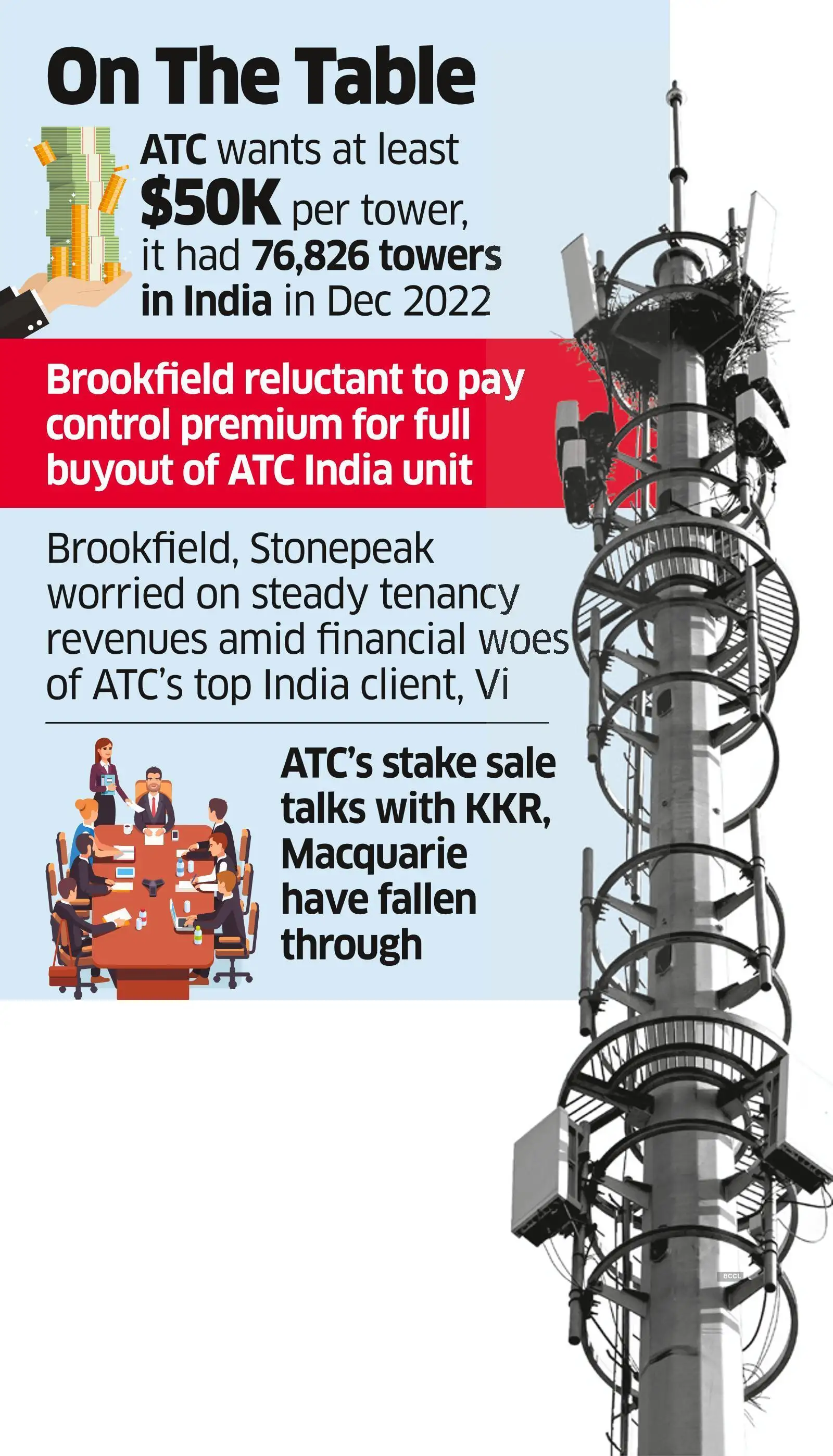
- India: After years of consolidation and regulatory hurdles in the Indian market, the 2026 environment shows a more stabilized telecommunications sector, contributing more predictably to AMT's bottom line.
The CoreSite Integration and Data Centers
One of the most significant shifts in American Tower’s business model was the 2021 acquisition of CoreSite. By 2026, this move has fully matured. By owning both the towers that transmit data and the data centers that process it, AMT has positioned itself as a "one-stop-shop" for the digital economy. This synergy is particularly valuable for Edge Computing, where data needs to be processed physically close to the end-user to reduce lag in applications like autonomous driving, augmented reality, and industrial automation.
Financial Metrics and Shareholder Value in 2026
For investors tracking AMT’s net worth, the most critical metric is not Net Income, but Adjusted Funds From Operations (AFFO). This measure accounts for the unique depreciation schedules of real estate and provides a clearer picture of the cash available for dividends.
| Metric | 2024 (Historical Ref.) | 2026 (Current Status) |
|---|---|---|
| Market Capitalization | ~$92 Billion | ~$122 Billion |
| Total Sites Owned | ~224,000 | ~228,500 |
| Annual AFFO per Share | ~$10.40 | ~$12.15 |
| Quarterly Dividend | ~$1.70 | ~$1.95 |
| Net Debt / EBITDA Ratio | 5.2x | 4.7x |
| Tenant per Tower Ratio | 1.9x | 2.1x |
Technical Analysis of the Business Model
The "moat" around American Tower’s net worth is built on the high barriers to entry in the tower industry. Building a new tower requires significant capital, complex zoning permits, and specific geographic locations that are often limited by local regulations.
The Leasing Structure
Most of AMT’s revenue comes from non-cancellable, long-term leases (typically 5 to 10 years) with built-in rent escalators. In the United States, these escalators are usually fixed at around 3% annually. Internationally, they are often tied to local inflation indices. This structure makes American Tower a natural hedge against inflation, as their revenue increases automatically when prices rise, while their primary cost—the land lease under the tower—is often fixed for even longer periods.
Colocation and Margin Expansion
The most powerful lever for increasing the company's value is the colocation rate. A tower with one tenant might have a gross margin of 40%. When a second tenant is added, that margin can jump to 70%, and a third tenant can push it above 80%. In 2026, American Tower has successfully increased its average tenants-per-tower ratio to 2.1x, significantly boosting its enterprise value without the need for massive new construction projects.
Risks and Challenges in the 2026 Landscape
Despite its massive net worth, American Tower faces several risks that analysts monitor closely.
- Interest Rate Volatility: As a REIT, AMT is sensitive to the cost of capital. While rates have stabilized in 2026, any sudden upward shift could increase interest expenses and lower the valuation of real estate assets.
- Carrier Consolidation: If major carriers merge (as Sprint and T-Mobile did previously), it can lead to "churn," where the new entity cancels redundant leases on the same tower.
- Technological Disruption: The rise of Low Earth Orbit (LEO) satellite constellations, like SpaceX’s Starlink, is often cited as a threat. However, in 2026, these are seen more as complementary services for rural areas rather than replacements for high-capacity terrestrial towers in populated regions.
- Foreign Exchange Risk: Since AMT operates in dozens of countries, it must constantly manage the risk of local currencies devaluing against the U.S. Dollar, which can eat into reported earnings.
The Role of ESG and Sustainability
In 2026, a significant portion of institutional investment in American Tower is tied to its Environmental, Social, and Governance (ESG) performance. The company has invested heavily in "Green Towers," utilizing solar power and high-efficiency battery storage to reduce reliance on diesel generators in emerging markets. This has not only reduced operating costs but has also made the stock more attractive to "impact" investors, further supporting the company’s market valuation.
Understanding the Future Outlook
Looking beyond 2026, the company’s net worth is expected to be increasingly influenced by the "6G" development cycle and the further decentralization of the internet. American Tower’s strategy of owning the physical "dirt" and the "interconnection points" (data centers) ensures that it remains an essential utility for the modern world.
As long as data consumption continues to grow—driven by AI, video streaming, and the Internet of Things (IoT)—the demand for American Tower’s infrastructure will likely remain robust. The company's ability to maintain a disciplined balance sheet while returning capital to shareholders through growing dividends is the cornerstone of its high valuation.
FAQ
How is American Tower's net worth calculated?
American Tower's net worth is primarily viewed through its market capitalization, which is the current stock price multiplied by the total number of shares outstanding. In 2026, this figure sits between $118B and $132B. Analysts also consider Enterprise Value, which adds the company's debt to its market cap, reflecting the total cost to acquire the business.
Does satellite internet like Starlink decrease AMT’s value?
In 2026, satellite internet is viewed as a niche competitor rather than a primary threat. Satellites are excellent for rural and remote connectivity but lack the capacity and low latency required for dense urban 5G and 6G applications. Terrestrial towers remain the most cost-effective way to deliver high-speed data to the vast majority of the global population.
Why is AMT classified as a REIT?
American Tower converted to a Real Estate Investment Trust (REIT) in 2012. This classification requires the company to pay out at least 90% of its taxable income to shareholders in the form of dividends. In exchange, the company pays little to no corporate income tax on its real estate earnings, which significantly enhances its cash flow and valuation.
What is the impact of 5G on AMT's 2026 valuation?
5G has been a major tailwind. Because 5G uses higher-frequency spectrum that doesn't travel as far as 4G, carriers need more equipment and more sites. This has led to increased "tenant density" on AMT's towers and higher rental income through lease amendments, directly contributing to the growth in net worth seen in 2026.
How much of American Tower's value comes from outside the U.S.?
Approximately 45% to 50% of American Tower's revenue in 2026 is generated from international markets. While the U.S. is the most stable and high-margin market, international regions like India, Brazil, and parts of Africa provide the highest growth potential for new tower builds and mobile penetration.
Practical Recommendation
For those tracking American Tower's financial health in 2026, focus on the AFFO growth rate and the Net Debt to EBITDA ratio. A rising AFFO suggests the company is successfully growing its rents and adding tenants, while a declining or stable debt ratio indicates that the management is efficiently handling the capital-intensive nature of the business. Investors should monitor the CoreSite data center integration as a key indicator of whether AMT can successfully transition from a "tower company" to a "comprehensive digital infrastructure provider."