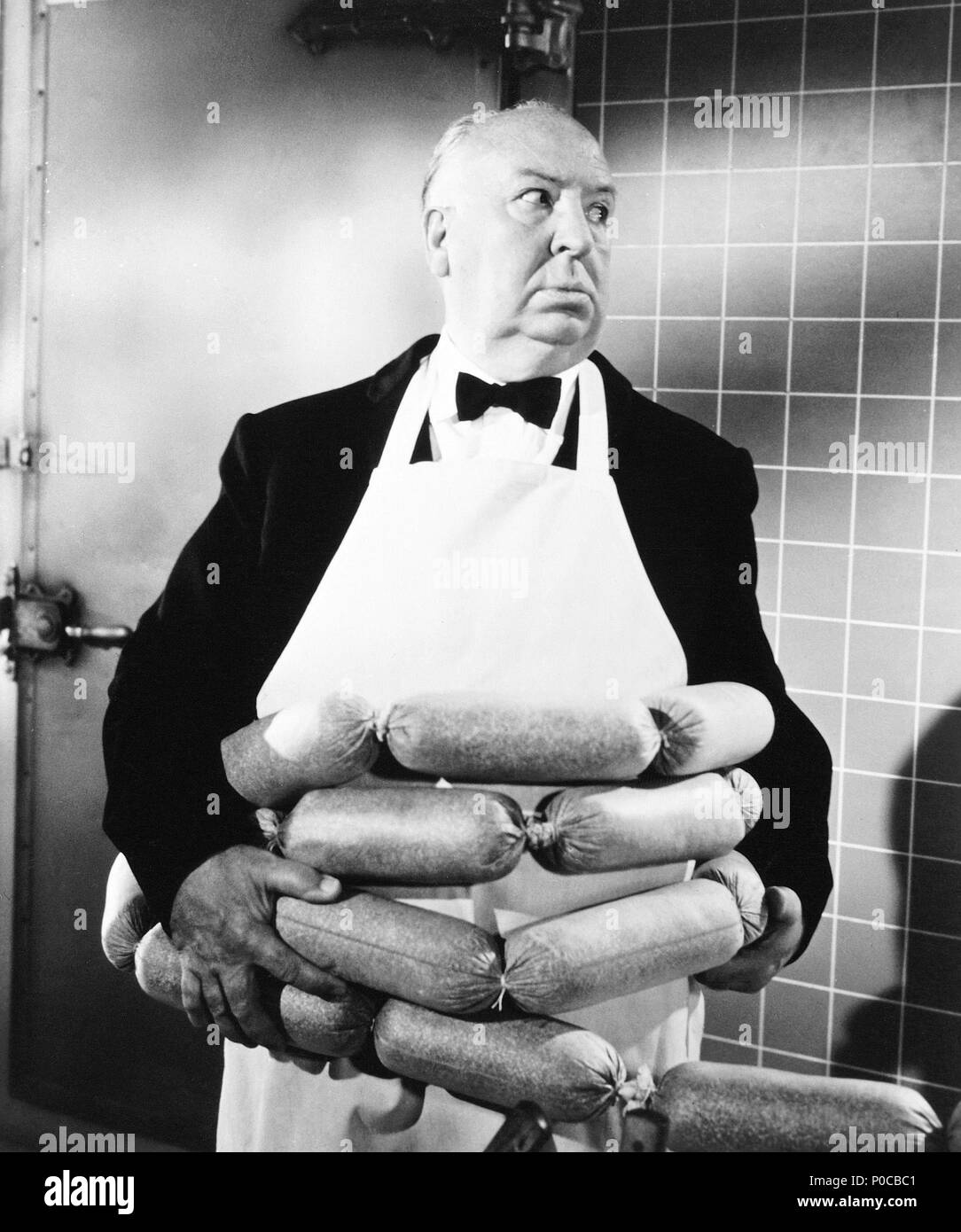
Life insurance fraud is one of the most frequent narrative engines in Alfred Hitchcock Presents and The Alfred Hitchcock Hour. Across both series, episodes featuring staged deaths, arsenic poisoning, and beneficiary double-crosses used financial greed to expose domestic hypocrisy, almost always concluding with an ironic twist or an adjuster uncovering the scheme.
Between 1955 and 1965, the Master of Suspense brought dozens of tales of domestic intrigue and homicidal greed to American living rooms. Among the various motives explored—jealousy, revenge, psychological mania—none appeared with the clinical regularity of insurance fraud. The mid-century American middle class had embraced life insurance as a staple of financial planning and family security. In the cynical, razor-sharp universe of Hitchcock's anthology television show, however, that safety net became a lethal weapon: a high-stakes bet where murder was disguised as natural misfortune, accidental drowning, or sudden illness.
Understanding how Alfred Hitchcock Presents addressed life insurance fraud requires examining its recurring narrative archetypes, notable episodes, production code constraints, and the distinctive procedural role played by insurance investigators.
The Anatomy of Insurance Schemes in Hitchcock’s Anthology
Insurance fraud in classic suspense television relied on a delicate balance between meticulous planning and psychological unravelling. In the 1950s and 1960s, murder-for-payout plots resonated deeply because life insurance policies had become standard household assets. Hitchcock took advantage of this banality to turn domestic settings into crime scenes.
The Hitchcock Fraud Cycle
- Financial Motive (Debt, Spousal Spite, Desire for Wealth)
- The "Perfect" Scheme (Poison, Faked Death, Alibi Manipulation)
- Flawed Execution (Unforeseen Clause, Motive Clue)
- The Investigator (Claims Adjuster or Suspicious Doctor)
- The Ironic Twist (Payout Denied, Accidental Self-Incrimination)
- Moral Accounting (Hitchcock's Epilogue Confirms Capture)
The Spousal Poisoner and the "Sudden Illness"
A dominant sub-genre within the series involved spouses quietly eliminating their partners to collect on freshly purchased policies. The mechanics were rarely violent; these perpetrators favored arsenic, digitalis, or swapped medication. The narrative tension rested on pacing: watching a cold, calculating spouse play the grieving widower or widow while fielding inquiries from suspicious neighbors, doctors, and claims adjusters.
The vulnerability in these schemes consistently came down to timing and policy conditions. Perpetrators frequently bought coverage immediately before the death or purchased double-indemnity riders that triggered mandatory corporate reviews. In Hitchcock's framing, the criminal’s undoing was not an oversight in the chemistry of the poison, but their failure to grasp the forensic diligence of insurance underwriters.
The Faked Death and Double-Cross
Another common framework involved staged deaths. A character in financial distress would orchestrate an apparent drowning, car crash, or disappearance in wilderness terrain, planning to assume a new identity in South America or Mexico once their confederate cashed the check.
These episodes relied heavily on dramatic irony and the principle of bad faith. If two conspirators were required to pull off the fraud—typically an unfaithful husband and his mistress, or a husband and his put-upon wife—one conspirator inevitably deduced that collecting 100 percent of the proceeds was preferable to splitting the take. The faked death frequently turned into an actual homicide, with the architect of the scheme finding themselves betrayed, stranded, or murdered by their co-conspirator.
The Cynical Claims Investigator as Protagonist
While standard crime dramas of the era lionized municipal police detectives, Alfred Hitchcock Presents often elevated insurance claims adjusters and corporate actuaries to the role of protagonist. These characters operated outside traditional law enforcement procedures.
Unburdened by warrants or formal interrogations, the Hitchcockian insurance adjuster weaponized actuary tables, paperwork discrepancies, and mundane timeline audits. They were cynical professionals motivated by corporate loss prevention, making them uniquely immune to the performative grief of guilty beneficiaries.
Essential Episodes Featuring Life Insurance Fraud
Across the ten-season combined run of the half-hour Alfred Hitchcock Presents and the expanded hour-long The Alfred Hitchcock Hour, multiple installments centered directly on fraudulent insurance plots. The following episodes represent the finest executions of this trope.
1. "The End of Indian Summer" (Season 2, Episode 19)
- Original Air Date: February 24, 1957
- Key Cast: Steve Forrest, Gladys Cooper, Ned Wever
- Plot Mechanics: Joe Rogers, a field operative for an insurance company, investigates Mrs. Margurite Gillespie, an elderly grandmother figure whose past two elderly husbands passed away shortly after updating their wills and insurance policies. Rogers goes undercover to observe her courtship with a third wealthy suitor.
- The Suspense Dynamic: The brilliance of this episode lies in the ambiguity. Mrs. Gillespie presents as sweet, fragile, and utterly harmless. The suspense is derived from Rogers attempting to determine whether she is an unlucky widow or an apex predator using marriage certificates as financial contracts. The climax upends the investigator's assumptions while underscoring corporate paranoia.
2. "Post Mortem" (Season 3, Episode 31)
- Original Air Date: May 18, 1958
- Key Cast: Steve Forrest, Joanna Moore, James Gregory
- Plot Mechanics: Judy and Steve Archer marry after the sudden death of Judy's first husband, Harry. While settling past affairs, Steve discovers that Harry was buried wearing a bespoke suit whose pocket contained an uncashed, winning sweepstakes ticket. Steve lobbies aggressively to have Harry’s body exhumed to retrieve the fortune.
- The Fraud Twist: The exhumation requires a state autopsy order, which prompts Harry's life insurance carrier to conduct a secondary toxicological panel on preserved tissue samples. What began as a greedy attempt to recover lottery cash inadvertently proves that Harry died of deliberate arsenic poisoning—rendering Judy's previous insurance payout fraudulent and landing the new couple in the crosshairs of a homicide investigation.
3. "Cheap Is Cheap" (Season 4, Episode 26)
- Original Air Date: April 5, 1959
- Key Cast: Jack Carson, Christopher Dark, Gage Clarke
- Plot Mechanics: Alexander Gifford is a pathologically frugal man who monitors every cent spent in his household. When he discovers his wife wants to live a more fulfilling life, he calculates that a legal divorce and the resulting alimony would ruin him financially.
- The Economic Calculation: Gifford decides that the only cost-effective route is to take out a life insurance policy on his wife, eliminate her, and collect the cash. He shops for budget hitmen and discount poisons, treating spousal murder as a line-item business investment. The episode uses pitch-black humor to satirize how life insurance commodifies human relationships, ending with an absurd administrative error that invalidates his expected windfall.
4. "Anyone for Murder?" (The Alfred Hitchcock Hour, Season 2, Episode 22)
- Original Air Date: March 13, 1964
- Key Cast: Barry Nelson, Patricia Breslin, Richard Dawson
- Plot Mechanics: Dr. James Bingham is trapped in an unhappy marriage to a cold wife who controls his access to capital. Bingham encounters Robert Johnson, an eccentric assassin-for-hire who offers bespoke murder services structured around life insurance payouts.
- The Escalation: The plot explores the contract killing market as an extension of financial services. Bingham aims to secure an insurance payout while establishing an unbreakable alibi, but the contract killer's bureaucratic precision and hidden fees gradually turn the transaction into an extortion trap that outpaces the value of the insurance policy itself.
Comparative Analysis of Insurance Episodes
The table below contrasts how life insurance schemes were constructed, investigated, and ultimately resolved across notable installments of the series.
| Episode Title | Series & Season | Primary Mechanism of Fraud | Instigating Catalyst | Investigator / Unraveler | The Ironic Resolution |
|---|---|---|---|---|---|
| "The End of Indian Summer" | Presents, S2 Ep19 | Serial spousal murder for death benefits | Pattern of deceased elderly husbands | Corporate claims field agent | The investigator discovers the truth too late to prevent an unexpected outcome. |
| "Post Mortem" | Presents, S3 Ep31 | Concealed arsenic poisoning payout | Greed for an exhumed lottery ticket | State coroner and claims pathologist | Greed for a smaller prize forces an exhumation that exposes the murder. |
| "Cheap Is Cheap" | Presents, S4 Ep26 | Budgeted hit to avoid divorce alimony | Extreme personal frugality | Incompetent criminal accomplices | Excessive corner-cutting results in zero financial payout and complete legal ruin. |
| "The Motive" | Presents, S3 Ep17 | Staged murder framed to look like random violence | Academic debates on motive | Police and amateur crime buffs | Attempting to commit an untraceable, motiveless crime leads back to personal finance. |
| "Anyone for Murder?" | Hour, S2 Ep22 | Contract assassination funded by policy | Marital discord and financial dependence | Mercenary contract killer | The fee structure and extortion consume the entirety of the intended insurance proceeds. |
| "A Tangled Web" | Hour, S1 Ep4 | Double-indemnity manipulation | Petty burglar seeking upper-class wealth | Police detectives and family witnesses | An attempt to clear oneself using an insurance alibi exposes an even worse crime. |
The Historical Role of the Television Production Code
To fully appreciate how insurance fraud was depicted in mid-century television, one must examine the regulatory constraints of the era. American broadcasting operated under strict industry self-regulation enforced by the National Association of Broadcasters (NAB) Television Code, in tandem with individual network Standards and Practices departments.
The NAB Code held strict rules regarding the depiction of crime:
- Criminal techniques could not be presented in such granular detail as to serve as an instructional guide or inspiration for real-world viewers.
- Crime had to be depicted as a losing proposition; justice was required to triumph in every narrative.
- Law enforcement and judicial institutions could not be portrayed as fundamentally incompetent or corrupt.
These rules created a creative problem for Alfred Hitchcock. Hitchcock loved stories where sociopathic characters nearly committed the perfect crime, outwitting local sheriffs and running off with the insurance carrier’s money.
NAB Code Compliance
- Dramatic Narrative: Suspenseful crime unfolds; Criminal appears to escape with insurance proceeds at cut-to-black.
- Hitchcock's Epilogue: Sarcastic wrap-up notes: "The claims adjuster caught him three days later."
Hitchcock resolved this friction through his trademark framing segments. In the dramatic body of the episode, the director and writers frequently allowed the criminal to outsmart the claims adjuster, conceal the poisoning, or successfully collect the life insurance check. The episode would appear to end on an immoral note of unpunished greed.
Immediately following the final commercial break, however, Hitchcock would reappear on screen holding an absurd prop—a magnifying glass, a skull, or a noose—and deliver a deadpan verbal epilogue:
"Lest you leave your sets with the impression that our charming friend managed to retire comfortably on Mrs. Henderson’s twenty-thousand-dollar double-indemnity policy, I must inform you that the claims department was not entirely dormant. An acute actuary noticed a minor arithmetic error on page seven of the claim form, which led to a thorough exhumation, a brief trial, and twenty-five years at state expense."
These epilogues allowed the production to satisfy network censors and NAB requirements without compromising the suspense and cynical black humor of the dramatic narrative.
Why Insurance Fraud Remains Hitchcock's Darkest Trope
Hitchcock was deeply fascinated by crimes that took place in broad daylight, surrounded by middle-class comfort. A gang of bank robbers or a mob enforcer engaged in violence that felt foreign to the average television viewer in 1960.
A husband sitting across the breakfast table, carefully examining his wife’s insurance policy over coffee, struck closer to home. It turned an emblem of familial protection—the monthly life insurance premium—into a bounty placed on a spouse's head.
The enduring appeal of these episodes lies in their procedural and psychological symmetry. The criminal treats human life as an actuarial value: X dollars paid against Y risk of getting caught. The insurance company, through its investigators, applies that same actuarial calculation in reverse to catch them. In the intersection between personal sociopathy and corporate paperwork, Hitchcock found some of his sharpest, most enduring observations on human nature.
Frequently Asked Questions
Which episode of Alfred Hitchcock Presents features an exhumation over an insurance payout?
Season 3, Episode 31, titled "Post Mortem." Judy’s new husband, Steve Archer, learns that her deceased first husband was buried with an uncashed, valuable sweepstakes ticket. When Steve arranges an exhumation to retrieve the ticket, Harry's insurance company uses the opportunity to conduct a post-mortem autopsy, which proves the first husband was poisoned with arsenic, exposing Judy to murder charges.
Why did Alfred Hitchcock frequently explain the criminal's arrest in the episode epilogues?
The network censors and the Television Code of the National Association of Broadcasters (NAB) prohibited television programs from showing criminals escaping justice or getting away with murder. Because the dramatic scripts often ended on an ambiguous or cynical note where the fraud succeeded, Hitchcock used his post-story commentary to dryly explain that the perpetrator had subsequently been caught and convicted.
Did Alfred Hitchcock personally direct the insurance fraud episodes?
While Hitchcock directed 17 episodes of Alfred Hitchcock Presents and one episode of The Alfred Hitchcock Hour, the majority of the insurance fraud scripts were handled by talented anthology directors such as Arthur Hiller, Paul Henreid, Herschel Daugherty, and Norman Lloyd. Hitchcock selected the source material, established the tonal parameters, and directed key episodes highlighting similar themes of domestic duplicity, such as "Lamb to the Slaughter."
Where can viewers stream classic episodes of Alfred Hitchcock Presents?
In 2026, streaming rights for Alfred Hitchcock Presents and The Alfred Hitchcock Hour are primarily distributed via platforms such as Peacock, The Roku Channel, and Pluto TV, with high-definition digital restorations also available for commercial purchase through major digital storefronts such as Amazon Prime Video and Apple TV.
Next Steps for Classic Television Enthusiasts
For viewers seeking to explore Hitchcock's treatment of financial crime and fraudulent schemes, follow this targeted viewing progression:
- Start with "Post Mortem" (Season 3, Episode 31): This installment provides the definitive synthesis of life insurance forensics, spousal deceit, and dramatic irony.
- Watch "The End of Indian Summer" (Season 2, Episode 19): Examine this episode to see how the series portrays the professional methods of insurance adjusters operating outside standard police protocols.
- Contrast with "Cheap Is Cheap" (Season 4, Episode 26): Observe how the series balances grim psychological drama with dark comedic satire regarding household financial planning.
- Compare to Hitchcock's Feature Films: Trace these episodic TV themes back to Hitchcock's full-length cinematic treatments of spousal murder and financial gain, specifically Dial M for Murder (1954) and Shadow of a Doubt (1943).