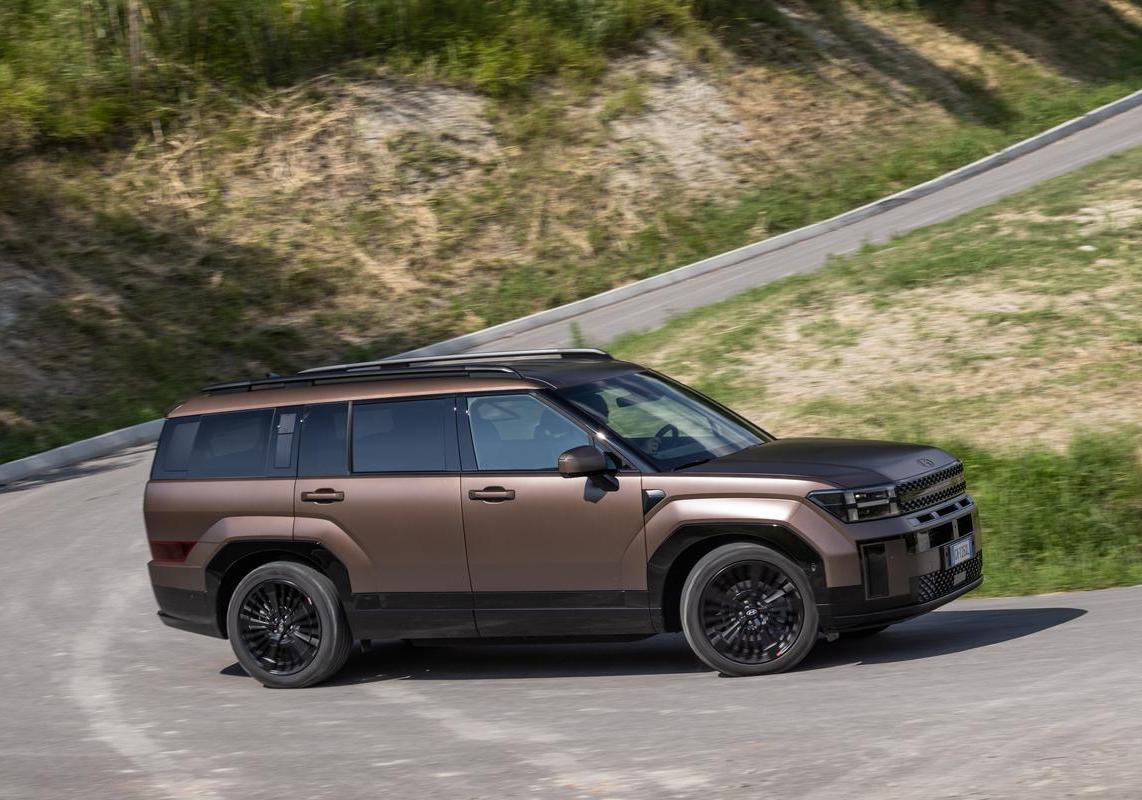
The Hyundai Santa Fe 4x4, primarily utilizing the HTRAC All-Wheel Drive (AWD) system, represents a significant shift in mid-size SUV capability and design for 2026. It combines an electronically controlled torque-splitting system with terrain-specific drive modes, a choice of turbocharged or hybrid powertrains, and a radical "boxy" aesthetic that maximizes interior utility for adventurous families.
1. The HTRAC System: Understanding the "4x4" Capability
When consumers search for a "Hyundai Santa Fe 4x4," they are typically looking for the vehicle’s HTRAC (Hyundai Traction) All-Wheel Drive system. While traditional 4x4 systems often rely on a mechanical transfer case with a dedicated low-range gear for extreme rock crawling, the Santa Fe uses a sophisticated, multi-mode electronic AWD system designed for versatility, fuel efficiency, and high-speed stability.
How HTRAC Functions
The HTRAC system is an "on-demand" intelligence layer that monitors over 50 vehicle signals approximately 100 times per second. By analyzing variables such as wheel speed, steering angle, and ambient temperature, the system determines the optimal distribution of torque between the front and rear axles. In standard cruising conditions, the Santa Fe prioritizes the front wheels to minimize mechanical drag and improve fuel economy. However, the moment the system detects a loss of traction or aggressive acceleration, it can divert up to 50% of the engine’s torque to the rear wheels via an electromagnetic multi-plate clutch.
Terrain Mode Management
For the 2026 model year, the Santa Fe 4x4 offers dedicated Terrain Modes, which calibrate the powertrain, braking, and steering to match specific environmental challenges:
- Snow Mode: Limits torque output to prevent wheel spin on icy surfaces and optimizes the traction control system for gradual starts.
- Mud Mode: Provides a more aggressive torque split to maintain momentum in soft, high-drag environments.
- Sand Mode: Adjusts the transmission shift points to keep the engine in a higher RPM range, ensuring the vehicle doesn't "bog down" in loose terrain.
This electronic approach allows the Santa Fe to perform admirably on forest service roads, snowy mountain passes, and light off-road trails, bridging the gap between a standard commuter car and a heavy-duty off-roader.
2. Powertrain Diversity: Turbocharged Performance vs. Hybrid Efficiency
Choosing a Hyundai Santa Fe 4x4 in 2026 requires a decision between two distinct propulsion philosophies. Both engines are paired with the HTRAC system, but they offer different driving dynamics and towing capabilities.
The 2.5L Turbocharged Engine
The 2.5-liter Smartstream turbocharged four-cylinder is the "muscle" of the lineup. Producing approximately 277 horsepower and 311 lb-ft of torque, this engine is paired with an 8-speed Wet Dual-Clutch Transmission (N-DCT). The "wet" designation refers to the oil-cooled clutches, which provide better heat management during heavy loads or stop-and-go traffic compared to "dry" DCTs. This powertrain is the preferred choice for those who intend to utilize the Santa Fe’s maximum towing capacity of 4,500 pounds (when properly equipped with trailer brakes).
The 1.6L Turbo-Hybrid (HEV)
For the eco-conscious driver, the 1.6-liter Turbo-Hybrid remains a cornerstone of the 2026 Santa Fe range. This system combines a smaller turbocharged gasoline engine with a 44.2 kW electric motor and a 1.49 kWh lithium-ion battery. Total system output is roughly 231 horsepower. Unlike the gas-only version, the hybrid utilizes a traditional 6-speed automatic transmission, which many drivers find provides a smoother, more predictable experience in urban environments. While it yields superior fuel economy, the hybrid's towing capacity is typically capped at 2,000 pounds, making it better suited for light utility rather than hauling heavy trailers.
According to data from the U.S. Department of Energy, hybrid variants of mid-size SUVs can save owners significant costs in annual fuel expenses, particularly in stop-and-start city driving where the electric motor handles the majority of the initial load.
3. Design Evolution: The "Open for More" Philosophy
The 2026 Hyundai Santa Fe (the MX5 generation) is defined by its bold, angular silhouette. This is not merely a stylistic choice; it is a functional evolution designed to maximize the "terrace-like" space of the vehicle’s interior.
Maximizing the Rear Opening
One of the most critical "things to know" about the modern Santa Fe 4x4 is its massive tailgate. Hyundai engineers moved the taillights to a lower position and utilized high-strength steel struts to create a nearly square rear opening that is significantly wider than the previous generation. This allows for the loading of bulky items—such as mountain bikes, camping gear, or plywood sheets—with unprecedented ease.
The Hidden C-Pillar Grab Handle
Given the Santa Fe’s height and its marketing toward outdoor enthusiasts, Hyundai integrated a clever "Self-Handle" into the C-pillar. This is a lockable, flush-mounted handle that provides a secure grip for users standing on the rear tires to access the roof rack. For owners of the 4x4 variant who frequently mount roof boxes or kayak racks, this small ergonomic feature is a significant quality-of-life improvement.
Interior Configuration
The 2026 Santa Fe is a three-row SUV by default. However, the third row is best suited for children or occasional use by adults on short trips. The second row offers impressive legroom, often exceeding that of its primary competitors. In the 4x4 models, the floor remains relatively flat despite the presence of a drive shaft, ensuring that middle-seat passengers in the second row aren't cramped.
4. Technology and Safety: The Digital Cockpit and SmartSense
The 2026 Santa Fe 4x4 serves as a showcase for Hyundai’s latest "connected car Navigation Cockpit" (ccNC). This system integrates two 12.3-inch curved displays into a single panoramic interface, providing a seamless transition between the instrument cluster and the infotainment screen.
Advanced Driver Assistance Systems (ADAS)
Safety is a primary pillar for the Santa Fe. The vehicle comes standard with Hyundai SmartSense, which includes:
- Forward Collision-Avoidance Assist 2: This system doesn't just watch for cars in front; it monitors for pedestrians, cyclists, and oncoming traffic when making a left-hand turn at an intersection.
- Highway Driving Assist 2 (HDA 2): On mapped highways, HDA 2 combines adaptive cruise control with lane-centering technology. It can even assist in lane changes when the driver activates the turn signal, provided the sensors detect a safe gap in traffic.
- Remote Smart Parking Assist: Using the key fob, drivers can move the Santa Fe into or out of tight parking spaces while standing outside the vehicle—an invaluable tool for those with narrow garages or crowded trailhead parking.
Over-the-Air (OTA) Updates
In 2026, the Santa Fe is fully capable of receiving OTA software updates. This means that improvements to the HTRAC AWD logic, infotainment features, or even battery management in hybrid models can be delivered wirelessly without a visit to the dealership.
5. Cost of Ownership and Warranty Protection
A critical factor in the Santa Fe 4x4's popularity is the financial peace of mind provided by Hyundai’s industry-leading warranty. For the 2026 model, the "America's Best Warranty" program remains a major selling point.
Warranty Specifications
| Coverage Type | Duration / Mileage |
|---|---|
| Powertrain Limited Warranty | 10 Years / 100,000 Miles |
| New Vehicle Limited Warranty | 5 Years / 60,000 Miles |
| Anti-Perforation Warranty | 7 Years / Unlimited Miles |
| 24-Hour Roadside Assistance | 5 Years / Unlimited Miles |
Note: Warranty terms may vary by region; always verify with a local authorized dealer.
Maintenance Requirements
The HTRAC system does require specific maintenance to ensure longevity. Owners should be aware that the rear differential fluid and the transfer case fluid need periodic inspection and replacement, especially if the vehicle is frequently used for towing or off-road driving. Neglecting these fluids can lead to premature wear of the electromagnetic clutches in the AWD system.
Furthermore, the 2026 Santa Fe includes Hyundai Complimentary Maintenance for the first 3 years or 36,000 miles (whichever comes first) in many markets. This covers routine oil changes and tire rotations, which is a significant value-add for the first few years of ownership.
Technical Comparison: 2.5T vs. Hybrid 4x4
| Feature | 2.5L Turbo Gasoline AWD | 1.6L Turbo Hybrid AWD |
|---|---|---|
| Horsepower | 277 hp | ~231 hp (System Total) |
| Torque | 311 lb-ft | ~271 lb-ft (System Total) |
| Transmission | 8-Speed Wet DCT | 6-Speed Automatic |
| Towing Capacity | 4,500 lbs (with package) | 2,000 lbs |
| Drive System | HTRAC with Terrain Modes | HTRAC with Terrain Modes |
| Primary Advantage | High-speed passing & towing | Fuel economy & city driving |
Frequently Asked Questions
Is the Hyundai Santa Fe 4x4 good for off-roading?
The Santa Fe 4x4 is an excellent "soft-roader." While its HTRAC system provides impressive traction on dirt, gravel, and snow, its ground clearance (approximately 8.2 inches) and lack of a low-range transfer case mean it is not intended for technical rock crawling or deep mud bogging. It is designed for "lifestyle" off-roading—getting you to the campsite, the ski resort, or the boat ramp safely.
How does the HTRAC system affect fuel economy?
Modern HTRAC systems are designed to be efficient. Under light loads on a dry highway, the system can disconnect the rear axle almost entirely to save fuel. You can expect a 1–2 MPG decrease compared to the Front-Wheel Drive (FWD) model, but for most drivers in northern climates, the added safety and traction of the 4x4 system far outweigh this minor fuel penalty.
Can I lock the AWD system in the Santa Fe?
In many trims, there is an AWD Lock button (or a dedicated "Lock" setting within the drive mode dial). This forces the system to maintain a 50:50 torque split between the front and rear axles at low speeds (typically below 20-25 mph). This is specifically useful for getting unstuck from deep snow or sand where you need all four wheels spinning simultaneously from a standstill.
Does the Santa Fe 4x4 have a full-size spare tire?
Most 2026 Santa Fe models, particularly the hybrids and those with the HTRAC system, come with a temporary "donut" spare tire or a tire mobility kit to save weight and accommodate the AWD hardware. If you plan on extensive off-road travel, it is recommended to investigate aftermarket solutions for a full-size spare to avoid being stranded in remote areas.
What is the difference between AWD and 4x4 in this vehicle?
Technically, the Santa Fe is an AWD vehicle. However, because it offers a "Lock" mode and specific "Terrain" settings, many consumers and even some marketing materials refer to it as a "4x4" to signify its enhanced traction capabilities. Real 4x4s (like a Jeep Wrangler or Toyota 4Runner) have mechanical locking differentials and low-range gearing, which the Santa Fe does not possess.
Is the 2026 Santa Fe 4x4 reliable?
The 2026 model benefits from several years of refinements to the MX5 platform and the Smartstream engine family. Hyundai has addressed early concerns regarding DCT software and thermal management. Combined with the 10-year powertrain warranty, the Santa Fe is considered a highly reliable choice in the mid-size SUV segment, provided that the owner adheres to the manufacturer's maintenance schedule.
Final Recommendation
For 2026, the Hyundai Santa Fe 4x4 stands out as one of the most balanced mid-size SUVs on the market. If you require maximum towing and frequent highway passing power, the 2.5L Turbo is the clear winner. However, if your daily routine involves city commuting with occasional weekend trips to the mountains, the Hybrid AWD offers a smoother ride and significantly lower operating costs. Before purchasing, ensure you test drive both powertrains to feel the difference between the DCT and the traditional automatic transmission, as the driving "feel" is the most subjective and significant difference between the two models.