Navigating the auto insurance market in the Peach State requires balancing state-mandated coverage limits with affordable rates, reliable claims handling, and strong financial stability. To identify the top options, drivers must look past marketing claims and evaluate critical metrics like average premiums, customer satisfaction ratings, coverage customization, and discount availability across different geographic regions of Georgia.
Finding the right auto insurance policy in Georgia means balancing mandatory state minimum requirements—25/50/25 liability limits—with the protection necessary to guard against high rates of uninsured motorists and weather-related hazards. Because insurance rates depend heavily on ZIP codes, driving history, and credit scores, different carriers offer vastly different value propositions. Whether you live in dense urban centers like Atlanta, suburban neighborhoods in Gwinnett County, or rural stretches of South Georgia, understanding the landscape helps secure the best financial protection.
Understanding Georgia Auto Insurance Requirements and Regulations
Before shopping for a policy, Georgia drivers must understand the legal obligations enforced by the state. The Georgia Office of Insurance and Safety Fire Commissioner establishes the baseline parameters for operating a motor vehicle legally on public roads. Compliance is strictly monitored through the Georgia Electronic Insurance Compliance System (GEICS), which links insurance companies directly to the Department of Revenue (DOR) to track coverage lapses in real time.
Mandatory Liability Minimums
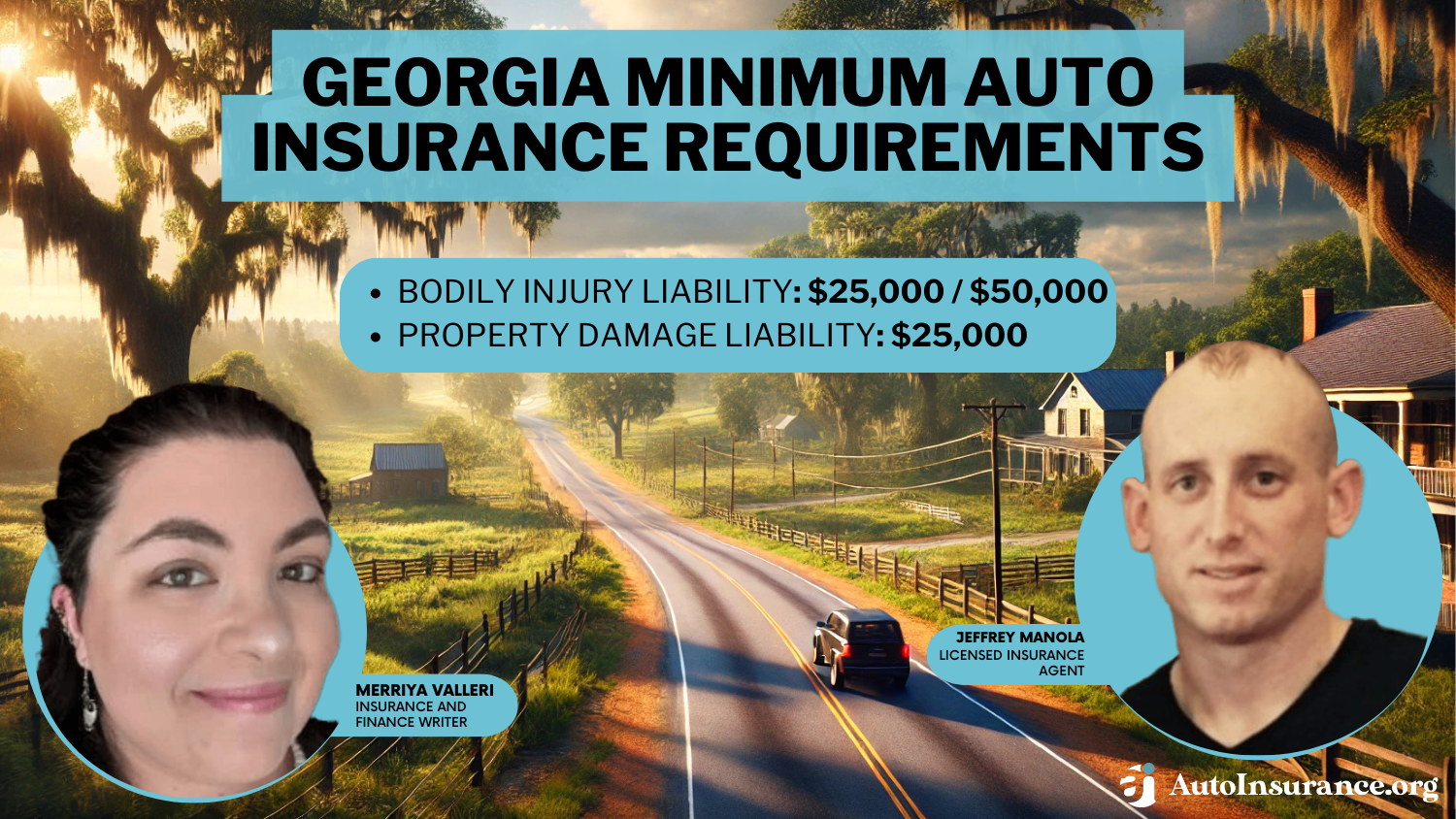
Georgia law requires all registered vehicle owners to carry bodily injury and property damage liability insurance. The standard minimum limits, commonly referred to as 25/50/25, include:
- $25,000 for bodily injury per person injured in an accident you cause.
- $50,000 for total bodily injury per accident when multiple people are hurt.
- $25,000 for property damage to other vehicles or structures per accident.
While these numbers represent the legal minimums, industry experts consistently recommend purchasing higher limits—such as 100/300/100—to protect personal assets from lawsuits following severe collisions. Minimum limits are often insufficient to cover modern vehicle replacement costs and mounting medical bills.
Optional Coverages Worth Considering
Beyond liability, Georgia drivers frequently opt for coverages designed to protect their own vehicles and passengers. Comprehensive and collision coverages are typically required if you finance or lease your vehicle. Furthermore, because uninsured motorist (UM) coverage is vital in a state with significant numbers of uninsured drivers, Georgia law requires insurers to offer UM coverage, though drivers can reject it in writing.
| Coverage Type | What It Protects | Recommended For |
|---|---|---|
| Liability | Injuries and property damage you cause to others | All drivers (State Minimum) |
| Collision | Damage to your vehicle from accidents with cars or objects | Newer or financed vehicles |
| Comprehensive | Theft, vandalism, weather, and animal strikes | All drivers without high savings cushions |
| Uninsured Motorist | Your medical bills and vehicle repairs if hit by an uninsured driver | All Georgia drivers |
Evaluation Criteria for Georgia Insurers
Selecting the top providers involves a rigorous assessment of quantitative and qualitative data. When evaluating carriers for the Georgia market, several key metrics determine true value:
- Financial Strength: Ratings from agencies like AM Best indicate a company’s ability to pay out claims during catastrophic events, such as hurricanes moving inland or severe localized storms.
- Customer Satisfaction: Metrics from J.D. Power and the National Association of Insurance Commissioners (NAIC) complaint index reveal how fairly and efficiently companies handle claims and customer service interactions.
- Pricing and Discounts: Availability of accident forgiveness, paperless billing, safe driving programs, and bundling options that reduce annual premiums.
- Local Accessibility: The presence of a robust network of local independent agents or responsive digital platforms tailored to Georgia drivers.
The 5 Best Auto Insurance Providers for Georgia Drivers
Based on overall performance, customer service ratings, pricing competitiveness, and coverage flexibility, the following five insurance providers stand out for drivers across the Peach State.
1. State Farm: Best for Customer Service and Local Agent Network
State Farm holds a dominant market share in Georgia, largely due to its extensive network of captive, local agents. For drivers who prefer face-to-face interactions and personalized policy reviews, State Farm provides an unmatched physical presence from Savannah to Rome.
- Pros: Outstanding customer satisfaction marks, numerous physical offices across Georgia, and strong financial stability.
- Cons: Rates can be higher for drivers with poor credit scores or recent moving violations.
- Key Feature: The Steer Clear program offers significant discounts for drivers under the age of 25 who complete safe driving courses.
State Farm consistently ranks high in J.D. Power’s regional customer satisfaction studies for the Southeast. The company's claims handling process is streamlined through mobile applications, yet policyholders retain the ability to work directly with a local agent who understands Georgia-specific insurance nuances.
2. Progressive: Best for High-Risk Drivers and Online Tools
Progressive is widely recognized for its flexible underwriting, making it an exceptional choice for drivers with imperfect driving records, past accidents, or lapses in coverage. Additionally, Progressive's Name Your Price tool helps budget-conscious consumers find coverage tiers that match their financial constraints.
- Pros: Excellent online quote tools, competitive rates for drivers with tickets or accidents, and robust telematics through Snapshot.
- Cons: Customer service ratings can vary because a large portion of policies are serviced through independent call centers rather than dedicated local agents.
- Key Feature: Snapshot, Progressive’s usage-based insurance program, tracks driving habits via a mobile app or plug-in device to potentially lower rates for safe drivers.
Georgia drivers who log low annual mileage or exhibit safe braking habits often find substantial savings through Progressive's telemetry programs, offsetting base rates that might otherwise skew higher.
3. GEICO: Best for Affordable Rates and Digital Convenience
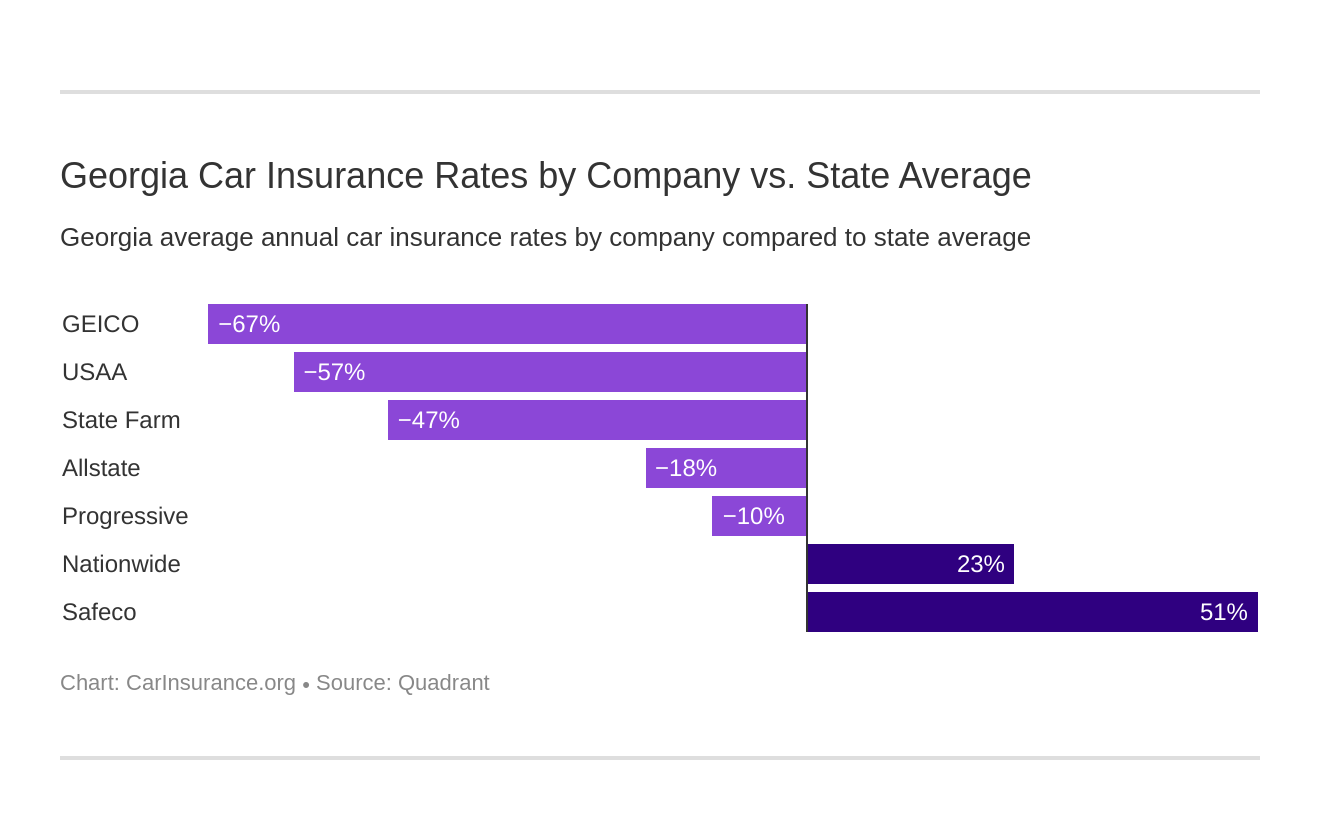
GEICO appeals strongly to budget-focused drivers seeking reliable coverage without paying a premium for brand name recognition or extensive brick-and-mortar storefronts. The company offers competitive baseline pricing across most Georgia ZIP codes, supported by a polished mobile app.
- Pros: Consistently lower-than-average premiums, highly rated mobile app for policy management, and straightforward claims processing.
- Cons: Fewer physical storefronts in rural areas of the state; specialized high-risk drivers may find better options elsewhere.
- Key Feature: Broad discount availability, including military discounts, federal employee breaks, and multi-car savings.
GEICO’s digital-first approach allows Georgia drivers to manage ID cards, file claims, and adjust coverage limits instantly from their smartphones, making it ideal for tech-savvy commuters navigating busy corridors like the Downtown Connector in Atlanta.
4. Allstate: Best for Coverage Customization and Rewards
Allstate positions itself as a premium provider that rewards safe driving and policy longevity. While base rates can sometimes trend higher than discount-focused competitors, the depth of optional coverages and unique rewards programs provide substantial value.
- Pros: Rich variety of add-on coverages (like new car replacement and roadside assistance), innovative safe-driving rewards, and responsive digital tools.
- Cons: Higher average premiums compared to competitors like GEICO; rates increase rapidly after at-fault accidents.
- Key Feature: Drivewise monitors driving behavior in real time and offers cash back or statement credits for maintaining safe speeds and avoiding sudden stops.
For drivers looking to protect custom equipment, rideshare driving gaps, or seeking accident forgiveness features built directly into their contracts, Allstate delivers comprehensive policy customization options.
5. Auto-Owners Insurance: Best for Independent Agent Shopping and Bundling
Auto-Owners Insurance operates through a network of independent insurance agents, allowing consumers to compare rates across multiple carriers while receiving personalized advice. The company is known for its stability and strong community roots across the Southeast.
- Pros: Excellent claims satisfaction, personalized service via independent agents, and strong multi-policy discounts when bundling home and auto.
- Cons: Not available direct-to-consumer online; you must work through an appointed independent agent to get a quote.
- Key Feature: Personal Automobile Plus Package, which bundles several valuable endorsements—such as deductible reduction, mobile phone replacement coverage, and roadside assistance—into a single low-cost add-on.
Auto-Owners provides an old-school touch combined with modern coverage options, making it a favorite for homeowners who want to consolidate their property and casualty policies under one trusted local agency.
Comparing Georgia Auto Insurance Providers
To help weigh your options, review the core attributes of each top-rated provider in the comparison table below:
| Provider | Primary Advantage | Best For | Telematics Program | Local Agent Presence |
|---|---|---|---|---|
| State Farm | Local service & high satisfaction | Drivers wanting face-to-face support | Steer Clear | Extensive |
| Progressive | Flexible underwriting | High-risk drivers and digital users | Snapshot | Moderate (Independent) |
| GEICO | Competitive baseline rates | Budget-conscious drivers | DriveEasy | Minimal (Digital-first) |
| Allstate | Rich add-ons and features | Feature-heavy policy seekers | Drivewise | Moderate |
| Auto-Owners | Independent agent network | Home and auto bundling | Personal-Lines App | Extensive |
Factors Affecting Auto Insurance Rates in Georgia
Auto insurance premiums are not calculated uniformly. Insurance underwriters evaluate a complex matrix of risk factors to determine individual pricing. Recognizing these factors helps drivers identify areas where they can improve their risk profile and lower monthly payments.
Geographic Location (ZIP Codes)
Where you park your vehicle overnight heavily influences your rate. Urban environments like Atlanta, Savannah, and Augusta generally experience higher insurance rates due to dense traffic congestion, higher rates of vehicle theft, and increased frequency of minor collisions. Conversely, rural counties in Southwest or North Georgia typically see lower baseline rates.
Driving History and Credit Score
Under Georgia law, insurance companies are permitted to use credit-based insurance scores alongside driving records to calculate premiums. Drivers with clean driving records for three to five years and high credit scores enjoy the lowest rates. Speeding tickets, at-fault accidents, and DUIs will trigger substantial surcharges that can persist on a policy for three to five years.
Vehicle Make, Model, and Safety Ratings
The cost to repair or replace your vehicle directly impacts your comprehensive and collision premiums. High-end luxury cars, sports cars with high horsepower ratings, and vehicles with expensive integrated sensor suites cost more to insure than standard sedans or family SUVs equipped with advanced safety features.
Tips for Lowering Your Auto Insurance Premium in Georgia
Lowering your insurance costs requires a proactive approach. Implementing several proven strategies can significantly reduce annual expenditures:
- Bundle Policies: Combine your auto insurance with homeowners, renters, or umbrella policies through the same carrier to unlock multi-policy discounts ranging from 10% to 25%.
- Maintain Good Credit: Regularly review your credit report for errors and pay down revolving debts to improve your credit-based insurance score over time.
- Increase Deductibles: Raising your comprehensive and collision deductibles from $500 to $1,000 can reduce your monthly premium, provided you keep enough savings set aside to cover the higher out-of-pocket cost in an emergency.
- Ask for Discounts: Inquire about lesser-known discounts, such as paperless billing, automatic monthly payments (autopay), defensive driving course completions, and low-mileage discounts if you work from home.
Frequently Asked Questions
What are the minimum auto insurance requirements in Georgia?
Georgia requires all drivers to carry liability insurance with minimum limits of $25,000 for bodily injury per person, $50,000 for total bodily injury per accident, and $25,000 for property damage per accident (25/50/25).
Does Georgia use an electronic verification system for auto insurance?
Yes. Georgia uses the Georgia Electronic Insurance Compliance System (GEICS). Insurance companies report policy activations and cancellations directly to the state Department of Revenue to automatically catch uninsured motorists.
Can my credit score affect my auto insurance rates in Georgia?
Yes. Insurance companies in Georgia are legally permitted to use credit-based insurance scores as a rating factor when determining your premium pricing, alongside your driving record and ZIP code.
Should I drop collision coverage on an older car?
If your vehicle has a low market value—generally less than 10 times the annual cost of adding collision and comprehensive coverage—it may make financial sense to drop these optional coverages and rely solely on state-minimum liability.
How can I verify if a Georgia auto insurance company is licensed?
You can verify the licensing status and review consumer complaint records of any insurance provider by checking the official website of the Georgia Office of Insurance and Safety Fire Commissioner.
Next Steps for Georgia Drivers
Securing the best auto insurance policy requires comparison shopping. Gather quotes from at least three of the providers listed above using identical coverage limits to ensure an accurate comparison. Review your current policy for gaps in coverage—such as missing uninsured motorist protection—and consult with a licensed independent agent or company representative to tailor a policy that balances cost with robust protection.