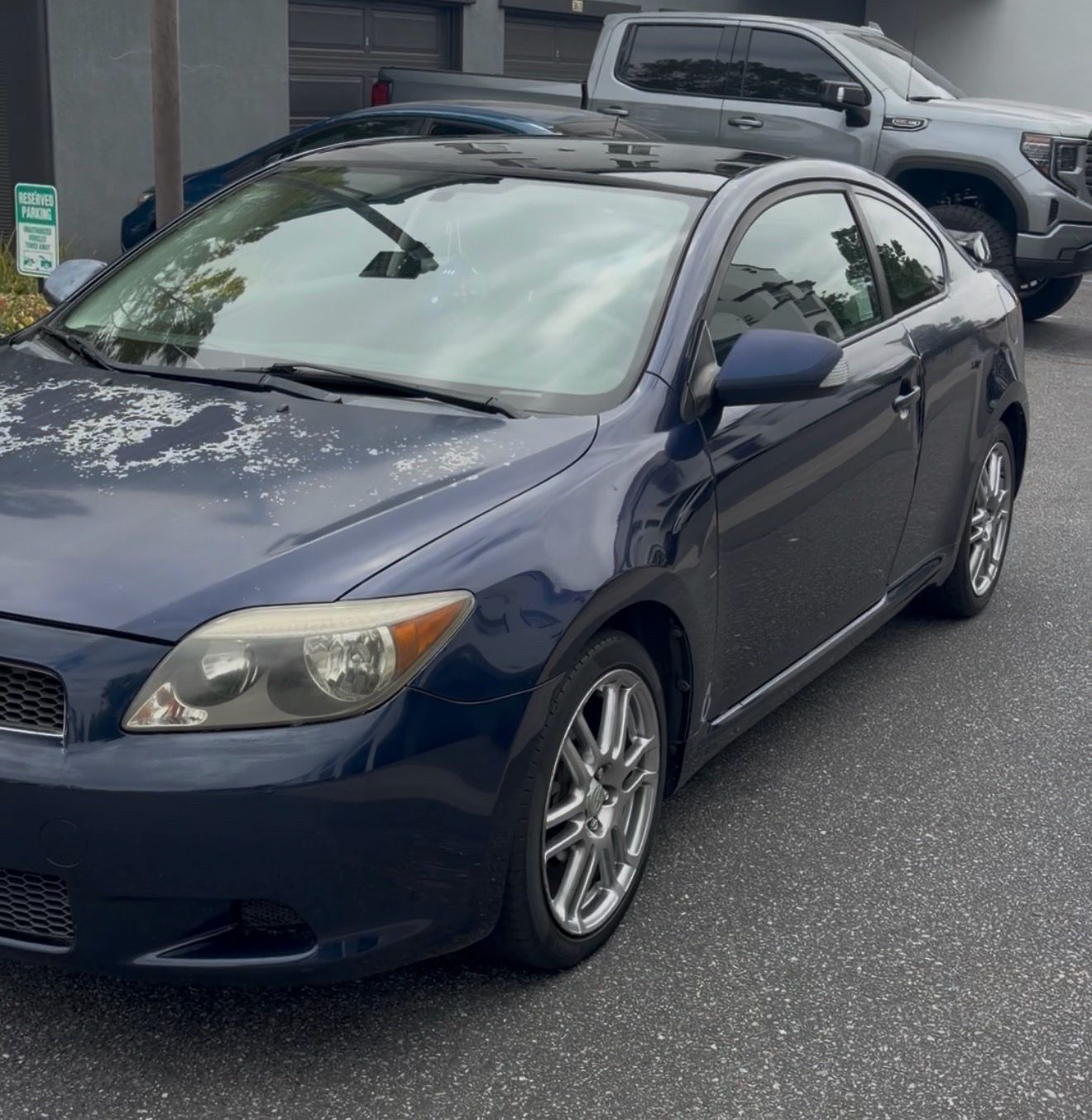
The 2006 Scion tC remains a highly regarded choice in the used car market due to its Toyota-derived engineering, punchy 2.4-liter 2AZ-FE engine, and straightforward mechanical design. While it is generally considered a highly reliable vehicle, prospective buyers should account for known issues related to oil consumption, potential electrical gremlins, and the wear patterns typical of a platform now approaching two decades of age.
The Foundation of Reliability: Toyota Engineering
The Scion brand, established by Toyota as an entry-level marque aimed at younger demographics, benefited significantly from the parent company's reputation for manufacturing longevity. The 2006 Scion tC was built on the MC platform, which it shared with vehicles like the Toyota Avensis. This shared DNA is the primary reason for the car's enduring mechanical resilience.
At the heart of the 2006 tC is the 2.4L 4-cylinder engine (2AZ-FE). This engine was a workhorse for Toyota throughout the mid-2000s, appearing in the Camry, the RAV4, and the Highlander. Because this engine was mass-produced for high-volume vehicles, parts are not only widely available but also remarkably affordable. Unlike newer, forced-induction engines that rely on complex turbochargers and delicate direct-injection systems, the 2006 tC utilizes a more traditional port-injected architecture, which simplifies long-term maintenance and troubleshooting.
Mechanical Strengths and Weaknesses
When evaluating the reliability of a 2006 model today, one must separate the "Toyota-built" reliability from the wear-and-tear items that afflict all high-mileage vehicles.
The Oil Consumption Phenomenon
Perhaps the most documented mechanical concern regarding the 2006 tC is the potential for increased oil consumption. Some engines in the 2AZ-FE family were subject to premature wear of the piston oil rings. This issue may cause the engine to burn oil between scheduled changes. Owners who remain diligent about checking their dipstick level every 1,000 miles can usually mitigate the risk of catastrophic failure. However, for a high-mileage 2006 model, it is essential to monitor exhaust smoke upon startup and during heavy acceleration, as these are clear indicators of internal engine wear.
Transmission Performance
The 2006 tC was available with both a 5-speed manual and a 4-speed automatic transmission. The 5-speed manual transmission is widely considered robust, provided the clutch has been maintained or replaced according to the previous owner's driving habits. The 4-speed automatic, while not particularly sophisticated by modern 2026 standards, is a conservative design that favors durability over shift speed. Provided the transmission fluid has been changed at reasonable intervals—a step many owners unfortunately neglect—this unit can easily exceed 200,000 miles without significant overhaul.
Common Areas Requiring Inspection
Because the newest 2006 Scion tC is now twenty years old, its reliability is no longer just about the powertrain; it is about the condition of rubber, plastic, and electrical components.
- Suspension Bushings: The tC is known for a relatively firm, sporty ride. After two decades, the original control arm bushings and struts are likely at the end of their service life. A clunking noise when traversing bumps is a definitive sign that the suspension geometry requires a refresh.
- Electrical Accessories: The tC featured a distinct panoramic glass roof. While stylish, the motorized shade and the seal surrounding the glass are prone to failure or leaks. Ensure the roof operates smoothly without straining, as a motor failure in these components can be expensive to repair due to the difficulty of accessing the assembly.
- Interior Plastics: The interior quality of the 2006 Scion was designed to be functional and budget-friendly. While the plastics are durable, they are prone to rattling as the vehicle ages. Clips and fasteners often lose their tension, making the interior feel less "solid" than it did when the car was new.
Maintenance Considerations for the Long-Term Owner
To maximize the lifespan of a 2006 Scion tC in 2026, owners should adhere to a strict maintenance protocol that accounts for the car's age rather than just its mileage.
| Component | Inspection/Replacement Interval | Priority Level |
|---|---|---|
| Engine Oil | Every 3,000–5,000 miles | Critical |
| Transmission Fluid | Every 30,000 miles | High |
| Coolant/Antifreeze | Every 50,000 miles | High |
| Serpentine Belt | Every 60,000 miles | Medium |
| Spark Plugs | Every 100,000 miles | Medium |
| Brake Fluid | Every 2 years | High |
Safety and Legal Limitations
It is important for prospective owners to recognize that the 2006 tC predates many of the advanced safety features now standard in 2026. While the tC performed adequately in its day, it lacks side-curtain airbags on some models, modern stability control systems, and the advanced collision-avoidance technology found in contemporary vehicles. When purchasing a 2006 model for a new driver or as a daily commuter, evaluate the state of the existing airbag modules and seatbelt pretensioners. If the "Airbag" light is illuminated on the dashboard, this indicates a failure in the Supplemental Restraint System (SRS), which should be addressed immediately by a qualified professional, as it renders the safety system ineffective.
Comparative Reliability: The Scion Edge
Compared to other compact coupes from 2006, the Scion tC occupies a unique position. It is more reliable than many European competitors of the same era, which often suffer from fragile cooling systems and complex electronic failures. It is also generally more robust than several American-made coupes from the mid-2000s, which struggled with interior quality and transmission consistency. The primary competitor to the tC in terms of reliability is the Honda Civic Coupe of the same year. While the Civic is a benchmark for longevity, the tC often wins on a "value per dollar" basis, as the Scion’s parts are often slightly cheaper and the car is often less prone to the "tuner" abuse that plagues many used Hondas.
Troubleshooting Frequent Concerns
If you are currently experiencing issues with your 2006 Scion tC, start with the most likely culprits before assuming deep mechanical failure:
- Rough Idle: If the engine struggles to maintain a smooth idle, start by cleaning the Mass Airflow (MAF) sensor and the Throttle Body. These components accumulate carbon deposits over time, which can interfere with the air-fuel ratio.
- Water Leaks: If you notice moisture in the trunk or footwells, check the taillight seals and the sunroof drainage tubes. These rubber seals often dry out, leading to cracks that allow water ingress. Clearing the drainage tubes with compressed air is a simple task that can prevent significant rust issues.
- Check Engine Light (CEL): The 2006 tC is sensitive to evaporative emissions (EVAP) system leaks. If a CEL appears, have the vehicle scanned for codes. Often, this is caused by a faulty gas cap or a cracked vacuum hose rather than a failing catalytic converter.
Frequently Asked Questions
Is the 2006 Scion tC a good car for a student or new driver? Yes, it is excellent. The 2006 tC is simple to work on, affordable to insure, and provides a decent balance of safety and utility. Its hatchback configuration offers much more cargo space than a traditional coupe, making it versatile for school moves or daily errands.
How many miles can a 2006 Scion tC typically last? With consistent oil changes and routine fluid maintenance, these vehicles are well-documented to reach 200,000 to 250,000 miles. Some examples have exceeded 300,000 miles, though the condition of the interior and suspension usually deteriorates before the engine fails completely.
What is the most expensive common repair for this model? Replacing the panoramic sunroof mechanism or addressing severe oil consumption due to internal engine wear are the most costly repairs. Beyond these, the 2006 tC does not have many "deal-breaker" flaws that require engine replacement or expensive transmission rebuilds.
Does the 2006 Scion tC have a timing belt or chain? The 2006 Scion tC 2.4L engine uses a timing chain, not a belt. This is a significant advantage for long-term reliability, as timing chains do not require the periodic, expensive replacement intervals that timing belts do.
Should I buy a 2006 tC with over 150,000 miles? Yes, provided you have a pre-purchase inspection performed by a mechanic. At this mileage, the value is in the car's remaining service life versus the purchase price. As long as the chassis is free of significant rust and the engine shows no signs of major oil burning, it remains a viable daily driver.
Final Recommendation
The 2006 Scion tC remains a testament to the "golden era" of Toyota's mid-2000s production. It is a car that rewards a proactive owner; by keeping up with fluid changes and addressing minor leaks or electrical quirks before they become major problems, you can expect this vehicle to serve as a reliable daily transport for many years to come. If you are in the market to purchase, prioritize finding an example with a verifiable service history over one with low mileage but unknown maintenance intervals. A well-cared-for high-mileage tC will almost always outlast an abused low-mileage one.