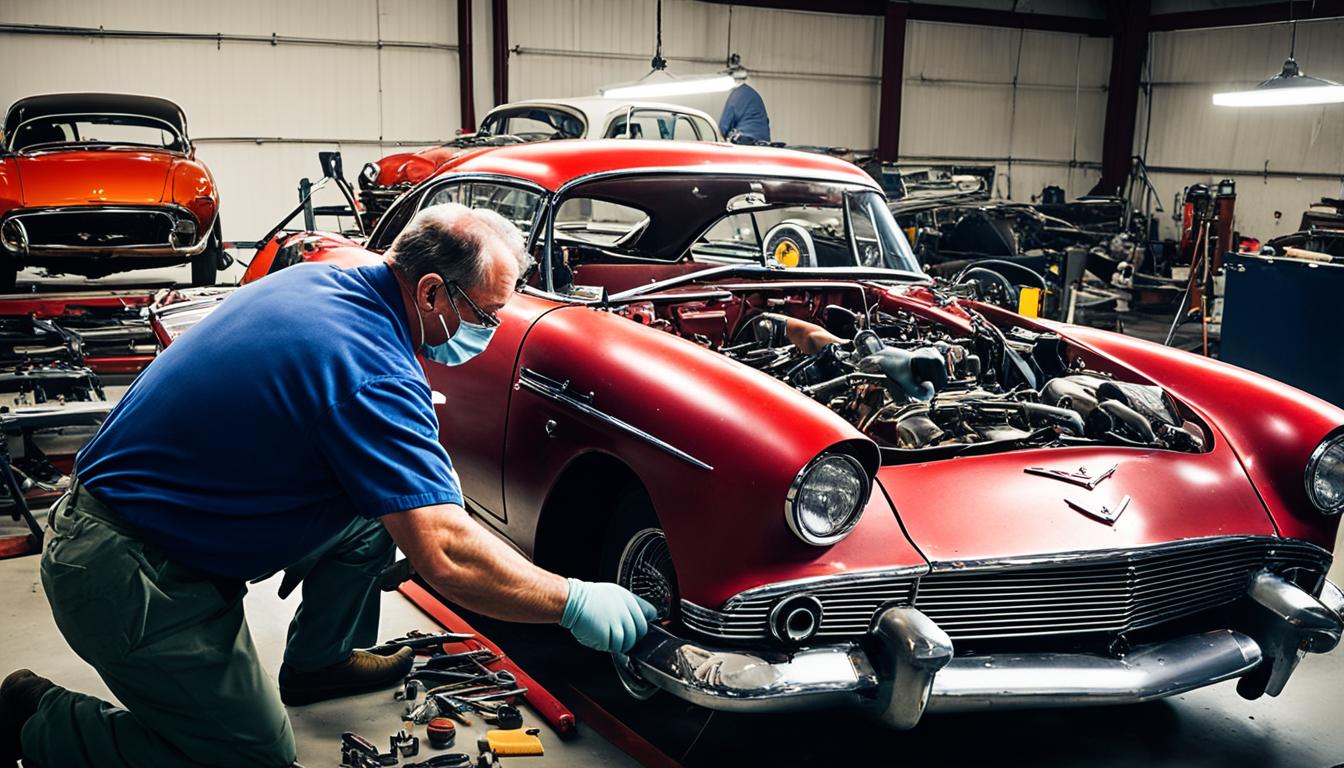
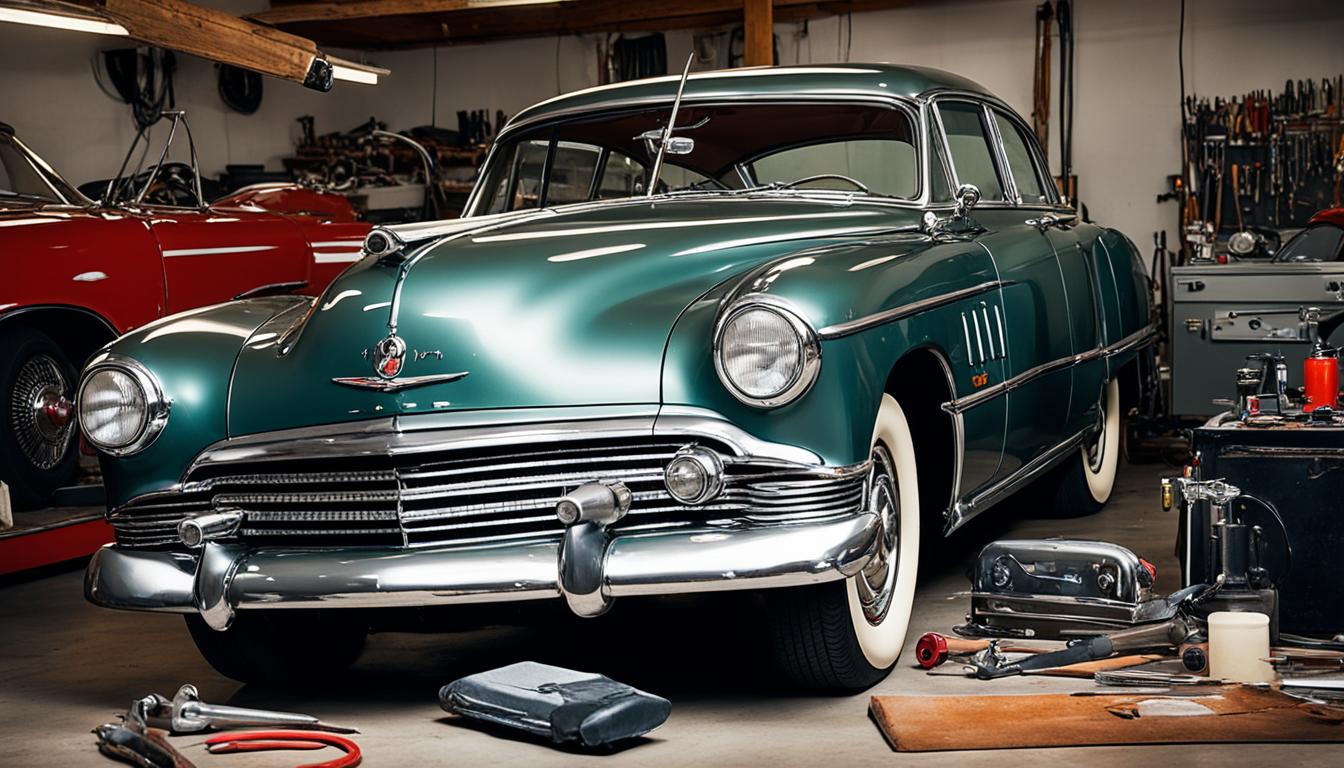
Integrating the 11 meter band—better known as Citizen’s Band (CB) radio—into a classic car restoration involves balancing period-correct aesthetics with functional communication. For vehicles from the 1960s through the 1980s, a CB radio is often a vital accessory for historical accuracy, requiring specific hardware sourcing, antenna tuning, and electrical considerations to ensure the system operates safely without damaging the vintage vehicle’s original components.
The Cultural and Historical Significance of the 11 Meter Band
In the realm of automotive restoration, authenticity is often measured by how well a vehicle captures a specific moment in time. The 11 meter band, which occupies the frequencies between 26.965 MHz and 27.405 MHz, became the definitive soundtrack of American motoring during the 1970s. Following the 1973 oil crisis and the subsequent imposition of the 55 mph national speed limit, CB radios transitioned from specialized tools for truckers into a mainstream cultural phenomenon.
For a restorer working on a mid-1970s muscle car, a late-70s "Land Yacht," or a period-correct off-road SUV, the CB radio is more than just a communication device; it is a piece of historical equipment. During the peak of the craze (1975–1978), millions of units were installed in passenger vehicles. Omitting the 11 meter hardware in a high-fidelity restoration of a 1976 Pontiac Trans Am or a Ford F-150 "Highboy" would be equivalent to leaving out the 8-track player. By 2026, these units have become sought-after "New Old Stock" (NOS) items that require specialized knowledge to reintegrate into a modern-driven vintage environment.
Technical Specifications: Understanding the 11 Meter Spectrum
The 11 meter band is a segment of the High Frequency (HF) radio spectrum. Before 1958, this band was actually allocated to Amateur Radio (Ham) operators. When the FCC reassigned it for the Citizens Radio Service, it created a unique niche for short-range, unlicensed (or later, "licensed by rule") communication.
Frequency and Channelization
The band is divided into 40 distinct channels in the modern era, though this was not always the case.
- Pre-1977: CB radios featured 23 channels. If you are restoring a car to "showroom" 1975 specifications, a 23-channel unit is the only period-correct choice.
- Post-1977: On January 1, 1977, the FCC expanded the band to 40 channels to alleviate congestion. A restoration of a 1979 Lincoln Continental would technically require a 40-channel unit to be historically accurate.
Modulation Modes: AM and SSB
Most classic automotive CBs utilize Amplitude Modulation (AM). However, higher-end restorations might feature Single Sideband (SSB) units. SSB allows for greater range and more efficient use of power by transmitting only on the Upper Sideband (USB) or Lower Sideband (LSB). While less common in casual passenger cars of the era, SSB units were the "prestige" electronics for enthusiasts and are highly prized in 2026 for their technical complexity.
Sourcing and Restoring Vintage 11 Meter Hardware
Finding a period-correct radio for a restoration requires identifying brands that were dominant during the vehicle’s production year. Leading names included Cobra, Midland, Johnson (Messenger series), Royce, and Pace.
Evaluating "New Old Stock" (NOS) vs. Used Units
When sourcing hardware, the most significant challenge is the degradation of internal components. Even if a unit looks pristine on the outside, the electrolytic capacitors inside have likely dried out over 40 to 50 years.
- Recapping: Any vintage 11 meter radio should undergo a "recap" before being powered on. Replacing old capacitors prevents internal shorts that could destroy the rare Phase-Locked Loop (PLL) chips or final power transistors.
- Crystal-Controlled Units: Very early 23-channel radios used physical quartz crystals to set frequencies. If a specific channel is "dead," you may need to source a specific replacement crystal, which can be difficult in 2026.
- Microphone Compatibility: Many vintage units used 4-pin or 5-pin DIN connectors with varying wiring schemes. Ensuring the microphone is matched to the radio’s impedance (usually high-impedance for older tube-type or early solid-state) is critical for audio clarity.
Installation Logistics in Classic Chassis
Installing a radio in a modern car is straightforward, but classic car restorations present unique hurdles regarding structural integrity and electrical interference.
Mounting Without Damage
One of the primary goals in high-end restoration is "reversible modification." To mount a heavy 11 meter unit without drilling into a pristine dashboard, restorers often use:
- Transmission Tunnel Brackets: Custom-bent steel brackets that utilize existing seat-bolt mounting points.
- Under-Dash Hangers: Utilizing existing factory screw holes intended for ash trays or lower dash trim.
- Hidden Installs: For "stealth" restorations, some owners hide a modern, small-footprint CB inside the glovebox or under a seat, while using a vintage-looking microphone on the dash to maintain the aesthetic.
Electrical Power and Grounding
Classic cars, particularly those from the early 60s, may have different electrical architectures.
- Positive vs. Negative Ground: Most CB radios are designed for negative-ground 12V systems. If you are restoring a very early classic that uses a positive-ground system, you must use a DC-to-DC isolated converter to prevent a catastrophic short-circuit when the radio chassis touches the car body.
- Noise Suppression: Vintage ignition systems—specifically those with points and condensers—generate massive amounts of Radio Frequency Interference (RFI). To use an 11 meter radio effectively, you must install RFI suppressors on the alternator and use resistor-type spark plug wires, although the latter can sometimes conflict with "pure" engine restoration goals.
The Antenna: The "Long Whip" Aesthetic vs. Performance
In the 1970s, the "Texas Star" or "102-inch whip" antenna was a symbol of the CB enthusiast. However, mounting such an antenna can place significant stress on the vehicle’s body panels.
Period-Correct Antenna Types
- The 102-inch Stainless Steel Whip: The gold standard for performance. It requires a heavy-duty ball mount usually drilled into the rear quarter panel or bumper. For most restorers, drilling a hole in original sheet metal is unacceptable.
- The "Twin Trucker" Co-Phased Mirrors: Common on classic pickup trucks and vans. These utilize two shorter fiberglass antennas mounted on the side mirrors.
- The Disguised AM/FM/CB Antenna: During the late 70s, many manufacturers offered a "tri-band" antenna that looked like a standard radio aerial but contained a loading coil for the 11 meter band. This is the preferred choice for restorers who want a clean, factory-delivered look.
Standing Wave Ratio (SWR) Calibration
An 11 meter radio can be destroyed if keyed up without a properly tuned antenna. The Standing Wave Ratio (SWR) measures how much power is reflected back into the radio rather than being radiated into the air.
- Target: A ratio of 1.5:1 or lower is ideal.
- The Problem with Classics: Vintage cars often have more chrome and different grounding planes than modern cars. If an antenna is mounted on a chrome bumper, ensure there is a dedicated braided ground strap connecting the bumper to the main chassis, as chrome-to-steel contact can be electrically "noisy."
Comparison of Era-Specific 11 Meter Units
| Feature | Mid-1960s (Tube/Hybrid) | Mid-1970s (23-Channel) | Late 1970s/Early 80s (40-Channel) |
|---|---|---|---|
| Common Brands | Johnson, Browning | Cobra, Midland, Royce | Uniden, President, Cobra |
| Technology | Vacuum Tubes / Early Transistors | Discrete Transistors / Crystals | Integrated Circuits / PLL |
| Channel Count | 23 Channels | 23 Channels | 40 Channels |
| Typical Size | Very Large (Heavy) | Moderate (Standard Din) | Compact to Large |
| Power Draw | High (Warm-up time needed) | Low (Instant-on) | Low (Efficient) |
| Restoration Difficulty | High (Sourcing tubes) | Medium (Capacitor refresh) | Low (Modern components) |
Legal and Regulatory Status in 2026
As of 2026, the FCC (Federal Communications Commission) continues to govern the 11 meter band under Part 95 Subpart D. While a formal individual license is no longer required—users are "licensed by rule"—there are strict operational limits that restorers must adhere to:
- Power Limits: AM transmissions are limited to 4 watts of carrier power. SSB is limited to 12 watts Peak Envelope Power (PEP).
- Hardware Modifications: Using an "amplifier" or "linear" to boost a classic car's CB signal is illegal and can cause significant interference with other services.
- Equipment Compliance: For a restoration to be truly "road legal," the equipment should ideally be FCC-type accepted. While using vintage gear is generally permitted, modifying that gear with modern high-power chips can lead to regulatory issues if it bleeds into other frequencies.
Modern Upgrades for Vintage Aesthetics
A growing trend in 2026 is the "Restomod" approach to 11 meter radios. This involves taking a vintage, non-functional 1970s chassis and hollowing it out to house modern electronics.
Bluetooth Integration
Some specialty shops now offer services to integrate Bluetooth modules into vintage CB microphones. This allows the driver to use the classic "Push-to-Talk" (PTT) handset to answer phone calls or trigger voice assistants through the car's hidden modern stereo, all while the 11 meter radio remains a static, period-correct display piece.
LED Conversions
Vintage radios used small incandescent "grain of wheat" bulbs to illuminate the S-meter and channel display. These bulbs run hot and eventually burn out. Replacing them with "warm white" LEDs during a restoration preserves the soft glow of the 1970s dashboard while reducing the heat load on the aging plastic components and internal wiring.
Maintenance and Troubleshooting
Once the 11 meter system is installed, it requires periodic maintenance to ensure it doesn't become a fire hazard or a source of electrical drain.
- Check the Coaxial Cable: RG-58 coax cable degrades over time. If you are using original 1970s cabling, the outer jacket may have become brittle, allowing moisture to enter and "green" the copper shield, which ruins the signal. Always use fresh, high-quality coax.
- SWR Monitoring: Check the SWR every season. Vibrations from classic engines can loosen antenna mounts or ground straps, causing a sudden spike in SWR that could fry the radio's final output transistors.
- Contact Cleaning: Use a dedicated electronic contact cleaner on the volume and squelch potentiometers. These often develop "dead spots" or "scratchy" sounds due to dust accumulation over decades.
FAQ
Is it legal to use a 23-channel CB radio in 2026?
Yes, it is legal to operate a 23-channel CB radio as long as it was originally FCC-type accepted. These radios operate on the first 23 frequencies of the current 40-channel 11 meter band. You must still adhere to the 4-watt power limit. Because these units are older, ensuring they are not "off-frequency" is vital for legal operation, as aging crystals can drift into adjacent frequencies.
Can I use a vintage CB antenna for my modern FM radio?
Only if you use a specific CB/AM/FM splitter or if the antenna was designed as a "tri-band" unit. A dedicated 11 meter antenna is tuned specifically for 27 MHz. Attempting to use it for FM radio (which operates at 88-108 MHz) will result in poor reception. Conversely, using a standard car antenna for a CB radio will likely result in a high SWR and damage to the CB's transmitter.
How do I stop engine noise from coming through the CB speaker?
Engine noise in classic cars is usually caused by the ignition system or the alternator. To fix this, ensure the radio is wired directly to the battery (with an inline fuse) rather than through the ignition switch or cigarette lighter. Additionally, installing a "noise snubber" or LC filter on the power lead can help, as can ensuring the engine hood is properly grounded to the firewall with a grounding strap.
What is the range of an 11 meter radio in a classic car?
Range varies significantly based on terrain and antenna quality. Typically, a mobile-to-mobile setup in a classic car will have a range of 3 to 7 miles. During periods of high solar activity (part of the 11-year solar cycle), "skip" conditions can occur, allowing 11 meter signals to bounce off the ionosphere and travel hundreds or even thousands of miles, though this is not reliable for consistent communication.
Should I choose a "Sideband" (SSB) radio for my restoration?
Choose an SSB radio only if you are restoring a high-end, enthusiast-owned vehicle of the era. SSB was significantly more expensive and less common than standard AM. If your goal is "average consumer" accuracy, a standard AM unit is more appropriate. However, if you want the best performance available for the period, SSB is the superior choice.
Practical Recommendations for Restorers
When embarking on a project involving the 11 meter band, start by defining the "build date" of your vehicle restoration. If the car is a 1974 model, prioritize a 23-channel Cobra or Midland unit with a silver faceplate. For a late-70s truck, a 40-channel unit with a digital LED channel readout is more appropriate.
Before installation, send the radio to a specialist for a "bench test" and capacitor replacement. This prevents the heartbreak of a vintage component failing and potentially causing an electrical fire in a newly restored interior. Finally, always prioritize the antenna's ground plane; a poorly grounded antenna is the leading cause of poor performance and hardware failure in automotive 11 meter systems. By following these technical guidelines, you ensure that your classic car remains both a beautiful piece of history and a functional communication platform.