In 2026, commercial foundation repair in Lewisville remains a vital investment for property owners. Given the region’s volatile expansive clay soils, addressing structural shifts early prevents catastrophic damage, preserves property valuation, and mitigates significant legal liabilities associated with tenant safety and ADA compliance, often yielding a high long-term return on investment.
Deciding whether to authorize a significant capital expenditure for foundation stabilization is a common challenge for facility managers and commercial real estate investors in North Texas. In Lewisville, the question is rarely if a building will experience movement, but rather when and how severely that movement will impact the bottom line. As we navigate the economic landscape of 2026, the cost of labor and materials continues to rise, making proactive intervention more fiscally responsible than reactive, emergency reconstruction.
The Geological Reality of Lewisville: Why Foundation Issues are Inevitable
To understand the value of foundation repair, one must first understand the ground beneath Lewisville. The city sits atop a geological formation characterized by expansive clay soils, primarily within the Eagle Ford Shale and Woodbine groups. These soils are notorious for their "shrink-shrink" cycles.
The Impact of Volatile Clay Soils
In North Texas, the clay acts like a sponge. During the wet spring months, the soil absorbs water and expands with immense force, capable of lifting heavy commercial concrete slabs. Conversely, during the blistering Texas summers—which have seen record-breaking heat streaks recently—the soil loses moisture and shrinks. This creates voids under the foundation.
When a commercial structure, which carries significantly more weight than a residential home due to steel framing and heavy machinery, loses its uniform support, the foundation begins to settle unevenly. This is known as differential settlement. Unlike uniform settlement, where a building sinks evenly, differential settlement causes the structure to twist and shear, leading to the expensive symptoms property owners dread.
The Role of Local Hydrology
Lewisville’s proximity to Lewisville Lake and the Trinity River basin further complicates soil moisture levels. Variations in the water table can lead to localized "hot spots" of soil movement. For commercial properties located near these water bodies, the rate of foundation shifting is often accelerated, making regular inspections and timely repairs a non-negotiable part of property management.
Identifying the Signs of Commercial Foundation Failure
Waiting for a wall to collapse is not a strategy. In 2026, commercial property managers use a combination of visual inspections and advanced structural monitoring to catch issues early. The "worth" of an investment in repair is often highest when these signs are caught in their infancy.
- Interior and Exterior Cracking: While hairline cracks in mortar are common, "stair-step" cracks in brickwork or large diagonal cracks in interior drywall (especially near door frames) indicate significant stress.
- Door and Window Misalignment: In a commercial setting, if fire doors do not latch properly or storefront windows begin to "pinch" or crack, the structural frame is likely distorted.
- Uneven Flooring and Trip Hazards: For retail and warehouse spaces, a floor that is no longer level is a major liability. Even a quarter-inch deviation can violate ADA (Americans with Disabilities Act) standards, opening the business to lawsuits.
- Plumbing and HVAC Issues: Foundation movement often shears underground plumbing lines. If you notice a sudden spike in water bills or unexplained damp spots on a warehouse floor, a slab leak caused by foundation shifting is a likely culprit.
- Separation of Additions: Many commercial buildings in Lewisville have been expanded over time. If the "seam" where the new building meets the old is widening, the foundations are moving independently.
Technical Repair Methods for Commercial Structures in 2026
Commercial foundation repair is not a one-size-fits-all service. The method chosen significantly impacts both the cost and the long-term durability of the fix.
1. Helical and Steel Piering
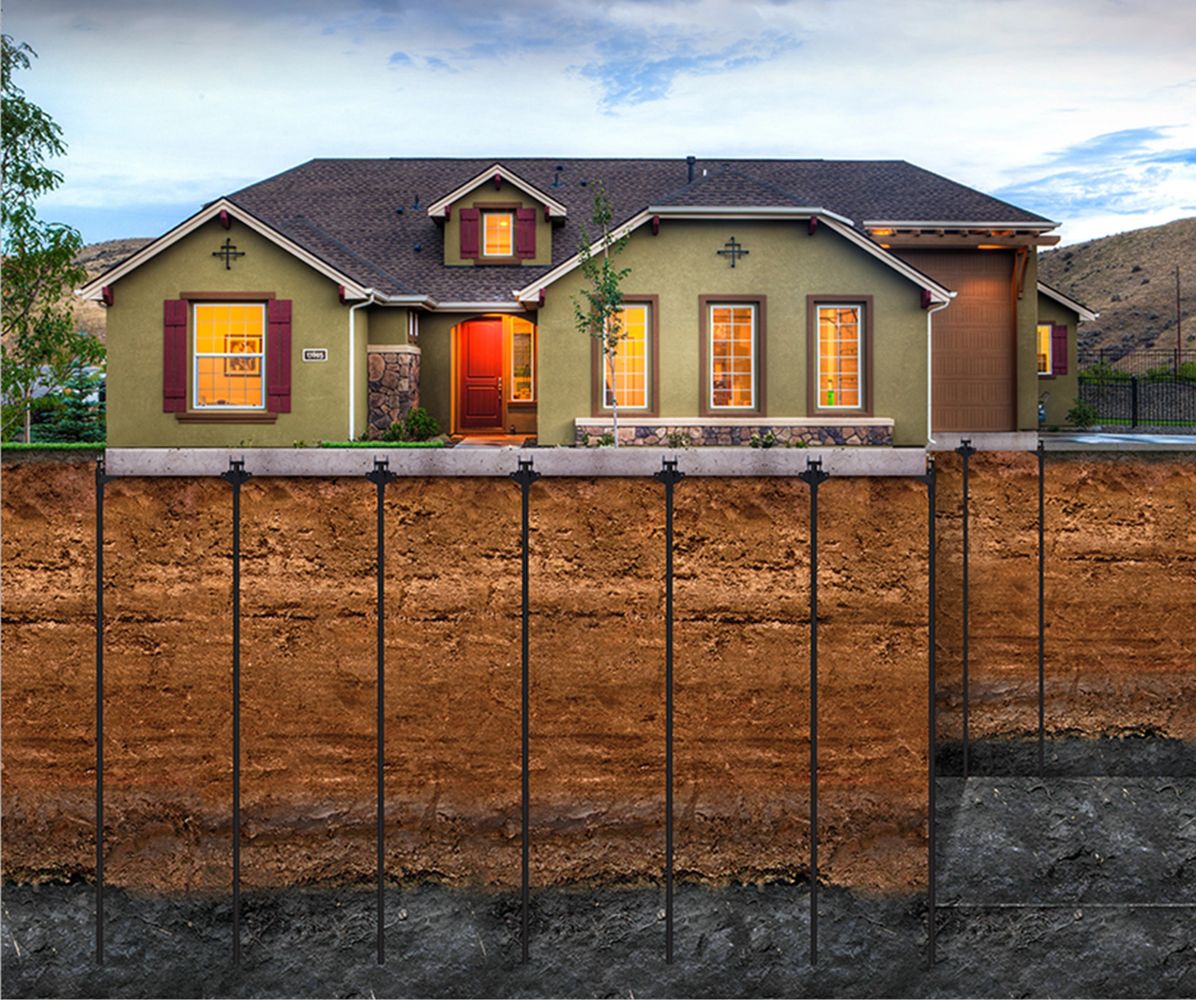
Steel piers are considered the gold standard for commercial applications in Lewisville. These are driven deep into the earth until they reach "refusal" at the stable bedrock or a load-bearing strata. Because they bypass the active clay layer, they provide a permanent solution that is unaffected by surface moisture changes.
2. Concrete Pressed Piers
Often used for lighter commercial structures or when budget constraints are tighter, concrete piers involve driving pre-cast concrete cylinders into the ground. While effective, they may not offer the same depth or longevity as steel in the specific high-plasticity clays found near the City of Lewisville municipal boundaries.
3. Polyurethane Foam Injection (High-Density)
For warehouse floors or large retail slabs that are sinking but don't have deep structural failure, polyurethane injection is a highly efficient 2026 solution. The foam expands to fill voids and lift the slab with minimal downtime. For a business that cannot afford to close for two weeks, the "worth" of this investment is found in the avoided operational loss.
4. Drainage Correction and Root Barriers
Sometimes, the best repair is preventative. Installing commercial-grade French drains or moisture barriers can stabilize the water content in the soil, preventing further movement. In many cases, these interventions are required alongside piering to ensure a lifetime warranty.
Financial Analysis: Is the Investment Worth It?
To determine if the repair is worth the cost, we must compare the price of the intervention against the potential loss of asset value.
| Repair Method | Estimated Cost (Per Pier/Unit) | Durability | Business Disruption | ROI Potential |
|---|---|---|---|---|
| Steel Piers | High ($1,200 - $2,500) | Permanent | Moderate | High (Asset Protection) |
| Concrete Piers | Moderate ($700 - $1,100) | High | Moderate | Moderate |
| Polyurethane Injection | Moderate (By Sq Ft) | 10-20 Years | Low | High (Operational) |
| Drainage Systems | Low to Moderate | Variable | Low | Very High (Prevention) |
Preserving Property Valuation
In the 2026 North Texas real estate market, buyers are incredibly diligent. A commercial building with known, unaddressed foundation issues will often see a price reduction that far exceeds the actual cost of the repair. Investors typically apply a "risk penalty," potentially devaluing a property by 15-20% for a problem that might only cost 5% of the building's value to fix.
Liability and Insurance Considerations
Insurance companies are increasingly stringent about structural integrity. In Lewisville, failing to address a known foundation issue can lead to the cancellation of a policy or the denial of claims related to water damage or slip-and-fall accidents. When you factor in the cost of a single personal injury lawsuit resulting from an uneven floor, the cost of foundation repair appears negligible.
Tenant Retention and Lease Obligations
For owners of multi-tenant retail centers or office buildings, foundation issues can be a "constructive eviction" trigger. If a tenant's space becomes unusable due to jammed doors or cracked floors, they may have legal grounds to break their lease. Maintaining a stable foundation is a prerequisite for maintaining a stable income stream.
Choosing a Commercial Specialist in Lewisville
The "worth" of the investment is also tied to the quality of the contractor. Residential foundation companies often lack the heavy equipment and engineering oversight required for commercial projects.
When evaluating a service provider in 2026, ensure they provide:
- Engineered Load Calculations: A professional firm should have a third-party structural engineer review the plan.
- Comprehensive Insurance: This includes high-limit general liability and workers' compensation.
- Commercial References: Ask for case studies of local Lewisville warehouses or office parks they have stabilized.
- Transferable Warranties: This is crucial for the future resale of the property.
Common Pitfalls to Avoid
The investment's value is often eroded by common mistakes made during the procurement process:
- Ignoring Drainage: Fixing the foundation without fixing the reason the soil moved (e.g., poor guttering or slope) is a recipe for failure.
- Choosing the Cheapest Bid: In commercial repair, the cheapest bid often involves shallower piers or lower-grade materials that will fail within five years.
- Delaying the Repair: Soil movement is progressive. A $50,000 problem in 2026 can easily become a $150,000 problem by 2028 as the structural damage spreads to the roof and mechanical systems.
Frequently Asked Questions
How long does commercial foundation repair usually take in Lewisville?
Most commercial projects take between one to three weeks, depending on the number of piers required. However, methods like polyurethane injection can often be completed in just a few days with minimal disruption to foot traffic or machinery operations.
Will my business have to close during the repairs?
Not necessarily. Most exterior piering can be done while the building is occupied. If interior piers are required, work can often be scheduled in phases or after-hours to accommodate business operations.
Does the City of Lewisville require permits for foundation repair?
Yes, the City of Lewisville Building Inspections department requires permits for most structural repairs. A reputable contractor will handle the permitting process and ensure that a final engineering report is filed with the city. This documentation is essential for future property sales or refinancing.
Is foundation movement covered by commercial property insurance?
Generally, no. Most standard commercial policies exclude "earth movement" or "settlement." This makes proactive maintenance even more critical, as the financial burden of repair typically falls entirely on the property owner. Some specialized endorsements exist, but they are rare and expensive.
How do I know if I need deep piers or just slab leveling?
This requires a professional evaluation. If the entire structural frame is tilting or cracking, deep piers are likely necessary. If only a small portion of a warehouse floor has "dipped" without affecting the walls, slab leveling via foam injection may be sufficient. An American Society of Civil Engineers (ASCE) certified engineer can provide an unbiased assessment.
Final Recommendation
For commercial property owners in Lewisville, foundation repair is not merely an expense; it is a critical act of capital preservation. The unique geology of North Texas makes structural movement a statistical certainty over the lifespan of a building.
By investing in high-quality, engineered foundation solutions in 2026, you protect the building's equity, ensure the safety of its occupants, and avoid the exponentially higher costs of structural failure and legal liability. To move forward, schedule a comprehensive structural evaluation with a specialist who understands the specific clay compositions of the Denton County area. The most cost-effective time to fix a foundation is always today.