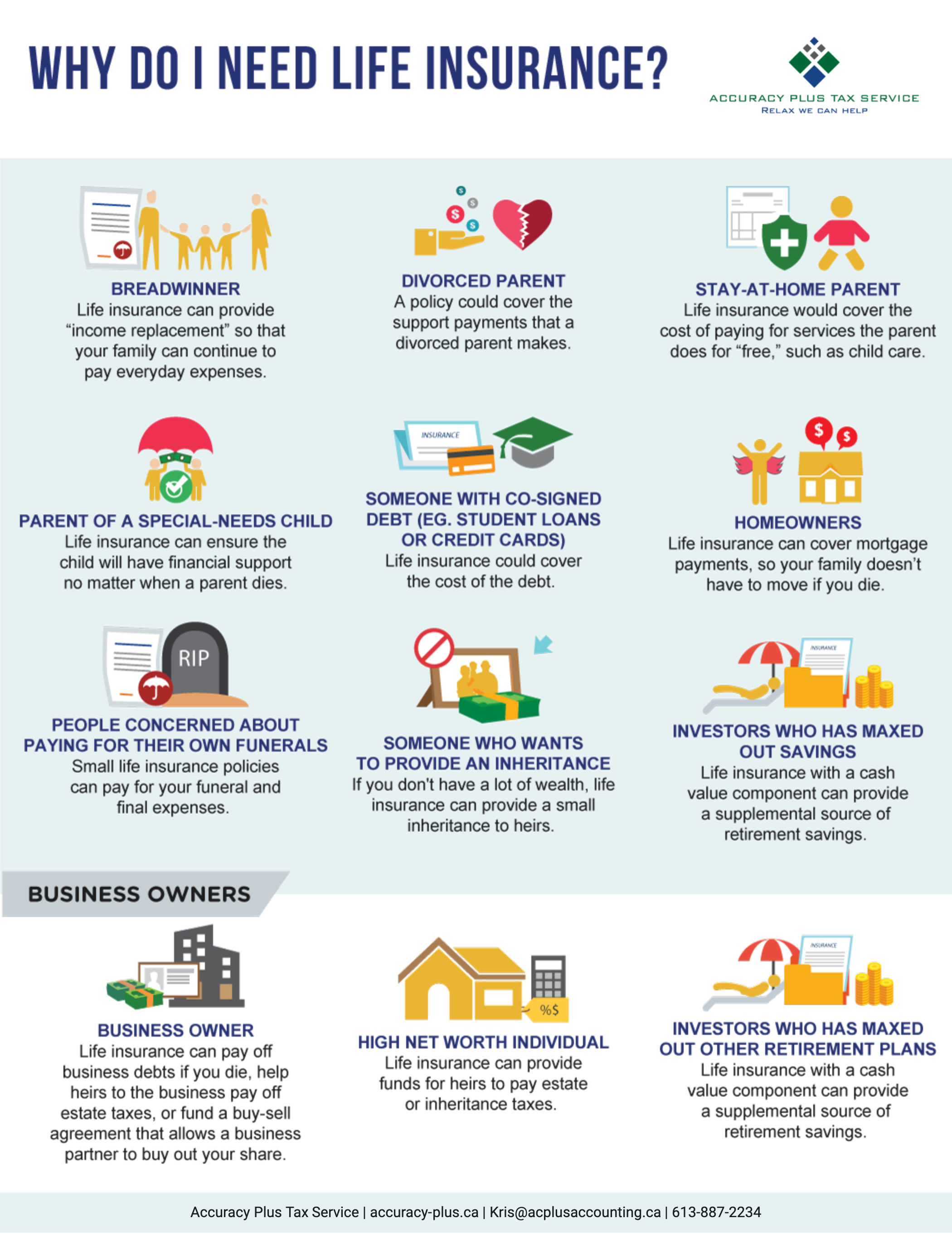
Assessing total life insurance needs requires calculating the exact financial shortfall your dependents would face if your income vanished today. Rather than relying on static rules of thumb, an accurate assessment aggregates immediate end-of-life expenses, outstanding debt payoff, future obligations like mortgage and education, and long-term income replacement, offset by your family’s existing liquid assets.
Why Common Rules of Thumb Fall Short
A conventional guideline across retail financial services suggests purchasing a life insurance policy worth 7 to 10 times your annual gross salary. While this metric provides a fast, conversational benchmark, it routinely produces severe underinsurance or expensive overinsurance.
The primary flaw in arbitrary income multipliers is their complete detachment from individual balance sheets. A 30-year-old earning $90,000 with three young children, a $500,000 mortgage, and negligible savings has drastically different financial protection requirements than a 55-year-old earning $90,000 with grown children, an almost-cleared mortgage, and $700,000 in retirement accounts. The 10x multiplier suggests identical $900,000 policies for both individuals, leaving the younger family critically underfunded while burdening the older individual with unnecessary premium costs.
Moreover, flat multipliers fail to account for:
- Non-working spouses who provide full-time childcare and household management whose replacement costs substantial capital.
- The compounding effect of inflation on multi-decade income replacement funds.
- Asymmetrical liabilities, such as large private student loans or business debt with personal guarantees.
- Surviving spouse earnings capacity and statutory safety nets such as Social Security Survivor Benefits.
To establish adequate family security without overpaying for coverage, policyholders must apply comprehensive financial assessment frameworks that balance immediate liabilities against long-term capital requirements.
Primary Methodologies for Calculating Life Insurance Needs
Financial planners evaluate life insurance requirements through three primary frameworks: the Human Life Value (HLV) approach, the D.I.M.E. formula, and the Comprehensive Capital Needs Analysis. Understanding how these models operate allows you to choose the calculation that best reflects your household complexity.
- Total Capital Required
- Final & Estate Expenses
- Debt & Mortgage Balances
- Childcare & Education Funds
- Multi-Year Income Replacement
- Minus Available Resources
- Cash & Savings Accounts
- Investment Portfolios
- Existing In-Force Coverage
- Surviving Spouse Future Income
- Equals Net Life Insurance Benefit Needed
1. The Human Life Value (HLV) Approach
The Human Life Value model measures the economic loss a household sustains when an income-earning individual passes away. It treats the individual's future earnings capacity as an asset to be replaced in net-present-value terms.
The formula follows three distinct steps:
- Determine Net Annual Earnings: Take projected annual earnings and deduct estimated income taxes, personal living expenses (food, clothing, personal transit, discretionary spending), and personal insurance premiums. The resulting figure represents the net income dedicated directly to family support.
- Determine Working Horizon: Calculate the number of working years remaining until planned retirement.
- Discount to Present Value: Because a lump-sum life insurance payout can be invested to generate yield, the cumulative future earnings stream must be discounted using a conservative, inflation-adjusted rate of return (typically 2% to 4% net of inflation).
While HLV offers a precise picture of an individual's total economic output, it occasionally overstates insurance needs for individuals whose families require less capital to thrive than the earner's full lifetime gross capacity.
2. The D.I.M.E. Framework
The D.I.M.E. method is an accessible, modular calculation popular in personal financial education. It aggregates financial exposure across four core categories:
- Debt: Total outstanding consumer debt, personal loans, car notes, and credit cards, excluding the primary mortgage. It also typically incorporates a baseline allocation for funeral and final medical expenses ($15,000 to $25,000).
- Income: Annual income multiplied by the number of years the family requires financial support. For families with toddlers, this is frequently set at 15 to 20 years (until the youngest reaches financial independence); for couples without children, it might be 3 to 10 years to allow a transition window.
- Mortgage: The total payoff balance of the primary residence, preventing surviving dependents from facing housing displacement or unaffordable monthly payments.
- Education: The estimated total cost of post-secondary education for all children, accounting for tuition, room, and board at target institutions.
The total of these four components establishes the gross insurance target. Although practical, D.I.M.E. often overestimates needs because it neglects existing savings, investments, and survivor benefits that can absorb part of the liability.
3. Comprehensive Capital Needs Analysis (The Gold Standard)
The Capital Needs Analysis is the definitive method used by fee-only financial planners and credentialed insurance underwriters. Unlike the previous models, it evaluates the household's total balance sheet, balancing gross long-term obligations against existing assets and alternative income streams.
Under Capital Needs Analysis, required capital is divided into two operational categories:
- Immediate Cash Needs at Death (Lump-Sum Obligations): Uninsured medical expenses, burial and funeral expenses, estate administration, debt retirement, mortgage payoff, emergency fund stabilization, and dedicated education endowments.
- Ongoing Income Needs (Present Value of Income Stream): The monthly income required to sustain household operational expenses minus ongoing revenue generated by a surviving partner or dependent benefits, capitalized over a specific time horizon.
From this aggregate capital demand, planners subtract all accessible resources: cash reserves, non-retirement investment accounts, existing group term policies, and liquidable non-primary assets. The remaining balance represents the net death benefit required.
Comparison of Life Insurance Needs Methodologies
| Assessment Method | Core Focus | Primary Inputs | Advantages | Disadvantages / Limitations |
|---|---|---|---|---|
| Flat Multiplier (7–10x Income) | Fast estimation based on gross salary | Current annual salary | Simple, fast, requires no detailed balance sheet data | Ignores existing savings, precise debts, family age, and specific goals |
| D.I.M.E. Formula | Direct liability and milestone clearing | Non-mortgage debt, desired years of income, mortgage balance, education costs | Structured, easy to calculate, guarantees major debts and college are funded | Can lead to overinsurance by ignoring existing liquid assets and survivor benefits |
| Human Life Value (HLV) | Economic replacement of the individual | Gross earnings minus personal consumption, tax rates, years to retirement, discount rate | Reflects the absolute financial value of the human asset over a lifetime | Often yields exceptionally high numbers; does not tailor coverage to specific milestones |
| Capital Needs Analysis | Net balance sheet deficit resolution | Immediate liabilities, present value of income needs, college, liquid assets, survivor benefits | Highly customized, dynamic, prevents both underinsurance and overpaying | Requires comprehensive financial documentation and regular recalibration |
Step-by-Step Guide to Calculating Total Needs
Executing a capital needs assessment requires gathering recent mortgage statements, investment accounts, outstanding debt balances, and current household operating budgets. Follow this step-by-step process to reach an accurate figure.
- Total Capital Required:
- Step 1: Immediate Cash Needs
- Step 2: Income Replacement Needs
- Step 3: Future Capital Goals
- Step 4: Subtract Current Assets
- Net Benefit Needed
Step 1: Calculate Immediate Cash Obligations at Death
Immediate obligations represent expenses that must be settled shortly after death.
- Final Expenses: Standard funeral arrangements, burial or cremation, and final medical bills not covered by health insurance typically range between $15,000 and $25,000.
- Consumer and Personal Debt: Tally all credit cards, personal loans, auto financing, and student loans that do not discharge upon death.
- Emergency Fund Establishment: If the surviving household lacks an emergency reserve, allocate a lump sum equal to 3 to 6 months of essential operating costs.
Step 2: Determine Income Replacement Duration and Value
Determine how much income your household needs to function normally if your paychecks stop.
- Determine Essential Operating Expenses: Surviving households rarely need 100% of previous gross income. When one earner passes, household consumption drops (fewer personal expenses, lower payroll taxes, altered transportation needs). A surviving household typically requires 60% to 75% of prior joint gross income to maintain its standard of living.
- Subtract Alternative Inflows: Subtract the predictable ongoing earnings of the surviving spouse, verified pension entitlements, and projected Social Security Survivors Benefits, which provide indexed monthly payments to surviving spouses caring for children under age 16 or children up to age 18 (or 19 if still in secondary school).
- Calculate Present Value of the Shortfall: Take the net annual shortfall and multiply it by the number of years protection is necessary. To factor in investment yield and inflation accurately, divide the annual shortfall by a conservative real discount rate (e.g., 2% to 3%), or use a financial present-value formula over the designated term.
Step 3: Quantify Future Educational and Milestone Obligations
Add major capital milestones that cannot be absorbed through standard monthly cash flow.
- Higher Education: The College Board publishes average published tuition and fees across public and private universities. Decide whether you plan to cover 50%, 75%, or 100% of these projected expenses, multiply by the number of children, and account for inflation-adjusted college cost projections.
- Mortgage Retirement: Decide whether the mortgage should be cleared completely or serviced monthly out of the income replacement stream calculated in Step 2. Caution: Do not double-count by including the entire mortgage balance here while simultaneously factoring monthly mortgage payments into your family's ongoing income replacement needs.
Step 4: Inventory and Deduct Accessible Liquid Assets
Total all capital already available to your family to offset these obligations.
- Cash and Equivalents: High-yield savings accounts, money market accounts, and certificates of deposit (excluding the baseline emergency fund).
- Taxable Brokerage Accounts: Stocks, bonds, mutual funds, and exchange-traded funds held in non-retirement accounts.
- Existing Life Insurance: In-force personal policies and reliable group life insurance coverage provided by employers. Note: Treat employer-provided coverage cautiously; group life policies rarely transfer if you change jobs or face prolonged illness prior to death.
- Retirement Assets (With Nuance): While 401(k)s and IRAs transfer to beneficiaries, using them to meet immediate income shortfalls prior to age 59½ can trigger administrative nuances, and pre-tax distributions remain subject to ordinary income taxes. When counting pre-tax balances against cash needs, discount their face value by 15% to 25% to account for future income taxation.
Total Capital Needed = (Immediate Cash Needs + Income Replacement Capital + Major Future Liabilities) - Current Available Assets
Critical Variables Often Omitted from the Math
Overlooking ancillary costs or structural financial dynamics can invalidate an otherwise sound calculation. When assessing your household's coverage requirements, account for these frequently neglected variables.
The Economic Replacement Value of a Non-Working Spouse
A stay-at-home parent generates substantial economic value that does not appear on a W-2. If a non-working parent dies, the surviving breadwinner must either pay out-of-pocket for childcare, household logistics, meal preparation, and transportation, or scale back work hours, directly reducing professional income.
Procuring full-time childcare, before-and-after school care, domestic management, and private transport for multiple children can easily exceed $35,000 to $60,000 annually in private market costs. A stay-at-home parent should often be covered by a policy ranging from $250,000 to $500,000, scaled to the number of remaining years until the youngest child reaches driving age and school independence.
The Impact of Inflation on Long-Term Capital Drawdowns
If an insurance assessment determines a family requires $60,000 per year for 20 years, a simple multiplication suggests $1,200,000 of coverage. However, if inflation averages 3% annually, a basket of goods costing $60,000 in Year 1 will cost roughly $105,000 by Year 19.
Conversely, if the surviving spouse invests the $1,200,000 lump sum upon receipt, those funds will generate an investment return. Planners address this using a "real rate of return" (nominal portfolio return minus the rate of inflation). If your family's portfolio yields 6% and inflation runs at 3%, the net capital grows at an effective real rate of roughly 3%. Using a capitalization rate accounts for this dynamic, preventing long-term purchasing power erosion.
Structural Changes to Income Taxes
A surviving spouse's tax bracket often shifts unfavorably after the year of the partner's death. Following a transition period (such as the Qualifying Surviving Spouse filing status for up to two years if supporting dependent children), the surviving partner must file as Head of Household or Single.
These filing statuses feature narrower tax brackets and lower standard deductions than Married Filing Jointly, causing more of the household's income to be taxed at higher marginal rates. Incorporating a modest tax cushion ensures the surviving family retains adequate net cash flow.
Aligning Policy Structure with Need Horizons
Arriving at a total dollar need solves only half of the life insurance problem; the next step requires structuring the death benefit across appropriate policy categories and durations. Needs are dynamic, rising as young families take on mortgages and welcome children, and tapering as retirement accounts grow and liabilities shrink.
- Coverage Need ($) over Time (Years):
- Tier 1: 10-Yr Term (Peak debt / Childcare)
- Tier 2: 20-Yr Term (Mortgage / College)
- Tier 3: 30-Yr / Permanent (Base living costs)
Term Insurance vs. Permanent Insurance
For the overwhelming majority of consumers, pure term life insurance is the most cost-effective vehicle for addressing capital needs. Term insurance provides a fixed death benefit for a specific period (e.g., 10, 20, or 30 years) with level premiums. It aligns with obligations that eventually disappear:
- Mortgages get paid down over 15 to 30 years.
- Children grow up, complete schooling, and become financially independent within 18 to 23 years.
- Retirement savings compound over 20 to 40 years, ultimately achieving self-insurance.
Permanent life insurance (such as whole life or universal life) remains in effect for the insured's entire lifetime, provided premiums are paid, and includes a cash-value accumulation component. Because permanent insurance premiums are significantly higher than term rates for identical coverage amounts, relying solely on permanent products often leads to purchasing insufficient death benefits.
Permanent coverage should generally be reserved for permanent problems, including:
- Funding irrevocable life insurance trusts to manage estate tax liabilities for high-net-worth households.
- Providing ongoing financial support for children with lifelong disabilities or special needs who will never achieve financial self-sufficiency.
- Funding cross-purchase buy-sell agreements for closely held business equity.
Policy Laddering
Rather than securing a single massive policy for a 30-year term, consider a laddered approach using multiple term policies. This structure tailors coverage to match declining debt over time, substantially lowering lifetime premium expenses.
For example, an individual who requires $1,500,000 in total coverage might structure their portfolio as:
- A 30-year term policy of $500,000 to maintain core income support for a spouse until retirement.
- A 20-year term policy of $500,000 to cover the balance of a 30-year mortgage and college completion.
- A 10-year term policy of $500,000 to cover high-cost early childcare expenses and short-term consumer debt.
After 10 years, the first policy drops off, reducing ongoing premium costs precisely when early childcare expenses end. Ten years later, the second policy expires as the mortgage balance drops and children complete college. The remaining 30-year policy protects the spouse through the final working years.
When to Recalibrate Your Life Insurance Assessment
A life insurance calculation captures a single snapshot in time. Significant life events systematically adjust your capital liabilities and assets, requiring regular review. Re-evaluate your figures whenever you encounter:
- A Shift in Family Size: The birth or adoption of a child introduces 18 to 22 years of continuous living costs and higher post-secondary education goals.
- Real Estate Transactions: Taking on a larger mortgage increases immediate balance sheet liabilities, whereas downsizing reduces required death benefits.
- Substantial Career Advancement: Significant salary increases often lead to lifestyle expansion. If your family adjusts its baseline spending upward, existing income-replacement policies will prove insufficient during a crisis.
- Debt Elimination: Paying off student loans, business liabilities, or home financing reduces the net insurance coverage required to keep the household solvent.
- Significant Asset Accumulation: As your taxable investment portfolios, Roth IRAs, and 401(k) balances expand, your estate moves toward "self-insurance," allowing you to decrease term coverage or allow older policies to expire without replacement.
Frequently Asked Questions
Can I rely on the life insurance provided through my employer?
No, employer-provided group life insurance rarely offers complete protection. Most corporate group plans cap benefits at 1x or 2x your base salary, well below the capital needed to support a family over multiple decades. Furthermore, group life insurance is tied directly to your employment; if you leave your job, face termination, or become too ill to work, your coverage typically ends. Securing an independent, medically underwritten personal policy guarantees your family remains protected regardless of your employment status.
Should I factor my retirement savings into my life insurance calculations?
Yes, but apply a realistic tax and liquidity discount. Readily accessible, non-retirement investment assets can be deducted dollar-for-dollar from your gross insurance requirement. For pre-tax accounts (like traditional 401(k)s and traditional IRAs), surviving beneficiaries must pay ordinary income tax on withdrawals. To prevent a capital shortfall, deduct only 75% to 85% of pre-tax balances from your gross insurance calculation.
Does a stay-at-home parent need life insurance if they have no salary?
Yes. Although a non-working parent does not produce a formal paycheck, they provide services that carry significant market replacement costs, including childcare, cooking, home maintenance, and administrative management. If that parent passes away, the surviving spouse must either pay third-party service providers or work fewer hours. A term policy between $250,000 and $500,000 is customary to protect against this financial strain.
What is the difference between Human Life Value and Capital Needs Analysis?
The Human Life Value (HLV) approach evaluates the total lifetime economic earnings potential of an individual and converts it to a present-value lump sum. It answers: "How much money would this person have earned for their family over their remaining career?" The Capital Needs Analysis calculates the concrete financial deficits the surviving family will experience. It answers: "What specific bills, debts, tuition, and living costs must be satisfied, minus existing savings?" Capital Needs Analysis is typically preferred because it prevents overinsuring high earners who already hold significant liquid assets.
How does inflation affect my life insurance calculation over long periods?
Inflation gradually degrades the purchasing power of fixed death benefits. An annual income replacement figure that seems adequate today will purchase significantly less 15 years from now. To protect against this, planners calculate income requirements using a "real rate of return," which models the lump-sum payout invested conservatively in a diversified portfolio, earning a return that offsets inflation over the distribution horizon.
Practical Next Steps
- Conduct an Asset and Liability Audit: Pull recent balances for all non-mortgage debt, remaining mortgage balances, checking and savings accounts, and investment portfolios.
- Define Coverage Horizons: Determine how many years your family requires income protection (e.g., until your youngest child graduates from college or until your planned retirement date).
- Calculate Your Net Deficit: Apply the Capital Needs Analysis framework: sum your immediate cash needs, milestone costs, and discounted income shortfall, then subtract your liquid non-retirement assets.
- Compare Structure Options: Evaluate whether a single 20- or 30-year term policy covers your exposure, or if laddering multiple policies provides a more cost-effective match for declining debt obligations.
- Secure Professional Review: If your estate involves business partnerships, children with special needs, or potential federal estate tax obligations, consult an independent, fee-only Certified Financial Planner (CFP) to verify your figures before binding coverage.