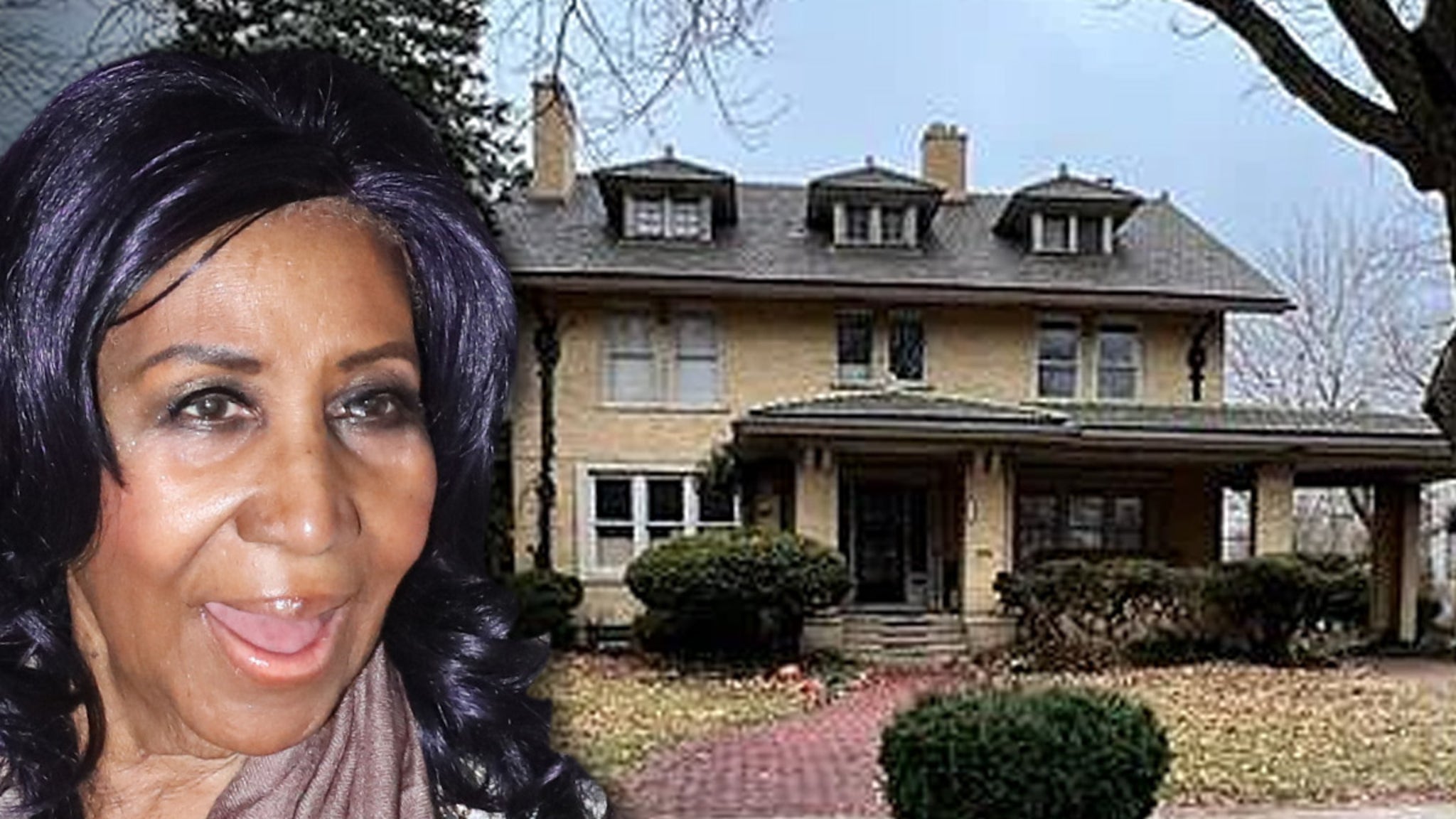
Aretha Franklin’s childhood was defined by the intersection of rigorous religious training, the instability of a traveling family life, and an early immersion in the gospel music scene of Detroit. Born in Memphis, Tennessee, in 1942, she moved to Detroit by age four, where her father’s influential ministry and the presence of legendary musical icons in her home provided the foundational environment for her future as the "Queen of Soul."
Origins in Memphis and the Migration to Detroit
Aretha Louise Franklin was born on March 25, 1942, at her family’s home in Memphis. Her father, Reverend Clarence LaVaughn (C.L.) Franklin, was a prominent itinerant preacher, and her mother, Barbara Siggers Franklin, was an accomplished gospel singer and pianist. The family’s move to Detroit in 1946 was a pivotal moment in Aretha’s early life. At that time, Detroit was becoming a major hub for Black culture and industry, and Reverend Franklin quickly established himself as a powerhouse of the pulpit.
He became the pastor of the New Bethel Baptist Church, which eventually became the center of the Franklin family's existence. The transition from the South to the North reflected the broader Great Migration, but for Aretha, it meant settling into a household that was constantly buzzing with community leaders, civil rights activists, and high-profile musicians.
The Influence of New Bethel Baptist Church
The church was not just a place of worship for the young Aretha; it was her primary classroom. Reverend C.L. Franklin was renowned for his "preaching voice," characterized by a melodic, rhythmic delivery that held audiences captive. Researchers and biographers have often noted that Aretha’s vocal phrasing—her ability to hold a note and build emotional intensity—was heavily influenced by watching her father’s sermons from the pulpit or the front pew.
Sunday mornings were intense, but the week was filled with rehearsals and social gatherings. The church provided a structured environment where Aretha honed her piano skills and vocal dexterity. By age ten, she was already featured as a soloist, demonstrating a maturity and vocal power that were far beyond her years. The gospel tradition emphasized personal testimony and emotional authenticity, two pillars that would later become the hallmarks of her secular soul recordings.
The "House of Music" and Famous Visitors
One of the most unique aspects of Aretha’s childhood was the guest list in the Franklin household. Because her father was a national celebrity in the gospel world, the family home in Detroit was a sanctuary and a waypoint for the most significant African American artists of the mid-20th century.
It was common for the young Aretha to wake up or come home from school to find figures like Clara Ward, Mahalia Jackson, or James Cleveland sitting in their living room. These artists were not merely acquaintances; they were mentors. She studied their techniques, watched them play piano, and absorbed the nuances of gospel improvisation. This informal training was perhaps more influential than any formal music lessons she might have received in school.
| Influence | Area of Impact | Role in Development |
|---|---|---|
| C.L. Franklin | Phrasing and Delivery | Taught the power of the "sermon" as performance. |
| Clara Ward | Vocal Improvisation | Modeled complex, melismatic gospel singing. |
| James Cleveland | Piano Accompaniment | Influenced her percussive and rhythmic piano style. |
| Mahalia Jackson | Emotional Depth | Demonstrated the importance of spiritual gravity in song. |
Family Dynamics and Early Challenges
While the public image of the Franklin family was one of religious prosperity and status, Aretha’s childhood was also marked by significant instability. Her parents’ marriage suffered from long periods of separation, and they eventually separated permanently when she was six years old. Her mother, Barbara, moved back to Buffalo, New York, and passed away when Aretha was just ten.
The absence of her mother and the demanding, often itinerant nature of her father’s ministry forced Aretha to grow up quickly. Her grandmother, Rachel, and various family friends helped raise her, but the emotional impact of losing her mother at such a young age is often cited by biographers as the source of the profound melancholy and longing that permeates much of her later work. These early experiences of loss and public scrutiny required her to develop a protective exterior, a trait that became a signature of her professional persona throughout her adult life.
Musical Education Beyond the Gospel Tent
While gospel was the bedrock of her musical identity, Aretha’s childhood curiosity led her to explore other genres. Despite the strict religious atmosphere of the church, she was exposed to the emerging sounds of secular jazz and rhythm and blues through radio and the phonograph records brought into the home by older peers and visiting musicians.
She was largely self-taught on the piano, relying on her extraordinary ear to replicate what she heard. This "ear-training" was a vital component of her development. She did not need to rely on sheet music; she could internalize the chord structures and melodies of a song after hearing it only a few times. This ability to interpret and "re-compose" songs—making them her own—would eventually become the core of her recording philosophy at Atlantic Records decades later.
Education and Social Life in Detroit
Aretha attended public schools in Detroit, where she was often recognized not just as a student, but as the daughter of the famous Reverend Franklin. This provided her with a level of local celebrity but also created a barrier in her peer relationships. She was shy and introspective, often choosing to spend time practicing the piano rather than engaging in typical teenage extracurricular activities.
Her education was frequently interrupted by travel, as she began to accompany her father on his gospel caravans throughout the country. While these tours offered unparalleled performance experience, they meant that her traditional academic schooling was secondary to her development as a performer. By her early teens, she was already a veteran of the gospel circuit, having performed in churches from Detroit to Los Angeles.
The Transition to Professional Recording
By the age of 14, in 1956, Aretha recorded her first album, Songs of Faith, at the New Bethel Baptist Church. This project serves as a time capsule of her childhood environment. It captures the raw, unpolished, but undeniable talent of a teenager who had already absorbed a lifetime of musical lessons.
This recording was not an attempt to enter the secular pop charts but a reflection of the world she lived in. It showcased her ability to lead a congregation and hold her own alongside adult musicians. This experience provided the prerequisites for her eventual move into mainstream music; by the time she approached major record labels, she had already spent thousands of hours behind a microphone and in front of an audience, a level of preparation few of her contemporaries could match.
Frequently Asked Questions
How did Aretha Franklin’s father influence her music?
Reverend C.L. Franklin provided the vocal framework for Aretha’s style. His rhythmic, oratorical preaching style taught her how to build tension and release in a performance, a technique she later applied to soul and R&B tracks to give them an emotional, "preached" quality.
Did Aretha Franklin have formal musical training?
No, Aretha was largely self-taught. She learned by listening to and interacting with the legendary gospel musicians who frequented her home. She possessed a remarkable natural ear that allowed her to master the piano and complex vocal arrangements without traditional conservatory training.
How did her mother’s death impact her childhood?
The death of her mother when Aretha was ten was a foundational trauma. It contributed to her reserved, sometimes guarded personality and is often linked to the deep sense of longing and emotional intensity expressed in her later ballads and soul performances.
Was Aretha Franklin’s early career exclusively gospel?
Yes, her early career was entirely focused on the gospel circuit. She toured with her father’s ministry and recorded her first album at her church. It was only after she reached her late teens that she began to transition toward secular music, seeking to reach a wider audience beyond the church.
Why is Detroit significant to her formative years?
Detroit in the late 1940s and 1950s was a cultural epicenter for Black Americans. The city’s vibrant community life and the prominence of her father’s ministry within that urban environment allowed Aretha to interact with top-tier talent and perform in high-profile settings, which served as a launching pad for her national career.
Next Actions for Further Research
To gain a deeper understanding of Aretha Franklin's early development, those interested in music history should examine the archival recordings of the New Bethel Baptist Church services from the late 1950s. These recordings offer a rare, unmediated look at the acoustic environment and the specific communal expectations that shaped her voice. Furthermore, reviewing biographies that focus specifically on the role of the Black church in mid-century American music will provide critical context for why her specific style of delivery became so transformative for the soul genre in the 1960s.