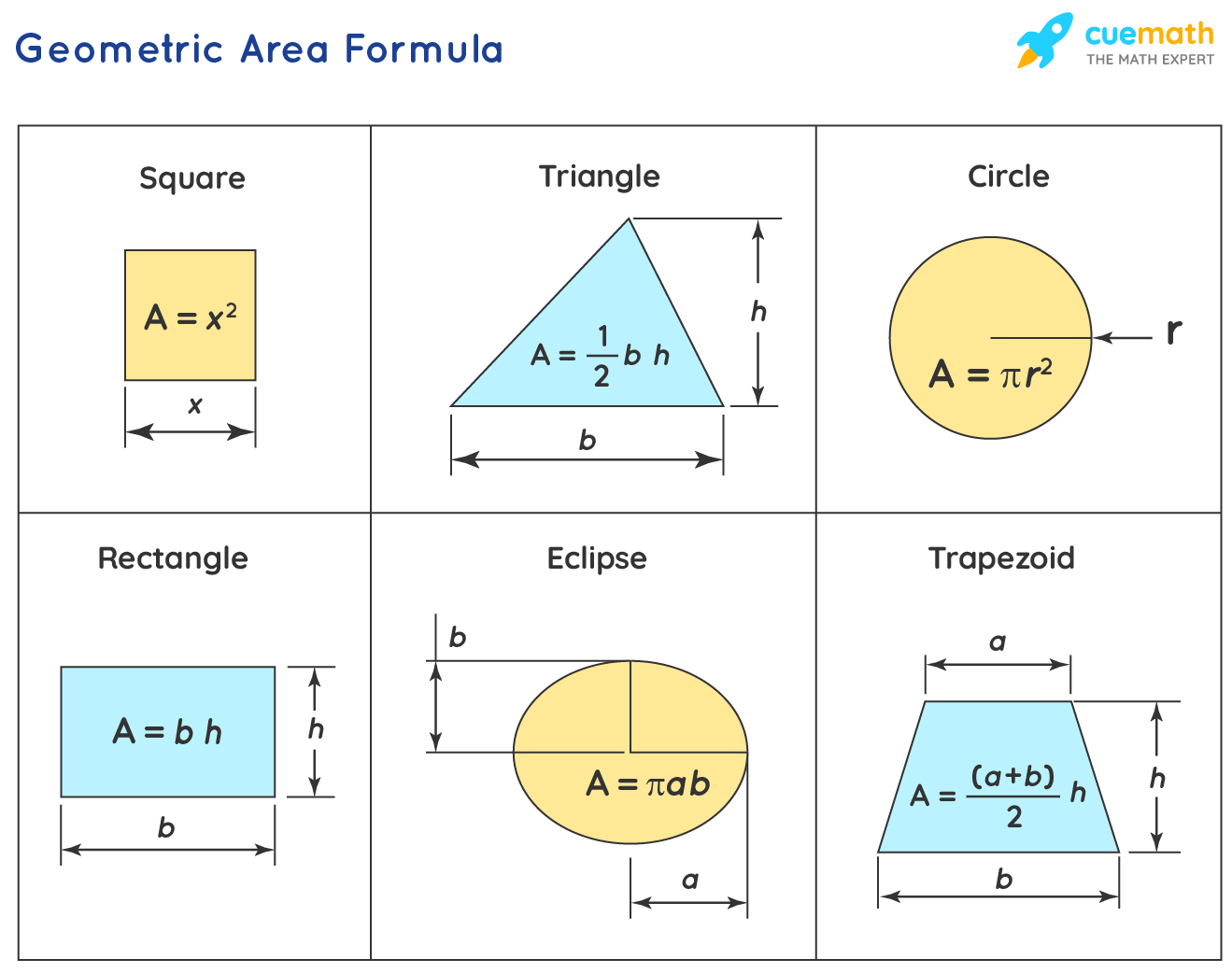
The area of a regular polygon can be calculated by multiplying the apothem by the perimeter and dividing the result by two, expressed as the formula Area = 1/2 × a × P. This geometric calculation is a fundamental method used in trigonometry, architecture, and structural engineering to determine the spatial footprint of symmetric shapes.
The Geometric Significance of the Apothem
In Euclidean geometry, a regular polygon is defined as a polygon that is both equilateral (all sides have equal length) and equiangular (all interior angles are equal). Within these symmetric figures, the apothem plays a critical role as the line segment from the center of the polygon to the midpoint of one of its sides. Crucially, the apothem is perpendicular to the side it bisects.
The apothem acts as the radius of the "incircle," which is the largest circle that can be drawn inside the regular polygon. Because every regular polygon can be divided into congruent isosceles triangles—each having the center of the polygon as its common vertex—the apothem functions as the altitude (or height) of these constituent triangles. Understanding this relationship is the foundation for deriving the area formula.
Deriving the Area Apothem Formula
To grasp why the formula works, one must look at the polygon as a collection of identical triangles. If a regular polygon has $n$ sides of length $s$, it can be decomposed into $n$ isosceles triangles. The base of each triangle is the side length $s$, and the height of each triangle is the apothem $a$.
The area of a single triangle is given by the standard formula: Area of triangle = 1/2 × base × height Substituting our values: Area of one triangle = 1/2 × s × a
Since there are $n$ such triangles in the entire polygon, the total area is: Total Area = n × (1/2 × s × a)
Because the perimeter $P$ of a regular polygon is equal to the number of sides $n$ multiplied by the length of each side $s$ ($P = n × s$), we can substitute $P$ into the equation. This yields the universal formula: Area = 1/2 × a × P
Step-by-Step Application of the Formula
Applying the formula requires three distinct steps: identifying the variables, verifying dimensions, and executing the calculation.
- Calculate the Perimeter ($P$): Multiply the length of one side ($s$) by the total number of sides ($n$). If the side length is 5 cm and the polygon is a hexagon ($n=6$), the perimeter is 30 cm.
- Determine the Apothem ($a$): In many real-world or textbook scenarios, the apothem is provided. If it is not provided, it must be calculated using trigonometry. If you know the side length $s$ and the number of sides $n$, the apothem can be found using the formula $a = s / (2 × tan(180°/n))$.
- Execute the Area Calculation: Once $a$ and $P$ are known, multiply them together and divide by two. Always ensure your units are consistent—if the perimeter is in centimeters, the area will be in square centimeters.
Trig-Based Calculation for the Apothem
Often, problems provide the side length but omit the apothem. In such cases, you must utilize the interior properties of the polygon. Every regular polygon is composed of $n$ central triangles. By bisecting one of these triangles, you create a right-angled triangle where the angle at the center is $180° / n$.
Using trigonometry:
- The adjacent side to the central angle is the apothem ($a$).
- The opposite side is half the side length ($s/2$).
- Therefore, $tan(180°/n) = (s/2) / a$.
- Rearranging for $a$ gives: $a = s / (2 × tan(180°/n))$.
This approach allows engineers and designers to derive the exact area of any regular polygon even when only the side length and the number of sides are documented.
Comparison of Polygon Area Calculation Methods
While the apothem method is highly efficient for regular polygons, other methods exist depending on the known variables. The table below outlines when to use the apothem formula versus alternative geometric approaches.
| Known Variables | Recommended Method | Complexity |
|---|---|---|
| Apothem and Perimeter | Area = 1/2 × a × P | Low |
| Side length and Number of sides | Apothem trig formula + Area formula | Moderate |
| Circumradius and Number of sides | Area = (n × r² × sin(360°/n)) / 2 | High |
| Vertices (Coordinate Geometry) | Shoelace Formula | High |
Practical Considerations and Common Mistakes
A frequent error in manual calculation involves the misuse of the degree and radian settings on scientific calculators. When using the formula $a = s / (2 × tan(180°/n))$, ensure the calculator is set to "Degrees." If the calculator is in "Radians," the input must be converted to $\pi / n$.
Another common mistake is neglecting the perimeter-to-side-length conversion. In some geometry problems, the "side length" provided is actually the length of the diagonal or the radius of the circumscribed circle. Always verify that the segment being used corresponds to the boundary of the polygon before multiplying by $n$ to determine the perimeter.
Furthermore, when dealing with complex structural components, rounding errors can accumulate. If you are calculating the area of a large structural floor slab, for instance, maintain at least four decimal places during the intermediate steps of the apothem calculation to ensure the final square footage or square meter measurement is accurate.
Troubleshooting Polygon Area Problems
If your calculation produces a result that seems physically impossible (e.g., an area that is smaller than the area of the inscribed circle), revisit the input units. A common issue is the confusion between the radius (the distance from the center to a vertex) and the apothem (the distance from the center to the midpoint of a side).
- Check the Apothem: The apothem is always shorter than the radius. If your calculated apothem is longer than the radius of the circumcircle, you have likely used the wrong trigonometric function.
- Verify the Perimeter: Ensure $n$ represents the total number of sides. A decagon should be multiplied by 10, not 8.
- Coordinate Verification: If you are working with polygons in a CAD environment, use the built-in measurement tools to verify the apothem length before applying the manual formula to confirm your results.
Frequently Asked Questions
Is the apothem formula applicable to non-regular polygons? No. The formula relies on the symmetry of the polygon, where the distance from the center to the midpoint of every side is identical. Non-regular polygons lack a central point equidistant to all sides, meaning the "apothem" cannot be defined in the same way.
Does the apothem change if the size of the polygon changes? Yes. The apothem is directly proportional to the side length. If you double the side length of a regular polygon while keeping the number of sides constant, the apothem will also double, and the total area will quadruple.
What is the difference between an apothem and a radius? The apothem connects the center to the midpoint of a side (forming a right angle). The radius connects the center to a vertex. In a regular polygon, the radius is always the hypotenuse of the right triangle for which the apothem is a leg.
Can I use this formula for a circle? Technically, as the number of sides $n$ in a regular polygon approaches infinity, the shape becomes a circle. The perimeter approaches the circumference ($2\pi r$), and the apothem approaches the radius ($r$). The formula $1/2 × a × P$ then becomes $1/2 × r × 2\pi r$, which simplifies to $\pi r^2$, the standard area of a circle.
Why is this formula preferred in construction? In architecture and construction, components are often manufactured in regular polygonal shapes (e.g., hexagonal pavers or octagonal gazebos). The apothem is an easily measured physical dimension on the finished product, making it the most practical variable for verifying floor space or material surface area requirements.
Next Steps for Accurate Measurement
To ensure the highest level of accuracy when calculating the area of a regular polygon, always measure the apothem using a calibrated digital caliper or professional-grade measuring tape. If the object is too large for manual measurement, use a laser distance measurer to determine the side length, then calculate the apothem using the trigonometric ratio provided. For professional applications, document your work in a spreadsheet, keeping the raw dimensions separate from the calculated area to allow for easy revisions should the design requirements change.