In the 2023 fiscal year, Apple Inc. reported total iPhone revenue of $200.58 billion. This figure represents a slight decrease from the $205.49 billion reported in 2022, reflecting a challenging macroeconomic environment characterized by supply chain constraints, fluctuating consumer demand, and a general cooling in the global smartphone market during that period.
The Financial Context of Apple in 2023
To understand the revenue figures for the iPhone in 2023, one must look at the structure of Apple’s fiscal year, which ends in September. The 2023 fiscal results encompassed the sales performance of the iPhone 14 lineup and the initial market reception of the iPhone 15 series, which launched in September 2023.
Apple’s business model relies heavily on the "halo effect," where the iPhone serves as the primary gateway for users into the broader ecosystem of hardware, software, and services. In 2023, while total revenue saw a year-over-year contraction, the iPhone remained the bedrock of the company’s financial health, accounting for roughly 52% of the company's total net sales of $383.29 billion.
Global Economic Pressures
The 2023 fiscal year was defined by high inflation, interest rate hikes by central banks globally, and geopolitical tensions that impacted consumer discretionary spending. Smartphone lifecycles began to lengthen as consumers held onto their devices for longer periods, discouraged by both the rising cost of living and the diminishing marginal returns of annual hardware upgrades.
Supply Chain and Manufacturing Dynamics
For much of 2023, Apple continued to navigate the tail-end of supply chain disruptions that had plagued the tech industry since 2020. Specifically, manufacturing operations in China faced temporary labor and logistical challenges, which directly impacted the availability of high-end models such as the iPhone 14 Pro and Pro Max during critical sales quarters. By the time the iPhone 15 series was released, supply chains had largely normalized, but the initial months of the fiscal year were impacted by these operational hurdles.
Revenue Breakdown by Fiscal Quarter
Apple reports its financials on a quarterly basis, which allows analysts to track the seasonality of iPhone sales. The holiday quarter (Q1) consistently serves as the strongest period, driven by new product launches and seasonal gift-giving.
| Fiscal Quarter | Period Ending | iPhone Revenue (USD) |
|---|---|---|
| Q1 2023 | December 31, 2022 | $65.78 Billion |
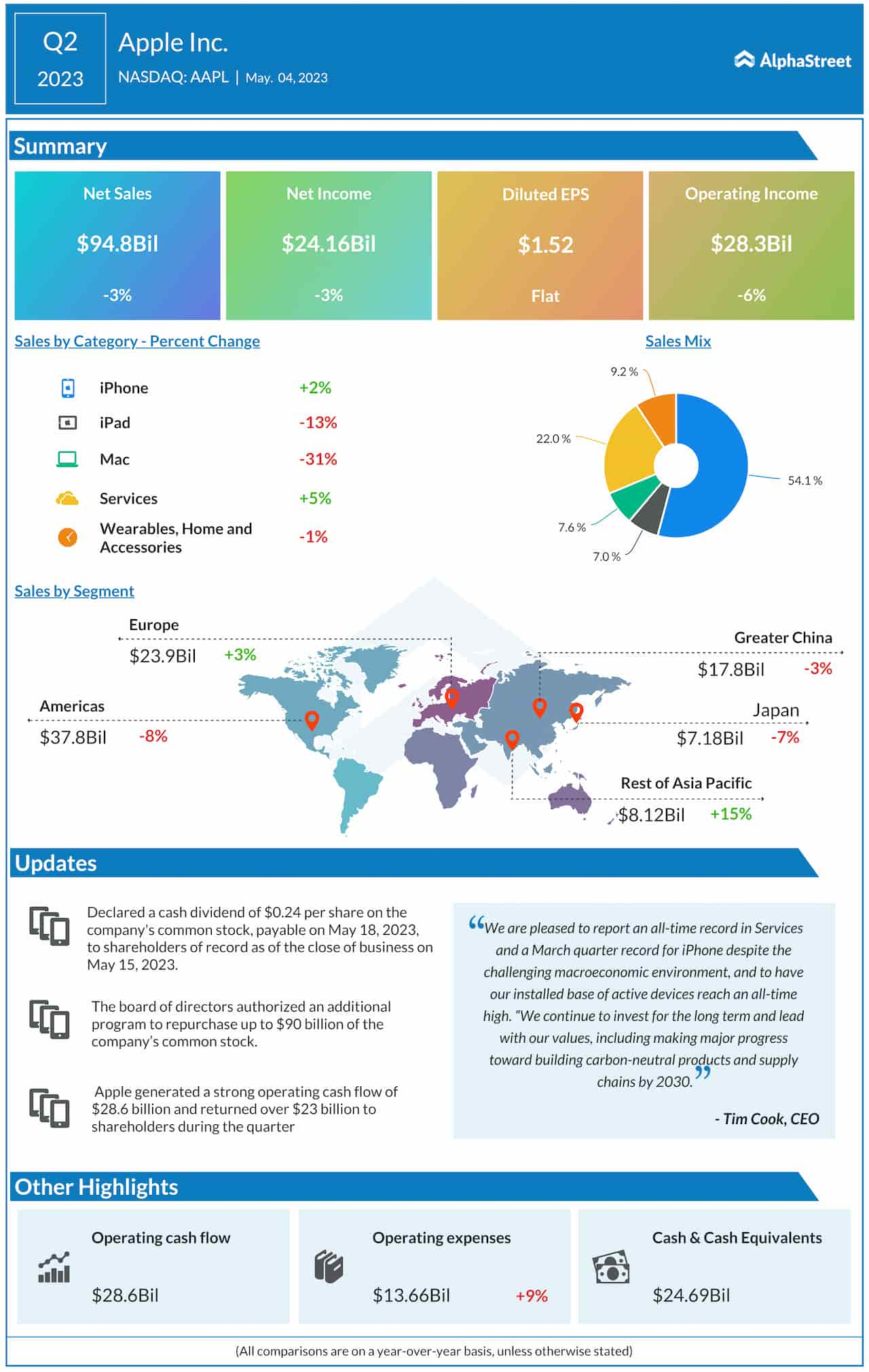
| Q2 2023 | April 1, 2023 | $51.33 Billion |
| Q3 2023 | July 1, 2023 | $39.67 Billion |
| Q4 2023 | September 30, 2023 | $43.80 Billion |
Note: Data derived from Apple Inc. Form 10-K filings for the fiscal year ended September 30, 2023.
Analyzing the Q1 Peak
The Q1 revenue of $65.78 billion highlights the intense demand associated with the September launch cycle. However, when comparing this to the previous year’s Q1, it marked a decline, largely attributed to supply constraints in the Pro-level iPhone 14 models. This demonstrated that even with strong consumer interest, Apple’s revenue in 2023 was as much a function of supply-side fulfillment as it was of consumer demand.
The Mid-Year Plateau
Q3 typically represents the "lull" period in the smartphone industry, as consumers wait for the announcement of the next hardware iteration in September. In 2023, this effect was pronounced. As the smartphone market matured, fewer users were compelled to upgrade mid-cycle, leading to the observed $39.67 billion revenue figure, which was the lowest point for iPhone sales in the 2023 fiscal year.
Strategic Factors Influencing 2023 Performance
Beyond macroeconomic variables, specific product strategies played a role in how revenue materialized.
The "Pro" Strategy
Apple has increasingly focused on differentiating its "Pro" and "Pro Max" models from the base and "Plus" models. In 2023, this pricing strategy was critical. By gating premium features—such as the A-series chip advancements, superior camera optics, and the Dynamic Island interface—behind higher price points, Apple successfully encouraged a portion of its user base to opt for more expensive hardware. This helped maintain Average Selling Price (ASP) even when unit sales faced downward pressure.
Ecosystem Integration and Services
The revenue from the iPhone is intrinsically linked to the growth of Apple’s Services division, which includes the App Store, iCloud, Apple Music, and Apple Pay. In 2023, the iPhone user base reached an all-time high, creating a larger platform for recurring services revenue. While this does not count as "iPhone revenue," it is a vital indicator of why Apple continues to prioritize the iPhone as its central product. The more iPhones sold and currently in active use, the higher the potential for high-margin service revenue.
Geographical Revenue Shifts
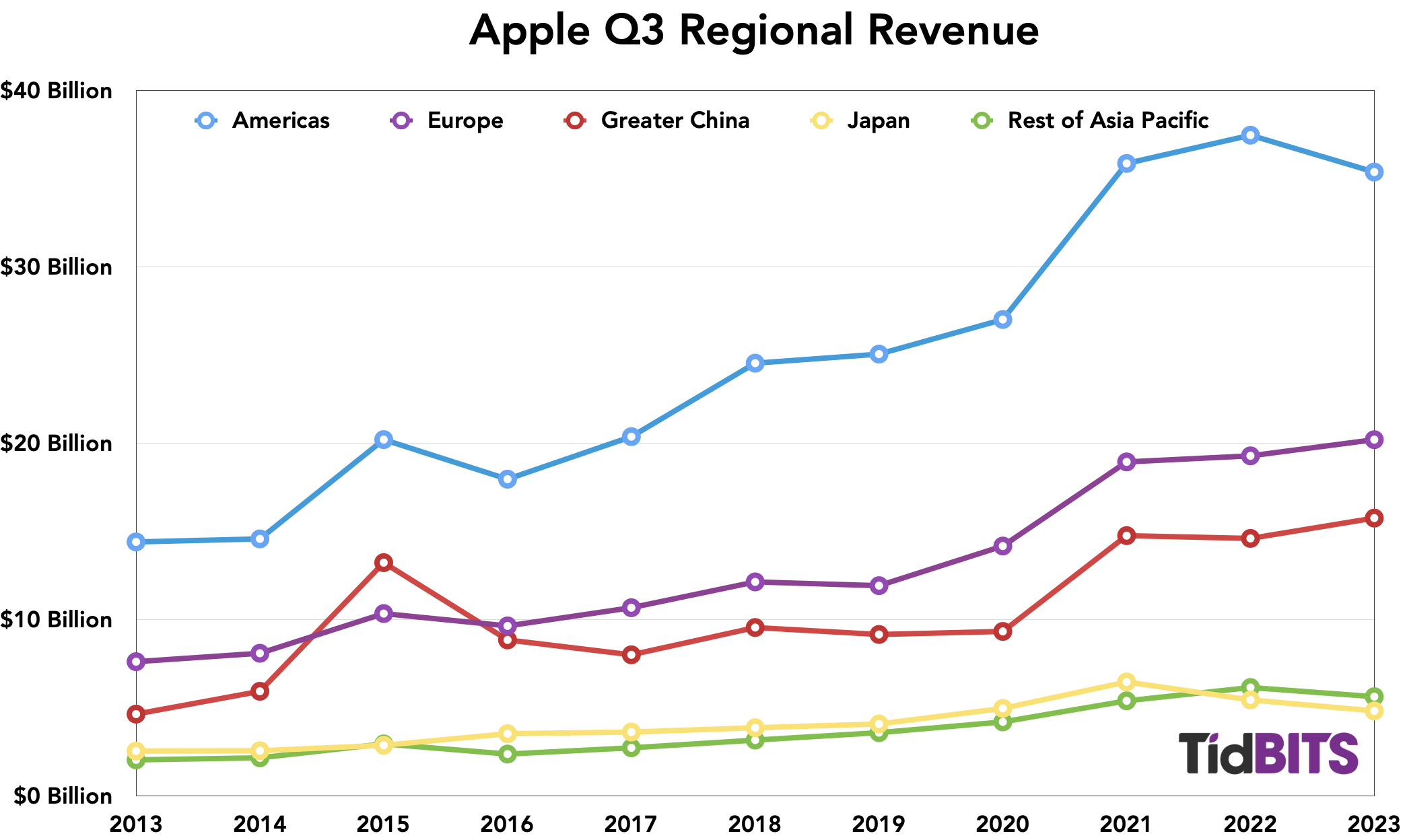
In 2023, revenue performance varied by geography. The Americas remained the largest market, but regions like Greater China faced increasing competition from local domestic players and regulatory scrutiny. However, Apple’s continued investment in emerging markets, such as India, provided a hedge against slowing growth in more saturated Western markets.
Common Misconceptions Regarding iPhone Financials
It is important to distinguish between "revenue" and "profit." While iPhone revenue reached $200.58 billion, this is the top-line figure before the costs of goods sold (COGS), research and development (R&D), marketing, and administrative expenses are deducted.
- Revenue vs. Unit Sales: Apple stopped reporting specific unit sales numbers for the iPhone in 2019. Therefore, when discussing 2023 performance, one cannot definitively say if the revenue drop was due to fewer phones being sold or a change in the product mix (i.e., people buying cheaper models).
- Productivity of Older Models: Revenue in 2023 was not just generated by the latest iPhone 15; it included the continued sale of older models like the iPhone 13 and iPhone 14, which remain popular in both primary and secondary (refurbished) markets.
- The Impact of Currency: As a global company, Apple’s revenue is impacted by the strength of the U.S. Dollar. In 2023, a strong dollar meant that sales generated in foreign currencies were worth less when translated back to USD, which negatively impacted the reported revenue totals.
Challenges and Future Outlook Post-2023
The performance in 2023 served as a stress test for Apple’s hardware-centric business model. As of 2026, it is clear that the 2023 fiscal year acted as a transition period. Apple began diversifying its supply chain away from a heavy reliance on China and increased its focus on the "Services" sector as a way to decouple profit growth from the inherent volatility of the smartphone upgrade cycle.
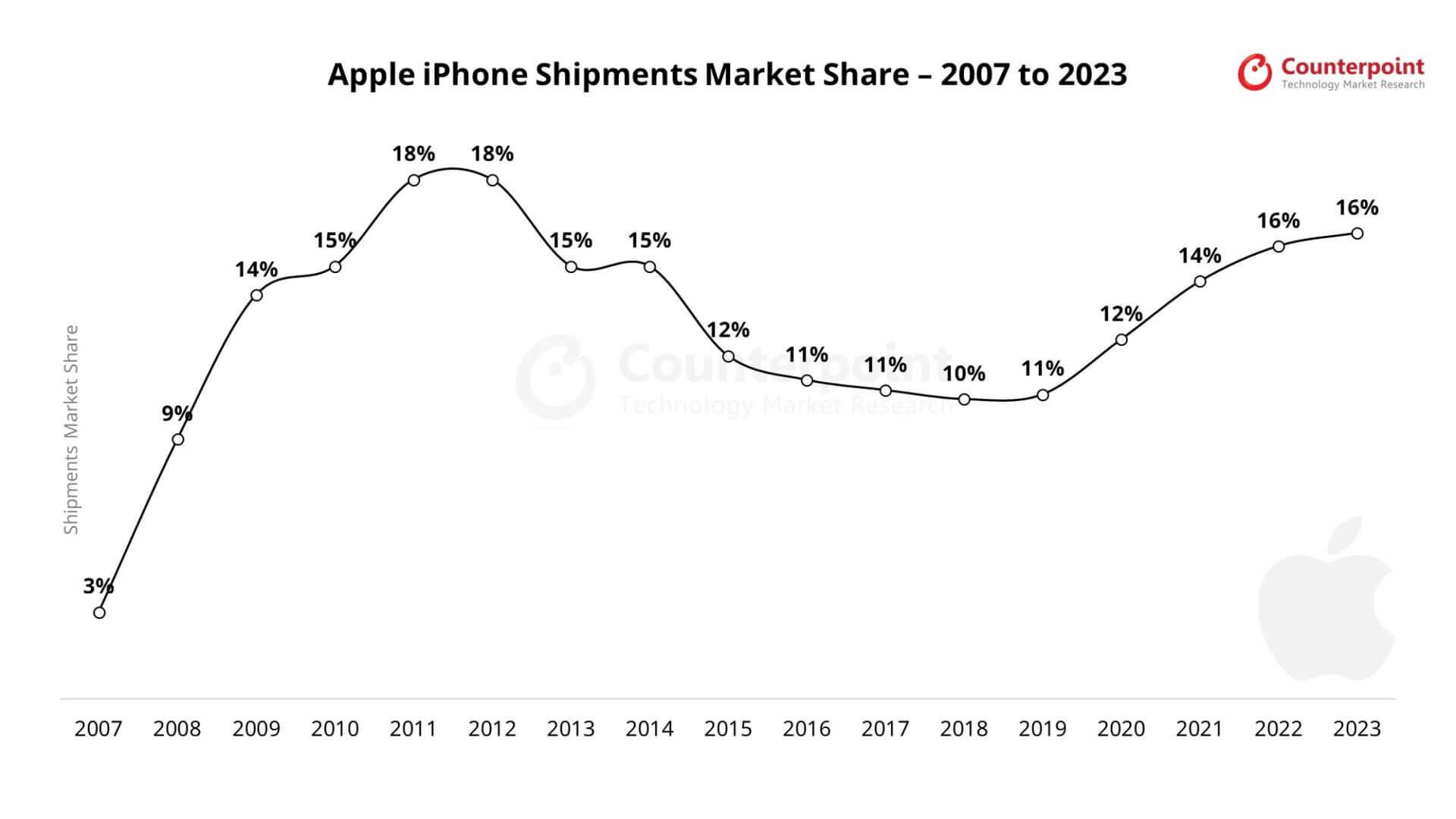
Investors and market analysts often view the 2023 results as a reminder that even the most successful consumer electronics product in history is subject to the cyclicality of the global economy. By maintaining brand loyalty and ecosystem lock-in, Apple successfully defended its market share in 2023, even if top-line revenue growth was momentarily halted.
Frequently Asked Questions
Why did iPhone revenue decrease in 2023? The decrease was primarily driven by a combination of a weaker global economy, extended consumer upgrade cycles, and supply chain constraints during the early part of the fiscal year that prevented the company from fully meeting demand for flagship Pro models.
Is iPhone revenue the same as Apple's total profit? No. iPhone revenue is the total amount of money generated from the sale of iPhones. Profit is the money left over after all expenses—such as manufacturing, research, shipping, and marketing—have been subtracted. iPhone revenue is a major component of Apple’s total revenue, but it is not the same as total net income.
How does Apple maintain high iPhone revenue despite market saturation? Apple utilizes a tiered pricing strategy that ranges from entry-level older models to premium Pro/Pro Max devices. By segmenting the market, they can capture users at different price points while pushing higher-end users to premium models, which increases the Average Selling Price (ASP).
Did the iPhone 15 launch affect the 2023 revenue? Yes, but only partially. The iPhone 15 launched in September 2023, which is the final month of Apple’s 2023 fiscal year. Consequently, only a small portion of the 2023 revenue reflects iPhone 15 sales; the bulk of the 2023 revenue was generated by the iPhone 14, 13, and 12 lineups.
Where can I find the official verification of these figures? These figures are publicly available in the Apple Inc. Annual Report (Form 10-K) for the fiscal year 2023, which can be accessed via the U.S. Securities and Exchange Commission (SEC) EDGAR database or the official Apple Investor Relations website.
Recommendation for Further Analysis
For those conducting financial research into Apple's hardware performance, it is recommended to supplement the 2023 revenue figures with an analysis of Apple’s "Services" revenue growth from the same period. Understanding how the company bridges the gap between hardware cycles through software and subscription services provides a more holistic view of why the company maintains its high valuation despite fluctuations in specific product lines. Always consult the official 10-K filings when performing comparative financial modeling to ensure accuracy across fiscal periods.