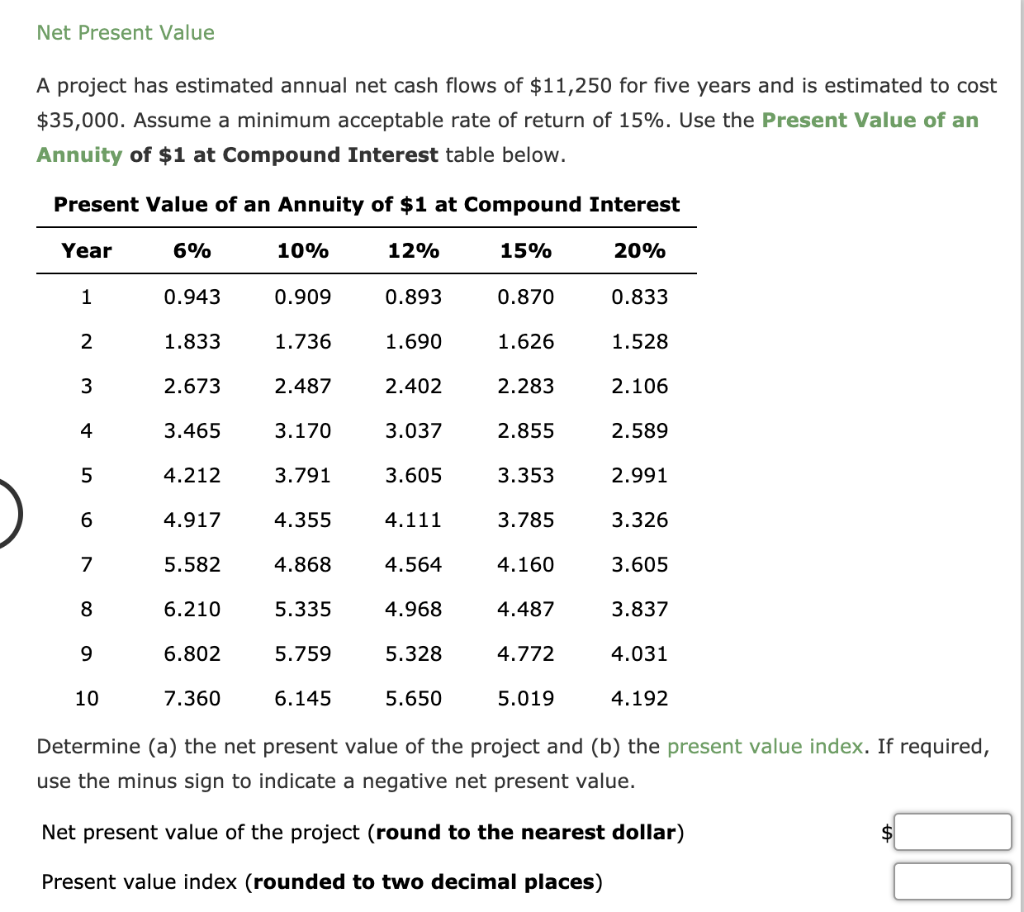
Calculating annual net worth using present value involves discounting future cash flows—such as pensions, Social Security, and long-term liabilities—to their current dollar equivalent. By applying a specific discount rate, you determine the actual value of your wealth today, providing a more accurate metric for long-term retirement planning and personal investment strategy in 2026.
The Evolution of Net Worth Tracking
Traditionally, net worth is viewed as a static snapshot: the sum of everything you own (assets) minus everything you owe (liabilities) at a single point in time. While this "book value" approach is helpful for understanding immediate liquidity, it often fails to capture the true economic reality of an individual’s financial position. This is where the concept of Present Value (PV) becomes essential.
In 2026, sophisticated investors and financial planners have moved beyond simple spreadsheets. They now incorporate the Time Value of Money (TVM) to assess their annual net worth. This approach recognizes that a dollar received today is worth more than a dollar received in the future due to its potential earning capacity. By calculating the present value of future inflows and outflows, you can normalize your wealth against inflation and opportunity costs, providing a "real-time" look at your purchasing power and financial security.
Understanding the Difference: Nominal vs. Present Value Net Worth
To master this calculation, one must first distinguish between nominal net worth and present value net worth. Nominal net worth uses the face value of assets. If you have a retirement account worth $500,000 and a home worth $800,000, your nominal assets are $1.3 million.
However, if you are entitled to a pension that will pay $5,000 a month starting in ten years, a traditional net worth statement might exclude it entirely or list it as a footnote. A Present Value Net Worth statement calculates what that future stream of $5,000 payments is worth in 2026 dollars. This provides a much more comprehensive view of your "economic net worth," which includes the value of your human capital and future entitlements.
The Mathematical Foundation of Present Value
The core of this analysis relies on the Present Value formula. To calculate the annual net worth using this method, you must apply this formula to every future cash flow associated with your financial life:
PV = FV / (1 + r)^n
Where:
- PV is the Present Value.
- FV is the Future Value (the amount of money to be received or paid in the future).
- r is the discount rate (the interest rate or expected rate of return).
- n is the number of periods (usually years) until the cash flow occurs.
In the context of 2026, selecting the appropriate discount rate (r) is the most critical step. If you use a rate that is too high, you will undervalue your future assets. If it is too low, you may develop an overconfident view of your wealth. Most financial experts recommend using a rate that reflects a mix of the current inflation rate and the risk-free rate of return (such as long-term Treasury bond yields).
Identifying Assets for Present Value Calculation
Not every asset requires a PV calculation. Cash in a checking account is already at its present value. However, several common "future-facing" assets must be discounted to be accurately reflected in an annual net worth statement.
Future Income Streams and Pensions
For many individuals, a "Defined Benefit" pension is their largest asset. To include this in your 2026 net worth, you must project the total payments you expect to receive over your lifetime and discount them back to today. This requires an estimate of your life expectancy and a conservative discount rate.
Social Security Benefits
While Social Security is often viewed as an "extra" benefit, it functions as an inflation-indexed annuity. In 2026, with the shifting landscape of retirement ages and benefit adjustments, calculating the PV of these benefits is vital for an accurate net worth. You must calculate the total expected benefit from your claiming age through your projected death, then discount it to the current year.
Business Interests and Royalties
If you own a business or receive royalties, your net worth isn't just the current cash in the business account; it is the present value of the future profits the business is expected to generate. This is often calculated using a Discounted Cash Flow (DCF) analysis, a staple of corporate finance adapted for personal use.
Discounting Liabilities: The Often Overlooked Step
Just as future assets are worth less today, future liabilities also have a present value that may differ from their nominal balance. This is particularly relevant for long-term debt.
Low-Interest Mortgages
In a 2026 economy where interest rates may have fluctuated significantly from previous decades, a fixed-rate mortgage at 3% or 4% is actually an asset in terms of present value if current market rates are higher. The "cost" of that debt in today's dollars is less than the principal balance because you are paying it back with future dollars that are worth less.
Deferred Tax Liabilities
If you have a large 401(k) or IRA, the nominal balance is misleading. You owe a portion of that money to the government. To find your true net worth using present value, you should calculate the PV of the future taxes you will pay upon withdrawal. This "Net-of-Tax" approach prevents you from overestimating your actual spendable wealth.
Step-by-Step Guide to Calculating Your 2026 PV Net Worth
Follow these steps to create a comprehensive annual report that utilizes present value techniques.
- Inventory Current Liquid Assets: List all bank accounts, brokerage accounts, and physical assets at their current market value. These do not require discounting.
- Project Future Cash Inflows: Identify every guaranteed future payment (pensions, annuities, Social Security, or business buy-outs).
- Select Your Discount Rate: For 2026, a common benchmark is the 10-year Treasury yield plus a small margin for inflation, often totaling between 4% and 6% depending on your risk tolerance.
- Apply the PV Formula to Each Inflow: Use a financial calculator or spreadsheet software to find the PV of each projected stream.
- Project and Discount Future Liabilities: Include long-term debts and estimated future tax burdens.
- Aggregate the Totals: Add your current assets to the PV of future inflows, then subtract the PV of your liabilities.
Comparative Analysis: Traditional vs. Present Value Net Worth
The table below illustrates how a 50-year-old individual in 2026 might see their net worth differently using these two methods.
| Asset/Liability Category | Nominal (Book) Value | Present Value (PV) | Notes/Assumptions |
|---|---|---|---|
| Cash & Savings | $150,000 | $150,000 | No discounting needed for current cash. |
| Brokerage Account | $600,000 | $600,000 | Current market value used. |
| Future Pension ($40k/yr) | $0 | $485,000 | Discounted at 5% over 25 years. |
| Social Security (Future) | $0 | $310,000 | Assumes claiming at 67; discounted to 2026. |
| Primary Residence | $900,000 | $900,000 | Current market appraisal. |
| Mortgage Balance | ($450,000) | ($380,000) | PV of remaining payments at 4% interest. |
| Deferred Tax Liability | $0 | ($120,000) | PV of taxes on 401(k) withdrawals. |
| Total Net Worth | $1,200,000 | $1,945,000 | The PV method shows a "truer" wealth. |
Common Mistakes in Present Value Net Worth Analysis
While this method is superior for long-term planning, it is prone to specific errors that can lead to financial mismanagement.
Using an Aggressive Discount Rate
If you use a 10% discount rate because that is what you "hope" to earn in the stock market, you will drastically undervalue your future income. For net worth purposes, the discount rate should represent a conservative "hurdle rate" or the rate of a low-risk investment.
Forgetting Inflation Adjustments
Many future cash flows, like Social Security, are adjusted for inflation (COLA). If you are discounting a payment that grows with inflation, you should use a "Real" Discount Rate (Nominal Rate minus Inflation Rate) to avoid double-counting the impact of rising prices.
Ignoring Liquidity Constraints
A high present value net worth does not mean you have cash in the bank. You cannot pay for a vacation in 2026 using the present value of a pension you won't receive for another decade. Always maintain a separate "Liquidity Ratio" alongside your PV net worth analysis.
The Role of Software and AI in 2026 Financial Modeling
By 2026, manual calculations have largely been replaced by AI-driven wealth management platforms. These tools can automatically pull data from your accounts and apply dynamic discount rates based on current economic indicators. When using these platforms, ensure that you can customize the assumptions. A "black box" calculation that doesn't reveal its discount rate or inflation assumptions can be more dangerous than a simple nominal calculation.
Advanced users often use Monte Carlo simulations in conjunction with PV net worth. Instead of a single "Present Value" figure, the software provides a range of values based on different interest rate environments and life expectancy scenarios. This probabilistic approach is the gold standard for high-net-worth individuals and professional fiduciaries.
Practical Applications for Personal Finance
Why go through the trouble of this complex calculation every year?
- Retirement Readiness: It tells you if your current assets plus the value of your future "promises" are enough to sustain your lifestyle.
- Estate Planning: It provides a clearer picture of the potential tax impact on your heirs, especially regarding the PV of deferred tax liabilities.
- Life Insurance Needs: If your PV net worth (including human capital) is high, you may need less life insurance than someone whose net worth is tied up in illiquid, non-income-producing assets.
- Major Purchase Decisions: Understanding the PV of a long-term debt (like a 30-year mortgage) can help you decide whether to pay off debt early or invest the cash elsewhere.
Frequently Asked Questions
What is the best discount rate to use for net worth in 2026?
For most individuals, a discount rate between 4% and 5% is appropriate in 2026. This typically aligns with the yield on long-term government bonds plus a 1-2% premium for inflation. However, if you are particularly risk-averse, using a lower rate (closer to the risk-free rate) provides a more conservative and safer estimate of your wealth.
Should I include my salary in present value net worth?
Including the PV of future salary is known as "Human Capital" valuation. While many economists recommend it for a total wealth view, most personal financial statements exclude it because it is not a "guaranteed" asset like a pension. If you choose to include it, apply a higher discount rate to account for the risk of job loss or disability.
How often should I recalculate the present value of my assets?
An annual review is standard. Because the variables—such as market interest rates, your age, and your expected retirement date—change every year, a yearly update ensures your financial plan remains grounded in current reality. Significant life events, like a career change or a large inheritance, should trigger an immediate recalculation.
Does present value net worth help with tax planning?
Yes. By calculating the PV of deferred tax liabilities on retirement accounts, you can better understand the "tax drag" on your portfolio. This allows for more strategic decisions regarding Roth conversions or tax-efficient charitable giving, as you are viewing the tax burden in today's dollars rather than as a distant, abstract problem.
Is present value net worth the same as "Economic Net Worth"?
The terms are often used interchangeably. Economic net worth is a broader concept that includes all tangible and intangible assets (like the value of an education or a brand) discounted to the present. Present value net worth is the specific mathematical application used to arrive at that economic figure.
Next Actions for Accurate Net Worth Tracking
To move from a basic understanding to a professional-grade financial analysis, your next step should be to aggregate all "future-pay" documents. Gather your latest Social Security statement, your pension plan’s Summary Plan Description (SPD), and any long-term debt contracts.
Once you have the data, construct a spreadsheet that separates "Current Assets" from "Discounted Future Assets." Use the PV function in Excel or Google Sheets to perform the calculations. Review these figures annually every January to adjust for changes in interest rates and your personal timeline. This disciplined approach will transform your net worth statement from a simple balance sheet into a powerful tool for predicting and securing your financial future.