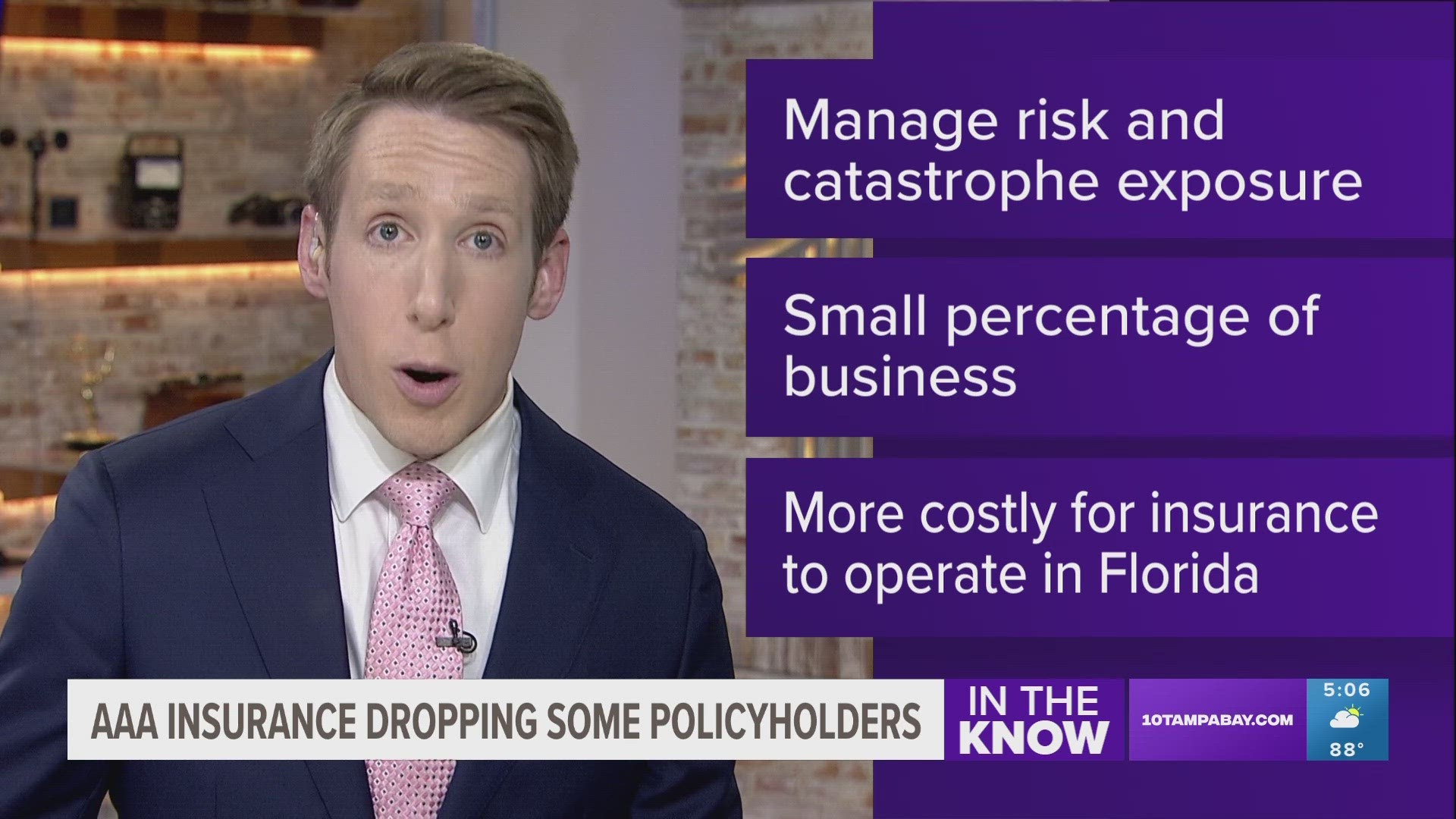
AAA home insurance myths often stem from the brand's primary association with roadside assistance, leading many to believe coverage is limited or only available to auto policyholders. In reality, AAA offers comprehensive HO-3 and HO-5 policies through regional clubs, providing robust protection for dwellings, liability, and personal property regardless of vehicle ownership status.
The American Automobile Association (AAA) is one of the most recognized brands in North America, yet it remains one of the most misunderstood in the insurance sector. As we move through 2026, the complexity of the housing market and the rising frequency of climate-related events have made accurate insurance knowledge vital. Many homeowners assume that because they have a AAA membership card in their wallet, they are either automatically covered or that their home insurance functions identically to their towing service.
To make informed financial decisions, it is necessary to separate the legendary roadside reputation from the technical realities of their property insurance products. Below, we dismantle the most persistent myths surrounding AAA home insurance policies.
Myth 1: AAA Is a Single Insurance Company
Perhaps the most significant misconception is that "AAA" is a monolithic insurance provider. In reality, AAA is a national federation of independently operated regional clubs. When you purchase a AAA home insurance policy in 2026, you are likely being underwritten by a specific entity such as the CSAA Insurance Group, Auto Club Enterprises Insurance Group, or a third-party partner specific to your geographic region.
Because of this decentralized structure, policy features, underwriting guidelines, and premium rates vary significantly between states. A policyholder in California may have entirely different endorsement options than one in Massachusetts. This regionality means that "myth-busting" must account for local variations. While the branding is consistent, the contractual obligations and available discounts are determined by the specific club serving your zip code.
Myth 2: You Must Have an Auto Policy to Buy AAA Home Insurance
Many consumers believe that AAA home insurance is an "add-on" product only available to those who already insure their vehicles through the club. This is false. While AAA heavily incentivizes bundling—the practice of holding both auto and home policies with the same carrier—you can typically purchase a standalone homeowners, renters, or condo policy.
However, the "membership myth" is closely related. While you don't necessarily need an auto insurance policy, most regional clubs require you to be a AAA member to access their insurance products. The cost of this annual membership is separate from your insurance premium. In 2026, many homeowners find that the "Member-Only" discounts on the insurance premium more than offset the cost of the annual membership fee, but it remains a distinct prerequisite for eligibility in most jurisdictions.
Myth 3: AAA Home Insurance Covers All Types of Water Damage
This is a dangerous myth that persists across the entire insurance industry, not just with AAA. Homeowners often assume that if their basement is underwater, the policy will pay out. The reality is far more nuanced.
Standard AAA homeowners policies (typically the HO-3 form) cover "sudden and accidental" water discharge—such as a pipe bursting or a water heater failing. They generally do not cover:
- Flood Damage: Water entering from the ground up (overflowing rivers, heavy rain accumulation, storm surges) requires a separate flood insurance policy, often through the National Flood Insurance Program (NFIP) or a private flood endorsement.
- Sewer Backup: If your local municipality’s sewer line backs up into your home, it is usually excluded unless you have specifically added a Sewer and Drain Backup Endorsement.
- Seepage and Gradual Leaks: If a pipe has been dripping behind a wall for six months due to poor maintenance, AAA (and most other carriers) will likely deny the claim, citing it as a maintenance issue rather than a sudden peril.
Myth 4: Your Policy Covers the Current Market Value of Your Home
In 2026, with real estate prices remaining volatile, many policyholders mistakenly believe they should insure their home for its market value—the price it would sell for on the open market. This is a fundamental misunderstanding of insurance principles.
AAA home insurance is designed to cover the Replacement Cost Value (RCV). The market value includes the value of the land and the desirability of the neighborhood, neither of which can be destroyed by fire or wind. The replacement cost focuses solely on the labor and materials required to rebuild the physical structure from scratch. If you insure for market value, you may be overpaying for coverage you can never claim. Conversely, in high-inflation environments, your replacement cost might actually be higher than your market value, leading to a "co-insurance penalty" if you are underinsured.
Myth 5: High-Value Items Like Jewelry Are Fully Protected
Standard AAA policies include coverage for personal property (Coverage C), but this coverage is subject to "special limits of liability" for certain categories of items. It is a myth that your $15,000 engagement ring or your expensive collection of 2026-era digital workstations is fully covered under the base policy.
Typically, sub-limits for jewelry, watches, furs, and firearms range from $1,000 to $2,500 total for the entire category—not per item. To properly protect these assets, you must "schedule" them. Scheduled Personal Property is an endorsement where you provide an appraisal for specific items, ensuring they are covered for their full appraised value, often with no deductible applied to those specific pieces.
Myth 6: AAA Policies Cover "Acts of God" Automatically
The term "Act of God" is a colloquialism, not a technical insurance term. While AAA policies cover many natural disasters like lightning, windstorms, and hail, two major "Acts of God" are almost universally excluded from standard policies: Earthquakes and Landslides.
If you live in a high-risk area, such as the West Coast or near fault lines, you must purchase a separate Earthquake endorsement or a standalone policy. Similarly, "earth movement" caused by sinkholes or mudslides is generally excluded. Relying on the base policy for these catastrophic events is a high-risk gamble that myth-busting reveals to be a common failure point in disaster recovery.
Myth 7: Filing a Small Claim Won't Affect Your Rates
There is a persistent belief that if a claim is small—say, just $500 above your deductible—it is "safe" to file. However, insurance companies, including AAA, use the Comprehensive Loss Underwriting Exchange (CLUE) report. This database tracks every claim filed on a property for up to seven years.
Filing multiple small claims can lead to a "frequency surcharge" or even a non-renewal of the policy. In the 2026 insurance climate, carriers are increasingly sensitive to claim frequency. Experts often recommend "self-insuring" for small losses and reserving the insurance policy for major financial catastrophes that you cannot afford to cover out of pocket.
AAA Coverage Matrix: Myth vs. Reality
The following table clarifies the technical differences between common assumptions and actual policy language as of 2026.
| Feature | Common Myth | Technical Reality (2026 Standards) |
|---|---|---|
| Membership | Auto insurance is required for home coverage. | Membership is required; auto insurance is optional but discounted. |
| Termites/Pests | Damage from infestations is covered. | Excluded; considered a preventable maintenance issue. |
| Home Business | Standard policy covers business inventory. | Very limited (usually <$2,500); requires a separate rider. |
| Total Loss | You receive the "Face Value" of the policy in cash. | You receive RCV or ACV based on actual rebuilding costs. |
| Mold | All mold remediation is covered. | Only covered if it results from a covered "sudden" peril. |
| Identity Theft | Not included in home insurance. | Often available as an affordable endorsement or included in "Premier" tiers. |
Myth 8: AAA Home Insurance is Always the Most Expensive Option
Because of the "premium" nature of the AAA brand, there is a myth that their insurance is inherently more expensive than "budget" carriers. While AAA may not always be the absolute lowest price, their value proposition in 2026 often lies in the dividend programs and loyalty discounts.
Certain regional AAA clubs operate as "reciprocal insurers," meaning they are owned by the policyholders. In years with lower-than-expected claims, these clubs may issue dividends or "loyalty credits" back to members. When these credits are factored in alongside bundling discounts (Home + Auto + Life), the net cost of a AAA policy can be highly competitive with direct-to-consumer digital insurers.
Myth 9: "Full Coverage" Means Everything is Covered
The phrase "full coverage" does not exist in a legal AAA insurance contract. This is a marketing term that often leads to devastating surprises after a loss. Every policy has exclusions and limitations.
A standard HO-3 policy from AAA is an "open perils" policy for the dwelling, meaning everything is covered except what is specifically excluded. However, personal property is usually covered on a "named perils" basis, meaning it is only covered for the specific events listed in the policy (e.g., fire, theft, wind). Understanding this distinction is the difference between being prepared and being underinsured.
Frequently Asked Questions
Does AAA home insurance cover my home office equipment?
Standard policies typically provide limited coverage (often $2,500) for "property used primarily for business purposes." If you run a full-scale business from home in 2026, this is likely insufficient. You should look into a Home Business Endorsement or a separate commercial policy to cover professional liability and high-value equipment like specialized servers or inventory.
Will my AAA policy cover my guest if they are injured on my property?
Yes, this falls under Coverage L (Personal Liability) and Coverage M (Medical Payments to Others). If a guest trips on a loose rug and sues you, the liability portion covers your legal defense and any settlements up to your policy limit. Medical payments cover smaller, immediate medical bills regardless of who was at fault, helping to prevent a lawsuit from occurring in the first place.
Is the "Roadside Assistance" included in my home policy?
No. Roadside assistance is a benefit of your AAA Membership, not your home insurance policy. While you need the membership to get the insurance, the towing and lockout services are separate from the homeowners' contract. Using your roadside assistance does not count as a "home insurance claim" and will not affect your home insurance premiums.
Does AAA offer discounts for smart home technology?
In 2026, most AAA regional clubs offer significant discounts for homeowners who install approved smart home protective devices. This includes centrally monitored fire and burglar alarms, smart water shut-off valves (which can prevent the catastrophic leaks mentioned in Myth 3), and gas leak sensors. Verification usually requires a certificate from the monitoring company.
Can I get AAA home insurance for a rental property I own?
Yes, but you need a Landlord Policy (DP-3) rather than a standard homeowners policy. A landlord policy covers the structure and your liability as a property owner but does not cover the tenant’s personal belongings. AAA also offers Renters Insurance (HO-4) for tenants, which is a very affordable way to protect personal property and provide liability coverage in a rented space.
Final Recommendations for Policyholders
To ensure your AAA home insurance policy functions the way you expect, perform an annual "Myth Audit" of your coverage. Review your Declarations Page to confirm your Replacement Cost Value aligns with 2026 construction costs in your specific town. If you have renovated your kitchen or added a deck, your previous limits may no longer be adequate.
Secondly, contact your local AAA agent to discuss specific endorsements for Sewer Backup and Scheduled Personal Property. These are the two most common areas where "myths" meet the hard reality of out-of-pocket expenses. Finally, always maintain your AAA membership; letting it lapse can, in some regions, lead to a loss of certain insurance discounts or even jeopardize your renewal eligibility.