The 2016 U.S. presidential campaign featured a historically diverse and crowded field, ultimately led by Republican nominee Donald Trump and Democratic nominee Hillary Clinton. Trump’s populist movement defeated 16 primary challengers, while Clinton overcame a strong progressive challenge from Bernie Sanders before the two major candidates faced off in the general election.
The 2016 election cycle remains a watershed moment in American political history. Looking back from the perspective of 2026, the candidates and the narratives they championed—ranging from trade protectionism to socialized healthcare—fundamentally reshaped the ideological boundaries of both the Republican and Democratic parties. The sheer volume of candidates in the early stages of the race reflected a nation at a crossroads, with voters seeking outsiders and traditionalists in equal measure.
The Republican Primary Field: A Record-Breaking Roster
The 2016 Republican primary was notable for its "clown car" of candidates, a term used by pundits at the time to describe the 17 major contenders who vied for the nomination. This was the largest field for a single political party in U.S. history. The candidates represented various factions of the GOP, from the libertarian wing to the evangelical right and the established governing class.
The Rise of Donald Trump
Donald Trump, a real estate mogul and television personality with no prior political or military experience, entered the race in June 2015. His campaign was built on the slogan "Make America Great Again." While initially dismissed by the political establishment, Trump’s focus on immigration reform, trade skepticism (specifically regarding NAFTA and the TPP), and an aggressive rhetorical style resonated with a significant portion of the Republican base. He leveraged his media savvy to dominate news cycles, often bypassing traditional campaign structures.
The Constitutional Conservatives: Ted Cruz and Marco Rubio
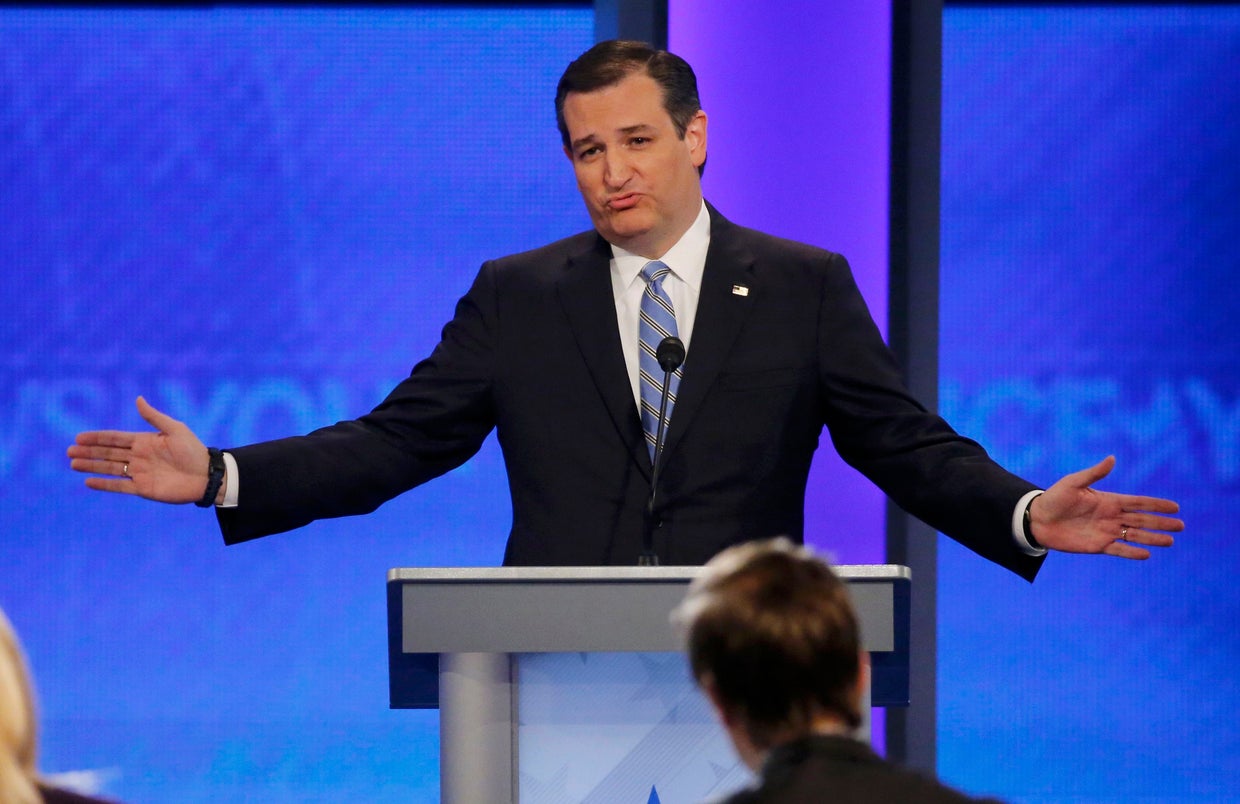
Senator Ted Cruz of Texas emerged as Trump’s most formidable challenger in the later stages of the primary. Cruz ran a disciplined, data-driven campaign focused on strict constitutionalism and evangelical outreach. He famously won the Iowa caucuses, positioning himself as the outsider who understood the legislative process.
Senator Marco Rubio of Florida was often viewed as the "establishment's" best hope for a youthful, charismatic alternative. Rubio’s platform emphasized a neoconservative foreign policy and a traditional Republican economic agenda. However, his campaign struggled to find footing after a poor debate performance in New Hampshire and Trump’s relentless branding of him as "Little Marco."
The Governors and the "Establishment" Lane
Former Florida Governor Jeb Bush entered the race with a massive fundraising advantage and significant name recognition. Despite his pedigree, Bush struggled to adapt to the populist energy of the 2016 cycle. His "Right to Rise" Super PAC spent heavily, but his moderate stance on immigration and his ties to the traditional GOP structure became liabilities in a year that favored disruption.
Other notable governors included:
- John Kasich (Ohio): The last candidate to stay in the race against Trump, Kasich positioned himself as a compassionate conservative and a pragmatic governor who could win a general election.
- Chris Christie (New Jersey): Known for his blunt style, Christie’s campaign failed to gain traction after the "Bridgegate" scandal and a disappointing finish in New Hampshire.
- Scott Walker (Wisconsin): Once considered a frontrunner due to his battles with labor unions, Walker was one of the first high-profile candidates to drop out due to lack of funds and polling momentum.
The Democratic Primary Field: A Clash of Ideologies
While the Republican field was crowded, the Democratic primary was a more focused, yet equally intense, battle between the party’s established leadership and its burgeoning progressive wing.
Hillary Clinton: The History-Maker
Hillary Clinton, the former Secretary of State, U.S. Senator, and First Lady, entered the race as the presumptive nominee. Her platform was built on "incremental progress," focusing on building upon the Affordable Care Act and maintaining a steady hand in foreign policy. She faced scrutiny over her use of a private email server during her time at the State Department, an issue that persisted throughout the campaign. Clinton’s candidacy was historic as she became the first woman to be nominated for president by a major U.S. political party.
Bernie Sanders: The Political Revolution
Senator Bernie Sanders, an independent from Vermont who identified as a democratic socialist, provided a surprisingly strong challenge to Clinton. Running on a platform of "a political revolution," Sanders advocated for Medicare for All, tuition-free public college, and a $15 minimum wage. His campaign was notable for its reliance on small-dollar donations, proving that a candidate could remain competitive without traditional Super PAC support. Sanders won 22 states and significant support among younger voters, shifting the Democratic platform further to the left on economic issues.
Other Democratic Contenders
- Martin O'Malley: The former Governor of Maryland ran as a progressive alternative but struggled to gain double-digit polling numbers in a race dominated by the Clinton-Sanders rivalry.
- Jim Webb and Lincoln Chafee: Both candidates participated in the early debates but withdrew shortly thereafter, as they were unable to build a national following.
Third-Party and Independent Candidates
The 2016 election also saw a notable surge in interest for third-party candidates, as many voters expressed dissatisfaction with both Trump and Clinton.
- Gary Johnson (Libertarian Party): The former Governor of New Mexico ran with former Massachusetts Governor Bill Weld. They advocated for fiscal conservatism and social liberalism. Johnson ultimately received about 3.3% of the popular vote, the highest for a Libertarian in history.
- Jill Stein (Green Party): Running on a "Green New Deal" platform, Stein appealed to disenfranchised Sanders supporters. She focused on climate change, student debt cancellation, and non-interventionist foreign policy.
- Evan McMullin (Independent): A former CIA officer, McMullin entered the race late as a "Never Trump" conservative alternative, focusing his efforts primarily on Utah.
Comparison of Major 2016 Candidates
The following table outlines the key figures who had the most significant impact on the 2016 electoral landscape.
| Candidate | Party | Key Platform Pillar | Exit/Result |
|---|---|---|---|
| Donald Trump | Republican | America First / Border Security | President-Elect |
| Hillary Clinton | Democratic | Continuity / Social Progress | General Election Loss |
| Bernie Sanders | Democratic | Income Inequality / Healthcare | Withdrew July 2016 |
| Ted Cruz | Republican | Constitutional Conservatism | Withdrew May 2016 |
| John Kasich | Republican | Pragmatic Governance | Withdrew May 2016 |
| Marco Rubio | Republican | New American Century | Withdrew March 2016 |
| Gary Johnson | Libertarian | Minimal Government | 4.5 Million Votes |
| Jill Stein | Green | Environmental Justice | 1.4 Million Votes |
Key Issues Defining the 2016 Cycle
The candidates were forced to address a specific set of national anxieties that differed significantly from previous cycles.
Trade and Globalization
For the first time in decades, both the Democratic runner-up and the Republican nominee voiced strong opposition to free-trade agreements. Donald Trump’s attacks on the Trans-Pacific Partnership (TPP) and NAFTA forced Hillary Clinton to move away from her previous support of the TPP. This shift reflected a growing discontent in the "Rust Belt" states over the loss of manufacturing jobs.
Immigration and National Security
Immigration was the cornerstone of the Republican primary. Trump’s proposal to build a wall on the U.S.-Mexico border and his calls for a "Muslim ban" (later framed as extreme vetting) dominated the conversation. In contrast, Democratic candidates focused on comprehensive immigration reform and a path to citizenship for "Dreamers" under the DACA program.
Economic Inequality
Bernie Sanders successfully framed the primary around the "1% versus the 99%." This rhetoric forced the Democratic Party to adopt more aggressive stances on banking regulation and wealth redistribution. On the Republican side, the focus remained on tax cuts and deregulation, though Trump added a populist layer by promising to protect Social Security and Medicare, unlike his more traditional GOP rivals.
The Role of the Primary Process and Superdelegates
The 2016 campaign highlighted the internal mechanics of how parties select their nominees. On the Democratic side, the use of superdelegates—party officials and leaders who can vote for any candidate—became a major point of contention for Sanders supporters, who felt the system was "rigged" in favor of Clinton.
On the Republican side, the winner-take-all allocation of delegates in several large states allowed Donald Trump to build an insurmountable lead even when he was not winning a majority of the popular vote in those states. This demonstrated how candidate strategy must align with the specific technical rules of the RNC and DNC.
Analysis of Candidate Strategy and Demographics
The candidates' success was largely tied to their ability to appeal to specific demographic segments.
- Trump: Effectively mobilized white, working-class voters without college degrees, particularly in the Midwest.
- Clinton: Maintained strong support among African American and Hispanic voters, as well as suburban college-educated women.
- Sanders: Dominated the youth vote (under 30), often outpolling Clinton and Trump combined in that demographic during the primaries.
The 2016 cycle also saw the increased professionalization of social media as a campaign tool. While traditional TV advertising remained the largest expenditure, the Trump campaign’s use of organic social media reach and the Clinton campaign’s sophisticated data analytics (which famously missed the shift in the Upper Midwest) proved to be decisive factors in the final outcome.
Frequently Asked Questions
Who were the final two candidates in the 2016 election?
The final major candidates were Donald Trump for the Republican Party and Hillary Clinton for the Democratic Party. Donald Trump won the Electoral College with 304 votes to Clinton's 227, despite Clinton winning the popular vote by nearly 2.9 million votes.
Why were there so many Republican candidates in 2016?
The high number of Republican candidates was due to the lack of a clear "heir apparent" after Mitt Romney’s 2012 loss, a perceived weakness in the Democratic field, and the rise of the Tea Party movement, which encouraged various ideological factions to field their own champions.
What happened to Bernie Sanders after the 2016 primary?
After a hard-fought primary, Bernie Sanders endorsed Hillary Clinton at the Democratic National Convention in Philadelphia. He returned to the Senate and subsequently ran for president again in 2020, where his 2016 platform became the baseline for many other Democratic contenders.
How did third-party candidates affect the 2016 outcome?
The impact of third-party candidates remains a subject of intense debate. In several "swing states" like Michigan, Wisconsin, and Pennsylvania, the number of votes cast for Jill Stein or Gary Johnson exceeded the margin of victory between Trump and Clinton, leading some analysts to suggest they acted as "spoilers."
What were the requirements to run for president in 2016?
To be a candidate, one must be a natural-born citizen of the United States, at least 35 years old, and a resident of the U.S. for at least 14 years. Beyond these constitutional requirements, candidates must navigate state-specific ballot access laws and FEC filing requirements.
Did any independent candidates win electoral votes in 2016?
No independent or third-party candidate won an entire state's electoral votes. However, 2016 saw a record number of "faithless electors" during the formal Electoral College meeting, where some electors cast votes for individuals like Colin Powell and Faith Spotted Eagle instead of the candidates they were pledged to.
Practical Guidance for Researching Past Elections
For those looking to study the 2016 campaign in greater detail, it is essential to utilize primary sources rather than just retrospective commentary. The Federal Election Commission (FEC) provides comprehensive data on campaign finance, showing how much each candidate raised and spent. Additionally, the Pew Research Center offers exhaustive demographic breakdowns of the 2016 electorate, which are vital for understanding why certain candidates succeeded in specific regions.
When analyzing this cycle, focus on the "pivotal" primary dates—such as Super Tuesday—to see how the field narrowed. Understanding the transition from a crowded field of 17 to a final nominee provides the best insight into the shifting priorities of the American voter during that decade.