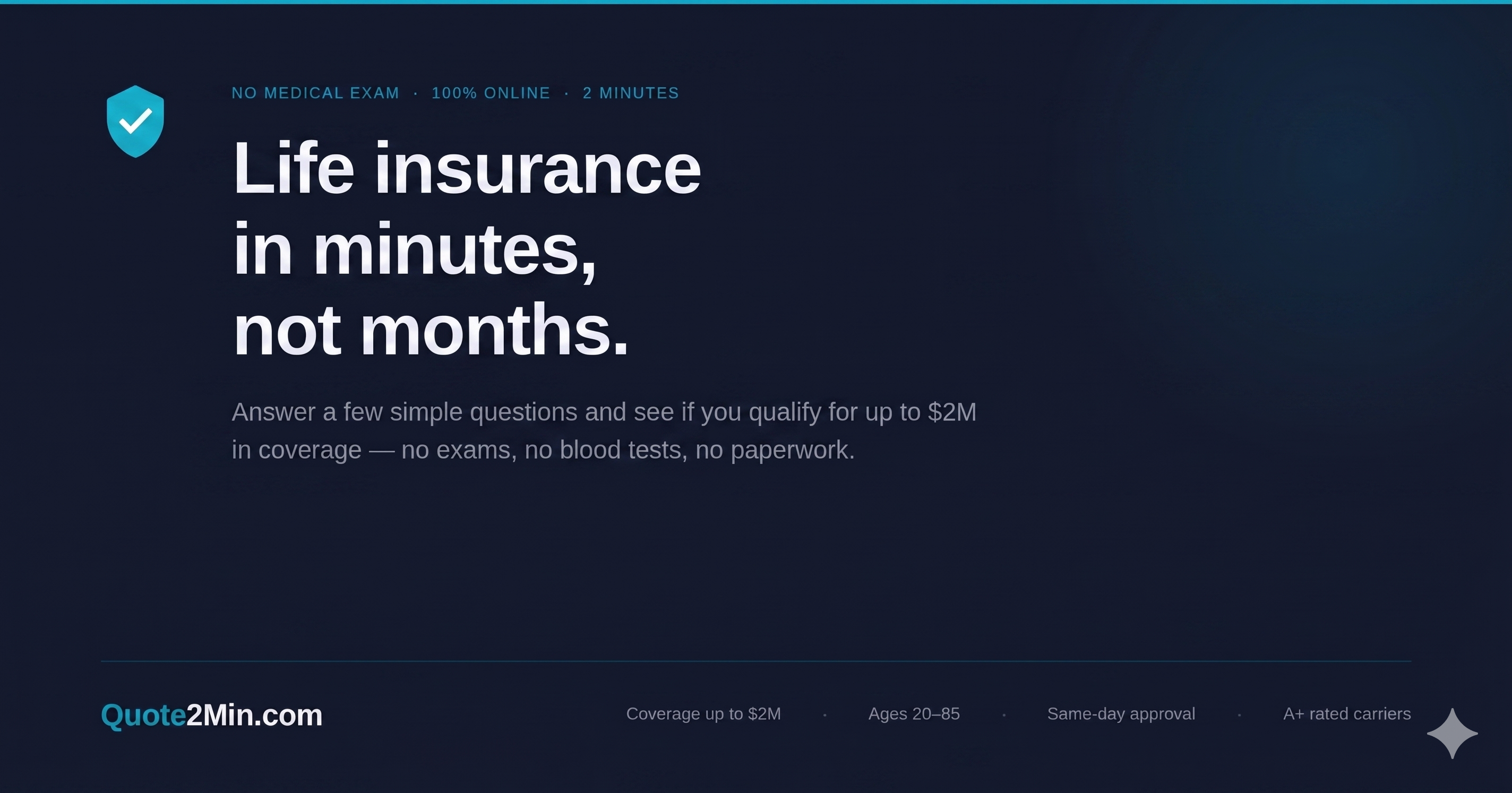
Whether a no medical exam life insurance policy is worth it depends entirely on the trade-off between the speed of securing coverage and the higher cost associated with the reduced underwriting scrutiny. For individuals with manageable health conditions, those in a hurry to secure a loan requirement, or applicants who simply dislike invasive paramedical exams, these policies provide essential utility. However, for healthy individuals who can qualify for traditional coverage, these plans often represent a more expensive, less efficient long-term financial vehicle.
Understanding No Medical Exam Life Insurance
No medical exam life insurance—often marketed as "simplified issue" or "guaranteed issue"—is a category of coverage that allows an applicant to bypass the traditional underwriting process. In a conventional life insurance application, the insurer requires a paramedical exam, which typically includes blood work, urine samples, and a physical assessment to determine your health profile.
When you opt for a no-exam policy, the insurer forfeits this diagnostic data. Instead, they rely on your answers to health questionnaires, your Medical Information Bureau (MIB) report, and sometimes your prescription drug history database. Because the insurer is taking on more "unknown" risk by not performing a physical exam, they compensate by charging higher premiums for the same amount of death benefit compared to a fully underwritten policy.
The Different Types of No-Exam Policies
It is a common misconception that all "no exam" policies are the same. In reality, they generally fall into three distinct buckets, each serving a different purpose and carrying different financial implications:
- Simplified Issue Term Life: This is the most common form of "fast" insurance. You complete a health questionnaire and undergo an automated background check. If you pass, coverage can often be approved within 24 to 48 hours. These policies usually offer lower death benefits than traditional plans, but they are significantly more robust than guaranteed issue options.
- Guaranteed Issue Life Insurance: This is a "no-questions-asked" policy. There is no health underwriting of any kind. These are designed primarily for individuals who have been turned down by other insurers due to serious pre-existing conditions. These policies almost always come with a "graded death benefit," meaning if you pass away from natural causes within the first two or three years, the beneficiary receives only the premiums paid plus interest, rather than the full face value.
- Accelerated Underwriting: Many major insurance carriers in 2026 now use "accelerated" underwriting. This is a hybrid approach where the insurer pulls your electronic health records and public data to make a decision. If their algorithm deems you a low-risk applicant, they waive the medical exam. If they find red flags, they may still request an exam.
When No Medical Exam Policies Are Worth It
The "worth" of these policies is not measured solely in dollars, but in the specific utility provided to the policyholder. You should consider these policies a net positive if you fall into one of the following categories:
- Urgency: If you require insurance for a specific business requirement, such as a "key person" insurance policy requested by a bank to secure a commercial loan, the speed of a no-exam policy can prevent a business deal from stalling.
- Needle Phobia or Medical Anxiety: For individuals whose blood pressure spikes during medical visits or who have an intense aversion to needles, the stress of a paramedical exam is not merely an inconvenience—it is a deterrent to getting insured at all.
- Time Constraints: Busy professionals who struggle to coordinate a time for a paramedical examiner to visit their home or office may find the simplified application process a more practical alternative.
- Health Uncertainty: If you have minor, well-managed health issues that you fear might lead to a "rating" (a surcharge) on a traditional policy, a simplified issue policy may offer a more predictable pricing structure.
The Financial Downside: Why They May Not Be Worth It
For a healthy individual, the long-term financial cost of skipping the medical exam is often substantial.
Premiums vs. Coverage: Because the insurer does not know your exact health status, they must price the policy based on the assumption that you might have hidden risks. This is known as "adverse selection." To offset this, they build a risk premium into your monthly costs. Over a 20- or 30-year term, these higher premiums can result in thousands of dollars of excess cost compared to a policy obtained through standard underwriting.
Coverage Caps: No-exam policies often have a maximum face value. If you are looking for a million-dollar death benefit to protect a mortgage and your family's long-term standard of living, you will likely find that simplified issue policies either do not offer these limits or charge prohibitively high premiums to get there.
Comparison of Life Insurance Pathways
| Feature | Fully Underwritten | Simplified Issue | Guaranteed Issue |
|---|---|---|---|
| Medical Exam | Required | No | No |
| Approval Speed | Weeks | Days | Minutes/Hours |
| Cost | Lowest | Moderate | Highest |
| Health Eligibility | High | Moderate | Guaranteed |
| Max Coverage | High (Unlimited) | Medium | Low |
Practical Considerations for Applicants
If you are currently evaluating your options, follow this systematic approach to determine if you can "get away" with skipping the exam without paying a permanent financial penalty:
- Check for Accelerated Underwriting: Before looking at "no-exam" products, check with high-tier carriers that offer accelerated underwriting. You get the benefit of a digital, fast-tracked process without the penalty of higher premiums.
- Evaluate the "Why": If you are only skipping the exam because you think you are "too healthy" to bother with it, reconsider. The medical exam is how you prove your excellence to the insurer. By taking the exam, you qualify for "Preferred" or "Super Preferred" rate classes, which can save you significant money over the life of the policy.
- Read the Graded Benefit Clause: If you are looking at Guaranteed Issue plans, look closely at the "graded" period. Know exactly what your beneficiary receives if you pass away in year one, two, or three.
- Confirm the Term Length: Ensure that the policy you choose matches your actual need. If you are buying a 20-year term, make sure the premium is locked in for that duration, as some no-exam policies have "step" premiums that increase as you age.
Common Misconceptions
A pervasive myth is that "no medical exam" means "no health review." In reality, your health history is rarely a complete mystery. Insurers use sophisticated data analytics in 2026 to verify your prescriptions, your history of hospitalizations, and even your driving record. Attempting to hide a chronic condition on a simplified issue application is likely to result in a claim denial during the contestability period—usually the first two years of the policy.
Frequently Asked Questions
Are no medical exam policies more expensive? Yes, generally. Since the insurer cannot verify your exact health status, they must charge a higher premium to account for the potential of insuring someone with underlying, undisclosed health risks.
Will I be denied if I have a health condition and choose a no-exam policy? It depends on the policy type. If you choose a "Simplified Issue" policy, you still must answer health questions. If your condition is chronic or severe, you can still be denied. If you choose "Guaranteed Issue," you cannot be denied based on health, but the coverage amounts are much lower.
Is it faster to get a no-exam policy in 2026? Yes, but the gap is closing. While a traditional policy can take 4–6 weeks, accelerated underwriting programs can often grant coverage in days. A truly "instant" no-exam policy is usually only available for smaller death benefit amounts.
What is the "Contestability Period"? This is a standard period, typically two years, during which an insurance company can investigate a claim. If it is discovered that you provided false information on your application, they can deny the claim and refund the premiums.
Can I convert a no-exam policy to a permanent policy? It depends on the specific contract. Many term policies offer a "conversion option." Always verify if this is included, as it allows you to switch to permanent coverage later without further medical proof, even if your health declines.
Final Recommendation
The decision to pursue a no-exam policy should be driven by necessity rather than convenience. If you are in good health and have the time to complete a 30-minute paramedical exam, it is almost always more cost-effective to seek a fully underwritten or accelerated underwriting policy. The "Preferred" rates you can secure by proving your health will result in lower premiums and higher potential death benefits. Reserve no-exam options for those instances where speed is critical, or your medical history makes traditional qualification impossible. Before signing any contract, request a "specimen policy" to understand the exclusions, the premium structure, and the exact process for your beneficiaries to file a claim.