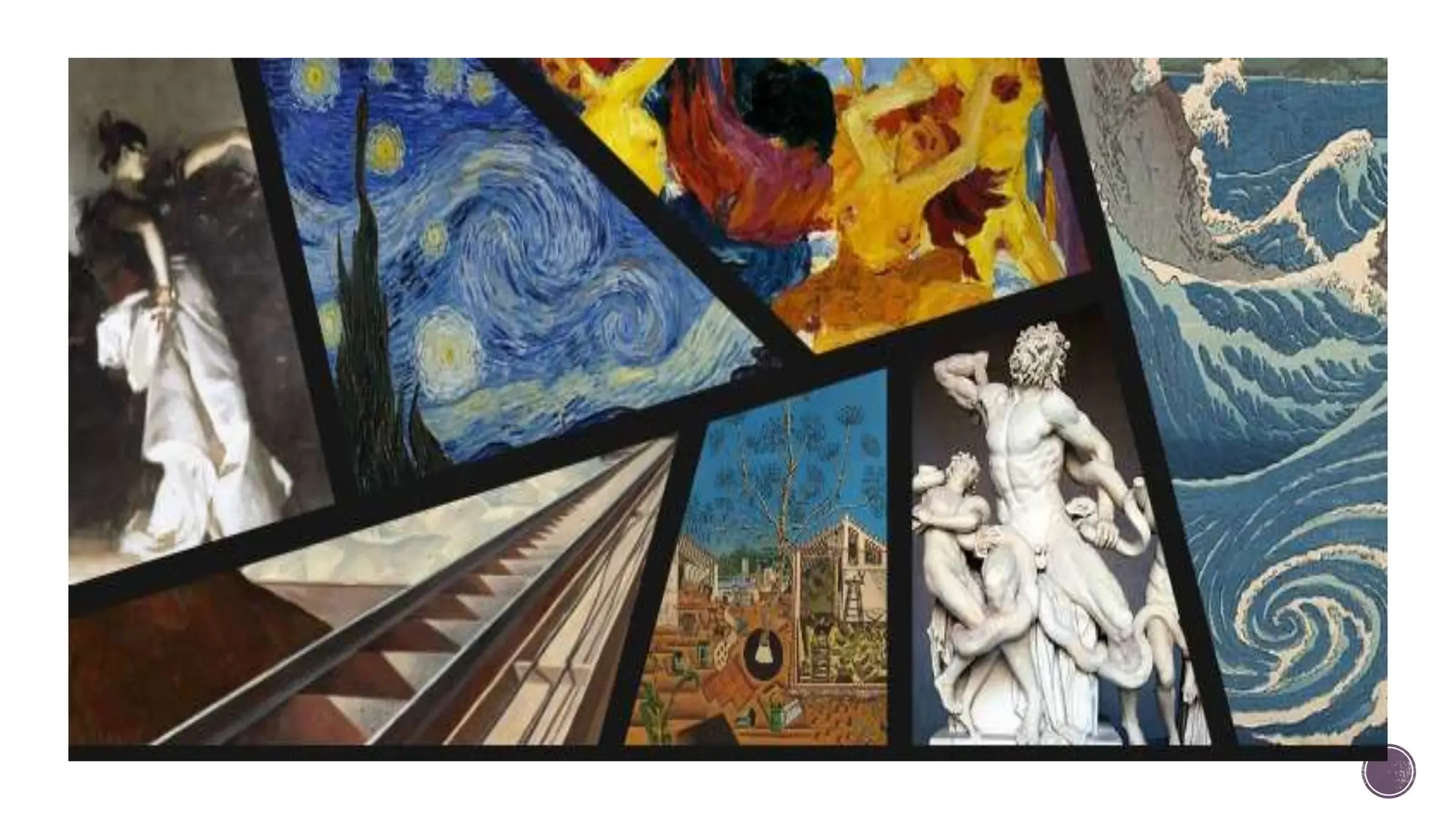
Artistic expression is an expansive landscape defined by centuries of cultural evolution, technical innovation, and shifting philosophies. A list of different styles of art helps observers categorize works based on their visual characteristics, historical context, and the underlying intent of the artist. Understanding these styles requires examining how form, color, composition, and subject matter interact to convey meaning, providing a framework for both art appreciation and creative practice.
The Foundation of Artistic Classification
Defining art styles is an iterative process. Historically, movements emerged as reactions to preceding standards or as reflections of societal changes. When examining the broad spectrum of art history, styles are generally grouped by their chronological origin, their focus on realism versus abstraction, or the specific materials and methods employed.
For the purpose of this guide, we will focus on major, distinct styles that remain pillars of art history and contemporary appreciation. These categories assist in identifying the technical DNA of a piece—whether it seeks to mimic the physical world, explore the subconscious, or challenge the very definition of aesthetic beauty.
Realism and Representational Art
Realism is arguably the most recognizable style for the general audience. Its core tenet is the accurate, unembellished depiction of life as it is observed.
- Classical Realism: This style emphasizes the mastery of light, shadow, and anatomy to create an illusion of three-dimensionality. Artists working in this tradition, such as those from the Renaissance, aimed for high fidelity to nature.
- Photorealism: Emerging in the mid-20th century, this style takes realism to its logical extreme. Photorealist painters work from photographs to reproduce images with such precision that the final painting appears indistinguishable from a camera capture. The focus is on the technical ability to replicate textures, reflections, and minute details that the human eye might overlook.
The primary requirement for success in these styles is disciplined observation. Artists must understand light physics—how it bounces, absorbs, and defines edges—to successfully render reality on a flat surface.
Impressionism: The Shift to Perception
Impressionism, which gained prominence in the late 19th century, represents a fundamental departure from the rigid standards of the past. Rather than focusing on the sharp, photographic detail of a subject, Impressionists sought to capture the "impression" of a scene.
- Key Characteristics: Impressionist paintings are characterized by short, visible brushstrokes that capture the essence of movement and changing light conditions.
- The Focus: The interest lies in the transient quality of nature. By using unmixed primary colors and placing them side-by-side on the canvas, the artist allows the viewer’s eye to mix the colors optically.
This style requires the artist to prioritize the "feeling" of the light and atmosphere over the structural integrity of the objects themselves. It remains a foundational lesson for students of light and color theory.
Abstract and Non-Objective Art
Abstract art does not attempt to accurately depict physical reality. Instead, it uses shapes, colors, forms, and gestural marks to achieve its effect.
- Abstract Expressionism: This style is defined by spontaneous, automatic, or subconscious creation. The act of painting becomes as important as the finished work, with large canvases and energetic brushwork.
- Minimalism: At the other end of the spectrum, Minimalism strips art down to its most fundamental features. It rejects the personal touch of the artist in favor of geometric shapes, neutral color palettes, and industrial materials.
The complexity of abstract art often stems from its lack of a clear subject. Viewers are invited to interpret the work through their own emotional response, making it a highly subjective experience that contrasts sharply with the objective nature of realism.
Comparison of Key Art Styles
| Style | Primary Goal | Technical Focus | Dominant Era |
|---|---|---|---|
| Realism | Accurate depiction | Anatomy, Light, Perspective | 19th Century |
| Impressionism | Capture atmosphere | Light, Color, Brushwork | Late 19th Century |
| Expressionism | Evoke emotion | Distorted forms, Bold colors | Early 20th Century |
| Minimalism | Objectivity | Geometry, Simplicity | Mid-20th Century |
| Surrealism | Unlock the subconscious | Dream logic, Juxtaposition | Early-Mid 20th Century |
Expressionism: The Emotional Internalization
Expressionism emerged as a deliberate distortion of reality to express a subjective emotional experience. Unlike Impressionism, which looks outward at the light, Expressionism looks inward.
Artists in this movement often used intense, jarring colors and exaggerated forms to create a sense of anxiety, joy, or alienation. The style does not ask, "What does this look like?" but rather, "How does this make me feel?" The technical skill here involves the deliberate rejection of traditional beauty standards to achieve a more profound psychological truth.
Surrealism: The Logic of Dreams
Surrealism sought to release the creative potential of the unconscious mind. Heavily influenced by the psychoanalytic theories of the early 20th century, Surrealists created irrational, dream-like scenes.
- Technical Juxtaposition: Surrealist works often feature high-detail, realistic painting techniques used to depict impossible scenarios. The contrast between the hyper-realistic rendering and the bizarre subject matter creates a cognitive dissonance that is central to the style.
- Automatic Drawing: Many Surrealists employed techniques to bypass rational control, allowing the hand to move randomly across the page to tap into the subconscious.
Modern and Contemporary Trends
As we look at the landscape of 2026, the boundaries between these traditional styles have become increasingly porous. Contemporary art frequently blends multiple styles to create new hybrid forms.
- Digital Art: While often treated as a medium, digital art allows for the synthesis of all previous styles. A digital artist can combine the brushwork of Impressionism with the geometry of Minimalism in a single project.
- Conceptual Art: In this approach, the idea or the concept behind the work is more important than the finished product. The "style" is secondary to the message, which can take the form of installations, performances, or text-based works.
- Neo-Expressionism: This movement revived the intense, emotive style of early Expressionism, incorporating it into contemporary critiques of culture and identity.
Common Questions About Art Styles
How do I identify the style of a piece of art? Start by looking for the "how" rather than the "what." Observe the brushwork—is it smooth or thick? Look at the color palette—is it realistic or unnatural? Finally, consider the intent. Is the artist trying to document a scene, express a feeling, or challenge a concept? Identifying these three elements usually points toward the dominant style.
Can an artist work in more than one style? Yes, and many do. Most professional artists spend their early careers exploring various styles before settling into a "signature" look. However, the foundational skills—such as understanding composition and balance—are universal across all styles.
What is the difference between style and movement? A style refers to the visual characteristics and technical execution of an artwork. A movement is a historical grouping of artists who shared similar philosophies, goals, or geographic locations during a specific time. For example, "Impressionism" is a movement, while "loose brushwork" is a style.
Does knowing the style change the value of the art? In the commercial market, value is driven more by provenance, scarcity, and the artist's reputation than by the style itself. However, certain styles may have higher demand depending on prevailing collector trends.
Why is Abstract art sometimes considered harder to understand than Realism? Abstract art removes the "crutch" of recognizable subject matter. When a viewer cannot identify a tree or a person, they are forced to engage with the elements of design directly. This can feel challenging because it lacks an immediate, logical entry point for the untrained eye.
Practical Steps for Further Exploration
If you are looking to deepen your understanding of these styles, consider the following approach:
- Visit Primary Sources: Spend time in physical galleries or digital archives managed by reputable institutions. Seeing works in their original scale provides a sense of technical effort that small images cannot replicate.
- Practice Active Observation: Choose a single style and spend 10 minutes observing a work. Ask yourself: "What decisions did the artist make regarding the lighting, the color, and the edges of the objects?"
- Contextualize with History: Read about the era in which a specific style was born. Often, political upheaval, technological advancement, or changes in social status dictated why artists moved away from one style and toward another.
By breaking down art into its constituent styles, you move from a passive viewer to an informed participant in the ongoing dialogue of human creativity. Whether you are seeking to create art or simply appreciate it, this analytical framework provides the tools necessary to navigate the vast history of visual expression.