Financial options are derivative contracts that grant the holder the right, but not the legal obligation, to buy or sell an underlying asset at a predetermined price within a specific timeframe. A common example is a "Call Option" on a stock, which allows an investor to profit from a price increase while limiting their potential loss to the initial cost of the option.
Disclaimer: This article is for informational purposes only and does not constitute professional financial, investment, or legal advice. Trading options involves significant risk and is not suitable for all investors. As of 2026, market volatility and regulatory requirements remain primary considerations for any participant in derivative markets.
The Fundamentals of Options Contracts
To understand an example of options in finance, one must first grasp the structure of the contract. Options belong to a broader category of assets known as derivatives, so named because their value is "derived" from an underlying asset, such as a stock, bond, commodity, or currency.
There are two primary types of options:
- Call Options: These give the holder the right to buy an asset. Investors typically buy calls when they anticipate the price of the underlying asset will rise.
- Put Options: These give the holder the right to sell an asset. Investors typically buy puts when they anticipate the price of the underlying asset will fall.
Every option contract is defined by four critical components: the underlying asset, the strike price (the price at which the asset can be bought or sold), the expiration date (the deadline for exercising the right), and the premium (the price paid to purchase the contract). In the United States, a standard equity option contract represents 100 shares of the underlying stock.
A Practical Example: The "Call Option" Scenario
Let us examine a concrete example of a call option in the 2026 equity market. Imagine a hypothetical company, Quantum Dynamics (ticker: QDYN). As of mid-2026, Quantum Dynamics is trading at $150 per share.
An investor believes that Quantum Dynamics will release a revolutionary software update in the next two months, which could drive the stock price significantly higher. However, the investor does not want to commit $15,000 to buy 100 shares outright. Instead, they turn to the options market.
The Setup
The investor buys one Call Option with the following specifications:
- Underlying Asset: Quantum Dynamics (QDYN)
- Strike Price: $155
- Expiration Date: Three months from today
- Premium: $5.00 per share (Total cost: $500, since one contract covers 100 shares)
By paying the $500 premium, the investor now controls 100 shares of QDYN until the expiration date. They have the right to buy those shares for $155, regardless of how high the market price goes.
Potential Outcome A: The Bullish Success
Two months later, Quantum Dynamics releases its update, and the market reacts enthusiastically. The stock price climbs to $180 per share.
The investor decides to exercise their option. They buy 100 shares at the strike price of $155 (total cost $15,500) and could immediately sell them at the market price of $180 (total value $18,000).
- Gross Profit: $18,000 - $15,500 = $2,500
- Net Profit: $2,500 (Gross Profit) - $500 (Premium Paid) = $2,000
In this scenario, the investor turned a $500 investment into a $2,000 profit, representing a 400% return. If they had bought the stock outright at $150, their $15,000 investment would be worth $18,000, a 20% return. This demonstrates the leverage inherent in options.
Potential Outcome B: The Unfavorable Market
Conversely, if the software update is delayed and the stock price drops to $140 per share by the expiration date, the option becomes "out of the money." Since no one would want to use an option to buy a stock for $155 when it is available on the open market for $140, the option expires worthless.
- Total Loss: The investor loses the $500 premium paid at the start.
- Risk Mitigation: Unlike a direct stock purchase, where a $10 drop in price on 100 shares would result in a $1,000 unrealized loss, the option holder's loss is capped strictly at the premium paid.
Detailed Comparison: Calls vs. Puts
To further clarify how options function, the following table compares the two primary types of contracts from the perspective of the buyer.
| Feature | Call Option (Buy) | Put Option (Buy) |
|---|---|---|
| Market Sentiment | Bullish (Expecting price to rise) | Bearish (Expecting price to fall) |
| Right Granted | Right to BUY the asset | Right to SELL the asset |
| Strike Price Goal | Want market price > strike price | Want market price < strike price |
| Maximum Risk | Limited to the premium paid | Limited to the premium paid |
| Maximum Reward | Theoretically unlimited (as stock rises) | Substantial (until stock hits zero) |
| Impact of Time | Value decreases as expiration nears | Value decreases as expiration nears |
Critical Terminology and Mechanics
To navigate the options market in 2026, an investor must understand the technical nuances that influence pricing and execution.
Intrinsic and Extrinsic Value
The price of an option (the premium) is composed of two parts. Intrinsic value is the amount the option is "in the money." For a call with a $155 strike price when the stock is at $160, the intrinsic value is $5. Extrinsic value (or time value) represents the "what if" factor—the premium buyers are willing to pay for the possibility that the stock will move further before expiration. As the expiration date approaches, extrinsic value decays, a process known as time decay.
The Role of "The Greeks"
Professional traders use mathematical measurements known as "The Greeks" to assess risk:
- Delta: Measures how much the option price is expected to change per $1 move in the underlying stock.
- Theta: Measures the rate of time decay. It tells you how much value the option loses every day as it gets closer to expiration.
- Vega: Measures sensitivity to volatility. If the market becomes more turbulent, Vega usually causes premiums to rise.
- Gamma: Measures the rate of change in Delta, providing insight into the stability of the option’s price movement.
Assignment and Exercise
When an option holder chooses to use their right, it is called exercising. The person who sold (wrote) the option is then assigned the obligation to fulfill the contract. In 2026, most retail traders do not actually exercise their options to take delivery of the stock; instead, they "sell to close" the position to lock in a profit or minimize a loss before the expiration date.
Strategic Uses of Options in Finance
Options are not merely for gambling on stock moves; they serve vital functions in sophisticated portfolio management.
1. Hedging (Protective Puts)
An investor who owns 1,000 shares of a stable blue-chip stock might fear a temporary market downturn. By purchasing put options, they effectively buy "insurance." If the stock price crashes, the gains on the put options offset the losses on the physical shares. This is a hallmark of risk management for institutional funds.
2. Income Generation (Covered Calls)
As of 2026, income-focused strategies remain popular in low-yield environments. An investor who owns a stock can "write" (sell) a call option against it. They collect the premium immediately. If the stock stays below the strike price, they keep the premium and the stock. If the stock rises above the strike, they are forced to sell their shares at the strike price but still keep the premium.
3. Speculation
Because options require less capital than buying the underlying asset, they allow traders to take larger positions on market directions. While this offers high potential rewards, it also carries a high probability of the total loss of the premium.
Operational Requirements and Market Access
Trading options requires more than a standard brokerage account. Because of the complexity and risk, financial institutions and regulators like the Securities and Exchange Commission (SEC) and FINRA require brokers to perform "due diligence" on their clients.
Brokerage Approval Levels
In 2026, most platforms use a tiered system for options access:
- Level 1: Covered calls and protective puts (the most conservative strategies).
- Level 2: Buying basic calls and puts.
- Level 3: Spreads (buying and selling multiple options simultaneously).
- Level 4/5: Uncovered (naked) writing, which carries theoretically unlimited risk.
Investors must typically provide information regarding their net worth, annual income, and previous investment experience before being granted high-level access. You can find detailed investor education resources on the SEC's Investor.gov website.
Settlement and Fees
Following the transition to T+1 settlement for most securities in mid-2024, options trades in 2026 generally settle one business day after the trade is executed. While many retail brokers offer "zero-commission" trades on stocks, options often still carry a per-contract fee (typically ranging from $0.50 to $0.65 per contract).
Common Mistakes and Risks to Consider
While the Quantum Dynamics example illustrates the upside, the majority of retail options expire worthless. Beginners often fail due to several recurring errors:
- Ignoring Volatility: Buying options when "Implied Volatility" is high means you are paying a massive "inflated" premium. If volatility drops, the option price can fall even if the stock price stays the same (known as a "volatility crush").
- Over-leveraging: Because options are cheaper than stocks, it is tempting to use all available cash to buy many contracts. A single bad move can wipe out an entire account.
- Holding to Expiration: Many traders wait too long, hoping for a miracle, and watch as Theta (time decay) erodes their remaining value in the final days of the contract.
- Lack of Liquidity: Some obscure stocks have "wide spreads" between the bid and ask price. An investor might buy an option for $2.00 but find that the highest buyer is only offering $1.50, resulting in an immediate 25% loss upon entry.
The Options Clearing Corporation (OCC) provides extensive data on market liquidity and contract specifications, which is essential for verifying the "tradeability" of a specific option. You can research these metrics at theocc.com.
Frequently Asked Questions
What happens if I don't do anything with my option on the expiration date?
If the option is "in the money" by as little as $0.01, most modern brokerage systems will automatically exercise it for you in 2026. This means they will buy or sell the underlying shares on your behalf. If you do not have the cash or margin available to support that stock position, the broker may close the position early or issue a margin call.
Can I lose more than I invest when buying options?
If you are strictly a buyer of calls or puts, your risk is limited to the premium you paid. However, if you are a seller (writer) of options without owning the underlying asset (naked options), your potential loss can be much higher than the premium you received—theoretically infinite in the case of naked calls.
How are options taxed?
In the United States, options are generally taxed as capital gains. If you hold an option for less than a year (which is most cases), it is treated as a short-term capital gain or loss, taxed at your ordinary income rate. Specific strategies like "Section 1256 contracts" (index options) may have different tax treatments, often referred to as the 60/40 rule.
What is the difference between American and European options?
This refers to when the option can be exercised. American options can be exercised at any time before the expiration date. European options (common with index options) can only be exercised on the expiration date itself. Most stock options traded on major US exchanges are American style.
Why does the value of my option go down even when the stock goes up?
This usually happens because of Theta or Vega. If the stock moves up slowly, but the expiration date is approaching quickly, the loss of "time value" can outweigh the gain from the price move. Similarly, if the market's expectation of future volatility drops, the premium can shrink regardless of the stock's direction.
Practical Recommendation for 2026 Investors
Before entering the options market, it is vital to build a foundation in the underlying assets. An example of options in finance is best used as a tool for a specific goal—whether that is hedging a portfolio against a 2026 recession or gaining leveraged exposure to a high-growth sector.
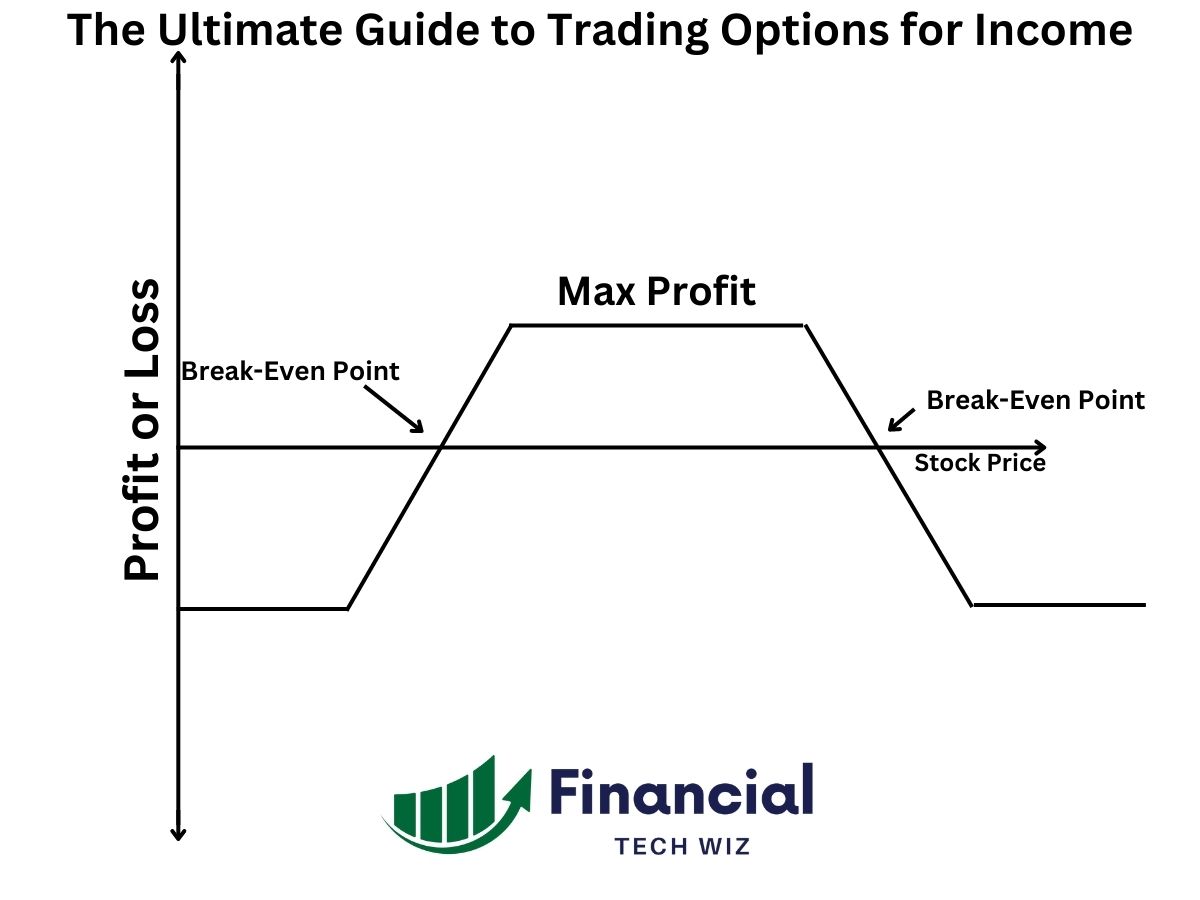
Start by using a "paper trading" simulator offered by major brokerages to practice the mechanics without risking real capital. Focus on high-volume, liquid assets like the SPDR S&P 500 ETF Trust (SPY) to ensure you can enter and exit positions easily. Finally, always calculate your "break-even" price (Strike Price + Premium Paid for calls) before entering any trade to ensure the move you are anticipating is realistic within the timeframe.