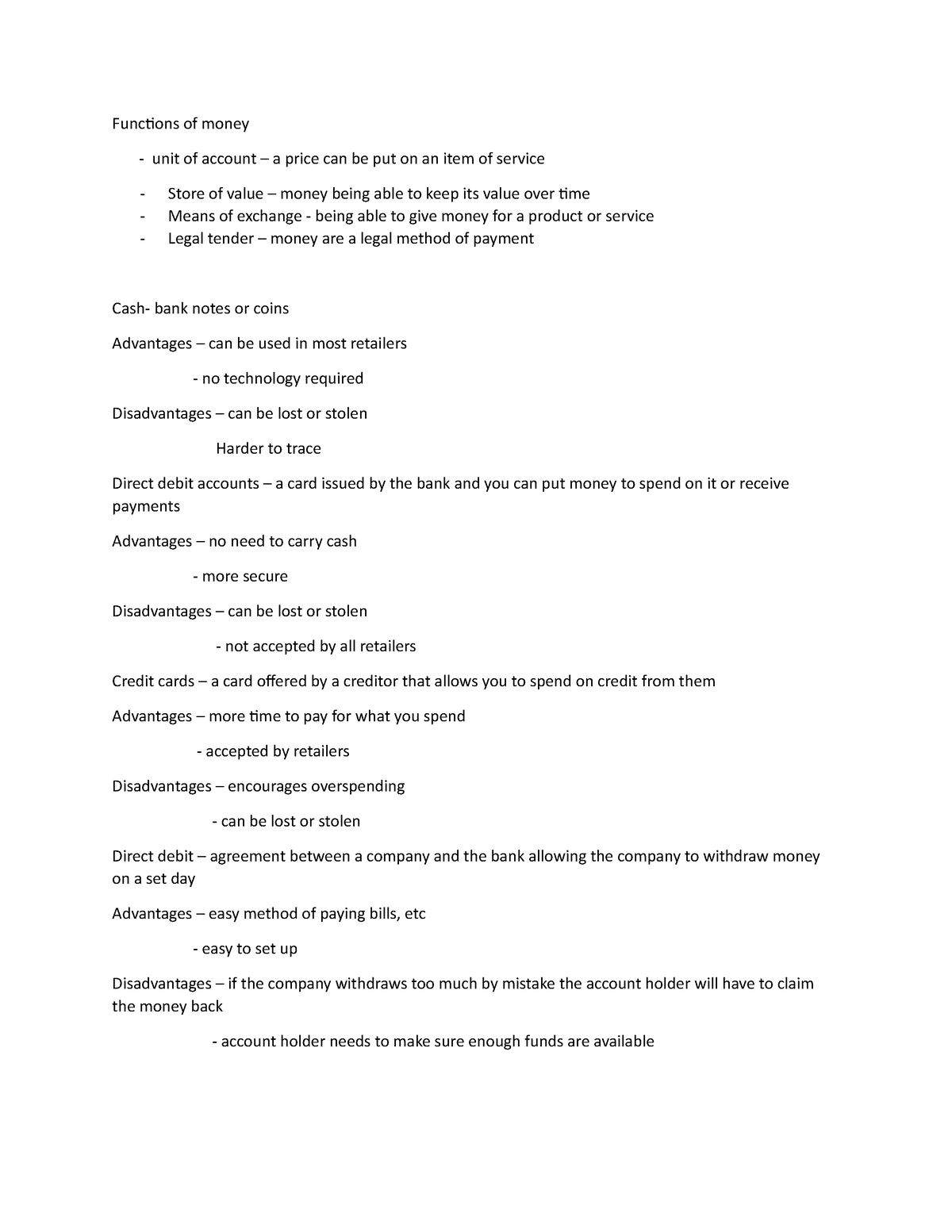
An example of a unit of account is the U.S. dollar, which serves as a standardized numerical measure to price goods, services, assets, and liabilities. By listing a gallon of milk at $4.00 and a laptop at $1,000, the dollar enables consumers and businesses to calculate relative value, record debts, and maintain accounting ledgers using a single common benchmark.
Understanding the Unit of Account Function in Economics
In classical monetary economics, money performs three core functions: it acts as a medium of exchange, a store of value, and a unit of account. While the medium of exchange function facilitates physical or digital transactions, the unit of account function provides the underlying measurement framework. It is the economic equivalent of a yardstick, a kilogram, or a liter—a standard unit that allows people to quantify and compare economic value across disparate items.
Without a standardized unit of account, an economy must rely on relative pricing between every pair of goods, a condition typical of a pure barter system. In an economy with only 10 goods, a barter market requires 45 individual exchange rates ($N(N-1)/2$) to determine the trade ratio between every possible pairing. Expand that economy to 1,000 goods, and the market requires 499,500 distinct price pairs.
Barter Pricing Formula: Relative Prices = N * (N - 1) / 2 (Where N = Number of Goods)
By introducing a single, universally accepted unit of account—such as a national currency—the number of required price points drops from hundreds of thousands to exactly $N$ (one price tag per good expressed in the monetary unit). This dramatic reduction in transaction costs and search friction is why units of account are fundamental to complex trade, commercial record-keeping, and macroeconomics.
A unit of account does not need to exist as a physical coin or banknote to function effectively. Economists frequently distinguish between "money of account" (the abstract measuring unit used in record-keeping) and "currency" (the circulating physical or digital tokens used to settle payments). Throughout history, economies have routinely separated these roles, using one standard to measure value and another to execute transactions.
Primary Examples of Units of Account
Units of account exist at various levels of the global economy, ranging from daily consumer purchasing to corporate balance sheets and international monetary institutions.
1. Sovereign Fiat Currencies
Sovereign fiat currencies are the most visible real-world examples of units of account. Governments establish legal tender laws that require tax obligations and legal judgments to be calculated in the domestic currency, establishing it as the official financial measurement system within that jurisdiction.
- The U.S. Dollar (USD): The dollar serves as the internal unit of account for the United States, where prices, wages, tax liabilities, and corporate earnings are measured in dollars and cents. Beyond domestic borders, the U.S. dollar acts as the primary international unit of account for global commodity markets, including crude oil, gold, and agricultural bulk goods.
- The Euro (EUR): The euro provides a unified unit of account across the member states of the Eurozone. Before its introduction as physical cash in 2002, the euro functioned from 1999 to 2001 strictly as an abstract unit of account for bank transfers, government bonds, and accounting ledgers across Europe.
- The Japanese Yen (JPY): The yen functions as Japan's legal unit of account. Unlike the dollar or euro, the modern yen is not subdivided into smaller fractional units (such as cents) in retail pricing, demonstrating how different cultural and inflationary histories shape unit mechanics.
2. Supranational and Synthetic Units of Account
Some units of account are explicitly created for institutional finance and balance-of-payments accounting without ever circulating as paper currency or retail bank deposits.
- IMF Special Drawing Rights (SDRs): Created by the International Monetary Fund in 1969, the SDR is an international reserve asset and pure unit of account. The value of an SDR is determined by a weighted basket of major reserve currencies (the U.S. dollar, euro, Chinese yuan, Japanese yen, and British pound). The International Monetary Fund uses the SDR as its official accounting unit to quantify member quotas, emergency loans, and financial holdings.
- European Currency Unit (ECU): Operating from 1979 until the arrival of the euro in 1999, the ECU was a basket of European Community member currencies used by internal financial mechanisms and international bond issuers as a stable measurement unit.
3. Corporate and Financial Accounting Units (Functional Currency)
In international business, corporations must select a single unit of account to prepare consolidated financial statements, evaluate profit margins, and calculate tax obligations.
- Functional Currency Under Accounting Standards: According to standard framework guidelines published by the IFRS Foundation, an entity's functional currency is the currency of the primary economic environment in which it operates. A foreign subsidiary located in Brazil that generates revenue in U.S. dollars and buys raw materials in U.S. dollars may adopt the USD as its functional unit of account, even though its local payroll is paid in Brazilian reals.
4. Historical Units of Account
Historical financial records demonstrate how economic societies often invented abstract units of account to maintain order when physical coinage was unstable or scarce.
- The Medieval Pound of Account: In medieval England and Western Europe, the "pound" ($\pounds$) was an accounting unit defined as one Troy pound of silver, divided into 20 shillings and 240 pence. For centuries, no physical "pound coin" was minted; people bought goods using various silver coins, foreign gold tokens, or credit, while merchants recorded the transactions in pounds, shillings, and pence on their ledgers.
- Ancient Mesopotamian Shekel: Long before the invention of struck coinage, ancient Mesopotamian societies used the shekel as a unit of weight and account. A shekel represented a standardized weight of barley or silver used to record debts, rent obligations, and agricultural yields in temple ledgers.
Evaluating Assets Across the Core Functions of Money
Not every financial asset or asset class fulfills the three functions of money equally. The table below illustrates how primary examples of units of account perform across measurement, exchange, and value retention functions:
| Asset / Financial Instrument | Primary Unit of Account Status | Medium of Exchange Suitability | Store of Value Stability | Primary Economic Application |
|---|---|---|---|---|
| U.S. Dollar (USD) | Universal (Global standard) | High (Immediate physical/digital liquidity) | Moderate (Subject to predictable central bank inflation) | Standard for global commodities, retail trade, and trade invoices. |
| Euro (EUR) | Regional & International Standard | High (Across Eurozone and trade partners) | Moderate (Managed by ECB inflation targets) | Standardized accounting and commerce for 20 European nations. |
| IMF Special Drawing Rights (SDR) | Pure Supranational Accounting Unit | Low (Institutional/Central Bank transfers only) | High (Diversified currency basket risk) | Sovereign reserve accounting and international financial assistance. |
| Gold (Ounce/Gram) | Historical / Specialized Commodity Standard | Low (High friction, non-divisible retail payments) | High (Preserves real purchasing power over long horizons) | Reserve asset pricing, collateral measurement, inflation hedging. |
| Bitcoin (BTC) | Emerging / Highly Volatile Unit | Low-to-Moderate (Network fees, volatile spot value) | Low-to-Moderate (High price variance) | Speculative asset; infrequently used as a native pricing standard. |
| Stablecoins (e.g., USDC) | Pegged Unit (Mirrors Fiat) | High (24/7 digital settlement) | Moderate (Tied directly to underlying fiat reserve) | Decentralized finance (DeFi) accounting and cross-border digital settlement. |
Key Characteristics of an Effective Unit of Account
For a currency or asset to serve effectively as a unit of account, it must satisfy specific mathematical, economic, and institutional criteria:
Unit of Account
- Divisibility (Fractional accounting units)
- Fungibility (Uniform value across identical units)
- Price Stability (Predictable purchasing power)
- Legal Status (Taxation & debt settlement baseline)
1. Divisibility and Scalability
An effective unit of account must be divisible into smaller, equal fractions so that it can accurately measure high-volume micro-transactions as well as massive capital expenditures. The U.S. dollar divides into 100 cents; the British pound divides into 100 pence. In digital finance, cryptocurrencies divide into much smaller fractions (such as Bitcoin's 100 million satoshis), providing theoretical divisibility, provided price stability is maintained.
2. Fungibility and Uniformity
Every unit must be identical in value to every other unit of the same denomination. One U.S. dollar held in a bank account in California must carry the exact same numerical valuation and purchasing validity as a one-dollar bill in New York. If individual units carry different values based on their physical condition or origin, calculating uniform prices becomes difficult.
3. Price Stability and Low Inflation
The primary requirement for a reliable measuring unit is consistency. If a standard meter stretched or shrank by 10% every month, construction projects would collapse. Similarly, if a currency experiences rapid inflation or deflation, its utility as a unit of account deteriorates. When prices change unpredictably, economic calculation becomes difficult, long-term contracts become risky, and deferred payment calculations lose precision.
4. Legal Framework and Tax Acceptability
A unit of account gains institutional permanence when recognized by government decree for calculation of tax liabilities, civil debt judgments, and public financial reporting. Under sovereign money frameworks, legal tender laws enforce the domestic currency as the default unit for discharging debt, ensuring widespread baseline adoption across commercial contracts.
Modern Challenges and Evolving Examples
The way businesses and individuals use units of account is constantly tested by currency crises, digital asset adoption, and corporate globalization.
Hyperinflation and the Failure of the Unit of Account
When a country experiences hyperinflation, its national currency fails as a store of value and, subsequently, as a unit of account.
During the Weimar Republic hyperinflation in 1923, or more recent hyperinflationary periods in Zimbabwe and Venezuela, prices printed in domestic currency became obsolete within hours. Merchants were forced to rewrite price tags multiple times a day or shift pricing entirely to a stable foreign currency, such as the U.S. dollar or euro.
This phenomenon—known as spontaneous dollarization—demonstrates a clear separation of monetary functions: local residents may still use rapidly inflating physical notes as a temporary medium of exchange to pass off quickly, but they switch their unit of account (pricing baseline) to a stable external asset.
Hyperinflationary Currency Breakdown:
- Store of Value Fails
- Unit of Account Collapses
- Foreign Dollarization Replaces Pricing
Digital Assets and Cryptocurrencies: The Volatility Barrier
Cryptocurrencies like Bitcoin present an instructive case study in monetary functions. While Bitcoin operates successfully as a censorship-resistant transfer mechanism (medium of exchange) and an alternative digital asset, it generally fails to function as a primary unit of account.
Because Bitcoin’s spot exchange price against fiat currencies fluctuates significantly day-to-day, merchants rarely price items natively in Bitcoin. A restaurant menu pricing a cup of coffee at 0.000080 BTC would have to update its numerical prices daily to maintain consistent fiat profit margins. Instead, merchants who accept crypto calculate prices in a local fiat unit of account ($4.00) and convert that amount to crypto at the exact moment of transaction point-of-sale.
Conversely, pegged stablecoins (such as USDC or USDT) function as digital units of account within decentralized finance (DeFi) protocols because they are pegged 1:1 to traditional fiat currencies, eliminating relative pricing noise for digital smart contracts.
Multi-Currency Accounting in Global Business
Multinational conglomerates face significant operational accounting challenges when operating across dozens of distinct currency jurisdictions. To maintain financial accuracy, corporate treasuries utilize accounting translation frameworks:
- Local Transaction Currency: The currency used in local invoices (e.g., Japanese Yen for local sales in Tokyo).
- Functional Currency: The primary currency of the operating environment (e.g., Euro for European regional management).
- Presentation/Reporting Currency: The final currency used to present consolidated corporate financial statements to shareholders and market regulators (e.g., U.S. Dollars under SEC guidelines).
Currency translation rules—such as those monitored by the Financial Accounting Standards Board (FASB)—dictate how fluctuations in exchange rates between these units of account are recognized on balance sheets to prevent distorted earnings reports.
Strategic Recommendations for Businesses and Managers
Understanding how units of account affect operational financial planning is essential for cross-border commerce and enterprise risk management.
- Match Debt Invoicing to Revenue Units: Businesses should denominate corporate debt obligations in the same unit of account as their primary revenue streams. Borrowing in U.S. dollars while earning revenue in a volatile emerging-market currency introduces severe foreign exchange mismatch risk.
- Define Functional Currency Early: Multinational firms should establish clear criteria for determining their functional currency under IFRS IAS 21 or FASB ASC 830 standards to streamline tax reporting and audited statement compliance.
- Implement Dynamic FX Hedging for Non-Standard Units: When selling products in markets subject to high inflation or currency controls, use forward exchange contracts or peg contract pricing directly to a stable benchmark unit of account (such as USD or EUR equivalent) to prevent margin erosion.
Disclaimer: This article is provided for educational and informational purposes only and does not constitute formal financial, accounting, legal, or tax advice. For specific corporate financial structure decisions, consult a certified public accountant (CPA) or licensed financial professional.
Frequently Asked Questions
What is the primary difference between a unit of account and a medium of exchange?
A unit of account is an abstract numerical measure used to calculate, state, and compare prices and economic value. A medium of exchange is an actual asset, token, or instrument (such as cash, bank transfers, or gold) passed from a buyer to a seller to clear a transaction. A unit of account is the metric; the medium of exchange is the vehicle used for payment.
Can an asset function as a unit of account without circulating as cash?
Yes. The IMF’s Special Drawing Rights (SDR) and the historic European Currency Unit (ECU) are primary examples of pure accounting units. They exist exclusively on electronic ledgers and institutional financial reports to calculate liabilities, balance of payments, and reserve holdings, but they never circulate as physical coins or paper cash in retail markets.
Why are international commodities like crude oil priced in U.S. dollars?
Pricing global commodities in a single, universally accepted unit of account eliminates the need to calculate thousands of cross-exchange rate price lists between trading partners. The U.S. dollar became the standard international commodity unit due to the size of the U.S. economy, the liquidity of dollar-denominated financial markets, and post-WWII international trade agreements.
How does hyperinflation ruin a currency’s function as a unit of account?
During hyperinflation, rapid price increases destroy the stability required of a standard measuring stick. Because prices change continuously, a domestic currency loses its ability to convey useful information about relative value. As a result, businesses abandon the local currency for pricing and adopt a stable foreign currency (such as the U.S. dollar) as their internal unit of account.
Is Bitcoin considered a standard unit of account?
No. While Bitcoin functions as a digital medium of exchange and speculative store of value, its market price volatility prevents it from serving as a widespread unit of account. Because the purchasing power of Bitcoin shifts frequently against real-world goods and services, merchants continue to price goods in traditional fiat currencies and convert to Bitcoin only at the time of payment settlement.