The legal alcohol limit for driving in the United States is a Blood Alcohol Concentration (BAC) of 0.08% for drivers aged 21 and older, while federal dietary guidelines recommend limiting intake to two drinks or less for men and one drink or less for women daily.
Understanding how the United States regulates alcohol requires examining two entirely distinct frameworks: legal operating limits and health-based consumption guidelines. While law enforcement focuses on the chemical concentration of ethanol in a person's system while driving, public health agencies focus on chronic consumption patterns and long-term well-being. Navigating these standards safely requires a clear view of federal limits, state-specific variations, physiological metrics, and the practical math of standard drink sizes.
Disclaimer: The following information is for educational purposes and does not constitute legal or medical advice. Regulations and health recommendations are subject to change, and individuals should consult qualified professionals for specific legal or health-related concerns.
The Dual Framework: Legal Standards Versus Consumption Guidelines
When discussing the alcohol limit in the U.S., it is vital to separate criminal law from nutritional and medical advice. Conflating these two frameworks leads to widespread confusion about what is legally permissible versus what is medically safe.
The legal standard is designed to protect the public from the immediate, acute hazards of operating motor vehicles and heavy machinery under the influence of an intoxicant. It relies on quantifiable chemical measurements taken via breath, blood, or urine tests. Enforcement is carried out by state and local law enforcement agencies under federal highway safety incentives.
Conversely, consumption guidelines are established through scientific consensus by health agencies to mitigate the chronic risks of excessive drinking, such as liver disease, cardiovascular complications, and certain cancers. These guidelines do not carry criminal penalties; instead, they serve as benchmarks for public health awareness and individual lifestyle choices.
Legal Standards: BAC Limits and Driving Laws
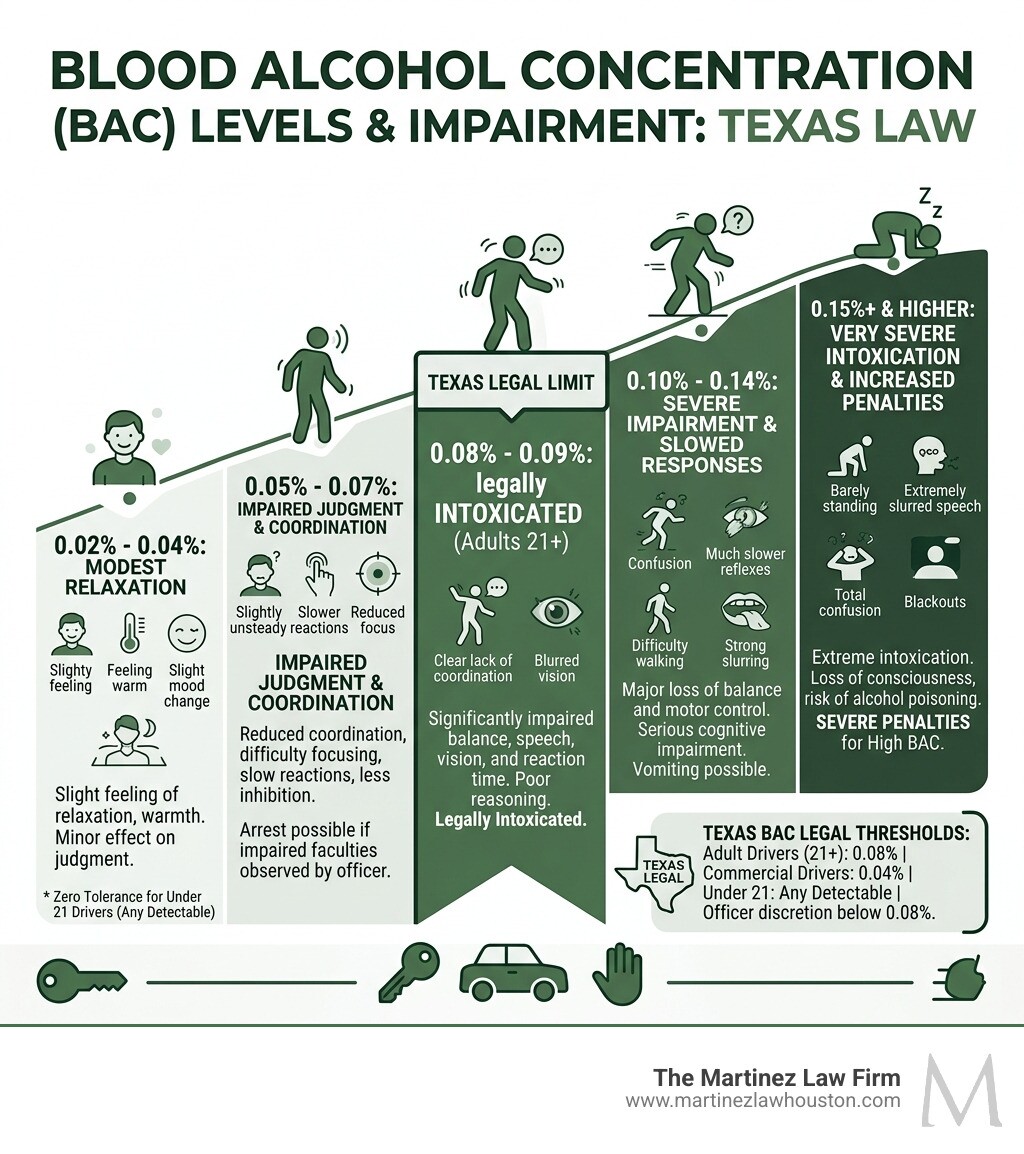
The legal landscape of alcohol limits in the U.S. is anchored by Blood Alcohol Concentration (BAC), which measures the weight of ethanol in a specific volume of blood. Across all 50 states, the District of Columbia, and Puerto Rico, the standard adult BAC limit for driving is 0.08%. However, nuance exists depending on age, commercial licensing, and the specific state jurisdiction.
Zero Tolerance and Underage Limits
For individuals under the age of 21, the legal drinking age nationwide, the legal standard is governed by "Zero Tolerance" laws. In virtually every state, driving with any measurable amount of alcohol—often defined as a BAC of 0.01% to 0.02%—is illegal for underage motorists. These strict limits account for potential residue from mouthwash or medications while ensuring that underage drinking and driving carries swift administrative penalties, such as immediate license suspension.
Commercial Drivers and Professional Operators
Commercial Driver's License (CDL) holders are held to a much higher standard of sobriety when operating commercial motor vehicles, such as semi-trucks, buses, and vehicles transporting hazardous materials. Under federal regulations established by the Federal Motor Carrier Safety Administration (FMCSA), the legal BAC limit for a CDL holder is 0.04%—half the standard adult limit. Furthermore, commercial drivers are typically prohibited from consuming any alcohol within four hours of reporting for duty.
Zero Tolerance for Probation and Repeat Offenders
Many states implement specialized BAC limits for individuals on probation for prior driving under the influence (DUI) convictions or for drivers who have had their licenses reinstated following an alcohol-related suspension. For these individuals, a BAC limit of 0.01% or 0.02% is common, and compliance is frequently monitored via mandatory ignition interlock devices (IIDs) installed in their vehicles.
Summary of U.S. Legal BAC Limits by Driver Category
| Driver Category | Federal / Standard BAC Limit | Common Enforcement Consequences |
|---|---|---|
| Standard Adult (21+) | 0.08% | Misdemeanor/Felony charges, fines, jail time, license suspension |
| Commercial Driver (CDL) | 0.04% | Loss of CDL for at least one year, fines, employer notification |
| Underage Driver (<21) | 0.02% (or 0.00%) | Administrative license suspension, mandatory education, fines |
| Probationary / Repeat Offender | 0.01% to 0.02% | Extended revocation, mandatory ignition interlock, potential jail |
Physiological Factors and BAC Calculation
A common misconception is that the legal limit can be predicted by counting the number of drinks consumed. In reality, Blood Alcohol Concentration is a complex physiological metric influenced by multiple biological variables. Two individuals consuming the exact same amount of alcohol over the same timeframe can exhibit radically different BAC levels.
Key Variables Influencing BAC
- Body Weight and Composition: Alcohol distributes primarily in body water. Because muscle tissue contains more water than fat, individuals with higher body fat percentages generally reach higher BAC levels than heavier individuals with higher muscle mass, given the same amount of alcohol consumed.
- Biological Sex: Biological differences in enzymatic activity (specifically gastric alcohol dehydrogenase) and body water composition mean that women generally absorb and metabolize alcohol differently than men, often achieving higher concentrations from equivalent consumption.
- Rate of Consumption: The human liver metabolizes alcohol at a fairly constant rate—roughly the equivalent of one standard drink per hour. Drinking rapidly overwhelms the liver's capacity, causing un-metabolized alcohol to accumulate in the bloodstream and spike the BAC.
- Food Intake: Consuming food before or while drinking slows down stomach emptying, delaying the absorption of alcohol into the small intestine and resulting in a lower, more gradual peak BAC compared to drinking on an empty stomach.
Consumption Guidelines: The Dietary Guidelines for Americans
While legal limits govern the highway, health guidelines govern lifestyle choices. The official dietary recommendations are published jointly every five years by the U.S. Department of Health and Human Services (HHS) and the U.S. Department of Agriculture (USDA).
The prevailing guidelines advise adults of legal drinking age to choose not to drink or to drink in moderation by limiting intake to specific daily maximums. These limits are not goals or targets; rather, they represent the ceiling of consumption associated with lower health risks.
Defining Moderate Consumption
- For Men: Moderate consumption is defined as two drinks or less in a day.
- For Women: Moderate consumption is defined as one drink or less in a day.
The disparity between male and female guidelines is rooted in physiological differences regarding body water volume, liver enzyme concentrations, and how the body processes ethanol. The guidelines explicitly state that drinking less is healthier than drinking more, and individuals who do not currently drink alcohol should not start for any reason.
Abstinence Recommendations
Certain populations are advised to practice complete abstinence from alcohol. These groups include pregnant women (due to the severe risk of fetal alcohol spectrum disorders), individuals under the age of 21, people taking specific medications that interact adversely with alcohol, individuals recovering from alcohol use disorder, and those managing specific medical conditions where alcohol exacerbates symptoms.
Defining the "Standard Drink" in the United States
A frequent point of confusion for both legal compliance and health tracking is the definition of a standard drink. In the U.S., a standard drink is defined as any beverage containing 0.6 fluid ounces (14 grams) of pure alcohol. Because different beverage types vary significantly in alcohol concentration, the physical volume of a "drink" changes depending on what is being poured.
Standard Drink Equivalents
- Beer: Approximately 12 ounces of regular beer (typically about 5% alcohol by volume).
- Malt Liquor: Approximately 8 to 9 ounces of malt liquor (typically about 7% alcohol by volume).
- Wine: Approximately 5 ounces of table wine (typically about 12% alcohol by volume).
- Distilled Spirits: Approximately 1.5 ounces of 80-proof (40% alcohol by volume) spirits, such as gin, rum, vodka, or whiskey.
Hand-poured drinks at restaurants, bars, or private homes frequently exceed these standard measures. A large restaurant pour of wine or a cocktail heavy on multiple liquors can easily contain the alcohol equivalent of two or three standard drinks, rendering mental drink-counting inaccurate for assessing sobriety or health limits.
State-Specific Nuances and Administrative Penalties
While the 0.08% BAC threshold is universal across all U.S. states due to federal highway funding mandates, state laws diverge significantly regarding enforcement, penalties, and collateral consequences.
Administrative License Revocation (ALR)
In many states, law enforcement officers can immediately confiscate a driver's license upon a failed or refused chemical test, independent of any criminal court conviction. This administrative process operates under civil law, meaning drivers must request a formal hearing within a narrow window (often 10 to 30 days) to contest the suspension of their driving privileges.
Enhanced Penalties for High BAC
Most states enforce "aggravated" or "extreme" DUI tiers. If a driver's BAC is found to be significantly above the legal limit—typically 0.15% or higher—mandatory minimum sentences increase substantially. These escalations can include higher financial fines, mandatory installation of ignition interlock devices for extended periods, mandatory alcohol treatment programs, and mandatory jail sentences, even for first-time offenders.
Implied Consent Laws
Every state operates under an "implied consent" law. By operating a motor vehicle on public roads, a driver legally consents to submit to chemical testing (breath, blood, or urine) if an officer has probable cause to suspect driving under the influence. Refusing to take the test carries severe administrative penalties, including automatic license revocation and, in some jurisdictions, admissibility of the refusal as evidence of guilt in a criminal trial.
Frequently Asked Questions
Does the 0.08% BAC limit mean I am safe to drive at 0.07%?
No. The 0.08% threshold is a legal definition of intoxication, not a measure of safety. Impairment in cognitive function, reaction time, visual acuity, and coordination begins at much lower BAC levels, often starting around 0.02%. A driver can be legally arrested and convicted of driving while impaired (DWI) or driving under the influence (DUI) even with a BAC below 0.08% if law enforcement observes erratic driving and impaired field sobriety performance.
How long does it take for the body to eliminate alcohol?
The human body metabolizes alcohol at an average rate of approximately 0.015% BAC per hour, though this varies based on individual metabolism, liver health, body mass, and food intake. There is no quick fix to sober up; neither coffee, cold showers, nor exercise accelerates the liver's processing rate. Only time allows the body to eliminate alcohol.
Are blood alcohol calculators or smartphone apps accurate?
No. Smartphone breathalyzer apps and online BAC calculators rely on generalized formulas based on height, weight, and drink counts. They cannot account for individual metabolic rates, stomach contents, medication interactions, or drink strength variations. They should never be used to determine whether a person is legally safe to drive.
Can prescription medications affect my legal BAC limit?
Yes, though not by altering the chemical BAC reading itself. Many prescription and over-the-counter medications—such as muscle relaxants, anti-anxiety drugs, and certain antihistamines—interact synergistically with alcohol, amplifying impairment. Driving under the combined influence of alcohol and drugs can lead to a DUI arrest regardless of whether the alcohol BAC is below 0.08%.
Practical Next Actions and Safety Recommendations
Navigating alcohol limits safely requires proactive planning, particularly when social drinking is involved. Relying on self-assessment of sobriety after consuming alcohol is notoriously unreliable due to the impairing effects of ethanol on cognitive self-monitoring.
- Designate a Sober Driver: Before consuming any alcohol, establish a clear plan for transportation that does not involve operating a vehicle.
- Utilize Alternative Transit: Leverage public transportation, rideshare services, or licensed taxi cabs when planning an evening that involves drinking.
- Pace and Measure: When consuming alcohol at home, use measuring tools or standard glassware to accurately track intake against federal dietary guidelines.
- Prioritize Complete Abstinence: When in doubt, or if medications or early-morning responsibilities are present, abstain from alcohol entirely to eliminate legal and safety risks.