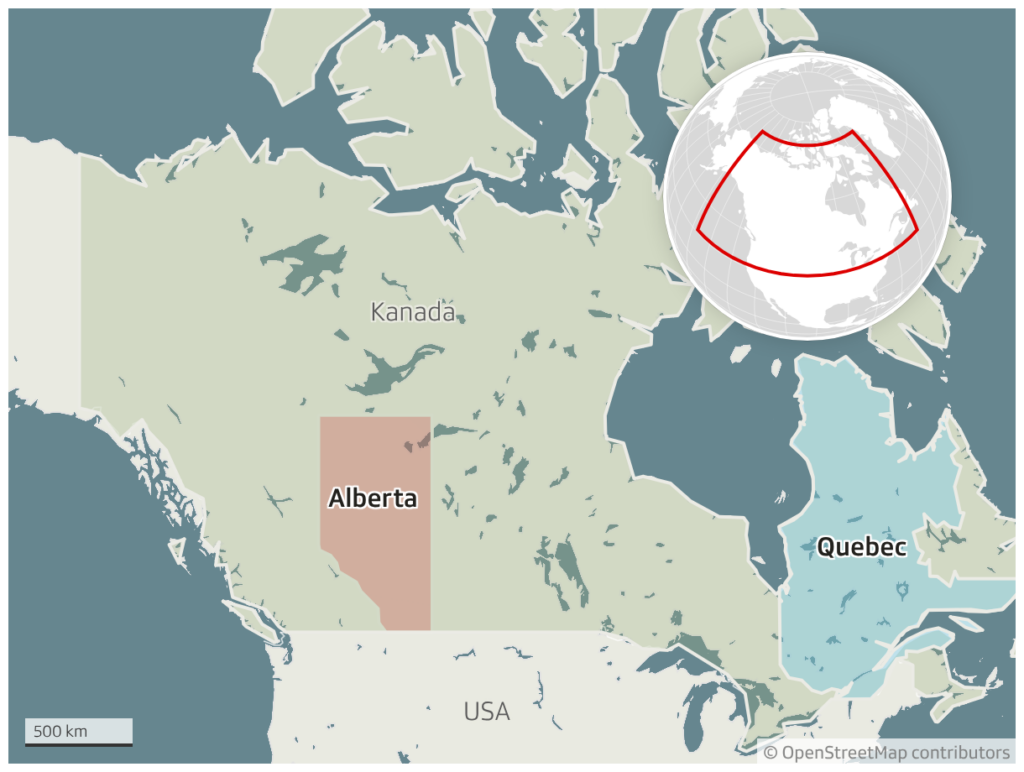
Relocating or traveling from Alberta to Quebec involves crossing approximately 3,600 kilometers of Canadian landscape, transitioning from the mountainous prairies to the Francophone heartland. Success requires managing significant logistical challenges such as long-distance vehicle transport, navigating Quebec’s unique provincial tax and healthcare systems, and preparing for the linguistic shift and regulatory requirements unique to "La Belle Province."
Crossing the vast expanse of Canada from the "Wild Rose Country" of Alberta to the historic corridors of Quebec is a journey that spans nearly 40 hours of driving time or a five-hour flight. Whether you are moving for a career opportunity in Montreal’s tech sector, seeking the European charm of Quebec City, or embarking on an epic cross-country road trip, the transition between these two provinces is one of the most distinct internal migrations possible within Canada. As of 2026, the economic and social landscapes of both provinces have evolved, yet the fundamental logistical hurdles of distance, administrative bureaucracy, and cultural adaptation remain the core pillars of a successful transition.
Logistics and Transportation: Bridging the 3,600 km Gap
The sheer distance between Alberta and Quebec is the primary obstacle for any traveler or person relocating. Depending on your starting point—typically Calgary or Edmonton—and your destination—Montreal, Quebec City, or Gatineau—the route covers four provinces (Saskatchewan, Manitoba, Ontario, and Quebec).
Driving the Trans-Canada Highway
For those choosing to drive, the journey is most commonly undertaken via the Trans-Canada Highway (Highway 1). From Calgary, the route takes you through the flat, expansive prairies of Saskatchewan and Manitoba before hitting the rugged, often challenging terrain of Northern Ontario. This segment, particularly around Lake Superior, is notorious for its winding roads and limited cell service, requiring careful planning for fuel and rest stops.
In 2026, electric vehicle (EV) infrastructure has matured significantly along this corridor. The "Electric Circuit" in Quebec and expanded charging networks in Ontario make an EV cross-country trip more viable than ever, though the long stretches between Thunder Bay and Sault Ste. Marie still require strategic charging stops. Drivers should allocate at least four to six days for this trip to ensure safety and avoid fatigue.
Professional Moving Services
Relocating a household from Alberta to Quebec is a major financial undertaking. In 2026, professional long-haul moving costs for a three-bedroom home typically range from $5,500 to $11,000, depending on the weight of the shipment and the level of service (packing/unpacking).
Due to the distance, most moving companies use a "consolidated shipping" model, where your belongings share a trailer with other shipments. This can lead to delivery windows ranging from 10 to 21 days. It is essential to verify that the moving company is registered with the Canadian Association of Movers (CAM) and carries sufficient insurance for interprovincial transit.
Shipping Vehicles
Many choose to fly and ship their vehicles separately. Rail transport via CN or CP remains the most cost-effective method for shipping cars between Calgary/Edmonton and Montreal. As of 2026, terminal-to-terminal shipping for a standard sedan costs between $1,200 and $1,800. If you choose professional car haulers (trucks), expect to pay a premium for door-to-door service.
Administrative Transitions: Healthcare and Licensing
Moving between provinces in Canada is not as simple as changing an address. Quebec operates with a high degree of administrative autonomy, and Albertans will find several systems that differ significantly from those in the West.
The RAMQ Healthcare Waiting Period
The Régie de l'assurance maladie du Québec (RAMQ) governs healthcare in Quebec. Unlike moving to some other provinces, there is generally a "waiting period" of up to three months before you become eligible for Quebec provincial health insurance.
During this transition, Alberta Health Care Insurance Plan (AHCIP) will continue to cover "insured" physician and hospital services at the Alberta rate, but this often does not cover the full cost of services in Quebec or ancillary services like ambulances. It is strongly recommended that those moving from Alberta to Quebec purchase private "bridge" insurance for the first 90 days to cover any gaps in coverage and ensure access to private clinics if necessary.
Driver’s Licensing and Vehicle Registration
Once you establish residency in Quebec, you have 90 days to exchange your Alberta driver’s license for a Quebec license through the Société de l'assurance automobile du Québec (SAAQ).
- Appointments: In 2026, SAAQ appointments for license exchanges can often be booked online, but wait times in major centers like Montreal can be several weeks.
- Vehicle Inspection: Any vehicle brought into Quebec from another province must pass a mechanical safety inspection at a SAAQ-mandated center before it can be registered. If your vehicle is older or has modifications, you may need to perform repairs to meet Quebec's specific safety standards.
- Winter Tires: Quebec is the only province where winter tires are mandatory by law. Between December 1 and March 15, all motorized vehicles must be equipped with tires bearing the "mountain/snowflake" symbol. Albertans, who are used to winter driving but not necessarily the legal mandate, must factor this into their move-in costs.
Financial Considerations: Taxes and Cost of Living
One of the most immediate shocks for an Albertan moving to Quebec is the change in the tax regime. Alberta is known for its "low tax" environment, having no provincial sales tax (PST) and a relatively flat or lower-tier provincial income tax.
Sales Tax (GST vs. QST)
In Alberta, consumers only pay the 5% Federal GST. In Quebec, you are subject to the Quebec Sales Tax (QST), which is 9.975% and is levied on top of the GST. This results in a combined tax rate of 14.975% on most goods and services. For a family moving from Alberta, this represents a nearly 10% increase in the cost of almost every daily purchase, from electronics to dining out.
Personal Income Tax
Quebec has the highest provincial personal income tax rates in Canada. While Alberta’s top marginal rate is competitive, Quebec’s progressive tax brackets can significantly reduce take-home pay for middle and high-income earners. However, Quebec offers more robust social programs, including highly subsidized childcare (the "reduced-contribution program") and lower post-secondary tuition rates for residents, which can partially offset the higher tax burden for families.
Housing Market Comparison
As of 2026, the housing dynamics between the two provinces remain distinct. While Calgary and Edmonton have seen significant price appreciation, Montreal and Quebec City offer different value propositions.
| Metric (2026 Estimates) | Calgary, AB | Montreal, QC | Quebec City, QC |
|---|---|---|---|
| Avg. 2-Bedroom Rent | $2,200 | $2,100 | $1,550 |
| Median Home Price | $620,000 | $595,000 | $410,000 |
| Auto Insurance (Monthly) | $150 | $95 | $85 |
| Electricity Cost | High (Variable) | Low (Hydro) | Low (Hydro) |
Quebec generally boasts lower electricity costs due to its vast hydroelectric infrastructure (Hydro-Québec) and significantly lower auto insurance premiums, largely because of the province’s "no-fault" public insurance system for bodily injury.
Cultural and Linguistic Integration
Quebec is the only predominantly Francophone jurisdiction in North America. While Montreal is a cosmopolitan hub where English is widely spoken, the rest of the province—and even the administrative functions within Montreal—operates primarily in French.
Language Laws (Bill 96)
By 2026, the impacts of Bill 96 (the reform of the Charter of the French Language) are fully integrated into Quebec society. For newcomers from Alberta, this means:
- Government Services: After a six-month "grace period," most government communications and services are legally required to be in French, with very limited exceptions for certain historic rights-holders.
- Workplace: French is the official language of work. Large and medium-sized businesses must operate in French, and employees have the right to work in French.
- Education: If you are moving with children, you must understand the rules regarding English-language schooling. Generally, unless one of the parents received the majority of their elementary education in English in Canada, children must attend French-language public schools.
Social Integration
Albertans often find Quebec’s social pace to be different. There is a heavy emphasis on "joie de vivre"—the joy of living—which manifests in a vibrant festival culture, a deep appreciation for the culinary arts, and a slightly more European approach to work-life balance. Learning even basic French is not just a practical necessity for navigating the SAAQ or a grocery store; it is a vital sign of respect that opens social doors and facilitates genuine community integration.
Common Pitfalls to Avoid
- Underestimating the Northern Ontario Drive: Many travelers try to drive from Winnipeg to Ottawa in one stretch. This is dangerous due to moose encounters and the lack of divided highways. Plan an overnight stop in Thunder Bay or Sault Ste. Marie.
- Missing the SAAQ Deadline: If you wait longer than 90 days to register your vehicle, you could face fines and complications with your insurance provider, as your Alberta policy may become void once you have clearly established residency elsewhere.
- Ignoring the Tax Year: If you move on December 31st, you are considered a resident of Quebec for that entire tax year and must file a Quebec tax return, which could lead to a significant unexpected tax bill compared to Alberta rates.
- Assuming "Bilingual" Means English is Enough: In 2026, the demand for French in professional environments is higher than ever. Do not assume that a professional designation from Alberta will automatically allow you to practice in Quebec without a French proficiency exam (e.g., for OIIQ nurses or OIQ engineers).
Frequently Asked Questions
Do I need to change my car insurance as soon as I arrive in Quebec?
You should notify your Alberta insurer of your move immediately. Most companies will provide a grace period (usually 30 days), but you must transition to a Quebec-based insurance policy quickly. Quebec’s system is unique because it splits coverage between the SAAQ (for bodily injury) and private insurers (for property damage).
Can I keep my Alberta health card while living in Quebec?
Only for the first three months. Once you have established residency, you are required to apply for a RAMQ card. Alberta will cover you during that 90-day waiting period, but once that period expires, your Alberta coverage will be cancelled.
Is it difficult to find an English-speaking doctor in Quebec?
In Montreal and the West Island, it is manageable, though the healthcare system is currently under strain. In Quebec City or more rural regions, finding a doctor who will consult primarily in English is significantly more challenging. Most medical professionals are bilingual, but the administrative framework of the clinics is Francophone.
What happens to my Alberta-registered business if I move to Quebec?
You must register your business with the Registraire des entreprises Québec (REQ). You may also need to collect and remit QST if your revenues exceed $30,000. Quebec has specific "extra-provincial" registration requirements for businesses based elsewhere that operate within its borders.
How do I handle the "Welcome Tax" when buying a home?
When you purchase property in Quebec, you must pay a "Land Transfer Tax," commonly known as the "Welcome Tax" (Taxe de bienvenue). Unlike Alberta, where land transfer fees are relatively nominal, the Quebec Welcome Tax is a percentage of the purchase price (ranging from 0.5% to 3.0% depending on the value and municipality). This is a one-time payment due shortly after the deed is signed.
Final Recommendation for Your Transition
If you are moving from Alberta to Quebec in 2026, the most critical step is early administrative preparation. Begin the process of finding a French language course at least six months before your move; the Quebec government often offers free or subsidized "Francisation" programs for new residents. Concurrently, secure a detailed quote from a reputable national moving company and set aside a "tax buffer" of at least 10-15% of your annual income to handle the higher cost of living and the transition to the Quebec tax system. By treating the move as an international relocation in terms of preparation, you will mitigate the "culture shock" and administrative hurdles of moving to Canada’s most unique province.