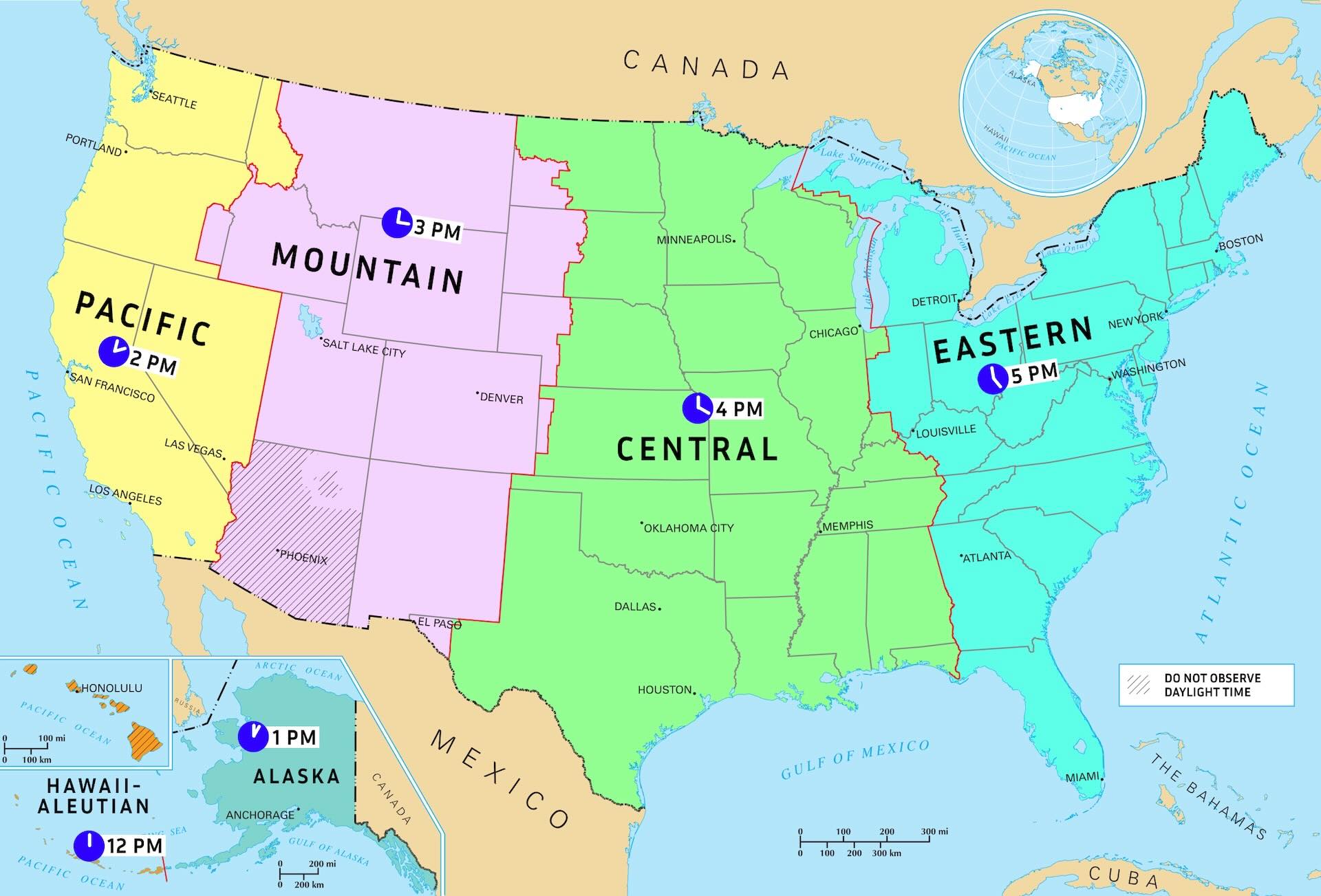
When it is 5:00 PM Eastern Time, the time in Arizona is either 2:00 PM or 3:00 PM. This variation occurs because Arizona does not observe Daylight Saving Time (DST). From March to November, Arizona is three hours behind Eastern Time; from November to March, the gap narrows to two hours.
Understanding the relationship between Eastern Time (ET) and Arizona Time is a common challenge for travelers, remote workers, and event planners. Because Arizona maintains a consistent standard time throughout the year while the rest of the country shifts its clocks, the "time difference" is a moving target. In 2026, as in previous decades, the key to an accurate conversion lies in identifying whether the Eastern United States is currently observing Standard Time or Daylight Saving Time.
The Eastern Time Zone Context in 2026
The Eastern Time Zone is the most populous time zone in the United States, encompassing major hubs like New York City, Miami, Atlanta, and Washington, D.C. It fluctuates between two different offsets from Coordinated Universal Time (UTC):
- Eastern Standard Time (EST): This is UTC-5. It is used during the winter months.
- Eastern Daylight Time (EDT): This is UTC-4. It is used during the spring, summer, and early autumn months to allow for more evening daylight.
In 2026, the transition dates for the Eastern Time Zone follow the federal mandate:
- March 8, 2026: Clocks "spring forward" one hour at 2:00 AM, moving from EST to EDT.
- November 1, 2026: Clocks "fall back" one hour at 2:00 AM, returning from EDT to EST.
During the period between March 8 and November 1, 2026, the Eastern Time Zone is in EDT. For the remainder of the year—January 1 to March 7 and November 1 to December 31—it is in EST.
Arizona’s Unique Timekeeping Status
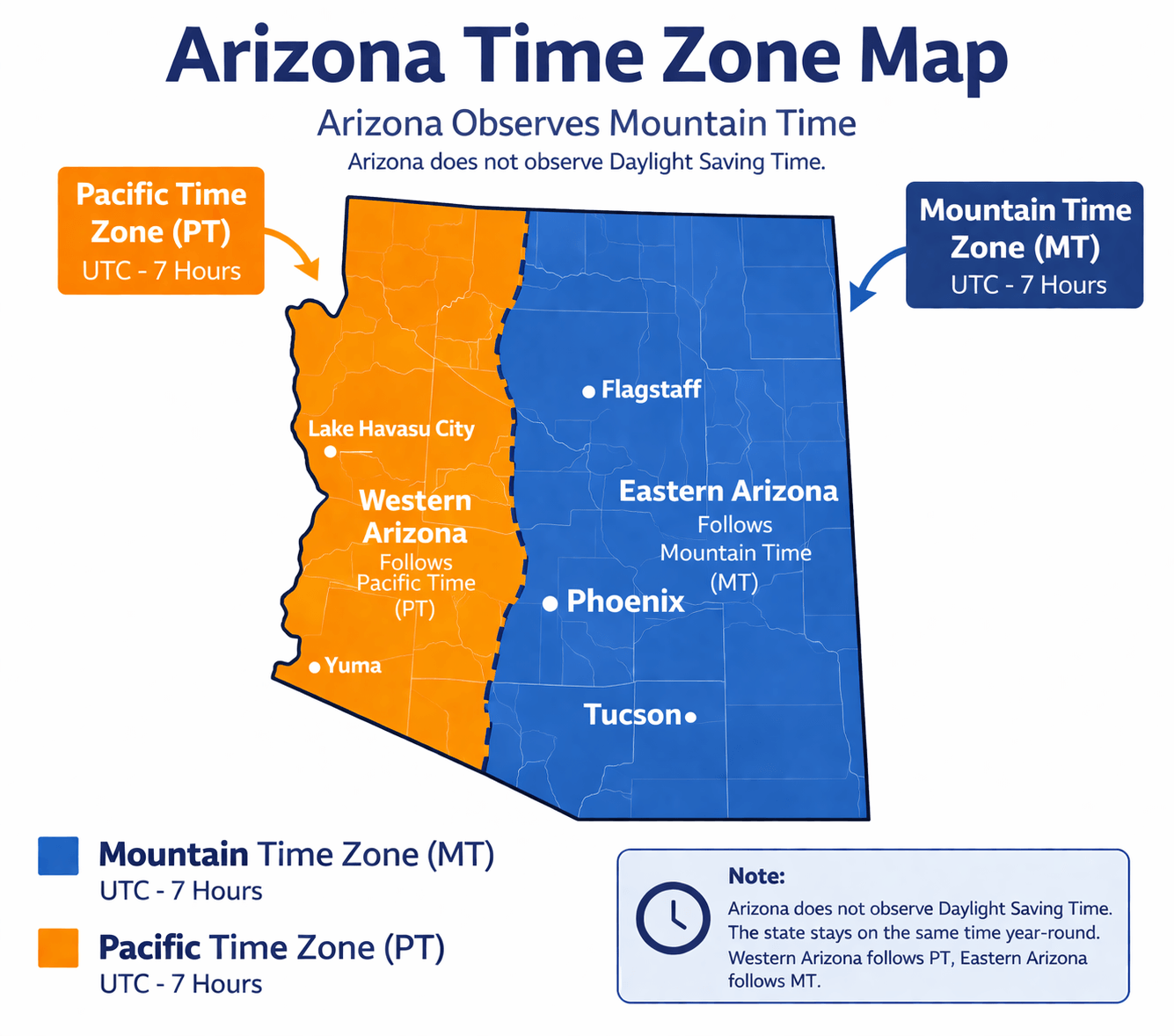
Arizona is one of the few places in the United States that does not participate in the annual ritual of changing clocks. Most of the state stays on Mountain Standard Time (MST) year-round. MST is consistently UTC-7.
The decision for Arizona to opt out of Daylight Saving Time was formalized in 1968. The primary reasoning was the state’s extreme summer heat. In desert climates like Phoenix and Tucson, additional daylight in the evening is not seen as a benefit; rather, it extends the period of intense heat, increasing energy costs for air conditioning and making outdoor activities less comfortable. By staying on Standard Time, Arizonans benefit from earlier sunsets during the hottest months of the year.
The Navajo Nation Exception
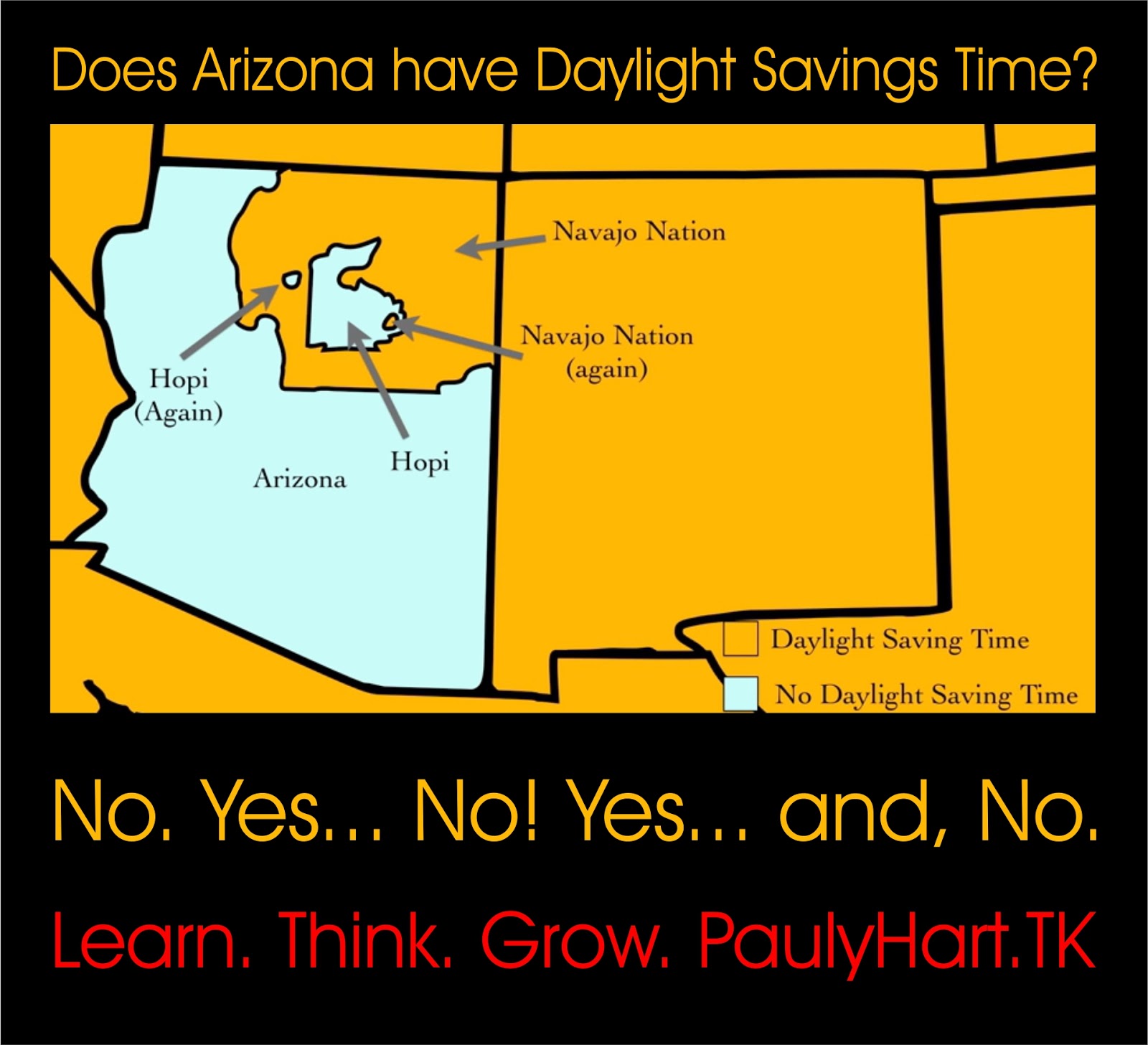
While most of Arizona ignores Daylight Saving Time, there is a significant geographical exception: the Navajo Nation. The Navajo Nation, which covers a vast area in northeastern Arizona as well as parts of New Mexico and Utah, does observe Daylight Saving Time. This is done to maintain a uniform time across the entirety of the Navajo reservation, regardless of state lines.
Interestingly, the Hopi Reservation, which is entirely surrounded by the Navajo Nation, does not observe Daylight Saving Time, aligning itself with the rest of the state of Arizona. This creates a "time island" effect where traveling through northeastern Arizona can result in multiple time changes within a single hour of driving.
Calculating the Difference: 5 PM ET to AZ
To convert 5:00 PM Eastern Time to Arizona Time, you must first determine which "mode" the Eastern Time Zone is in.
During Eastern Daylight Time (March – November)
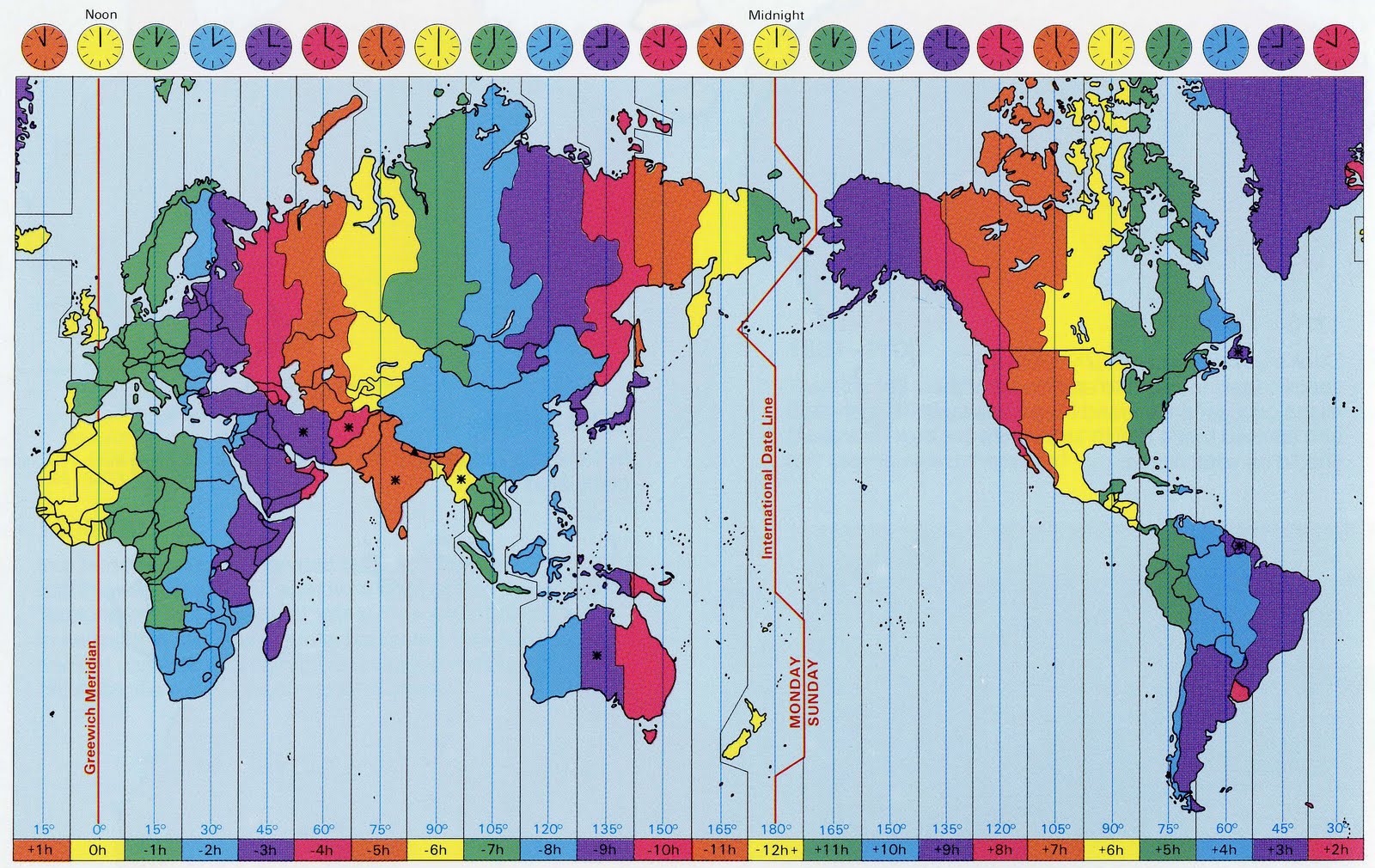
From the second Sunday in March to the first Sunday in November, the Eastern Time Zone is four hours behind UTC (UTC-4). Arizona remains seven hours behind UTC (UTC-7).
- The Math: 7 (AZ offset) - 4 (ET offset) = 3 hours difference.
- The Result: 5:00 PM EDT - 3 hours = 2:00 PM MST in Arizona.
During Eastern Standard Time (November – March)
From the first Sunday in November to the second Sunday in March, the Eastern Time Zone is five hours behind UTC (UTC-5). Arizona remains seven hours behind UTC (UTC-7).
- The Math: 7 (AZ offset) - 5 (ET offset) = 2 hours difference.
- The Result: 5:00 PM EST - 2 hours = 3:00 PM MST in Arizona.
2026 Conversion Calendar for 5 PM ET
The following table outlines how 5:00 PM Eastern Time translates to Arizona time throughout the year 2026. This excludes the Navajo Nation, which follows the Eastern transition schedule but remains in the Mountain Time Zone (resulting in a consistent 2-hour difference with ET).
| Month (2026) | Eastern Time Status | Offset from UTC | 5 PM ET in Arizona |
|---|---|---|---|
| January | Standard (EST) | UTC-5 | 3:00 PM |
| February | Standard (EST) | UTC-5 | 3:00 PM |
| March 1 – March 7 | Standard (EST) | UTC-5 | 3:00 PM |
| March 8 – March 31 | Daylight (EDT) | UTC-4 | 2:00 PM |
| April | Daylight (EDT) | UTC-4 | 2:00 PM |
| May | Daylight (EDT) | UTC-4 | 2:00 PM |
| June | Daylight (EDT) | UTC-4 | 2:00 PM |
| July | Daylight (EDT) | UTC-4 | 2:00 PM |
| August | Daylight (EDT) | UTC-4 | 2:00 PM |
| September | Daylight (EDT) | UTC-4 | 2:00 PM |
| October | Daylight (EDT) | UTC-4 | 2:00 PM |
| November 1 | Transition Day | UTC-4 to -5 | 3:00 PM |
| November 2 – Dec 31 | Standard (EST) | UTC-5 | 3:00 PM |
Practical Implications for Scheduling
The shifting difference between Eastern and Arizona time has real-world consequences for professionals and organizations. In 2026, if you are scheduling a recurring meeting at 5 PM Eastern, your Arizona participants will see that meeting move on their calendars twice a year.
Business and Remote Work
For companies with offices in both New York and Phoenix, the "working overlap" changes. In the summer, a 5 PM ET meeting happens at 2 PM in Phoenix, which is well within the standard 9-to-5 workday. In the winter, that same 5 PM ET meeting happens at 3 PM in Phoenix. While both are manageable, the shift can cause confusion for automated calendar invites if the "Time Zone" for the Arizona participants is incorrectly set to "Mountain Time" (which often defaults to Denver, a city that does observe DST) instead of "Arizona Time" or "Phoenix Time."
Television and Live Events
Live broadcasts, such as sports or awards ceremonies, often advertise a "5 PM Eastern" start time. For an Arizona viewer:
- In the summer (e.g., a June baseball game), the broadcast starts at 2:00 PM local time.
- In the winter (e.g., a January news special), the broadcast starts at 3:00 PM local time.
Transportation and Logistics
Airlines and shipping companies must be hyper-vigilant about the Arizona offset. When booking a flight from JFK (New York) to PHX (Phoenix) in 2026, the arrival time will be calculated based on the specific offset active on that date. A flight departing New York at 5 PM in July will arrive in a state that is 3 hours behind, whereas the same flight in December arrives in a state only 2 hours behind.
Technical Management of Time Zones
In the digital age, most devices handle these conversions automatically, provided the settings are correct. Operating systems like Windows, macOS, iOS, and Android include a specific "Arizona" or "Phoenix" time zone setting.
It is a common technical error to select "Mountain Time" for a device located in Arizona. In many software environments, "Mountain Time" implies a region that follows the standard US Daylight Saving Time rules (like Colorado or Utah). To ensure your device does not incorrectly shift its clock in March and November 2026, you must specifically select Phoenix or Arizona as the location.
The Internet Assigned Numbers Authority (IANA) Time Zone Database, which powers timekeeping for almost all modern computers and servers, uses the identifier America/Phoenix. This entry ensures that the system knows to keep the offset at UTC-7 regardless of the time of year.
Why Doesn't the Rest of the US Follow Arizona?
The confusion surrounding the conversion of 5 PM ET to Arizona time often leads people to wonder why the entire country doesn't simply abandon Daylight Saving Time. The debate is ongoing. Proponents of DST argue that it saves energy and reduces traffic accidents by providing more light during peak travel hours. However, critics, including many healthcare professionals, point to the disruption of human circadian rhythms and the "shocks" to the system that occur during the transitions.
As of 2026, despite various legislative attempts like the Sunshine Protection Act, the national standard remains divided. Arizona’s steadfast refusal to change its clocks remains an outlier that requires manual calculation for those living on the Eastern Seaboard.
Frequently Asked Questions
Is Arizona always on the same time as California?
No. During the summer (Daylight Saving Time), Arizona (UTC-7) and California (PDT, UTC-7) are on the same time. However, in the winter, California moves to Pacific Standard Time (PST, UTC-8), making Arizona one hour ahead of California.
What happens if I am on the Navajo Nation at 5 PM ET?
The Navajo Nation observes Daylight Saving Time. Therefore, they are always 2 hours behind Eastern Time. When it is 5 PM ET, it is always 3 PM on the Navajo Nation, whether it is summer or winter.
Does 5 PM ET to Arizona time affect international UTC?
The Eastern Time to Arizona conversion is internal to US time zones, but it is dictated by the relationship to UTC. Arizona is always UTC-7. Eastern Time is either UTC-5 or UTC-4. The conversion is simply the result of these varying UTC offsets.
Why is my phone showing the wrong time in Phoenix?
This usually happens if your "Set Automatically" feature is off or if your phone is pinging a cell tower near the border of a region that observes DST (like the Navajo Nation or a neighboring state). Ensure your time zone is specifically set to "Phoenix" rather than a generic "Mountain Time."
Has Arizona ever used Daylight Saving Time?
Arizona did use DST during World War I and World War II, and briefly in 1967. However, the state legislature voted to opt out of the Uniform Time Act of 1966, effective in 1968, and has remained on Standard Time ever since.
Summary Recommendation
To ensure you never miss a 5:00 PM Eastern Time deadline or meeting while in Arizona, remember the "Summer 3, Winter 2" rule. In the heat of the summer (March to November), subtract three hours. In the cool of the winter (November to March), subtract two hours. For the most reliable results in 2026, always use a dedicated time zone converter or ensure your digital calendar is set specifically to the "Phoenix" time zone to account for the lack of Daylight Saving Time automatically.