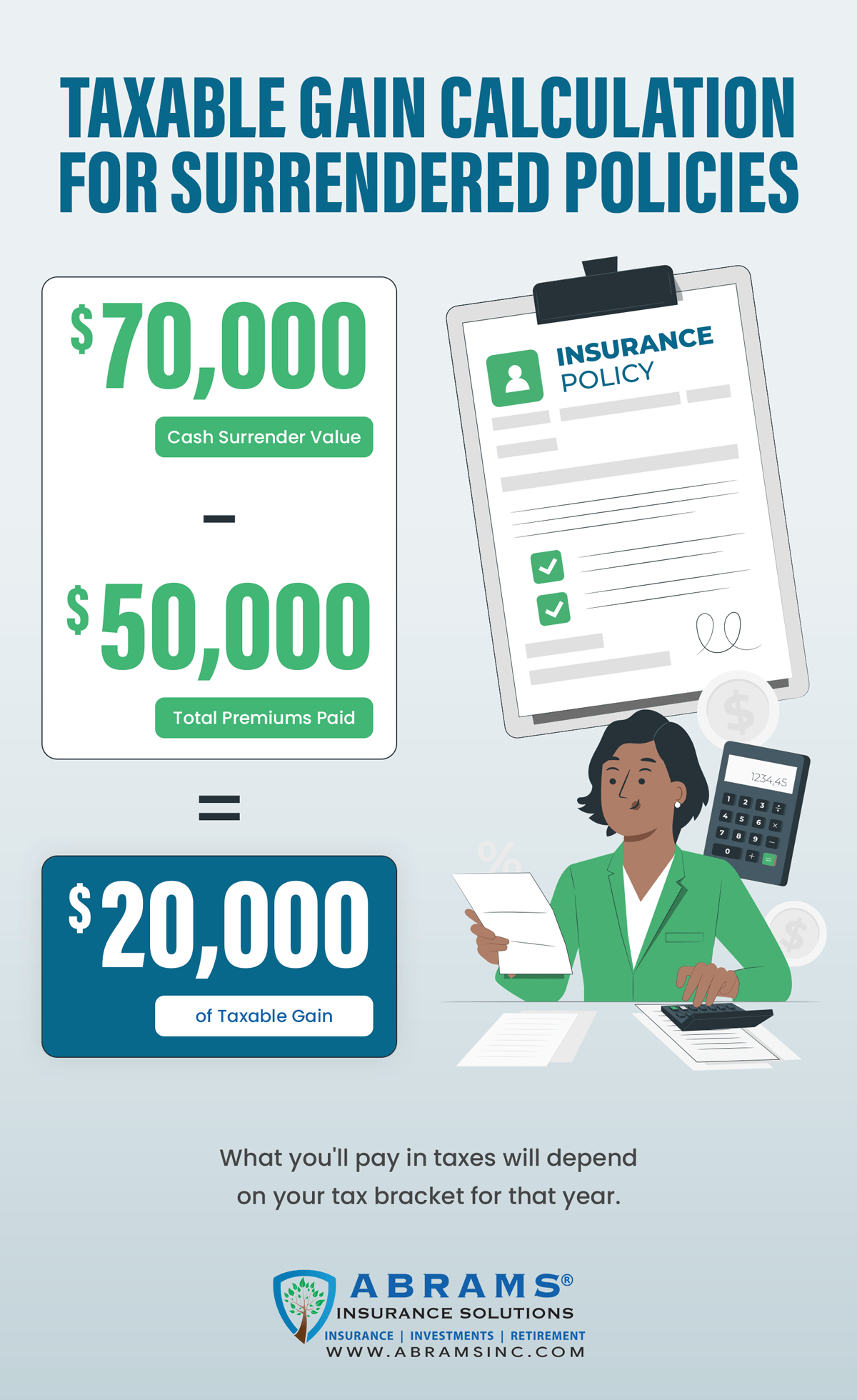
Surrendering a life insurance policy can trigger unexpected tax liabilities if the cash surrender value exceeds the total premiums paid, a gain known as the cost basis. While the phrase "591 2 rule" often circulates in informal financial discussions or tax planning forums, navigating policy surrenders requires a clear understanding of Internal Revenue Code (IRC) Section 72, cost basis calculations, and the distinction between standard ordinary income tax and early withdrawal penalties. When you terminate a permanent life insurance contract, such as a whole life or universal life policy, the insurance company calculates the payout by taking the gross cash value and subtracting any outstanding policy loans, unpaid interest, and surrender charges. If the resulting net cash surrender value is higher than your cumulative premium payments—commonly referred to as your investment in the contract—the difference is considered taxable income. Policyholders must also be mindful of modified endowment contract (MEC) rules, which apply separate tax treatments to pre-death distributions if the policy has been funded too aggressively within its first seven years. Recognizing how these financial mechanics interact prevents costly surprises at tax time and ensures compliance with federal reporting standards.
Understanding the Mechanics of Life Insurance Cash Surrender Value
To comprehend the tax implications of terminating a policy, one must first deconstruct how cash value life insurance operates. Unlike term life insurance, which purely provides a death benefit for a specific period, permanent life insurance builds a cash value account over time. A portion of each premium payment covers the cost of insurance and administrative fees, while the remainder is deposited into a tax-deferred cash value account that earns interest or dividends depending on the product structure.
When a policyholder decides to walk away from this contract, they initiate a surrender. The insurer liquidates the account and issues a final payout. This transaction is rarely a simple dollar-for-dollar return of savings. The calculation involves several distinct components:
- Gross Cash Value: The total accumulation of value within the policy at the time of surrender.
- Surrender Charges: Fees levied by the insurer, which typically scale down over a schedule lasting anywhere from 5 to 15 years from policy inception.
- Policy Loans and Interest: Any outstanding loans taken against the policy cash value, along with accrued interest, which must be satisfied before any remaining funds are distributed.
- Cost Basis: The total amount of premiums paid into the policy, minus any previous tax-free distributions, dividends, or withdrawals.
When the dust settles, the insurer issues a Form 1099-R detailing the gross distribution and the taxable amount. If the net proceeds exceed the cost basis, that excess is treated as ordinary income for the tax year in which the surrender occurred.
The Cost Basis Principle and Taxable Gains
The Internal Revenue Service (IRS) views life insurance surrenders through the lens of cost recovery. Under IRC Section 72, you are generally allowed to recover your investment in the contract tax-free. Your cost basis acts as a protective shield against taxation.
For example, suppose an individual has paid a cumulative total of $40,000 in premiums over a ten-year period into a whole life insurance policy. Due to favorable dividend performance and interest crediting, the gross cash value grows to $55,000. If the policyholder decides to surrender the policy and incurs a $2,000 surrender charge, the net cash distribution is $53,000.
To determine the taxable gain, the calculation is structured as follows:
$$\text{Taxable Gain} = \text{Net Cash Received} - \text{Cost Basis}$$
$$\text{Taxable Gain} = $53,000 - $40,000 = $13,000$$
In this scenario, the policyholder must report $13,000 as ordinary income on their federal tax return. It is a common misconception that life insurance payouts are universally tax-free. While death benefits paid to beneficiaries are generally exempt from income tax, cash withdrawals, policy surrenders, and gains realized during the lifetime of the insured are subject to strict federal scrutiny. Furthermore, because this gain is taxed as ordinary income rather than capital gains, it is subject to the policyholder's marginal income tax bracket, which can significantly reduce the net financial benefit of the surrender.
Modified Endowment Contracts (MECs) and the Seven-Pay Test
Conversations surrounding tax penalties on life insurance policies frequently intersect with Modified Endowment Contract (MEC) rules. Established by the Technical and Miscellaneous Revenue Act of 1988 (TAMRA), the MEC rules prevent individuals from using life insurance primarily as a tax-advantaged investment vehicle rather than a risk-protection tool.
A life insurance policy automatically becomes a MEC if it fails the "seven-pay test." This test dictates that the cumulative amount paid into the policy at any time during the first seven years cannot exceed the sum of the net level premiums that would have been paid on or before that time to fund future death benefit and maturity-related obligations.
If a policy is classified as a MEC, the tax treatment of any distributions—including surrenders, loans, and withdrawals—flips entirely:
- LIFO Accounting: Distributions from a MEC follow a Last-In, First-Out (LIFO) methodology. This means that any money taken out of the policy is presumed to come from the earnings first, rather than the tax-free cost basis. As a result, the entire distribution is taxed as ordinary income until all earnings are exhausted.
- 10% IRS Penalty: If the policyholder is under the age of 59½ at the time of the distribution, any taxable portion of the withdrawal or surrender may be subject to an additional 10% federal penalty tax, mirroring the early withdrawal penalties associated with traditional IRAs and 401(k) plans.
Understanding whether a policy holds MEC status is vital before initiating a surrender. Policies that have undergone large lump-sum deposits or rapid funding changes early in their lifecycle are particularly vulnerable to MEC reclassification.
Comparing Standard Surrenders Versus MEC Liquidations
To clarify how different policy structures affect taxation and potential penalties, the following comparison outlines the primary distinctions between a standard permanent life insurance policy surrender and the surrender of a Modified Endowment Contract.
| Feature | Standard Permanent Life Insurance | Modified Endowment Contract (MEC) |
|---|---|---|
| Primary Tax Rule | Cost basis recovered first (tax-free); gains taxed after basis is exhausted. | Earnings withdrawn first (LIFO); fully taxable until gains are depleted. |
| Tax Rate | Taxed at ordinary income tax rates on the gain portion. | Taxed at ordinary income tax rates on the entire distribution up to accumulated earnings. |
| Early Withdrawal Penalty | No 10% IRS penalty regardless of age. | Subject to a 10% IRS penalty on taxable distributions if withdrawn before age 59½. |
| Triggering Mechanism | Normal accumulation and surrender over the policy lifespan. | Failing the federal seven-pay test due to excessive front-loading of premiums. |
| Reporting Document | Form 1099-R issued by the insurance carrier. | Form 1099-R issued by the insurance carrier detailing taxable distributions. |
Strategic Considerations and Alternatives to Surrender
Surrendering a life insurance policy is a permanent decision that permanently erases the death benefit and eliminates future cash value growth potential. Because of the immediate tax liabilities and loss of coverage, financial professionals generally recommend exploring alternative strategies before executing a total surrender.
1. Reduced Paid-Up Insurance
If ongoing premium payments have become burdensome, policyholders can often convert their existing policy into a reduced paid-up contract. This option uses the current cash value to purchase a smaller, fully paid-up permanent policy. No further premiums are required, and the policy retains a modest death benefit while avoiding an immediate taxable surrender event.
2. Policy Loans
Taking a policy loan allows the insured to access cash value without triggering a taxable event, as loans are not considered distributions under IRS rules (provided the policy remains in force). However, policyholders must manage interest accruals carefully; if the loan balance plus accumulated interest exceeds the gross cash value, the policy will lapse, which can trigger a massive, unexpected tax bill on the total accumulated gain.
3. Life Settlements
For seniors or individuals with declining health, selling the life insurance policy to a third party through a life settlement or Viatical settlement may yield a higher payout than the cash surrender value offered by the insurance company. While these transactions are still subject to taxation on gains that exceed the cost basis, they often provide significantly greater liquidity.
4. 1035 Exchanges
Under Section 1035 of the Internal Revenue Code, a policyholder can exchange an existing life insurance policy for a new life insurance policy, annuity, or long-term care contract without recognizing a taxable gain at the time of the transfer. This allows individuals to transition away from underperforming or expensive policies into modern products with better terms while deferring any accrued tax liability.
Step-by-Step Verification Process Prior to Surrender
Before contacting an insurance carrier to surrender a policy, executing a structured verification process safeguards against unexpected financial liabilities and ensures that all contractual rights are preserved.
- Request an In-Force Illustration: Contact the insurance provider and request a current in-force ledger. This document outlines the exact gross cash value, current surrender charges, accumulated dividends, loan balances, and the exact cost basis.
- Calculate the Potential Tax Liability: Subtract the cost basis from the expected net payout. Multiply the resulting taxable gain by your current federal and state marginal income tax brackets to estimate your net tax bill.
- Check for MEC Status: Verify whether the policy has ever failed the seven-pay test and attained Modified Endowment Contract status. If it is a MEC and you are under age 59½, account for the additional 10% penalty.
- Evaluate Surrender Charge Schedules: Review how many years remain on the surrender charge schedule. Waiting even a few months for a scheduled step-down in fees can substantially increase the net cash payout.
- Consult a Tax Professional: Speak with a Certified Public Accountant (CPA) or a certified financial planner to evaluate how the reported gain will impact your overall annual tax bracket, including potential phase-outs of deductions or credits.
Frequently Asked Questions
Are the proceeds from surrendering a life insurance policy always taxable?
No. Surrender proceeds are only taxable to the extent that the net cash payout exceeds your total cost basis—the cumulative premiums you have paid into the policy. If you surrender the policy for less than you paid in premiums, there is no taxable gain, though the loss itself is generally not tax-deductible.
Does the insurance company withhold taxes when you surrender a policy?
Insurance companies are not always required to withhold federal income taxes on life insurance surrenders unless the policyholder specifically requests withholding or if the policy is classified as a MEC with a taxable distribution. However, even if tax is not withheld at the source, you remain legally responsible for reporting and paying any taxes owed when filing your annual return.
What happens if my policy has an outstanding loan when I surrender it?
An outstanding policy loan is treated as a constructive distribution when a policy is surrendered. The insurer will subtract the outstanding loan balance and unpaid interest from the gross cash value before issuing the final check. If the total loan amount combined with the cash distribution exceeds your cost basis, that entire excess amount is treated as taxable income.
How do I find out what my exact cost basis is?
Your cost basis is equal to your total premium payments minus any previous tax-free withdrawals, dividends received in cash, or outstanding loans. The insurance company typically lists the investment in the contract on the Form 1099-R issued after the surrender, but you can also request a historical premium ledger directly from customer service prior to making your decision.
Can I reverse a life insurance surrender if I change my mind?
Most insurance companies enforce a strict finality rule once a policy surrender is processed and paid out. While some states mandate a brief "free look" or cancellation window for newly purchased policies, a voluntary surrender of an established permanent policy is almost universally irreversible. For this reason, thorough advance calculation and professional consultation are essential.
Final Recommendations for Policyholders
Surrendering a life insurance policy is a definitive financial maneuver that permanently alters your estate planning and asset protection strategy. Always request official documentation from your insurer to verify your exact cost basis and potential surrender charges before making a final commitment. Because tax laws regarding ordinary income, cost recovery rules, and Modified Endowment Contracts carry complex statutory requirements, consulting a qualified tax advisor or financial planner ensures that your surrender aligns with your broader financial goals and prevents unexpected tax penalties.