Finding cheap car insurance without sacrificing necessary protection requires a strategic approach that goes beyond simply clicking the first online ad. By shopping around, adjusting coverage limits, maximizing available discounts, maintaining a clean driving record, and leveraging telematics programs, drivers can secure the most cost-effective rates tailored to their specific financial and driving circumstances.
Securing economical vehicle coverage is a financial priority for millions of vehicle owners navigating fluctuating economic conditions. Insurance premiums are calculated using complex risk algorithms that weigh everything from historical accident data and credit-based insurance scores to the specific make and model of the vehicle being driven. Because every insurance carrier uses a different proprietary formula to assess risk, identical drivers frequently receive vastly different pricing quotes for the exact same coverage levels.
Understanding how to systematically evaluate the marketplace, leverage institutional discounts, and adjust policy variables allows consumers to take control of their recurring transportation expenses. This guide outlines five proven strategies to uncover the most affordable auto insurance quotes available while ensuring you retain robust liability and physical damage protection.
1. Compare Multiple Quotes Across Different Carriers
The single most effective method for lowering your auto insurance bill is shopping around and comparing quotes from multiple independent carriers, regional insurers, and national providers. Insurance pricing is highly fragmented; a company that offers highly competitive rates for a homeowner in a suburban zip code might penalize drivers living in urban centers or those with longer daily commutes. Relying on a single provider often leaves hundreds—or even thousands—of dollars on the table each year.
When gathering quotes, consistency is essential. To make an accurate side-by-side comparison, you must request identical coverage limits, deductibles, and optional endorsements from every provider. Changing your deductible from $500 to $1,000 on one quote while keeping it at $500 on another will skew the premium totals, making it difficult to determine which company provides genuine value.
- Use Insurance Comparison Tools: Online insurance marketplaces allow users to input their driving history and vehicle information once to receive estimates from multiple carriers simultaneously. However, always verify quotes directly with the carrier before purchasing, as online aggregator estimates can sometimes fluctuate based on final verification reports.
- Include Regional and Mutual Insurers: While national household-name brands dominate advertising space, regional mutual insurance companies frequently offer lower rates because they operate with lower overhead and specialize in localized risk pools.
- Re-Shop Annually: Loyalty rarely pays in the insurance industry. Carriers often gradually increase rates over time (sometimes referred to as "price optimization"), meaning a company that offered the best rate three years ago may now be among the most expensive.
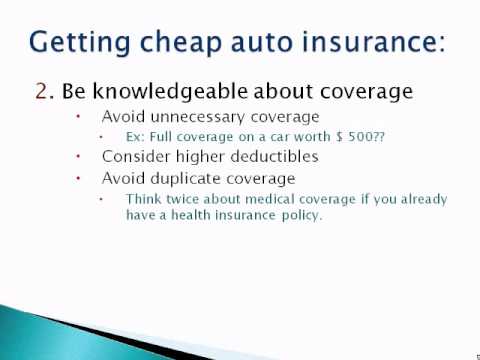
2. Optimize Coverage Limits and Increase Deductibles
Many drivers unknowingly overpay for auto insurance by carrying excessive coverage limits or deductibles that do not match their current financial situation or the actual market value of their vehicle. Reviewing your policy declarations page allows you to identify areas where you can trim unnecessary costs without exposing yourself to undue financial risk.
If you drive an older vehicle that has fully depreciated and is worth less than a few thousand dollars, paying for comprehensive and collision coverage often defies basic financial logic. If the cost of your comprehensive and collision premiums combined with your deductible exceeds 10% of the vehicle's actual cash market value, dropping those coverages entirely can yield immediate savings.
| Coverage Type | When to Keep | When to Consider Adjusting |
|---|---|---|
| Comprehensive & Collision | Vehicle is financed or has high market value. | Vehicle is older, paid off, and worth minimal cash value. |
| State Minimum Liability | Never recommended for most drivers due to high financial exposure. | Only if asset protection is entirely absent. |
| Higher Deductibles ($1,000) | You maintain a dedicated savings fund for unexpected expenses. | You lack liquid savings to cover an emergency payout. |
Furthermore, raising your deductibles from $500 to $1,000 typically reduces your comprehensive and collision premium costs by 15% to 30%. Before making this adjustment, ensure you maintain an emergency savings fund capable of covering the higher out-of-pocket deductible amount in the event of a sudden collision or weather-related incident.
3. Maximize Available Discounts and Bundle Policies
Insurance providers offer an extensive array of discounts designed to incentivize low-risk behaviors, loyalty, and efficient consumer habits. Many drivers miss out on significant savings simply because they never formally requested an audit of their eligible discounts with their insurance agent or customer service representative.
Discounts vary widely by state and carrier, but systematic categorizations remain consistent across most major insurers. Reviewing the following discount categories can help you uncover hidden savings:
- Policy Bundling: Combining your auto insurance policy with homeowners, renters, condo, or life insurance through the exact same provider frequently yields multi-policy discounts ranging from 10% to 25% on your car insurance bill.
- Multi-Car Discounts: Registering every vehicle operated within a single household under one unified policy drastically lowers the per-vehicle administrative and risk cost for the insurance carrier.
- Safety and Anti-Theft Device Reductions: Vehicles equipped with factory-installed passive restraint systems, anti-lock brakes, daytime running lights, GPS tracking devices, and verified vehicle recovery systems qualify for specific safety credits.
- Affinity and Professional Group Discounts: Many insurers offer preferential rates to alumni associations, military personnel, federal employees, teachers, engineers, and members of specific credit unions or professional organizations.
- Paperless Billing and Pay-in-Full Options: Opting out of physical mail statements and automatic monthly payment fees, or paying your six-month or annual policy premium entirely upfront, eliminates recurring installment fees and secures automated discounts.
4. Maintain a Clean Driving Record and Improve Credit-Based Scores
An insurer's primary objective is risk assessment. Statistically, drivers with historical moving violations, at-fault accidents, and impaired driving charges pose a higher probability of filing costly future claims. Consequently, maintaining a spotless driving record remains the most reliable long-term strategy for keeping insurance premiums manageable.
Moving violations such as speeding tickets, reckless driving citations, and failure to yield typically remain on your motor vehicle record (MVR) for three to five years, depending on state regulations. During this window, insurers apply surcharges that significantly inflate your premium. Defensive driving courses approved by your state's department of motor vehicles can sometimes remove points from your license or earn you a direct insurance discount of up to 10%.
In most jurisdictions, insurers are also legally permitted to utilize credit-based insurance scores to determine pricing tiers. Statistical models demonstrate a strong correlation between financial stability and claim frequency. You can actively lower your insurance costs over time by:
- Paying down revolving credit card debt and keeping credit utilization ratios low.
- Regularly checking your credit reports for reporting errors and disputing inaccuracies.
- Avoiding unnecessary hard credit inquiries in the months leading up to shopping for insurance quotes.
5. Enroll in Telematics and Usage-Based Insurance Programs
Usage-based insurance (UBI) programs, often powered by smartphone applications or plug-in telematics devices installed in your vehicle's OBD-II port, represent a major shift in how auto insurance quotes are calculated. Instead of relying purely on demographic statistics like age, gender, and zip code, telematics programs monitor your actual driving habits in real-time.
These programs track specific metrics, including:
- Speed Management: Monitoring how frequently you exceed posted speed limits or accelerate aggressively.
- Braking Dynamics: Measuring harsh stopping events that indicate tailgating or distracted reaction times.
- Milage Accumulation: Calculating total annual distance traveled; lower mileage drivers benefit immensely because vehicles parked more frequently incur lower risk exposure.
- Time-of-Day Driving: Penalizing late-night driving hours when the statistical probability of severe accidents involving impaired drivers spikes.
While telematics programs offer immediate initial sign-up discounts (often around 10% just for enrolling), drivers must evaluate their personal habits carefully. If you frequently commute during heavy rush-hour traffic, brake hard to avoid urban hazards, or drive late at night, a telematics program could potentially trigger a rate increase upon policy renewal. However, for remote workers, cautious city drivers, and individuals with low annual mileage, usage-based insurance consistently provides some of the lowest auto insurance quotes on the market.
Frequently Asked Questions
How often should I shop around for auto insurance quotes?
You should re-evaluate your auto insurance quotes at least once every 12 months or immediately following major life events such as moving to a new address, buying a new car, adding a teen driver to your policy, or getting married. Insurance rates change frequently due to statewide loss trends, and regular shopping ensures you never overpay.
Does my credit score really affect the cost of my car insurance?
Yes, in most U.S. states, insurance companies use a specialized credit-based insurance score to help determine premiums. Studies show a strong statistical correlation between credit history and the likelihood of filing an insurance claim. Improving your credit score over time can result in substantially lower insurance quotes.
What is the difference between comprehensive and collision coverage?
Collision coverage pays for damage to your vehicle resulting from a collision with another car or a stationary object, regardless of fault. Comprehensive coverage protects your vehicle from non-collision-related incidents, such as theft, vandalism, fire, animal strikes, falling tree branches, and severe weather events like hail or floods.
Will filing a minor insurance claim raise my rates?
Yes, filing even a minor claim can cause your insurance rates to increase upon your next policy renewal, especially if the accident was deemed your-fault. For minor incidents where repair costs are only slightly higher than your deductible, paying out-of-pocket often prevents long-term premium surcharges that exceed the cost of the repair.
How can I lower insurance rates for a teenage driver?
Adding a teenager to an auto insurance policy is notoriously expensive due to their lack of driving experience. You can mitigate these costs by adding them to an existing multi-car family policy rather than purchasing a standalone policy, ensuring they maintain a high school or college "Good Student" discount (usually requiring a B average or higher), and enrolling them in an approved defensive driving course.
Finding the best affordable auto insurance quotes requires diligence, active comparison, and an understanding of how insurance providers calculate risk. By systematically reviewing your coverage limits, leveraging multi-policy discounts, maintaining a clean driving record, and exploring usage-based telematics programs, you can dramatically reduce your annual auto insurance expenditures while maintaining the financial protection you and your vehicle deserve.