The 2020 BMW M8 Competition is a high-performance luxury grand tourer powered by a 4.4-liter twin-turbocharged S63 V8 engine producing 617 horsepower and 553 lb-ft of torque, mated to an 8-speed M Steptronic transmission and an M-tuned xDrive all-wheel-drive system capable of launching the car from 0 to 60 mph in roughly 3.0 seconds.
When BMW introduced the M8 lineup for the 2020 model year, it represented the pinnacle of the brand's engineering prowess, serving as the ultimate expression of luxury, speed, and technology. Sitting above the standard 8 Series, the M8 and its more aggressive sibling, the M8 Competition, replaced the old 6 Series generation with a much sharper, track-capable ethos. This comprehensive breakdown explores the inner workings, mechanical specifications, dynamic capabilities, and everyday practicality of the 2020 BMW M8 Competition.
Introduction to the F91, F92, and F93 Lineup
The 2020 BMW M8 Competition was offered in three distinct body styles, each designated by a specific factory chassis code. Understanding these variations is essential for identifying the precise weight, structural rigidity, and target demographic of each variant:
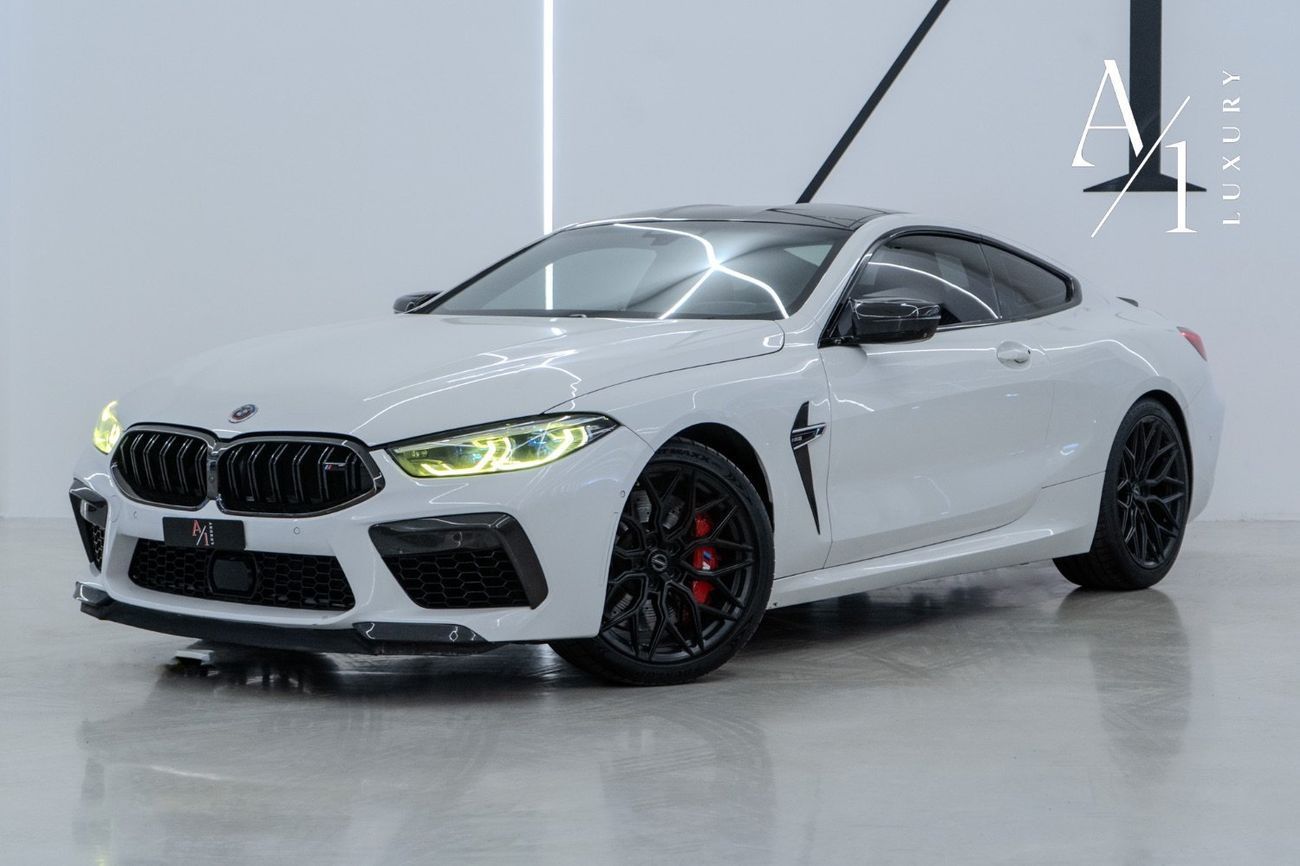
- F92 Coupé: The classic two-door fastback layout, optimized for structural rigidity and the lowest center of gravity in the lineup.
- F93 Gran Coupé: A four-door iteration featuring a stretched wheelbase, providing genuine rear-seat legroom while maintaining the sleek, low-slung roofline of a sports car.
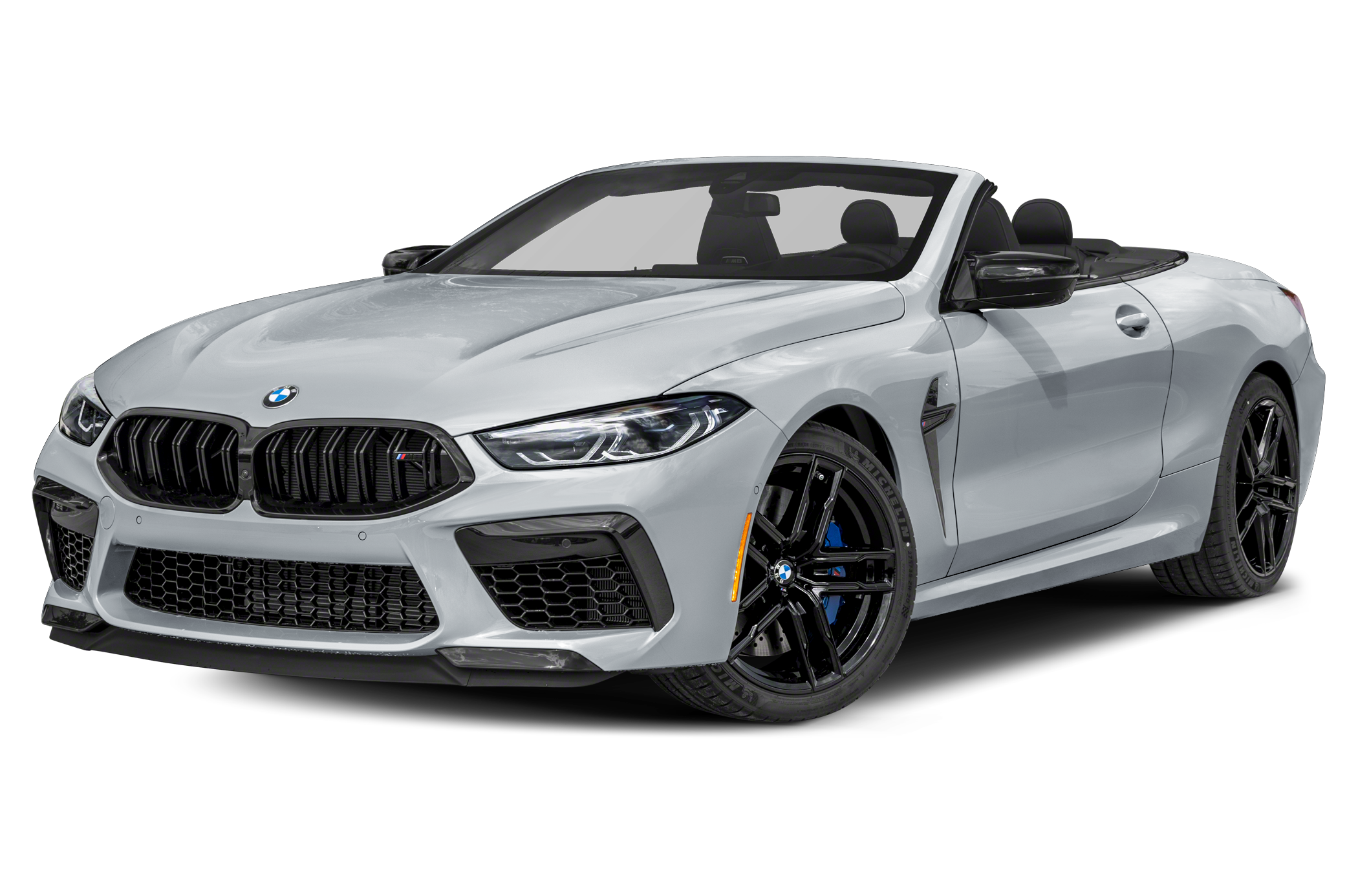
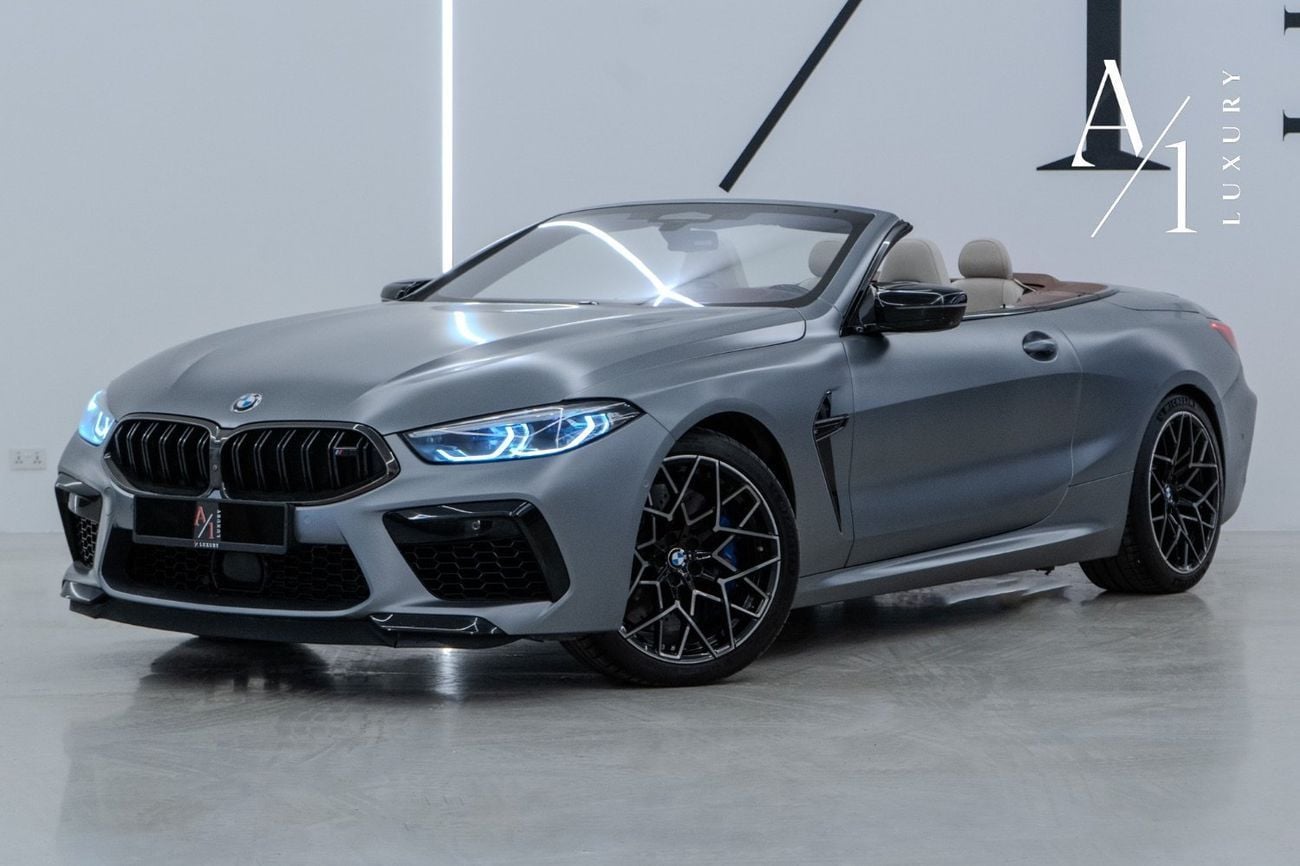
- F91 Convertible: A soft-top cabriolet designed for open-air driving, utilizing a multi-layer fabric roof that opens or closes in 15 seconds at speeds up to 30 mph.
Each of these configurations shares the same core powertrain and suspension architecture, though weight variations alter their straight-line acceleration and lateral grip metrics slightly.
Powertrain and Engine Architecture (S63B44T4)
At the heart of the 2020 BMW M8 Competition is the S63B44T4 engine, a heavily revised evolution of BMW's venerable 4.4-liter twin-turbocharged V8. Unlike the standard M8, which produces 600 horsepower, the Competition package unlocks an additional 17 horsepower, bringing the total output to a staggering 617 horsepower at 6,000 rpm. Peak torque remains a massive 553 lb-ft, available across a wide flat band from 1,800 to 5,860 rpm.
To achieve this performance, BMW utilized a cross-bank exhaust manifold that equalizes exhaust gas pulses and optimizes turbocharger spooling. The engine features direct fuel injection operating at an ultra-high pressure of 350 bar, ensuring atomization is as efficient as possible. Two twin-scroll turbochargers are positioned within the "V" of the cylinder block—a "hot V" layout—which drastically reduces turbo lag and shortens the distance exhaust gases must travel to spin the turbine wheels.
Furthermore, the engine is bolted to the chassis using stiffer engine mounts. BMW increased the spring rate of these mounts from 400 N/mm to 900 N/mm. This modification significantly reduces engine movement under heavy cornering loads, sharpening throttle response and providing a more direct connection between the driver's right foot and the rear wheels.
| Specification Category | 2020 BMW M8 Competition Data |
|---|---|
| Engine Type | 4.4-liter Twin-Turbocharged V8 (S63) |
| Horsepower | 617 hp @ 6,000 rpm |
| Torque | 553 lb-ft @ 1,800–5,860 rpm |
| Transmission | 8-speed M Steptronic with Drivelogic |
| Drivetrain | M xDrive All-Wheel Drive with 2WD Mode |
| 0–60 mph Time | ~3.0 seconds (Coupé) |
| Top Speed | 189 mph (with M Driver's Package) |
Transmission, Drivetrain, and M xDrive System
Power is routed through an 8-speed M Steptronic automatic transmission featuring Drivelogic, which allows the driver to adjust the shift speed and aggressiveness across three distinct modes, ranging from smooth daily commuting to lightning-fast track shifts. Unlike dual-clutch transmissions, this torque-converter-based automatic offers superior smoothness in heavy traffic while maintaining the capability to slam gears home under full throttle.
The standout feature of the powertrain is the rear-biased M xDrive all-wheel-drive system, which works in tandem with an Active M Differential on the rear axle. Drivers can select between three operational modes via the iDrive menu:
- 4WD (Default): Provides maximum traction and neutral handling, directing power to the front wheels only when the rear tires begin to slip.
- 4WD Sport: Sends a higher percentage of torque to the rear wheels, allowing for controlled, wider slip angles and a more rear-driven feel while retaining the safety net of front-wheel assistance.
- 2WD (Pure Rear-Wheel Drive): Disables the front axle entirely, routing 100% of the engine's output exclusively to the rear wheels. This mode also turns off the Dynamic Stability Control (DSC) system completely, catering directly to track enthusiasts and drift drivers.
Chassis, Suspension, and Handling Dynamics
Weighing in at over 4,000 pounds across all variants, the 2020 BMW M8 Competition relies heavily on advanced electronic and mechanical chassis tuning to mask its mass. The double-wishbone front axle and five-link rear axle feature bespoke M-specific kinematics, including stiffer rubber mounts, unique control arms, and higher camber settings to maximize contact patches during cornering.
Adaptive M Suspension with electronically controlled dampers comes standard. The system continuously monitors road conditions, driving style, and steering input to adjust damper stiffness in milliseconds. Drivers can cycle through Comfort, Sport, and Sport Plus damper settings, tailoring the ride quality from a compliant cruiser to a flat-cornering track machine.
Steering is handled by an Electric Power Steering system with M Servotronic variable ratio assistance. While purists often debate the feel of electronic steering racks, the M8 Competition delivers a heavy, accurate weighting that inspires confidence at triple-digit speeds.
Braking System and Brake-By-Wire Technology
Stopping a luxury grand tourer capable of nearly 190 mph requires substantial stopping power. The 2020 M8 Competition comes standard with M compound brakes featuring six-piston fixed calipers up front and single-piston floating calipers in the rear, clamping down on massive perforated, inner-vented discs.
Notably, the M8 utilizes an integrated braking system—a brake-by-wire setup—that combines the brake activation, brake booster, and control functions into a single compact module. This system allows drivers to customize the brake pedal feel through the iDrive menu, switching between a comfort-oriented pedal response and a more direct, track-focused pedal feel that requires less travel and offers immediate bite.
For buyers intending to track their vehicles, an optional M Carbon Ceramic Brake system was available. These gold-painted calipers clamp down on massive carbon-ceramic rotors, reducing unsprung weight by roughly 50 pounds, eliminating brake fade under extreme thermal stress, and significantly increasing pad and rotor lifespan during high-performance track driving.
Interior Technology, Ergonomics, and Luxury Amenities
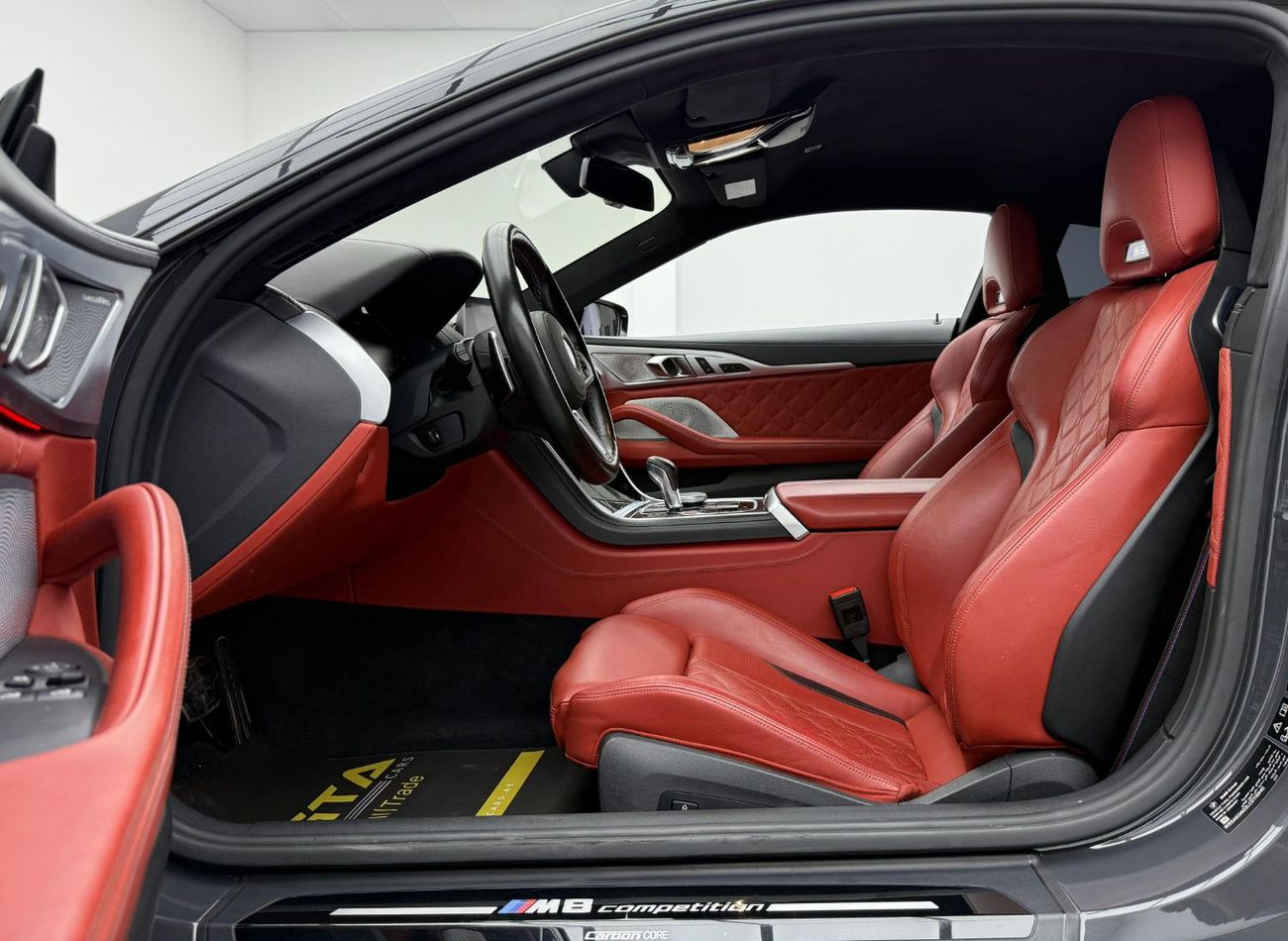
Inside the cabin, the 2020 BMW M8 Competition blends ultra-luxury materials with motorsport-inspired ergonomics. Merino leather upholstery comes standard, accented by Alconada headliners, carbon fiber trim finishers, and illuminated M8 badges embedded into the newly designed M Sport seats.
The dashboard centers around BMW’s Live Cockpit Professional, featuring a 12.3-inch digital instrument cluster and a 10.25-inch central touchscreen running iDrive 7.0. Physical controls remain for climate control and core audio functions, a welcome ergonomic choice for drivers who prefer tactile buttons over touchscreen menus while on the move.
The steering wheel features two prominent red buttons labeled M1 and M2. These customizable presets allow drivers to save their preferred configurations for engine response, transmission shift speed, suspension firmness, steering weight, brake pedal feel, and stability control thresholds. With a single tap of a thumb, the car transforms from a quiet highway cruiser into a snarling track monster.
Exterior Design and Aerodynamics
The exterior styling of the 2020 M8 Competition communicates high-performance intent through subtle yet aggressive aerodynamic enhancements. Up front, the signature kidney grille features double black slats and an M8 badge, flanked by adaptive LED headlights with BMW Laserlight technology.
The side profile is defined by muscular rear haunches, functional air breathers behind the front wheels, and an available carbon fiber roof (standard on the Coupé) that lowers the center of gravity and reduces overall vehicle weight. The rear fascia houses a carbon fiber lip spoiler, an aggressive lower diffuser, and quad black-chrome exhaust tips measuring 100 millimeters in diameter.
Common Considerations, Ownership Costs, and Maintenance
Owning a high-end performance flagship like the 2020 BMW M8 Competition involves financial responsibilities that extend well beyond the initial purchase price. Prospective buyers must account for several operational factors:
- Fuel Consumption: The S63 twin-turbo V8 is a thirsty engine. Expect fuel economy figures in the neighborhood of 15 mpg city and 21 mpg highway under normal driving conditions, dropping significantly during spirited driving.
- Tire Wear: Due to the vehicle's substantial weight and aggressive factory alignment specifications, rear tires experience high wear rates. Performance summer tires will likely need replacement every 10,000 to 15,000 miles depending on usage.
- Maintenance Expenses: Routine services, oil changes using high-performance BMW-approved synthetic oil, and brake replacements—especially on carbon-ceramic setups—carry premium luxury-tier pricing. Utilizing a reputable independent specialist familiar with the S63 engine can mitigate dealership service markups.
Frequently Asked Questions
What is the difference between a standard BMW M8 and an M8 Competition?
The M8 Competition features an upgraded suspension tune, stiffer engine mounts, a louder M Sport exhaust system, forged wheels, specific interior trim details, and an extra 17 horsepower extracted from the 4.4-liter twin-turbo V8, bringing its total output to 617 horsepower.
Can the 2020 BMW M8 Competition be driven in rear-wheel-drive mode?
Yes. The M xDrive system includes a dedicated 2WD mode that dispatches 100% of the engine power exclusively to the rear wheels, though this mode requires turning off the Dynamic Stability Control (DSC) system for safety and legal reasons.
How fast is the 2020 BMW M8 Competition from 0 to 60 mph?
Independent testing and official manufacturer specifications place the 0 to 60 mph acceleration time for the M8 Competition Coupé at approximately 3.0 seconds, making it one of the fastest accelerating production cars BMW has ever built.
Does the 2020 BMW M8 Competition have a manual transmission?
No. The M8 Competition is exclusively paired with an 8-speed M Steptronic automatic transmission featuring Drivelogic shift controls. A manual transmission option was never offered for this generation of the 8 Series or M8.
What kind of fuel does the 2020 BMW M8 Competition require?
The high-compression, twin-turbocharged S63 engine requires premium unleaded gasoline with a minimum rating of 91 AKI / 95 RON to prevent engine knock and achieve rated performance figures.
Conclusion and Final Recommendation
The 2020 BMW M8 Competition is an engineering tour de force that bridges the gap between ultra-luxury grand touring and supercar-level performance. While its high curb weight means it cannot hide its size on tight, technical tracks, its immense power, sophisticated all-wheel-drive system, and luxurious interior make it an exceptional high-speed cruiser and all-weather performer. For buyers seeking a daily-drivable luxury coupe, convertible, or four-door gran coupe with devastating straight-line speed and uncompromising build quality, the M8 Competition remains an extraordinary machine.