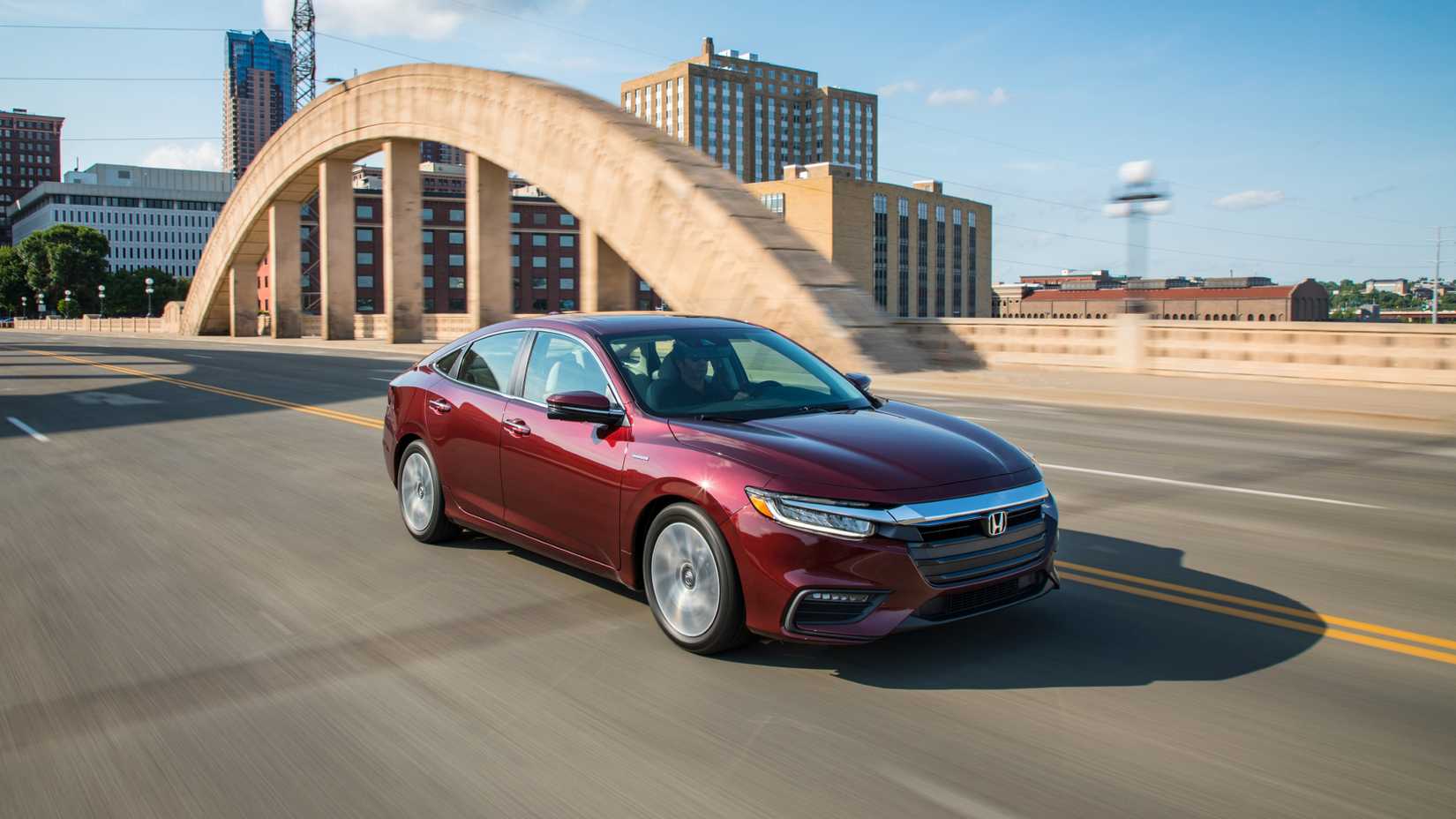
The 2019 Honda Insight represents the third generation of the model, re-introduced as a dedicated hybrid sedan designed to provide a sophisticated, fuel-efficient alternative to traditional compact cars. It utilizes a 1.5-liter Atkinson-cycle four-cylinder engine paired with an electric motor to deliver a combined 151 horsepower, focusing on a balance between daily efficiency and refined road dynamics.
The Evolution of the 2019 Honda Insight Platform
The 2019 model year marked a significant departure from the previous two-door, aerodynamic-focused liftback iterations of the Insight’s past. Honda repositioned the nameplate as a premium, five-passenger sedan sharing a platform architecture with the tenth-generation Honda Civic. This transition was critical for the vehicle's market placement; by moving toward a more conventional, upscale aesthetic, Honda aimed to attract buyers who wanted hybrid efficiency without the futuristic or polarizing design language often associated with dedicated hybrid vehicles.
The chassis design incorporates high-strength steel to maintain a rigid, lightweight structure, which is essential for both safety performance and handling precision. The suspension setup—MacPherson struts in the front and a multi-link rear suspension—provides a level of ride comfort that differentiates the Insight from some of its more economy-focused competitors.
Powertrain and Engineering Specifications
At the heart of the 2019 Honda Insight is the third-generation two-motor hybrid system. Unlike many hybrid systems that rely on a planetary gear set or a traditional automatic transmission, this setup functions primarily through electric power, with the internal combustion engine acting as a generator for much of the vehicle’s operation.
Engine and Motor Performance
- Engine Type: 1.5-liter, DOHC, i-VTEC 4-cylinder.
- Total System Horsepower: 151 hp.
- Total System Torque: 197 lb-ft of electric-motor torque.
- Electric Motor: AC Synchronous Permanent-Magnet Motor.
- Battery: 60-cell Lithium-ion battery pack, typically located under the rear seats to maximize trunk space.
The engine operates on the Atkinson cycle, which sacrifices some peak power for increased thermal efficiency. Under most driving conditions, the engine acts as an onboard generator, supplying electricity to the traction motor or recharging the battery. The vehicle can enter "Engine Drive" mode at higher sustained speeds where a lock-up clutch connects the engine directly to the front wheels, providing a mechanical link that is more efficient for highway cruising.
Fuel Economy and Real-World Efficiency
The primary objective of the 2019 Insight is fuel conservation. The EPA-estimated fuel economy ratings vary slightly based on the trim level due to differences in weight and equipment.
- LX and EX Trims: Rated at 55 mpg city / 49 mpg highway / 52 mpg combined.
- Touring Trim: Rated at 51 mpg city / 45 mpg highway / 48 mpg combined.
The variance in the Touring trim is largely attributed to the addition of luxury features such as larger wheels, leather seating, and a power moonroof, all of which contribute to a higher curb weight. To maximize efficiency, drivers should utilize the regenerative braking paddles located on the steering column. These allow the operator to adjust the intensity of the energy recovery system, effectively slowing the vehicle while replenishing the battery without using the mechanical brakes.
Interior Dimensions and Practicality
One of the most notable technical achievements of the 2019 Honda Insight is the placement of the Intelligent Power Unit (IPU). By housing the lithium-ion battery under the rear seats rather than in the trunk, Honda maintained a standard cargo volume of 15.1 cubic feet, which rivals the space found in non-hybrid midsize sedans.
Key Interior Measurements
| Dimension | Specification |
|---|---|
| Seating Capacity | 5 Passengers |
| Headroom (Front/Rear) | 39.3 / 36.9 inches |
| Legroom (Front/Rear) | 42.3 / 37.4 inches |
| Shoulder Room (Front/Rear) | 56.9 / 55.0 inches |
| Cargo Volume | 15.1 cubic feet |
The cabin design prioritizes ergonomics, featuring a standard 7-inch digital driver information interface and, on EX and Touring trims, an 8-inch high-resolution touchscreen display with Apple CarPlay and Android Auto integration.
Safety and Driver Assistance Technology
The 2019 Honda Insight came standard across all trim levels with the Honda Sensing suite of driver-assistive technologies. This inclusion was a major selling point, as it democratized safety features that were often hidden behind expensive optional packages in rival models.
- Collision Mitigation Braking System (CMBS): Detects obstacles and can apply brake pressure if a collision is deemed imminent.
- Road Departure Mitigation (RDM): Uses cameras to identify lane markings and provides steering assistance or braking if the car begins to drift off the road.
- Adaptive Cruise Control (ACC): Maintains a set following distance from the vehicle ahead.
- Lane Keeping Assist System (LKAS): Adjusts steering to keep the vehicle centered in detected lanes.
- Traffic Sign Recognition: Uses a camera to identify speed limit signs and displays them on the dashboard.
Trim Level Comparison
The 2019 Honda Insight was offered in three primary trim levels. Understanding the differences is essential for buyers or enthusiasts evaluating specific versions in the pre-owned market today.
- LX: The entry-level model. Includes LED headlights, dual-zone automatic climate control, and the full Honda Sensing suite. It features a 6-speaker audio system and a 7-inch touchscreen.
- EX: Adds the 8-inch display audio system, Apple CarPlay, Android Auto, a 60/40 split-folding rear seat (which the LX lacks), and a smart entry system with walk-away auto-lock.
- Touring: The top-tier trim. Includes leather-trimmed seats, heated front seats, a power driver’s seat, built-in navigation, Wi-Fi hotspot capability, and a premium 10-speaker sound system.
Common Maintenance and Ownership Considerations
As of 2026, many 2019 Honda Insight models have surpassed the typical manufacturer bumper-to-bumper warranty period. Ownership now requires an understanding of hybrid-specific maintenance.
The internal combustion engine requires standard full-synthetic 0W-20 oil changes, typically following the internal Maintenance Minder system. The hybrid battery, while designed to last the life of the vehicle, is covered by a specific high-voltage battery warranty that lasts for 8 years or 100,000 miles from the original date of purchase. For owners currently approaching or exceeding these mileage milestones, the health of the cooling system for the hybrid battery is paramount. The battery intake vent is located on the lower portion of the passenger-side rear seat; keeping this vent free of dust, pet hair, and obstructions is critical for preventing overheating.
Frequently Asked Questions
Does the 2019 Honda Insight require special charging?
No. The 2019 Honda Insight is a "self-charging" hybrid. It does not have a plug-in port and cannot be charged via a wall outlet. The battery is replenished through the internal combustion engine and regenerative braking during normal operation.
How does the 2019 Insight differ from a 2019 Toyota Prius?
While both are efficient hybrids, the 2019 Insight emphasizes a more traditional interior and exterior design compared to the unconventional styling of the Prius. The Insight generally offers higher horsepower, providing a more responsive driving experience, while the Prius often leads in absolute peak fuel economy.
Is the transmission a traditional CVT?
It is often referred to as an E-CVT (Electronic Continuously Variable Transmission), but it does not use belts or pulleys like a traditional CVT. It utilizes a clutch system to transition between electric and gasoline-electric drive, providing a more linear acceleration feel than older, droning CVT systems.
Can the rear seats fold down?
In the EX and Touring trims, yes. These models feature a 60/40 split-folding rear seat back that significantly increases cargo capacity. The entry-level LX trim does not feature folding rear seats, which is a major factor for those prioritizing utility.
Are there any known issues with the 2019 Insight?
The 2019 Insight is generally regarded for its reliability. Owners occasionally report infotainment system glitches, which are often rectified through software updates at a dealership. As with all vehicles using direct-injection engines, ensuring timely maintenance is critical for long-term engine health.
Recommendations for Buyers and Owners
For those considering a 2019 Honda Insight in 2026, prioritize vehicles with a documented service history, specifically confirming that the hybrid cooling fan intake remains clean. If you require maximum utility, target the EX or Touring trims to ensure the availability of the split-folding rear seat. When test-driving, pay close attention to the transition between electric and gasoline modes; this shift should be nearly imperceptible in a well-maintained vehicle. By keeping the vehicle within its service intervals and respecting the hybrid-specific cooling requirements, the 2019 Insight remains one of the most cost-effective and reliable daily commuters available on the pre-owned market.