The 1956 Israel war—widely known as the Suez Crisis, the Sinai War, or Operation Kadesh—was a pivotal mid-century military conflict involving Israel, Egypt, Great Britain, and France. Sparked by Egypt's nationalization of the Suez Canal and ongoing border hostilities, the conflict reshaped Middle Eastern geopolitics, accelerated the decline of European imperial influence, and cemented Israel's regional military posture during the Cold War.
Historical Context and Origins of the Conflict
To understand the outbreak of hostilities in October 1956, one must examine the intersection of post-colonial nationalism, regional border instability, and Cold War maneuvering. The years following the 1948 Arab-Israeli War were marked by deep hostility. Egypt, under the leadership of Gamal Abdel Nasser—who came to power following the 1952 revolution—aspired to lead the pan-Arab movement, modernize the Egyptian economy, and rid the region of lingering British military presence.
The Rise of Gamal Abdel Nasser and Regional Tensions
Nasser’s nationalist policies quickly positioned him as a central antagonist to Western interests in the Middle East and a direct threat to Israeli security. Several key friction points escalated tensions between Cairo and Tel Aviv:
- The Fedayeen Incursions: Operating primarily from the Egyptian-controlled Gaza Strip, Palestinian fedayeen launched frequent cross-border guerrilla raids into Israeli towns, resulting in civilian casualties and property destruction. Israel responded with heavy retaliatory military raids, creating an escalating cycle of violence.
- The Gaza Raid of 1955 (Operation Black Arrow): A massive Israeli Defense Forces (IDF) raid on an Egyptian military base in Gaza left dozens of Egyptian soldiers dead. This event convinced Nasser that a large-scale confrontation with Israel was inevitable, prompting him to seek advanced weaponry.
- The Czech-Egyptian Arms Deal (1955): Blocked by Western powers from acquiring sufficient arms, Nasser turned to the Soviet bloc, securing a massive cache of modern Soviet weaponry through Czechoslovakia. This deal altered the regional military balance and alarmed Israeli leadership, who feared a coordinated future Arab assault.
- The Blockade of International Waterways: Egypt closed the Suez Canal and the Straits of Tiran to Israeli-flagged shipping and vessels carrying strategic goods to the Israeli port of Eilat, violating international maritime conventions and strangling Israel's southern trade route.
The Suez Canal Nationalization Trigger
The immediate catalyst for the tripartite intervention of Britain, France, and Israel was Nasser’s decision on July 26, 1956, to nationalize the Suez Canal Company. The canal, previously owned largely by British and French shareholders, was a vital artery for international trade and Middle Eastern oil transit to Europe.
British Prime Minister Anthony Eden viewed Nasser’s move as an existential threat to British economic and imperial lifelines, likening Nasser to Benito Mussolini. Simultaneously, France was furious over Egypt's material and propaganda support for the Algerian National Liberation Front (FLN) fighting against French colonial rule. This alignment of interests forged a secret alliance between London, Paris, and Jerusalem to retake the canal and neutralize the Egyptian threat.
The Secret Protocol of Sèvres and Military Objectives
As summer turned to autumn in 1956, diplomats and military planners from Britain, France, and Israel secretly convened in Sèvres, outside Paris. The resulting Protocol of Sèvres established a coordinated military blueprint designed to provide a legal and political pretext for Anglo-French intervention.
The Tripartite Strategy
The plan engineered at Sèvres relied on a manufactured sequence of events:
- The Israeli Vanguard: Israel would launch a surprise, massive mechanized invasion across the Sinai Peninsula toward the Suez Canal, ostensibly to eliminate the fedayeen bases and break the naval blockade.
- The Anglo-French Ultimatum: Britain and France would immediately issue an ultimatum to both Egypt and Israel, demanding an immediate cease-fire and the withdrawal of their forces from the canal zone to "protect" international shipping.
- The Interventions: When Nasser—as anticipated—rejected the ultimatum, Anglo-French forces (Operation Musketeer) would launch amphibious and airborne assaults to seize the canal zone, ostensibly to separate the combatants and secure the waterway, while actually deposing Nasser and regaining control of the infrastructure.
The Military Campaign: Operation Kadesh and Operation Musketeer
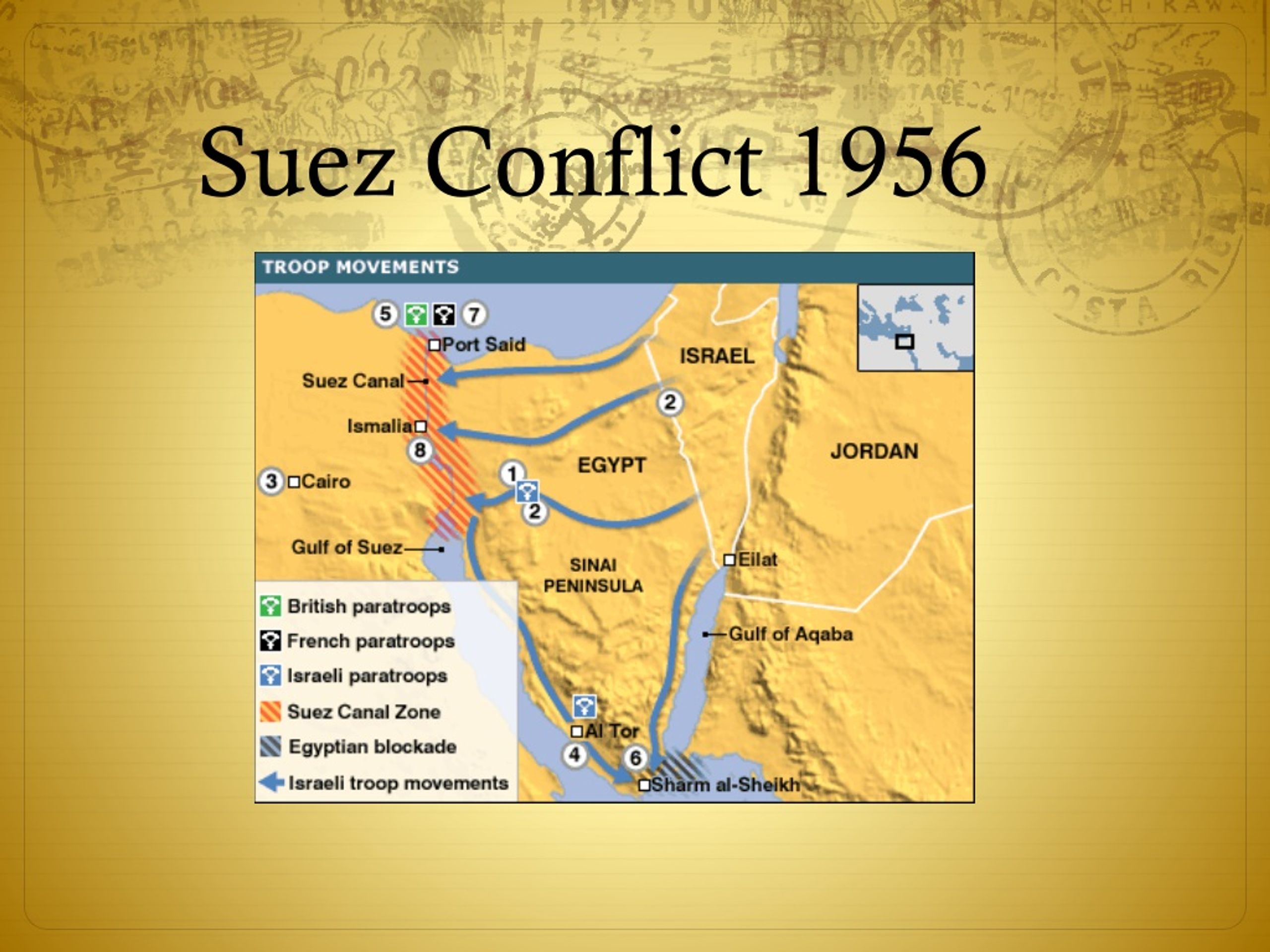
On October 29, 1956, the operational phase commenced when an Israeli paratrooper battalion dropped near the Mitla Pass deep within the Sinai Peninsula, swiftly followed by a full-scale armored advance led by prominent IDF commanders such as Moshe Dayan and Ariel Sharon.
| 1956 Sinai-Suez Campaign Overview | |
|---|---|
| Date Range | October 29 – November 7, 1956 |
| Primary Combatants | Israel, France, Great Britain vs. Egypt |
| Israeli Objective | Clear Sinai fedayeen bases, reopen Straits of Tiran |
| Anglo-French Goal | Reclaim Suez Canal control, weaken/oust Gamal Abdel Nasser |
| Outcome | Military victory for invaders; strategic/political defeat |
The IDF Sinai Offensive
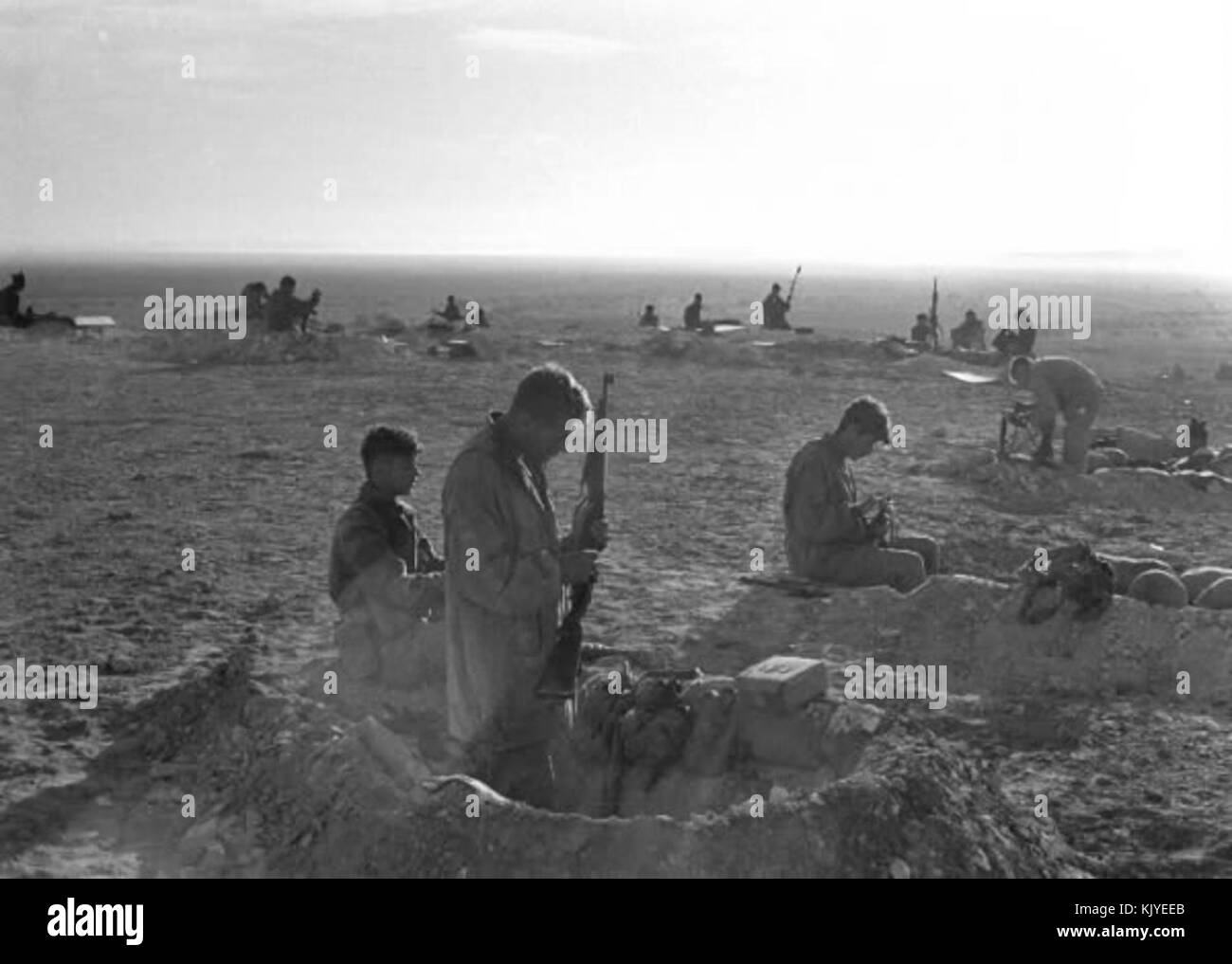
The Israeli campaign, designated Operation Kadesh, achieved rapid tactical success. Utilizing rapid mechanized columns, the IDF outmaneuvered Egyptian positions in the Sinai. Key battles occurred at:
- The Mitla Pass: Fierce fighting ensued as Israeli forces secured this strategic mountain defile, encountering unexpectedly heavy Egyptian resistance before clearing the route.
- Rafah and El-Arish: Israeli armored divisions broke through heavily fortified Egyptian defensive lines, cutting off the Gaza Strip and pushing deep into the peninsula.
- Sharm el-Sheikh: Capturing this southern outpost secured freedom of navigation through the Straits of Tiran, fulfilling a core Israeli strategic requirement.
By November 5, Israeli forces had secured the entire Sinai Peninsula and the Gaza Strip, achieving their military objectives at a cost of approximately 230 Israeli soldiers killed.
The Anglo-French Intervention
True to the Sèvres agreement, Britain and France issued their ultimatum on October 30. When Egypt rejected it, Anglo-French naval and air forces began bombing Egyptian airfields and infrastructure. On November 5 and 6, British and French paratroopers and marines landed at Port Said and Port Fuad.
While the military landings achieved their initial tactical goals of securing parts of the northern canal zone, the operation was plagued by political hesitation, logistical delays, and fierce international condemnation before reaching the Suez city of Ismailia or Cairo.
Geopolitical Consequences and Superpower Intervention
The military success of the invading coalition was entirely overshadowed by a catastrophic diplomatic defeat, engineered primarily by the intervention of the two Cold War superpowers: the United States and the Soviet Union.
The United States and Eisenhower’s Opposition
President Dwight D. Eisenhower and Secretary of State John Foster Dulles were furious that their NATO allies had launched a secret, uncoordinated war without American consultation, especially while Washington was simultaneously condemning Soviet intervention in the Hungarian Revolution of 1956.
Fearing that the invasion would drive Arab nations entirely into the Soviet sphere and damage Western moral credibility, the Eisenhower administration exerted immense financial and diplomatic pressure on Great Britain and France:
- Economic Pressure: The U.S. threatened to block British access to International Monetary Fund (IMF) emergency loans and refused to sell vital petroleum supplies to Britain, triggering a severe sterling crisis.
- United Nations Action: Washington co-sponsored resolutions in the United Nations General Assembly condemning the aggression and demanding an immediate, unconditional withdrawal of foreign troops.
The Soviet Threat
Simultaneously, Soviet Premier Nikolai Bulganin issued aggressive threats to Britain, France, and Israel, hinting at the use of "rocket weapons" (nuclear strikes) if the invasion did not cease immediately. While the primary Soviet motivation was exploiting Western disunity and posing as the champion of the Arab world, the war scare heightened Cold War tensions to a dangerous peak.
Withdrawal and Peacekeeping Deployment
Isolated internationally, facing imminent economic ruin in London, and abandoned by their American allies, Britain and France agreed to a cease-fire and withdrew their forces by December 1956. Israel, initially resistant to returning the conquered territories without ironclad security guarantees, ultimately withdrew from the Sinai Peninsula and Gaza Strip in March 1957 under heavy American pressure.
In exchange for withdrawal, the United Nations Emergency Force (UNEF) was deployed along the armistice line in the Sinai and at Sharm el-Sheikh to act as a buffer and guarantee maritime access through the Straits of Tiran. Furthermore, maritime powers recognized Israeli shipping rights in the Gulf of Aqaba as an international waterway.
Long-Term Regional and Global Impact
The 1956 war fundamentally altered the balance of power in the Middle East and globally, setting the stage for subsequent conflicts such as the Six-Day War in 1967.
- The Eclipse of European Imperialism: The crisis signaled the definitive end of Great Britain and France as global superpower arbiters in the Middle East. Power in the region shifted decisively to the bipolar hegemony of the United States and the Soviet Union.
- Nasser’s Political Triumph: Although Egypt suffered a decisive military defeat on the ground, Gamal Abdel Nasser emerged from the crisis as an undefeated political victor across the Arab world. He successfully retained nationalized control of the Suez Canal, cementing his status as the preeminent leader of Arab nationalism.
- Enhancement of IDF Deterrence: For Israel, the war demonstrated the operational capability of the IDF and secured free shipping lanes in the south for over a decade. However, it also underscored Israel's ultimate reliance on international diplomacy and the fragile nature of its borders without permanent security guarantees.
- Establishment of the UN Peacekeeping Model: The deployment of UNEF marked the birth of modern United Nations peacekeeping operations, establishing precedents for neutral buffer forces in international disputes.
Frequently Asked Questions
What was the main cause of the 1956 Israel war?
The primary catalyst was Egypt's nationalization of the Suez Canal in July 1956 by President Gamal Abdel Nasser. This act threatened British and French economic and strategic interests, while ongoing fedayeen border raids and Egypt's blockade of Israeli shipping through the Straits of Tiran provided the immediate pretext for Israeli military action.
Which countries participated in the 1956 conflict?
The military conflict directly involved Israel, Egypt, Great Britain, and France. Israel launched an offensive into the Sinai Peninsula against Egypt, while Britain and France intervened militarily to seize the Suez Canal zone following a pre-arranged secret pact known as the Protocol of Sèvres.
What was the military outcome of the Suez Crisis?
Militarily, the invading coalition achieved their immediate tactical goals: Israeli forces successfully overran the Sinai Peninsula and opened the Straits of Tiran, while Anglo-French forces captured parts of the Suez Canal. However, the intervention was a strategic failure due to intense diplomatic and financial pressure from the United States and the Soviet Union.
Why did the United States oppose the 1956 intervention?
The Eisenhower administration opposed the invasion because it was conducted without U.S. consultation, violated international law, coincided dangerously with the Soviet suppression of the Hungarian Revolution, and risked pushing Arab nationalist states into a military alliance with the Soviet Union.
How did the 1956 war impact Israel’s strategic position?
The war resulted in the temporary removal of Egyptian fedayeen bases from the Sinai, the securing of maritime access through the Straits of Tiran via the deployment of United Nations peacekeepers, and a temporary boost to Israeli military deterrence, though it did not permanently resolve broader regional recognition issues.
Conclusion and Historical Assessment
The 1956 war remains a classic study in the limits of military force when divorced from international diplomacy and superpower alignment. While tactical execution by the Israel Defense Forces and allied European powers achieved short-term objectives, the overriding realities of the Cold War forced a complete rollback of territorial gains. Understanding the context and consequences of Operation Kadesh and the Suez Crisis is essential for analyzing the complex geopolitical dynamics that continue to influence the Middle East today.