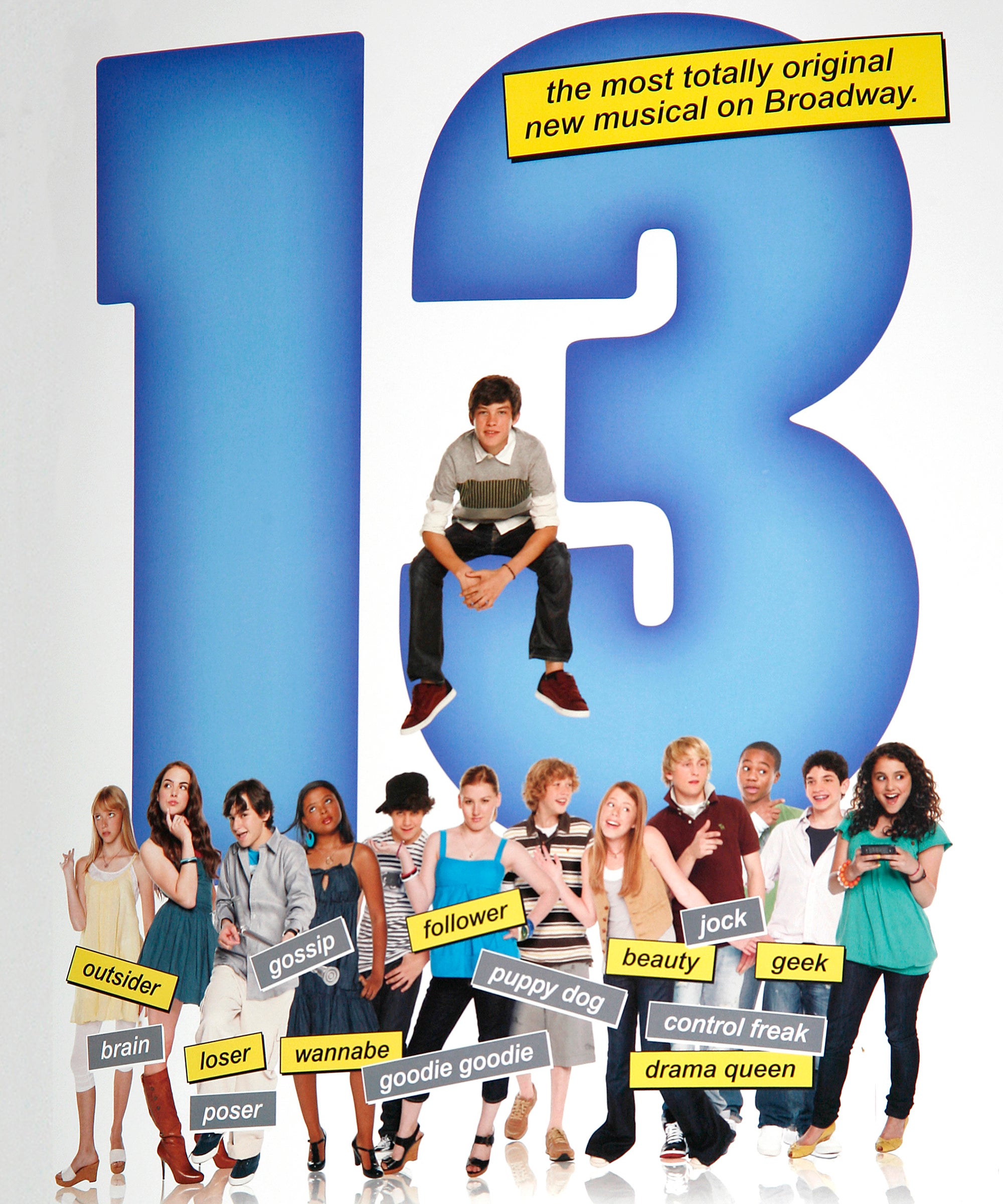
Ariana Grande made her professional debut in the 2008 Broadway musical 13, playing the role of Charlotte. As the only Broadway production to feature a cast and band composed entirely of teenagers, it served as the definitive launching pad for her career, showcasing the vocal prowess that would later define her global pop stardom.
The Genesis of 13: A Broadway Experiment
Before she was a multi-platinum recording artist or the star of the Wicked films, Ariana Grande was a fifteen-year-old theater enthusiast from Florida. The musical 13, with music and lyrics by Tony Award-winner Jason Robert Brown and a book by Dan Elish and Robert Horn, represented a significant risk for Broadway in 2008. The production’s central conceit was its age limit: every single person on stage, and every musician in the pit, had to be a teenager.
This "teenagers only" rule created a unique energy within the Bernard B. Jacobs Theatre. For Grande, the production was more than just a job; it was a rigorous training ground. The show follows Evan Goldman, a twelve-year-old who is uprooted from New York City to Appleton, Indiana, following his parents' divorce. As he navigates the social hierarchy of a new school while preparing for his Bar Mitzvah, the audience is introduced to various archetypes of middle-school life. Grande was cast as Charlotte, a cheerleader and a member of the "popular" clique, a role that required impeccable comedic timing and high-energy vocal delivery.
1. The Casting of Charlotte: Ariana’s Big Break
Ariana Grande’s journey to Broadway began with a massive open casting call. Out of hundreds of hopeful teenagers, Grande’s vocal clarity and stage presence stood out to Jason Robert Brown and the casting directors. While she was not the lead character—that role belonged to Graham Phillips as Evan—Charlotte was a pivotal supporting character.
Charlotte is essentially the "lieutenant" to the school’s "queen bee," Lucy. This role allowed Grande to showcase her ability to blend into an ensemble while still commanding attention during her featured moments. In 2008, critics noted the raw talent of the young cast, but few could have predicted that the girl playing the bubbly cheerleader would become one of the most successful vocalists of the 21st century.
2. Musical Highlight: "Opportunity"
If there is one song that defines Ariana Grande’s contribution to the original Broadway cast recording of 13, it is "Opportunity." Although the song is led by the character Lucy (originally played by Elizabeth Gillies), Grande’s Charlotte provides the essential harmonic support and character work that makes the number a standout.
"Opportunity" is a masterclass in Jason Robert Brown’s signature style—complex rhythms, driving piano melodies, and lyrics that capture the frantic social maneuvering of adolescence. Grande’s performance in this number demonstrated her early ability to handle sophisticated Broadway arrangements. Watching archival footage of this performance today, one can see the foundations of the vocal control and "runs" that would later become her signature in the pop world.
3. The Professional Debut and the National Youth Theatre Award
For her performance as Charlotte, Grande did not just receive a paycheck; she received critical validation. She won a National Youth Theatre Association Award for her role in 13. This was a significant milestone, proving that her talent was recognized by the industry long before she reached mainstream fame.
The award recognized her ability to portray the nuances of a character who was both a follower and a social climber. Charlotte's arc involves a constant struggle to stay in the good graces of the popular kids, a theme that resonated deeply with the show’s target audience. Winning this award solidified Grande’s status as a professional actress and set the stage for her transition to television.
4. The Grande-Gillies Connection
One of the most enduring highlights of 13 was the off-stage friendship and on-stage chemistry between Ariana Grande and Elizabeth Gillies. Gillies played Lucy, the antagonist and Charlotte’s best friend. Their partnership in 13 was so effective that they were later cast together in the Nickelodeon hit series Victorious.
In the context of 2026, looking back at their Broadway debut highlights how influential this period was for both actresses. They spent their formative years navigating the pressures of an eight-show-a-week Broadway schedule, which fostered a professional bond that lasted decades. Fans of both artists often revisit the 13 cast recording to hear the early iterations of their harmonies, which are strikingly mature for their respective ages at the time.
5. Technical Mastery: Working with Jason Robert Brown
Jason Robert Brown is notoriously demanding of his performers. His scores are known for their difficulty, often featuring unconventional time signatures and wide vocal ranges. For a fifteen-year-old Ariana Grande, mastering this score was an education in music theory and vocal stamina.
Highlighting Grande’s work in the show requires acknowledging the technical precision required for the ensemble numbers. In songs like "Brand New You" and "Hey Kendra," the cast had to execute tight, three-part harmonies while performing high-energy choreography. Grande’s ability to maintain pitch and character under these conditions was a precursor to her ability to perform complex live sets during world tours later in her career.
6. The All-Teenager Orchestra
A highlight of the production that often gets overlooked is the band. Because the production mandated that no adults appear on stage or in the pit, the musicians were also teenagers. This created a raw, rock-and-roll atmosphere that perfectly complemented the show's themes of teenage angst and energy.
Ariana Grande has often mentioned in interviews how inspiring it was to be surrounded by peers who were equally dedicated to their craft. The lack of adult professionals in the performance space meant that the teenagers had to take full ownership of the show’s success. This environment of high stakes and peer accountability was instrumental in shaping Grande’s professional work ethic.
7. Plot Significance: Charlotte’s Social Maneuvering
Charlotte’s role in the plot of 13 is to act as a catalyst for the conflict between the protagonist, Evan, and the popular girl, Kendra. Charlotte is the one who often delivers the news—or the gossip—that shifts the social dynamics of the school.
A key highlight of Grande's performance was her delivery of the "rumor" subplot. Through songs and dialogue, Grande portrayed the toxic nature of middle-school gossip with a sense of comedic timing that kept the character from being purely a villain. She made Charlotte relatable, a girl who simply wanted to belong, even if it meant being a bit of a "mean girl" by proxy.
8. "It Can't Be True": The Power of Ensemble
The song "It Can't Be True" is perhaps the most famous ensemble number from the show. It captures the moment a scandalous rumor spreads through the school like wildfire. Ariana Grande’s performance in this number is a highlight because of its frantic energy and synchronized movement.
In this number, Grande had to coordinate her singing with a series of fast-paced phone-call sequences on stage. It showcased her "triple threat" capabilities: singing, dancing, and acting simultaneously. The song remains a fan favorite because it encapsulates the chaotic essence of being thirteen years old, a feeling Grande and her castmates conveyed with authentic intensity.
9. Opening Night at the Bernard B. Jacobs Theatre
The opening night of 13 on October 5, 2008, was a historic moment for Broadway. It was the first time a show with such a young demographic had attempted a run at a major Broadway house. For Grande, walking the red carpet and performing for a theater full of critics and industry veterans was her official entry into the world of elite entertainment.
The highlights from that night include the electric atmosphere and the sense of history being made. Although the show had a relatively short run (closing on January 4, 2009, after 102 performances), its impact on the cast's lives was permanent. For Grande, the opening night was the culmination of months of rehearsals and years of dreaming about the New York stage.
10. The 2008 Cast Recording: A Time Capsule
For fans in 2026, the original Broadway cast recording of 13 serves as a vital historical document. It captures Grande’s voice before it underwent the natural changes of adulthood and the professional polishing of the recording studio.
Listening to the recording, one can hear the "theater" in her voice—the enunciation and the projection required for the stage. It is a stark contrast to the "whisper-pop" and R&B styles she would later master. However, the power is already there. Her ability to hit the "belt" notes in the finale, "Brand New You," provides a glimpse of the powerhouse vocalist she would become.
| Feature | Details of the Broadway Production (2008) |
|---|---|
| Theater | Bernard B. Jacobs Theatre |
| Director | Jeremy Sams |
| Composer | Jason Robert Brown |
| Grande's Role | Charlotte |
| Key Songs | "Opportunity," "It Can't Be True," "Brand New You" |
| Total Performances | 102 (plus 22 previews) |
| Casting Requirement | Strictly teenagers (cast and band) |
| Legacy | Launchpad for Ariana Grande and Elizabeth Gillies |
11. Transitions: From Broadway to Nickelodeon
The highlight of Grande’s time in 13 isn't just what happened on stage, but what happened immediately after. Casting directors for Nickelodeon were among those who saw the show. The skills Grande displayed as Charlotte—the comedic timing, the youthful energy, and the vocal ability—directly led to her being cast as Cat Valentine in Victorious.
Without the Broadway highlights of 13, it is unlikely Grande would have moved to Los Angeles and entered the television world. The show served as her "screen test" for the industry. It proved she could handle a grueling schedule and deliver high-quality performances consistently.
12. "Brand New You": The Emotional Finale
The finale of the show, "Brand New You," is a high-octane celebration of growth and moving forward. Ariana Grande’s role in this number was to help lead the ensemble in a powerhouse vocal display. The song’s message—that life goes on and things get better—became a theme for many of the young actors in the show.
For Grande, this song was her final Broadway bow for over a decade. It represented the end of her childhood stage career and the beginning of her journey as a global icon. In 2026, this song is often played at retrospectives of her career, serving as a reminder of where it all began.
13. The 2026 Perspective: The "Wicked" Full Circle
By 2026, Ariana Grande has fully integrated her Broadway roots into her global persona. Having starred as Glinda in the film adaptation of Wicked, she has come full circle back to the world of musical theater. The highlights of 13 are now viewed through the lens of a "prequel" to her performance as Glinda.
The training she received in 13—the discipline of a Broadway schedule and the complexity of Jason Robert Brown’s music—provided her with the technical foundation to take on one of the most vocally demanding roles in the musical theater canon. Her 2026 status as a "theater-kid-turned-superstar" is a testament to the importance of her debut in 13.
Common Challenges and Experiences for the Young Cast
Performing on Broadway at fifteen is not without its hurdles. The cast of 13 had to balance their professional lives with educational requirements. Because they were minors, they were required to have on-site tutors and adhere to strict labor laws regarding their hours.
Moreover, the physical toll of performing a high-energy rock musical eight times a week is significant. Grande has spoken about the vocal health habits she developed during this time, including the use of steamers and vocal rest. These early habits likely contributed to her ability to maintain her voice throughout her subsequent decade-long career of touring and recording.
Comparing the Broadway Original and the Netflix Adaptation
In 2022, Netflix released a film adaptation of 13: The Musical. While Grande was not involved in the film, its release brought renewed attention to the 2008 original. A comparison of the two highlights how unique the Broadway production was.
The Broadway version was more grounded in the specific, sometimes harsh, realities of 2008 middle-school life. Grande’s Charlotte was part of a production that didn't shy away from the awkwardness and occasional cruelty of teenagers. The Netflix version, while charming, leaned into a more polished, contemporary aesthetic. For purists, the 2008 Broadway highlights remain the definitive version of the story, largely due to the raw talent of the original cast.
FAQ: Ariana Grande's Broadway Debut
How old was Ariana Grande when she was in 13 on Broadway?
Ariana Grande was 15 years old during the run of 13 on Broadway. She was born in 1993, and the show opened in 2008. This was within the strict age requirements of the production, which featured only teenagers.
What character did Ariana Grande play in 13?
She played Charlotte, a member of the popular group of girls at the school. While not the lead, Charlotte was a significant supporting character who participated in most of the major ensemble numbers and had key lines in the subplots involving the characters Kendra and Lucy.
Can I watch Ariana Grande's performance in 13 today?
There is no official professional film of the full 2008 Broadway production available for public purchase. However, various clips of promotional performances, talk show appearances, and the official cast recording exist. The New York Public Library for the Performing Arts at Lincoln Center holds a recorded version in its archives for research purposes.
Did Ariana Grande win any awards for 13?
Yes, she won a National Youth Theatre Association Award. This was an early recognition of her talent and helped establish her as a professional to watch in the entertainment industry.
Is the character of Charlotte in the 13 movie the same as the Broadway version?
The character exists in both, but the film adaptation made several changes to the plot and the songs. The 2022 Netflix film features a different actress in the role, as the production was cast with contemporary teenagers. Grande's 2008 performance remains the blueprint for the character's theatrical iteration.
Practical Recommendation for Fans and Historians
If you want to truly understand the roots of Ariana Grande’s vocal technique, the best action is to listen to the 2008 Original Broadway Cast Recording of 13. Pay close attention to the tracks "Opportunity" and "It Can't Be True." These recordings provide the clearest evidence of her early potential and the rigorous musical environment that shaped her. For those interested in her acting development, seeking out archival interviews from the 2008-2009 period reveals a young artist who was already deeply committed to the professional demands of her craft.