A 4K videowall is a large-scale multi-display visualization system engineered to deliver a total resolution of 3840 x 2160 pixels across its entire surface. By tiling multiple high-definition screens or LED modules together, these systems create a single, seamless digital canvas used for high-impact branding, data monitoring, and immersive environmental experiences.
In 2026, the demand for high-fidelity visual communication has moved 4K from a premium luxury to the baseline standard for professional environments. Whether in a corporate lobby, a mission-critical command center, or a high-end retail space, understanding the nuances of 4K videowall technology is essential for making an informed investment.
Defining the 4K Videowall: Resolution vs. Hardware
The term "4K videowall" can be interpreted in two distinct ways, and clarifying this distinction is the first step in any procurement process. The first interpretation refers to the total canvas resolution. In this scenario, a combination of lower-resolution screens (such as four 1080p Full HD monitors in a 2x2 configuration) is used to create a collective resolution of 4K.
The second interpretation involves using native 4K displays for every tile in the array. In a 2x2 configuration of native 4K panels, the resulting videowall would actually be an 8K display. By 2026 standards, a "4K Videowall" typically refers to the total output seen by the viewer, ensuring that the content being mapped across the screens maintains Ultra High Definition (UHD) clarity without pixelation or loss of detail.
Why 4K Matters in Large-Scale Displays
Resolution is not just about "sharpness"; it is about information density and viewing distance. A 4K wall allows viewers to stand much closer to the screen without seeing individual pixels (the "screen door effect"). This is critical in control rooms where operators must read small text on maps or SCADA systems, and in retail where consumers interact with displays at arm's length.
Primary Display Technologies for 4K Walls
Choosing the right hardware platform is the most significant decision in designing a videowall. In 2026, two dominant technologies lead the market: Liquid Crystal Display (LCD) and Direct View LED (DVLED).
LCD Videowalls
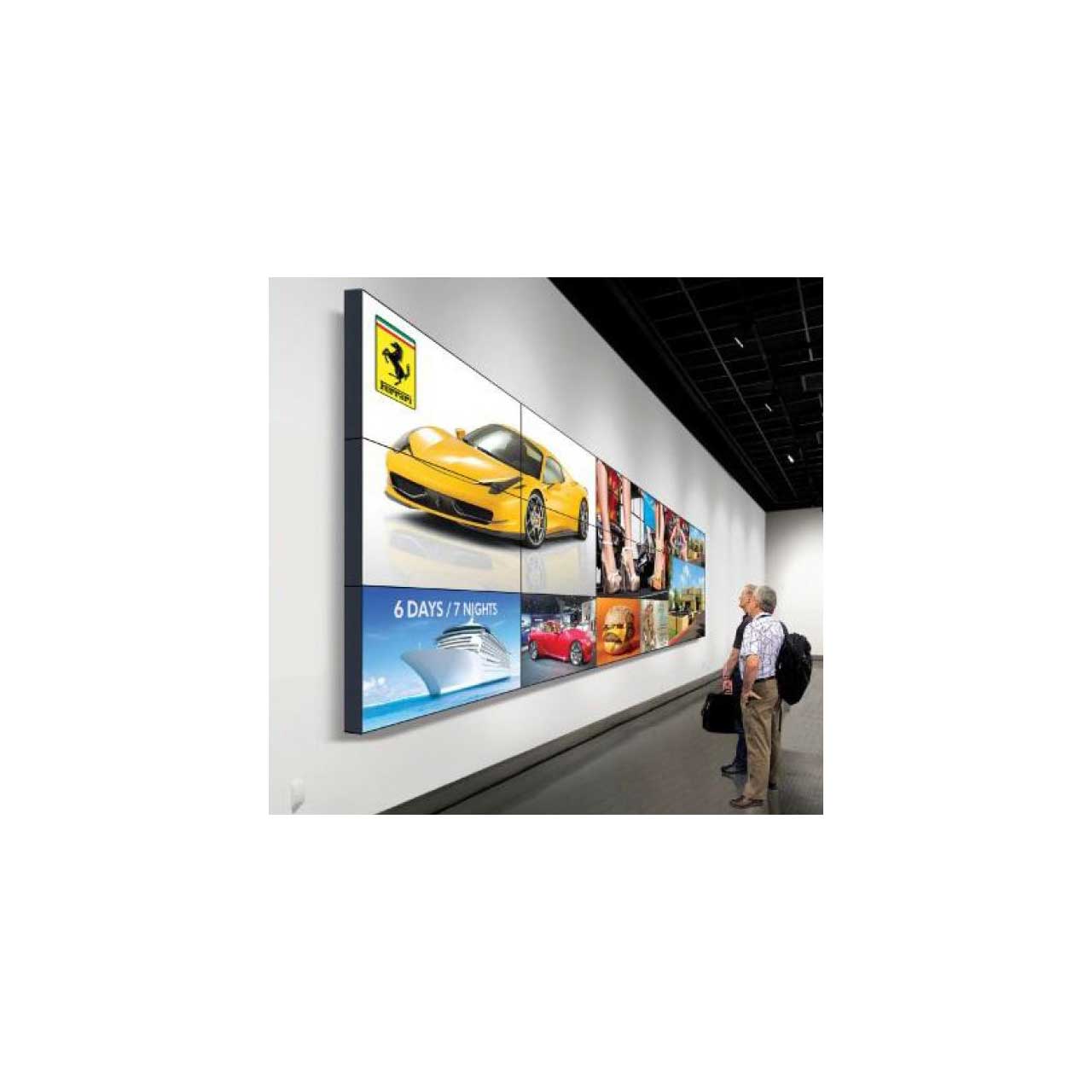
LCD remains a popular choice for 4K configurations due to its high pixel density and cost-effectiveness. These systems use professional-grade monitors with "extreme narrow bezels." When these monitors are tiled together, the gap between the images is often less than 1mm.
- Pros: Exceptional clarity for text and fine details, lower initial cost, and standard 16:9 aspect ratios that make content creation simpler.
- Cons: Visible seams (bezels) regardless of how thin they are, and potential for color shifting between panels over several years of use.
Direct View LED (DVLED)
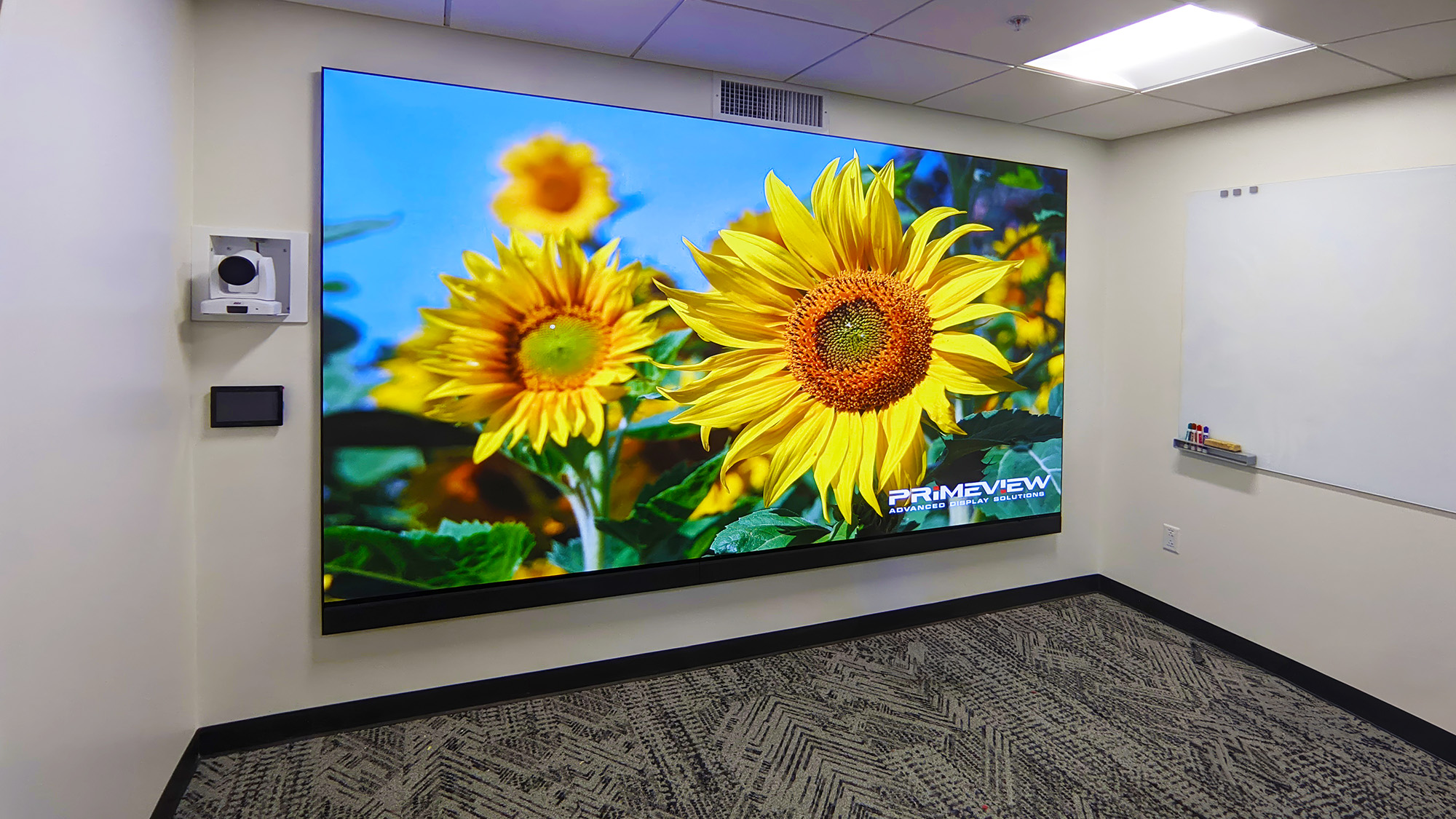
Unlike LCDs, DVLED systems consist of small modules of individual light-emitting diodes. These modules are "snapped" together to create a completely seamless surface with no bezels whatsoever.
- Pros: Absolute seamlessness, incredible brightness (ideal for sunlit atriums), and a much longer lifespan (often rated for 100,000 hours).
- Cons: Higher price point and the need for "fine pixel pitch" (the distance between pixels) to achieve a true 4K resolution in smaller physical spaces. To achieve 4K on a small wall, you need a very small pixel pitch (e.g., P0.9 or P1.2), which increases the cost significantly.
Essential Components of a 4K Videowall System
A videowall is more than just a collection of screens; it is an integrated ecosystem. To function at a 4K level, every link in the signal chain must support UHD bandwidth.
1. The Video Processor (The Brain)
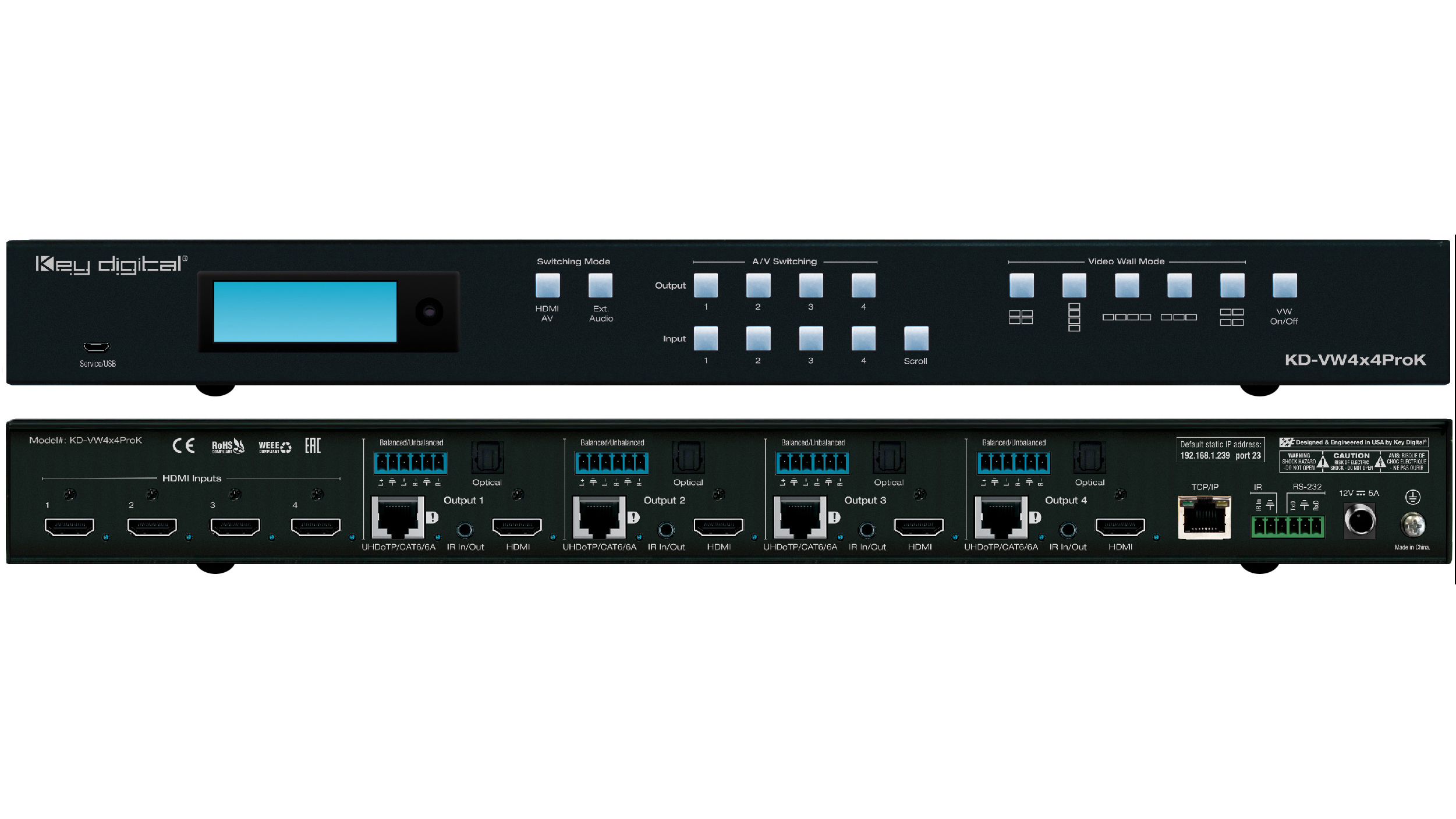
The video processor, or controller, takes various input sources (computers, cameras, media players) and scales them to fit the 4K canvas. In 2026, advanced processors use FPGA-based architectures to ensure zero-latency processing. They allow for "windowing," where multiple sources can be displayed simultaneously in different sizes and positions across the 4K area.
2. Mounting Systems
Standard VESA mounts are rarely sufficient for videowalls. Professional 4K walls require specialized mounting frameworks that allow for micro-adjustments in six directions (X, Y, and Z axes). This precision ensures that the screens are perfectly flush and aligned, which is vital for maintaining the illusion of a single continuous 4K image.
3. Connectivity and Signal Distribution
Distributing a 4K signal requires significant bandwidth. Traditional HDMI cables have distance limitations. Most modern installations utilize AV-over-IP (Audio-Visual over Internet Protocol) or HDBaseT. Using 10Gbps or 25Gbps network switches, installers can send uncompressed 4K video over long distances via Category 6A or Fiber Optic cabling.
Technical Specifications Comparison: LCD vs. DVLED
| Feature | LCD Videowall (4K Total) | DVLED Videowall (4K Total) |
|---|---|---|
| Bezel/Seam | 0.44mm to 3.5mm (Visible) | 0.0mm (Seamless) |
| Brightness | 500 – 700 nits (Standard) | 800 – 2000+ nits (High) |
| Resolution Density | High (Easy to hit 4K in small size) | Variable (Requires fine pitch for 4K) |
| Lifespan | 50,000 – 60,000 Hours | 100,000 Hours |
| Maintenance | Panel replacement is common | Module/Pixel-level repair possible |
| Ideal Environment | Indoor, text-heavy, budget-conscious | Atriums, high-end branding, large scale |
Prerequisites and Planning for Installation
Before purchasing a 4K videowall, several infrastructure requirements must be addressed to ensure the system operates reliably.
Structural Integrity
A 4K videowall is heavy. A 3x3 LCD array can weigh several hundred pounds. The wall where the displays will be mounted must be reinforced with plywood or steel backing. In some cases, floor-standing structures are used to distribute the weight to the building's foundation.
Power and Thermal Management
4K electronics generate significant heat. A large videowall acts as a space heater. Facilities must ensure that the HVAC system can handle the additional BTU (British Thermal Unit) load. Furthermore, power must be planned carefully; individual circuits are often required for different sections of the wall to prevent tripping breakers during the high-draw "power on" phase.
Calibration Requirements
No two displays are identical out of the box. A 4K videowall requires professional color and brightness calibration. In 2026, most high-end systems include automated calibration sensors that constantly monitor the panels and adjust them in real-time to ensure the "white balance" remains uniform across the entire wall.
Common Use Cases for 4K Videowalls
Mission-Critical Control Rooms
In utility plants, traffic management centers, and cybersecurity hubs, 4K resolution allows operators to view vast amounts of data. A 4K wall can display dozens of high-definition camera feeds or complex maps simultaneously without losing the legibility of small icons or text.
Corporate Lobbies and Experience Centers
First impressions are vital. Companies use 4K walls to display "digital art" or high-production-value brand videos. The 4K resolution ensures that even if a visitor walks right up to the wall, the imagery remains crisp and professional.
Broadcast Studios
Television news and sports sets rely on 4K videowalls as dynamic backdrops. Because modern cameras film in 4K or 8K, the background display must have a high enough resolution and refresh rate to avoid "moiré patterns" (visual interference) on camera.
Troubleshooting and Maintenance
Maintaining a 4K videowall requires a proactive approach. Because these systems are often composed of many moving parts, failures can occur.
- Color Drifting: Over time, one panel might become yellower or dimmer than its neighbors. Regular recalibration using a colorimeter is necessary.
- EDID Issues: Extended Display Identification Data (EDID) handshaking is a common failure point. If the processor doesn't "see" the 4K capability of the screens, it may default to a lower 1080p resolution.
- Cable Integrity: 4K signals are sensitive to electromagnetic interference. High-quality shielded cabling is required to prevent "sparkles" or intermittent blackouts on the display.
Strategic Recommendation
When investing in a 4K videowall in 2026, prioritize the Total Cost of Ownership (TCO) over the initial purchase price. While LCDs are cheaper upfront, their bezels and shorter lifespans may make them less desirable for high-traffic areas. For a truly future-proof solution, look toward Direct View LED with a pixel pitch of 1.2mm or lower. This provides a seamless 4K experience that can last over a decade. Always ensure your video processor is "HDCP 2.2" or "HDCP 2.3" compliant to ensure you can play protected 4K content from modern media players and streaming devices.
Frequently Asked Questions
Can I build a 4K videowall using consumer TVs?
Using consumer TVs is generally discouraged for 4K videowalls. Consumer TVs have thick bezels, lack the necessary cooling for 24/7 operation, and do not offer the "daisy-chaining" or external control capabilities (like RS-232 or LAN control) required to manage a multi-screen array effectively. Professional displays also offer higher brightness levels and matte finishes to reduce glare.
What is the difference between 4K and UHD in videowalls?
In the context of videowalls, the terms are often used interchangeably. Technically, 4K (DCI) is 4096 x 2160 pixels, while UHD (Ultra High Definition) is 3840 x 2160 pixels. Most professional videowall products follow the UHD standard (3840 x 2160) because it perfectly matches the 16:9 aspect ratio of standard content.
How much does a 4K videowall cost in 2026?
Pricing varies wildly based on technology. A 2x2 LCD 4K wall might start around $10,000 to $15,000 including processing. A seamless 4K DVLED wall of the same physical size could exceed $50,000 to $80,000 due to the high density of LEDs required for a small "fine pitch" surface.
Do I need special software to run a 4K videowall?
Yes, most installations require a Content Management System (CMS) or specialized videowall software. This software allows you to create "layouts," schedule content, and manage how different inputs are mapped across the 4K pixels. Without it, you are limited to simply stretching a single image across all screens.
What is the ideal viewing distance for a 4K videowall?
For a 4K wall, the "sweet spot" for viewing depends on the total size. However, generally, viewers can stand as close as 5 to 10 feet without seeing individual pixels. This is significantly closer than older 1080p walls, which required 15 to 20 feet of distance to appear "smooth."